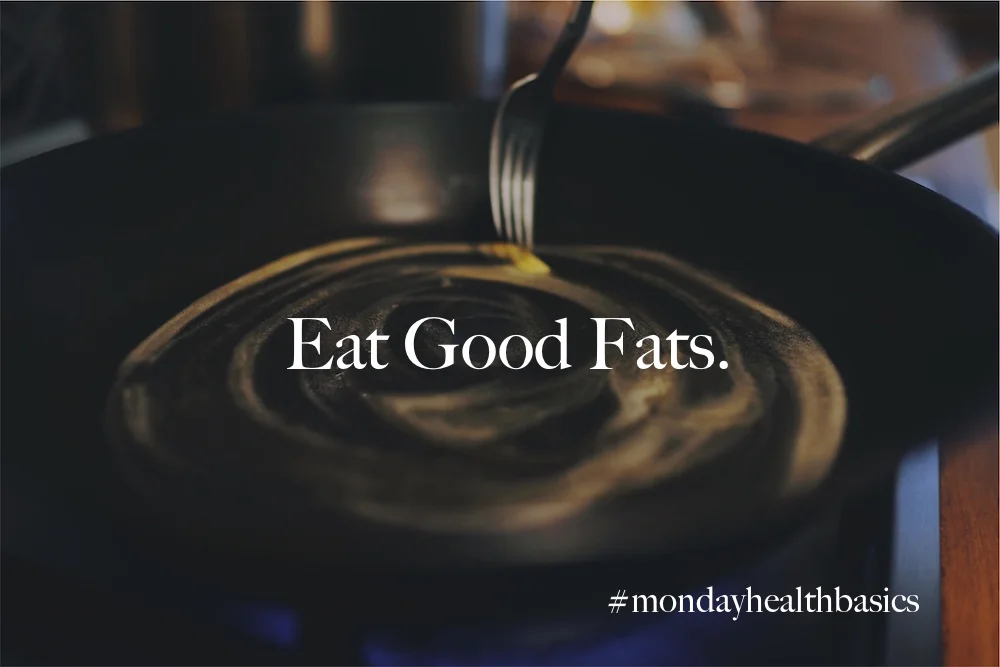
THURSDAY BASICS: Eat Good Fats
One of the most confusing topics in my practice as a Holistic Nutritionist is the Great Fat Debate. What is a good fat? What isn't as good a fat? Which ones should we nix from our kitchen pantry?
In this next in the series of #mondayhealthbasics, let's take a gander at this hotly debated topic, albeit in a bit simpler form.
This week’s topic is a cornerstone of supporting you in building a kitchen pantry that helps you work at keeping chronic disease at bay (read: inflammation).
STOCK UP ON THE GOOD FATS.
COLES’ NOTES:
1. Fats help deeply nourish all systems in the body, from immunity to brain to heart to reproductive
2. Fats are the backbone of all hormones, thus helping in balancing hormones (+blood sugars at the same time!)
3. Aim to have a good fat at every meal. A good place to start!
Read on for some great tips and ideas on how to incorporate this idea in to your every day.
One of the most confusing topics in my practice as a Holistic Nutrition Practitioner is the Great Fat Debate. What is a good fat? What isn't as good a fat? Which ones should we nix from our kitchen pantry? In this next in the series of #mondayhealthbasics, let's take a gander at this hotly debated topic, albeit in a bit simpler form.
These Monday blog posts are meant to be quick reads, and easy swaps or add-ins to your daily routine in order to support optimal health. And while I could talk for days on the topic of fat, I want to make this as succinct a blog post as I can. If you're looking for further reading and understanding of fats, I recommend some reliable sources at the bottom of this blog post, and invite you to peruse through those sources in order to best arm yourself with what makes sense for you. Every body is biochemically unique, and what works for one person won't necessarily work for the next.
I want to clear one thing up: FATS ARE GOOD. FATS ARE NECESSARY. They are a macronutrient category, much like Protein and Carbohydrates. These macronutrients are necessary for so many things, and one cannot just toss a macronutrient to the curb because they don't like the sound of it. (Sound familiar for another macronutrient?)
Know this: there are good fats out there. Sure, we were misled. The news is lit up with stories, and you can do your own research there. I just want to provide you the good things to add without barraging you with studies and information. That stuff is already out there.
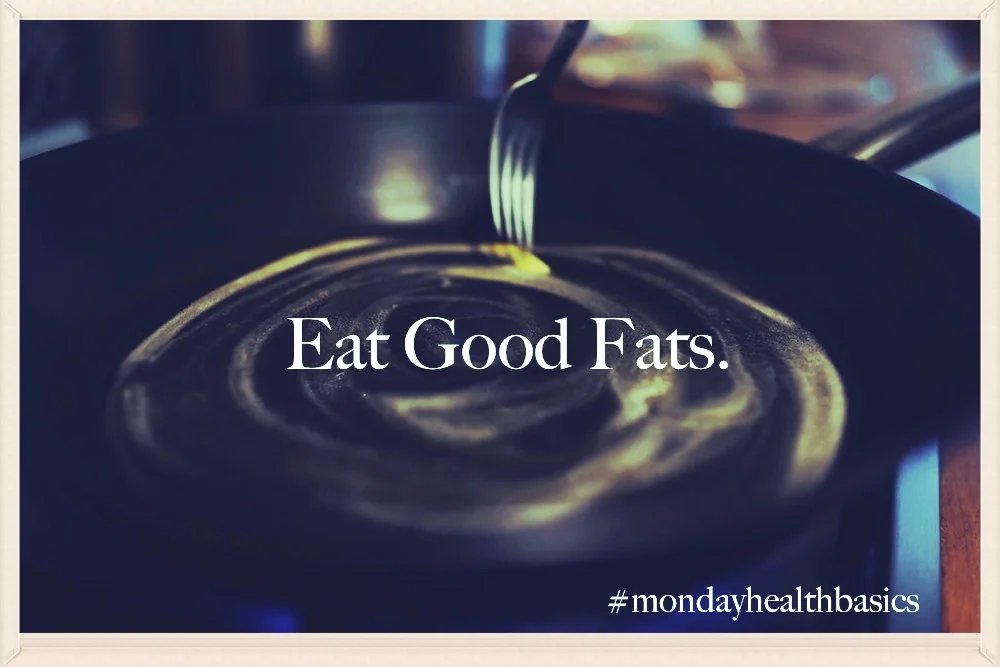
So why include fats?
They're a macronutrient. We need good fats as they serve as a concentrated energy source in our diet. We need them for cell membranes, hormones and hormone building. They play an integral role in our growing children's bodies, helping them to build each and every system especially their reproductive systems.
They are necessary for proper immune health, and we need them to build bones and teeth. Without fats, our brains would not exist (60% of our brain is made of cholesterol, a type of fat!). We need fats to better absorb, assimilate and metabolize minerals.
Fats are a necessary component of insulin production. Not only that, but saturated fats (a certain kind of stable fat = think solid at room temperature) protect the heart and liver against the damaging effects of stress.
In Dr. Natasha Campbell-McBride's book GAPS: The Gut and Psychology Syndrome, a book that explores the connection between the health of the gut and the health of the nervous system and how supporting improved digestion and assimilation can lead to improved health for the nervous system, she explains how big of a role good quality fats can play in contributing to reducing overall inflammation, including that found in the gut. We need fats to get the fat-soluble vitamins in our bodies: vitamins A, D, E and K which we need for healthy skin and mucosal linings (intestines! respiratory tract!), immune system, bone building and maintenance.
One of my favourite things good fats can do is to help slow down the absorption of foods at mealtime. This means we feel fuller, longer, or satiated and this, in turn, helps balance blood sugars and hunger hormones. Which is HUGE. (Anywhere you see blood sugar imbalance, think 'HANGRY', or brain fog, or inflammation, or adrenal drain, or blood cholesterol levels, or stress...)
So for you, dear friend, here are your healthy fat guidelines for this Thursday morning
remove your liquid vegetable oils like canola, sunflower, safflower, peanut oil, corn oils from your pantry (keep your olive oil and flax seed oil, and your sesame oil too) as they contribute to the inflammatory picture going on (high in Omega 6s)
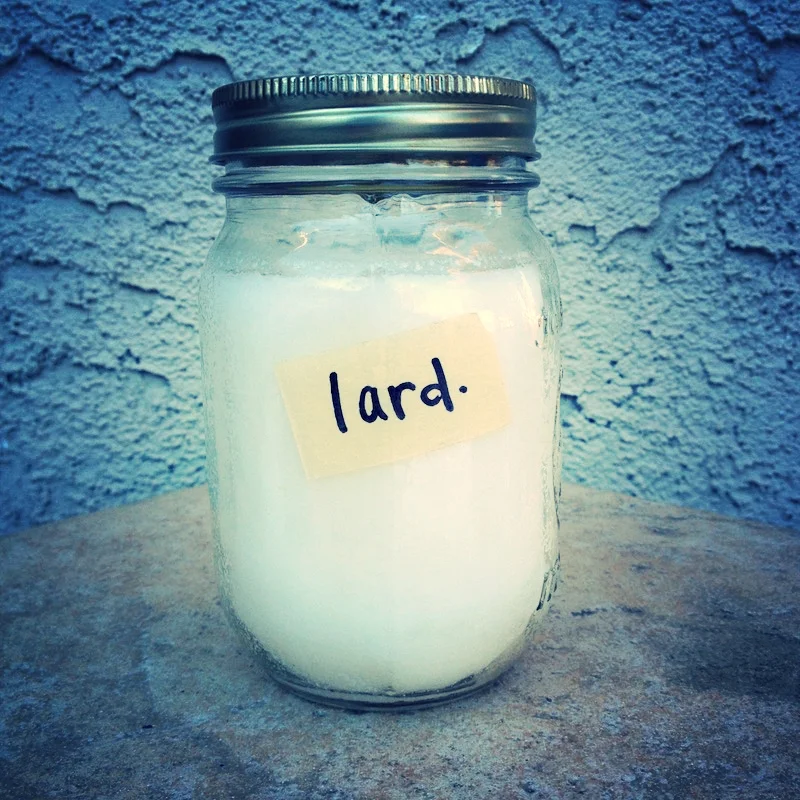
start cooking with saturated fats like butter, coconut oil, ghee, lard, tallow , shmaltz - they can take the heat without going rancid
low to mid temp cooking with olive oil and avocado oil is great, but ensure you are buying good quality oils (my favourite is to go with a small locally-owned specialty shop that can best guide you in choosing the right oil)
add a pat of ghee or butter to your veggies
drizzle olive oil on your salads or soups
make pestos, homemade mayo
if you are eating pastured meat, do not discard the fat
if you are drinking milk or eating dairy, swap your skim milk and 0% yogurts for the higher fat products
Reach for real food, reducing your intake of pre-packaged foods (usual hidden culprits of rancid oils)
start introducing these healthier fats slowly
Having said all this, if you are new to cooking from scratch or making whole foods, start slow and add one good thing to your pantry a week. As you add the good, the bad will fall to the wayside. And you'll be doing it in increments that are do-able, and sustainable!
HEALTHY FAT SOURCES
BUTTER and GHEE (conventional –> good; organic –> better; grass-fed -> best)
raw nuts and seeds (pre-soak for easier digestibility)
olives and olive oil
coconuts and coconut oil
cacao butter is amazing in smoothies, on oatmeal or in elixirs
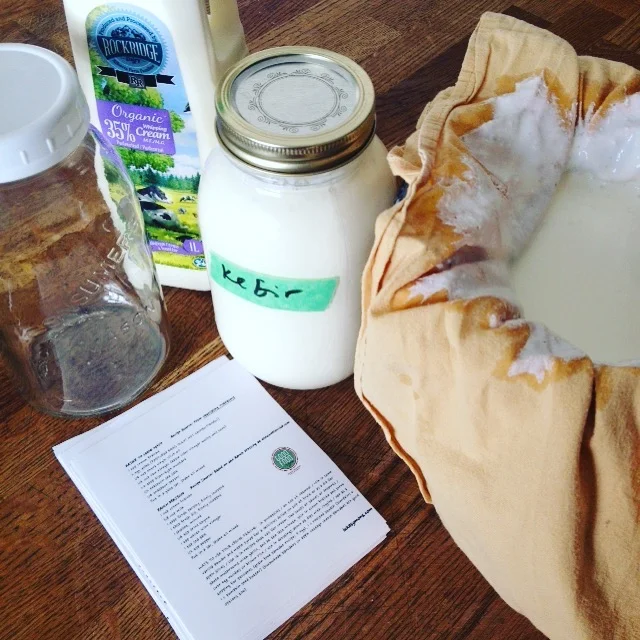
Dairy products like cheese, kefir, whipping cream, yogurt, creme fraiche if you can tolerate dairy
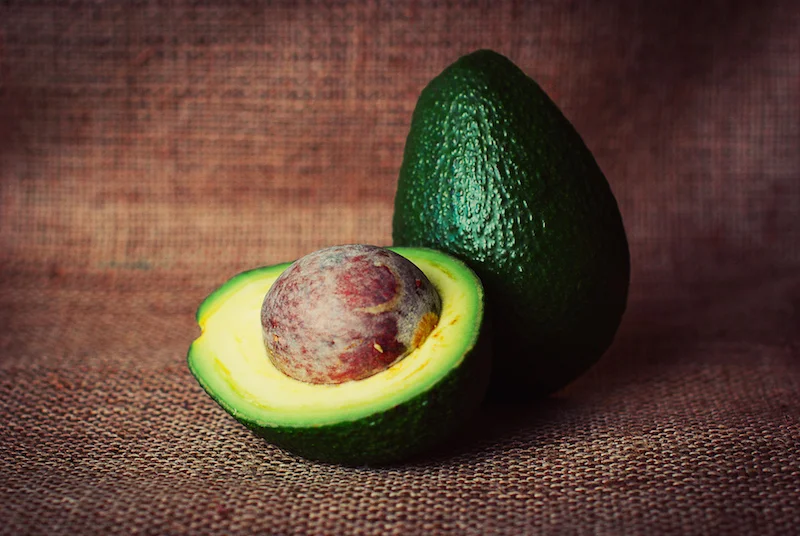
avocado
grass-fed meats and wild caught fish (from the ocean and freshwater)
unheated nut oils (keep them in the fridge)
fish oil, cod liver oil, krill oil
goose and chicken fat (shmaltz)
lard and tallow (bacon fat and beef fat, rendered)
avoid any packaged foods with 'soy bean oil' or the words 'hydrogenated oil' on it
Today's take-away: make sure to have a good fat at every meal and snack.
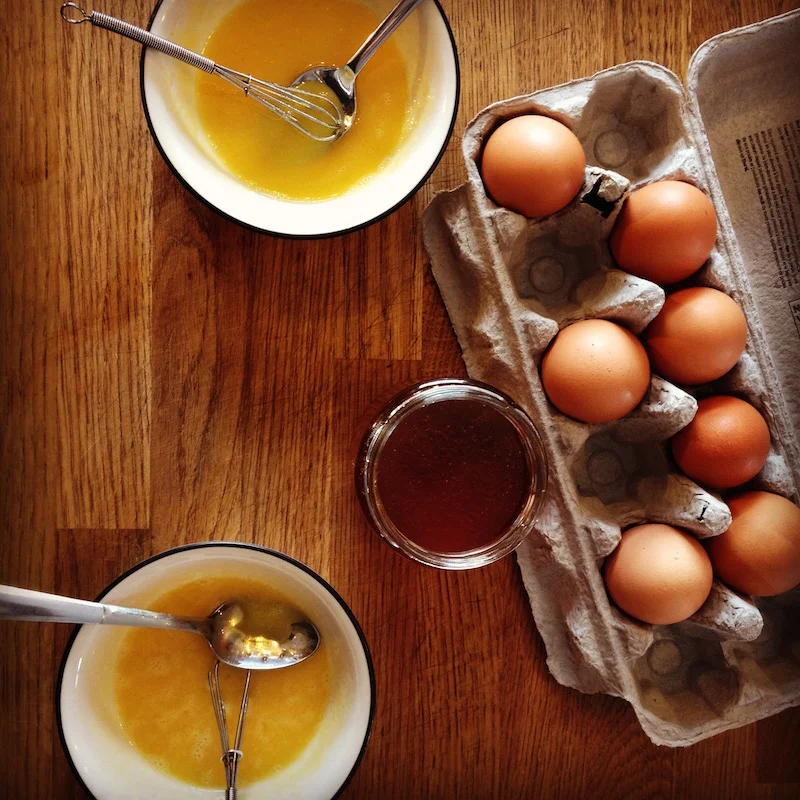
Have some nuts, seeds, or nut butter, or mix butter+honey=frosting!, have half an avocado with breakfast and drizzle it with olive oil, make sure to add cocoa butter to your smoothie or some yummy coconut oil.
If you're interested in reading up some more, may I recommend:
Sally Fallon and Mary Enig's book Nourishing Traditions
Dr. Natasha Campbell-McBride's book GAPS: The Gut and Psychology Syndrome
The Weston A. Price Foundation has done extensive research into the traditional uses of fats, and their applications in today's world. Read here for the full skinny on fats.
This online blogger goes into detail about which fats to include for a GAPS protocol
Now go eat a pat of butter, will you?

Video Podcast Feature - Recreate Your Relationship to Food
From The Light Cellar:
In this episode you will hear from Luka Symons where the first part of our conversation Luka shares what I described as the idyllic childhood in terms of being raised on whole foods. However what you will then hear is how she rebelled and her then subsequent journey with food and nutrition and how we all can learn from and grow from every choice and circumstance.
From this interview I know you will find a lot of gems and value in what Luka shares about being a parent and helping our children with their food choices as well as we draw a parallel to society as a whole and where we’re at collectively in our cultural journey with food and nutrition.
Recently, I had the pleasure of chatting with Malcolm Saunders, one of the owners and creative visionary at one of my favourite local shops, The Light Cellar. If you have yet to walk through the front doors at the Light Cellar and find yourself in Calgary, I urge you to check them out. The selection of products is carefully curated, sourced from reputable sources offering our bodies the nourishment to shine from within. Their staff are helpful, supportive and very knowledgeable. They are at 6326 Bowness Road in the North West. Tell 'em Luka sent you.
Malcolm has a new video podcast series of talks he calls Recreate Your Relationship to Food. He uses this platform to connect with local and not-so-local folks who are deeply entrenched in the world of nutrition, food, herbs, digestion and superfoods. Folks he has invited in through this series include Yarrow Willard of Harmonic Arts, Derek Fleming from New Earth Organics, Deborah Morgan from Kids Health Revolution to name a few.
He asks really probing questions, they are well thought out and he expertly leads the conversation to dig deeper. I invite you to settle in for this recently published video podcast to hear a bit about my back story, and my philosophy on foods. Read below for the intro to the video, then make yourself a warm cuppa something delicious. And comment below on what this talk brings up for you! If you have any questions, or further observations, I'd love to know what you're thinking.
Many thanks to Malcolm for his generosity of spirit, and his curiosity. It was a super fun chat, as it usually is with Malcolm.
Enjoy.
From The Light Cellar:
In this episode you will hear from Luka Symons where the first part of our conversation Luka shares what I described as the idyllic childhood in terms of being raised on whole foods. However what you will then hear is how she rebelled and her then subsequent journey with food and nutrition and how we all can learn from and grow from every choice and circumstance.
From this interview I know you will find a lot of gems and value in what Luka shares about being a parent and helping our children with their food choices as well as we draw a parallel to society as a whole and where we’re at collectively in our cultural journey with food and nutrition.
This was a very fun and lively conversation. Luka has fantastic energy and is a wealth of practical knowledge which you are about to discover through this interview.
You will learn:
- When is it too late in your own journey and relationship with food
- The role of a nutritional consultant as it relates to your journey
- How to empower your children on their own journey with food and nutrition including accepting the rebelling
- What is leaky gut - what is it specifically, what does it mean and how you can begin to heal it
- The role of bacteria and the gut in physical, mental and emotional health
- The connection between food traditions, generations and our collective cultural journey and how that is playing out for each of us individually
- The deeper aspects of food and its environment and how it affects us
- and so much more!
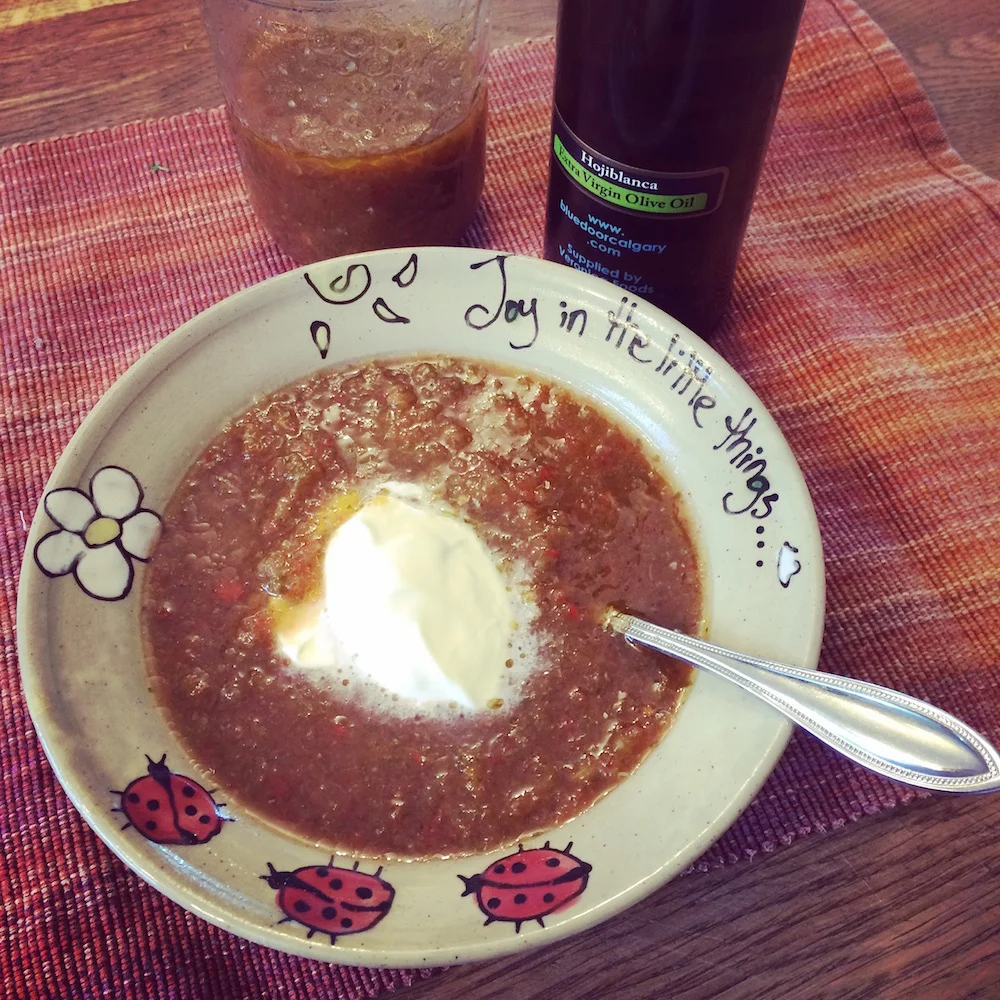
Gazpacho. Fermented.
New recipe on the blog, meant to take in the flavours of the season. Fermented Gazpacho, with flavour spikes from fused olive oil from Blue Door in Calgary, and flavoured vinegar from my wee garden patch. A nourishing probiotic-rich cold soup for the dog days of summer!
This is my story and I'm sticking to it. I had some cucumbers taking up space in my crisper, going a little soft. I had some lovely tomatoes from a local producer I had purchased in anticipation of my own tomatoes ripening at home, and so had to make something with them to make way for the home grown bounty. What does one make when one combines cukes and tomatoes? Well, gazpacho of course!
Being who I am, I couldn't just follow a recipe. Oh no, I had to experiment... I had some time on my hands. So play I did. Here is the finished product: Fermented Gazpacho! I fermented it in order to increase the nourishing aspects and add some probiotics to the mix. I fermented it in order to help it last in the fridge (fermenting extends the shelf life, did you know?). I also fermented in order to develop a really nice sour note to the cold soup; gazpacho just naturally lends itself to flavour explosions. I decided to try my hand at coming up with my own recipe.
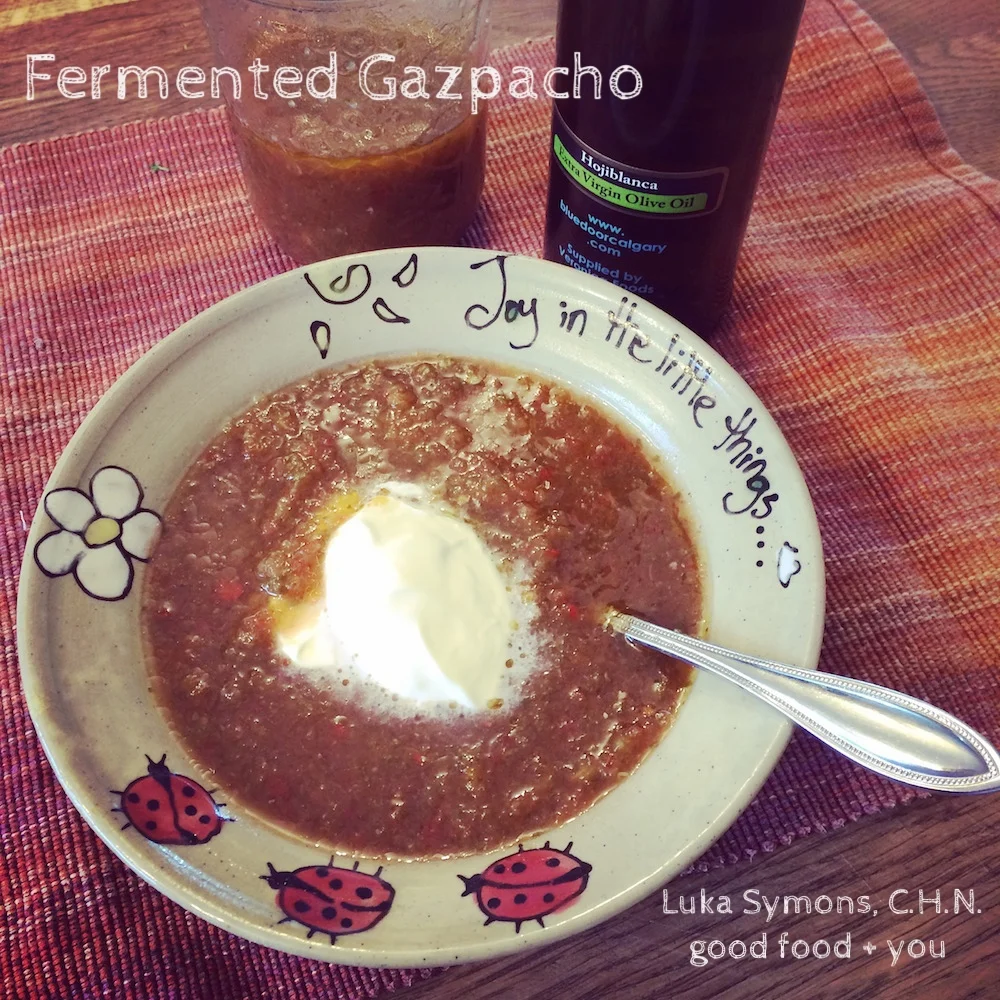
FERMENTED GAZPACHO
In a blender, combine until chunky (your desired consistency) or hand chop to pieces in the size you want:
- 5 mini cucumbers or 1 long english cucumber
- 4 tomatoes
- 2 bell peppers (I added colourful ones to enhance the visual glee you get from a gazpacho)
- 1 red onion
- 3 cloves of garlic (minced)
- 1 bunch of cilantro (minced)
- 1 bunch of parsley (minced)
- a handful of chives (minced)
Using a digital scale, pre-weigh a big kitchen bowl, big enough to hold your chopped veg. Mark down the weight of your bowl on a piece of paper, and return the bowl to the scale. Add your chopped veg. Mark the weight of the bowl + veg, and subtract the weight of the bowl: you have the total weight of veg! This is important, in order to know how much salt to use in order to allow for proper lactofermentation.
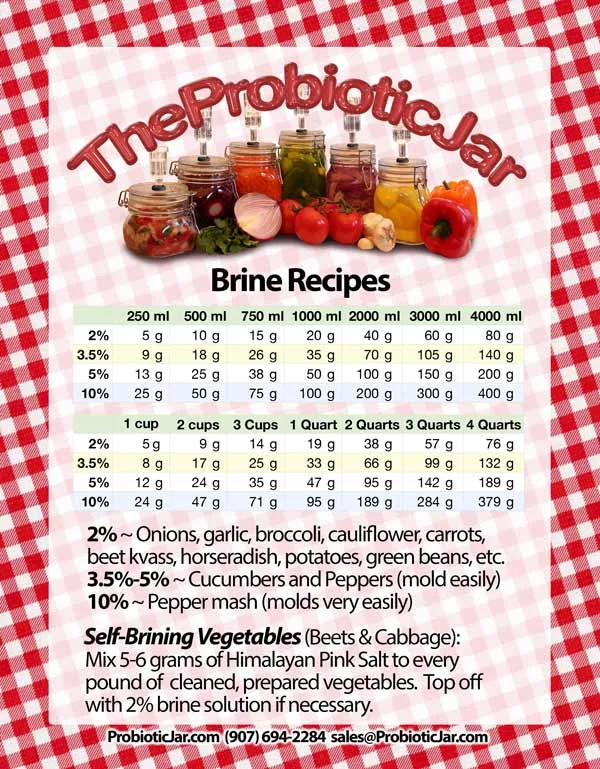
Handy chart to use to measure how much salt to volume. I prefer to measure by weight.
The good folks at The Probiotic Jar can do a much better and thorough explanation of how to figure out your salt brine percentage when making a ferment. See, when fermenting, it is crucial to set up the proper percentage of salt in your final product in order to have that tiny window that allows only the good probiotics to develop, selectively nixing out those that can't live in that salt percentage. This is how you ensure your product is food safe and won't mold, it's by ensuring the proper salt ratio for your ferment. And seeing as this gazpacho had cucumbers and peppers which are prone to mold, I opted to go for a 3.5% brine.
The total weight of my chopped veggies came to 1,623 grams. I multiplied this by 0.035 to get the 3.5% of weight to figure out how much salt to add to this lot. That turned out to be 57g of sea salt. I measured this amount out in a separate bowl using my digital scale, and then proceeded to swap out some of that salt for some leftover brine from a jalapeno+garlic ferment I did last summer. Knowing that 1 tbsp of sea salt can be replaced with 4 tbsp of leftover brine, I then whittled down the 57g of sea salt to 30g of sea salt by scooping out 2 tbsp of sea salt, and I added 1/2 cup of the juice from the jalapeno+garlic ferment, along with a few jalalpeno peppers for proper hit of spice.
It is important you figure out your own amount of sea salt you will need to add to your ferment, in order to ensure it is in that fine range to keep nefarious molds and bacteria out of the final product and make it a food safe venture. Do not follow my measurement, you won't have the same amount of veggies as I did. Each batch is different; it's why I am a big believer in measuring out in grams on a digital scale. It's not as hard as it seems!
Mix the salt + brine (if you are using) in with the vegetables well, and pour your final mix into a fermenting jar that will fit, or a fermenting crock or my favourite, a Fido jar. Make sure the lid is on tight, and if it's a jar you are using, mix your gazpacho every day by tipping upside down and right side up again to redistribute the veggies and salt, in order to prevent mold from developing on the top. If you have your gazpacho in a crock, it might be wise to mix it every day to redistribute the salt and re-submerge the tender veggies.
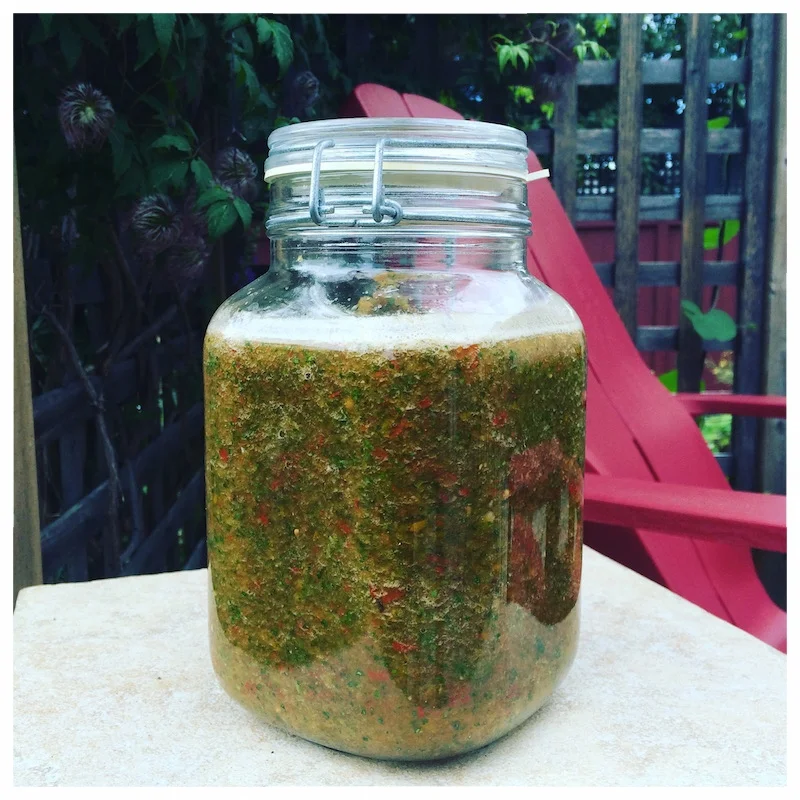
Gazpacho fermenting in my 2L Fido jar.
I let mine sit on the counter for 5 days, but you may prefer the taste at 3 days. It gets a bit more sour as the days go by, so when you decide to tuck in the fridge is completely dependant on your taste buds and preferences.
After the fermentation time on the counter, add to your jar:
- 1/4c flavoured olive oil (I used the Hojiblanca olive oil from Blue Door Oil + Vinegar, but you could use any flavour of olive oil here. Milanese Gremolata might impart that je-ne-sais-quoi!)
- 1/4c red wine or balsamic vinegar or flavoured vinegar (I used my homemade chive blossom vinegar)
- 2 tbsp of lime juice (fresh is best)
- Optional: hot sauce, chipotle peppers, red chili flakes
Mix well, and store the soup now in the refrigerator. Adding these ingredients deepen the flavours of the gazpacho, making each batch a unique offering. Having the good quality olive oil in the mix also imparts anti-inflammatory benefits, and packs on the nourishment and fats to help you assimilate more of the nutrients found in the gazpacho. Up that nutritional ante! Play with your food! And add a dollop of creme fraiche at serving time while you're at it.
The soup will keep for a minimum of 7 days, but I bet you'll run out before the end of day 2.
Bon appetit, les ami(e)s.
MONDAY BASICS: Eat Good Fats
One of the most confusing topics in my practice as a Holistic Nutritionist is the Great Fat Debate. What is a good fat? What isn't as good a fat? Which ones should we nix from our kitchen pantry? In this next in the series of #mondayhealthbasics, let's take a gander at this hotly debated topic, albeit in a bit simpler form.
One of the most confusing topics in my practice as a Holistic Nutrition Practitioner is the Great Fat Debate. What is a good fat? What isn't as good a fat? Which ones should we nix from our kitchen pantry? In this next in the series of #mondayhealthbasics, let's take a gander at this hotly debated topic, albeit in a bit simpler form.
These Monday blog posts are meant to be quick reads, and easy swaps or add-ins to your daily routine in order to support optimal health. And while I could talk for days on the topic of fat, I want to make this as succinct a blog post as I can. If you're looking for further reading and understanding of fats, I recommend some reliable sources at the bottom of this blog post, and invite you to peruse through those sources in order to best arm yourself with what makes sense for you. Every body is biochemically unique, and what works for one person won't necessarily work for the next.
I want to clear one thing up: FATS ARE GOOD. FATS ARE NECESSARY. They are a macronutrient category, much like Protein and Carbohydrates. These macronutrients are necessary for so many things, and one cannot just toss a macronutrient to the curb because they don't like the sound of it. Know this: there are good fats out there. Sure, we were misled. The news is lit up with stories, and you can do your own research there. I just want to provide you the good things to add without barraging you with studies and information. That stuff is already out there.
So why include fats?
They're a macronutrient. We need good fats as they serve as a concentrated energy source in our diet. We need them for cell membranes, hormones and hormone building. They play an integral role in our growing children's bodies, helping them to build each and every system especially their reproductive systems. They are necessary for proper immune health, and we need them to build bones and teeth. Without fats, our brains would not exist (60% of our brain is made of cholesterol, a type of fat!). We need fats to better absorb, assimilate and metabolize minerals. Fats are a necessary component of insulin production. Not only that, but saturated fats (a certain kind of stable fat = think solid at room temperature) protect the heart and liver against the damaging effects of stress. In Dr. Natasha Campbell-McBride's book GAPS: The Gut and Psychology Syndrome, a book that explores the connection between the health of the gut and the health of the nervous system and how supporting improved digestion and assimilation can lead to improved health for the nervous system, she explains how big of a role good quality fats can play in contributing to reducing overall inflammation, including that found in the gut. We need fats to get the fat-soluble vitamins in our bodies: vitamins A, D, E and K which we need for healthy skin and mucosal linings (intestines! respiratory tract!), immune system, bone building and maintenance. One of my favourite things good fats can do is to help slow down the absorption of foods at mealtime. This means we feel fuller, longer, or satiated and this, in turn, helps balance blood sugars. Which is HUGE. (Anywhere you see blood sugar imbalance, think 'HANGRY', or brain fog, or inflammation, or adrenal drain, or blood cholesterol levels, or stress...)
So for you, dear friend, here are your healthy fat guidelines for this Monday morning
remove your liquid vegetable oils like canola, sunflower, safflower, peanut oil, corn oils from your pantry (keep your olive oil and flax seed oil, and your sesame oil too) as they contribute to the inflammatory picture going on
start cooking with saturated fats like butter, coconut oil, ghee, lard, tallow , shmaltz
low to mid temp cooking with olive oil and avocado oil is great, but ensure you are buying good quality oils (my favourite is to go with a small locally-owned specialty shop that can best guide you in choosing the right oil)
add a pat of ghee or butter to your veggies
drizzle olive oil on your salads or soups
make pestos, homemade mayo
if you are eating pastured meat, do not discard the fat
if you are drinking milk or eating dairy, swap your skim milk and 0% yogurts for the higher fat products
Reach for real food, reducing your intake of pre-packaged foods (usual hidden culprits of rancid oils)
start introducing these healthier fats slowly
Having said all this, if you are new to cooking from scratch or making whole foods, start slow and add one good thing to your pantry a week. As you add the good, the bad will fall to the wayside. And you'll be doing it in increments that are do-able, and sustainable!
HEALTHY FAT SOURCES
BUTTER and GHEE (conventional –> good; organic –> better; grass-fed -> best)
raw nuts and seeds (pre-soak for easier digestibility)
olives and olive oil
coconuts and coconut oil
Dairy products like cheese, kefir, whipping cream, yogurt, creme fraiche if you can tolerate dairy
avocado
grass-fed meats and wild caught fish (from the ocean and freshwater)
unheated nut oils (keep them in the fridge)
fish oil, cod liver oil, krill oil
goose and chicken fat (shmaltz)
lard and tallow (bacon fat and beef fat, rendered)
avoid any packaged foods with 'soy bean oil' or the words 'hydrogenated oil' on it
Today's take-away: make sure to have a good fat at every meal and snack.
Have some nuts, seeds, or nut butter, or mix butter+honey=frosting!, have half an avocado with breakfast and drizzle it with olive oil, make sure to add cocoa butter to your smoothie or some yummy coconut oil.
If you're interested in reading up some more, may I recommend:
Sally Fallon and Mary Enig's book Nourishing Traditions
Dr. Natasha Campbell-McBride's book GAPS: The Gut and Psychology Syndrome
The Weston A. Price Foundation has done extensive research into the traditional uses of fats, and their applications in today's world. Read here for the full skinny on fats.
This online blogger goes into detail about which fats to include for a GAPS protocol