
THURSDAY BASICS: the wrap up.
Welcome to the last post of 2019.
✨Read up if you’re wanting to Keep Well.
✨Read up if you’re keen to Tame the Inflammation Dragon.
✨Read up if you want to Kick Chronic Disease to the Curb.
✨Read up if you want to Defeat the Blood Sugar Beast.
✨Read up if you want to Balance your Hormones.
✨Read up if you want to Feel Real Good.
Click on the image for a full exploration of these ideas updated + presented in a much more cohesive order in 2019.
The last one is here. The wrap up. The compendium. The whole she-bang.
See, in 2016, I set myself up for a weekly task. And in 2019, I set the intention to update each of those posts, and make them more relevant, delivering in an order that made more sense.
✨Read up if you’re wanting to Keep Well.
✨Read up if you’re keen to Tame the Inflammation Dragon.
✨Read up if you want to Kick Chronic Disease to the Curb.
✨Read up if you want to Defeat the Blood Sugar Beast.
✨Read up if you want to Balance your Hormones.
✨Read up if you want to Feel Real Good.
2019: THE YEAR THAT WAS.
I present to you, all the #thursdaybasics posts from this past year. 🥳🎆🎇
Welcome to the last post of 2019.
I hope this finds you well, dear one. Today’s post is a wrap-up of the re-posts from a series I lovingly called The Monday Health Basics, back in 2016.
For 2019, I endeavoured to update the information and links found within those earlier posts and log them in an order that made more sense. The idea was, if you were following along, you could implement one good thing at a time to help make sense of this Holistic Nutrition world.
See, back in that first week of January 2016, with a year of possibilities ahead, I set out for myself the task of coming up with 52 simple and effective changes you could make in order to help you achieve optimal health. The idea was to post one new concept every Monday, in order to build content on my website and explain my approach, but also to connect with food- and health-loving people out there.
What I got in the end was this gift of developing ideas, jumping off points for classes and class material, and extra support I could offer to my one-on-one clients. This blog series is the gift that keeps giving.
There were simple ideas, and there were more complicated ones. Most ideas revolved around food (I am a Holistic Nutrition Practitioner, after all...), but there were some concepts that were aimed at lifestyle kind of things too. All in all, these were meant to be suggestions to up the ante for you to improve not only your quantity of life, but also your quality of life.
Today's post is the wrap up. Consider this me, setting the lay of the land, in order for you to implement these concepts or steps one at a time for yourself. Whether you are looking for improved health, or support with an existing condition, or just aiming for a better quality of life, these ideas are for you.
Thank you for coming on this #thursdaybasics journey with me this year. I am forever grateful for your stories, your struggles and your involvement. May 2020 be a year of discoveries for you, a year of joy with plenty of health.

I have broken down the 51 ideas into six categories in this compendium, if you will. Peruse at your liking, click on the ideas that interest you. Hit the 'share' button at the bottom of this article to share with someone you really dig! Bookmark this page, and make a plan to implement one idea a week for the year ahead, in order to help support you through any current health concerns be they chronic degenerative diseases, raising a young family and fuelling your days or the desire to ensure health and vitality as we age!
FIRST THINGS FIRST
These go over the rules of the game, as it were. Or the rules of engagement.
ON EATING: Ways to think about eating, and why we do it. This is about being human. It's called On Eating.
ADD ONE GOOD THING AT A TIME: Start with where you are. And add only one good thing. Only one good thing at a time. Building the positive. And here's the secret: it feels better.
PANTRY STAPLES: An essential primer on how to stock your pantry with the essentials, what to keep, what to toss.
PRACTICE MINDFULNESS: In order to help support your body's ability to digest, I recommend you start carving time out for meals and practice mindfulness at these times. We are working on improving your body's ability to digest, and so it is imperative we don't just talk the talk, we also walk the walk!
EAT TOGETHER: We have a golden rule in our house, and it's one that I will insist upon until the day I die. Dinner is a meal meant to be shared, a meal that requires we are all around the dinner table, together. Let's talk about the power of connection when it comes to mealtimes.
WHOLE FOODS PRINCIPLES a la Weston A. Price
This section focuses on the major tenets of what it means to eat whole foods, the reasons you want to reach for whole foods. This means a traditional way of food preparation which encompasses the words live, natural and good quality: full of nutrients, low in pesticides, additives and other toxins, minimally processed, nourishing foods and from good sources. Read on to grasp some of these major ideas.
J.E.R.F.: One of the biggest changes you can make in how you approach foods. I realize I'm probably preaching to the converted here, but bears repeating. Just Eat Real Food. JERF.
EAT BUTTER: I invite you to read on the importance of including butter in your daily routine. There are more ideas too that make it easy to do so, so get playing with your food. Butter is the newest superfood!
EAT GOOD FATS: Good tips on how to incorporate some good fats in to your every day, speaking to the importance of this macro-nutrient in our diet. This is a controversial topic at times: read this article to understand which fats to eat, which fats to ditch and why you would want to.
GO FULL FAT (one of my favourite topics): This article is on the importance of switching your dairy products, salad dressings, mayo and other foods to the full fat version. Look here for good tips and easy swaps in order to bring down inflammation and provide your body with those all important fat soluble vitamins.
EAT EGGS: I did a wee write up on the importance of including eggs in your diet, if you can tolerate them. They are a cornerstone of the full GAPS diet, a big influence on my practice as a Holistic Nutrition Practitioner.
CHOOSE GRASS-FED: This piece is about choosing meats and all animal products like dairy and fats, and reaching for grass-fed or pastured options when you're able to.
MEAT STOCK: Meat stock is one of the most nourishing foods you can eat; prioritizing this in your weekly menus will go far in supporting a reduction in inflammation and improving gut health. Meat Stock vs Bone Broth? Meat stock every time. Check this link for a video how-to.
FERMENTED FOODS: This is one of the pillars of my work: fermented foods. We run through all of the benefits + help you figure out if something is fermented. It is a basic pillar of the WAPF way of things, and also a big player in the GAPS protocol, a gut-loving protocol.
PICK SPROUTED OR FERMENTED GRAINS: May I propose we take a gander at how to make grains more easily digestible. This post is not for everyone; but the information found within may help explain a bit behind the idea of traditional food preparation methods, and the wisdom found within. Let's talk about the wisdom of sprouted and/or fermented grains.
USING REAL SWEETENERS: I have an article on the importance of using real sweeteners, and reducing our intake of refined sugars and artificial sweeteners, and the ills they present. Let's sweeten naturally.
GOODFOOD BASICS + EASY TRICKS
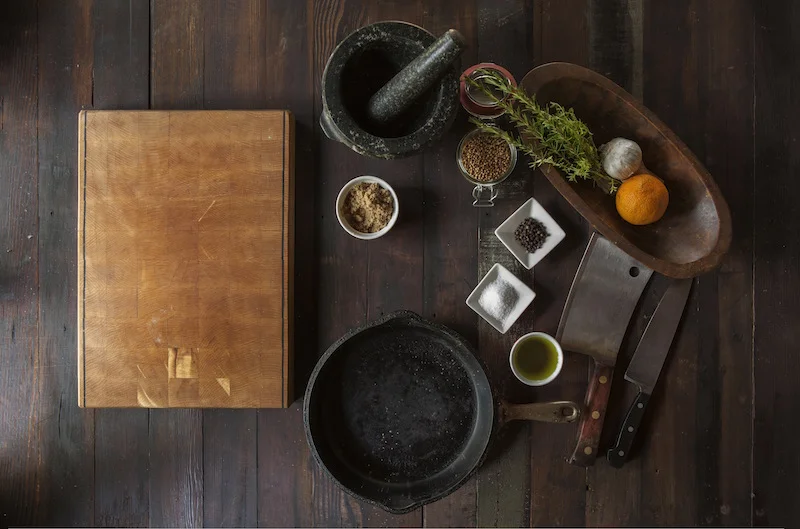
These are practical ideas and recipes or tricks I have come up with in order to help you play with your food more confidently. They are usually easy one-offs to work on, where I walk you through how to prepare these foods or incorporate them in to your everyday. There are recipes in this section: this is fun and delicious work, my friend.
SWAP YOUR TABLE SALT FOR REAL SEA SALT: This idea is one that is a pretty basic change that is fairly easy to implement, but is one topic that also raises many questions and controversy. We're talking SALT.
SWITCH TO FILTERED: We're talking water, of course. We're talking nix the straight up tap water, instead filtering it so it's of gentler support to your body. There are lots of reasons: all of this disinfecting comes with a price.
WATER: This article goes in to the benefits of water consumption and why we need it, but especially when and how to consume it. Timing and temperature is of the essence, here.
LEMON WATER TO START YOUR DAY: It takes all of 3 minutes to prep once every two weeks, and a little forethought every night before hitting the hay. We're talking the pros of starting your day with a glass of lemon water.
HOW TO THINK COFFEE: I love coffee. It can contribute to inflammatory things and blood sugar balancing things though, taking a toll on our adrenals. Here's a good way to think about that delicious elixir: there are good pro-coffee points here, and ways to mitigate the negative effects they can have on the work we have at hand.
REDUCE PACKAGED FOODS: In order to help your body reduce overall inflammation, with the intention to support gut health; loving your guts has a tendency to reverberate outwards, to all other systems in the body. This article is one more step towards reducing inflammation and supporting the gut lining.
MAKE YOUR OWN GREEK YOGURT: This article talks about two of my favourite things: dairy and fermentation. This blog post is for you if you like dairy. This blog post may also be for you if you are saying to yourself right now “Well Luka, I can't do dairy because I'm lactose intolerant”. It may also be something you want to check out if you find yourself reaching for that greek yogurt at the grocery store. Today's post is about how to maximize that probiotic hit, lowering the lactose and making sure that greek yogurt in your breakfast bowl is best going to support you through the day ahead.
BUY FROZEN FRUIT + VEG: Concerned about nutrient density? Want more bang for your food bucks? Frugal with your time? Buy frozen fruit and veg. Allow me to explain.
SOAK SEEDS FOR SMOOTHIES: This post is for those early birds who are regular consumers of smoothies come morning time. This article goes over some basic easy steps you can take in order to make that smoothie really count and nourish you from head to toe.
FLAVOUR YOUR WATER: As another option to help you increase your water intake (and reduce consumption of juice or sodas), may I recommend you infuse your own water with some tasty flavours.
SALAD DRESSINGS: Let's talk about making your own salad dressings, and why this is a good idea. We'll talk about how to manage this at home, and how to manoeuvre this idea whilst on the road.
MAKE YOUR OWN SEASONING MIXES: This easy tweak is a fairly simple thing you can do in your kitchen, in order to bring down the list of additives and other nefarious ingredients in your meals. We're looking to keeping it real food, mes ami(e)s.
BLITZED PULSE PASTE: I just like the sound of this. This article presents the idea of making a big batch of pureed pulses (lentils or beans) and freezing in small portions in order to use for easy protein and fibre additions to meals down the road.

A BAKER'S DOZEN OF BIG CHANGES
This section encompasses thirteen pretty big ideas and changes. This section is the heavy lifting, if you will. It's the section where you will find more complicated recommendations, or multi-faceted ways of supporting your body. You'll also find recipe round-ups in this section. Read on to find a topic that really resonates with you!
BREAK FOR 12: This one is about liver support. Let's go over the idea of a 12 hour break, in order to give your body that rest it needs to recoup from the day and prepare for tomorrow. This is about reducing inflammation and supporting your body's detox work.
LIVER LOVING BREWS: What a great way to augment your intake of water. I have a write up on liver-supportive teas with a recipe for a homemade brew of medicinal mushrooms, incredibly supportive to reduce inflammation in the body.
GOOD FATS via EFAs (Essential Fatty Acids): This explains the benefits of these all-important fats in your life. It is one that I think about every live long day, and it involves choosing foods that will support just about everything going on in your body.
EAT YOUR GREENS: This is the why + how to up the greens in your life. They are supportive to every inch of your body. SO GOOD! Make it delicious.
ADD NETTLE: I am a big lover of all things nettle. Further to the post just above, it's a fabulous green that is easy to add to your daily cooking. It is a fantastic anti histamine herb, works hard at bringing down inflammation, and rich in minerals.
ADD SEAWEED: Further in to this discussion on consuming your greens, this may help you figure out how to incorporate mineral-rich seaweed in to your kitchen creations. The benefits are manyfold on this super green.
EAT PREBIOTICS: This write up is on the importance of eating your fruit and veggies every day. There is a method to the madness! Feed the good bugs, my friend.
LOVE YOUR HEART: This is a post that originally came about as summer was making its first appearance. Through the Traditional Chinese Medicine lens, summer is the season of the heart. In this blog post, we look at how Holistic Nutrition can best support your ever-lovin heart. This one is a good one at any time of the year.
PUT UP THE HARVEST: This post came about at harvest time. This blog post is meant to inspire you to take full advantage of Mother Nature's bounty and gifts, and to celebrate this most wonderful time of the year. Friends, it's time to put up the harvest. (In small batches. Do-able things. Easy things. Delicious things. One good thing at a time. Your future-winter-self will thank you.)
SNACK WELL: This one focuses on good ideas for snack foods. I like to think of this list as a possibility for snacks, or maybe piece a few of these together to make for easy take-to-work lunches. Go play with your food!
LUNCH BOX PLANNING: I wrote an article with ideas on how to think about packing lunches, be it for the littles or the bigs in your life (and that includes you.) There are nutrient-dense ideas that are fairly easy to pull together, making lunch time a delicious and nourishing thing.
THE PRACTICAL IDEAS
This section zeroes in on the practical tools to help you make these changes do-able tasks, and ones that will carry you forward. Tools to your toolkit, you could say.
DIRTY DOZEN/CLEAN FIFTEEN LIST: This is the latest list of Dirty Dozen and Clean Fifteen that is put out every year by the folks at the Environmental Working Group. In the interest of reducing toxins in your every day life, use this list to help make trips to the grocery store a bit more manageable.
TAKE NOTES: This is a good place to start, in terms of the practical. Let's talk about writing down where you're at, noticing how you're feeling and really taking stock of where you begin this journey. This one's called Write This Down.
MEAL PLANNING TIPS: I wrote an article on meal planning, and tips on how to approach it. I find it helps to make mealtime easier during a busy family week night. I hope you find it useful!
BATCH COOK: This write up focuses on good ways to think about batch prep work. Batch prepping is meant to be one task you undertake once a week in order to supply easy to incorporate things for the meals in the week ahead. It's all meant to make meal prep during the weeks a bit of an easier task. It's also meant to help ease in to this whole-foods preparation with a bit of an easier time.

CRITICAL LIFESTYLE SUPPORT
These ideas are integral and critical to supporting good health, and keeping inflammation at bay. Remember, this is all about manageable things to make this a good life. And implementing these components? Perhaps the funnest and easiest ways to ensure vitality and health. And feeling good, top to bottom.
SLEEP LIKE A CHAMP: This idea is one that can get overlooked, one that can often fall to the back burner. Good quality sleep is critical to supporting health, allowing for the important rebuilding and repair work to take place. And rejuvenating. Start counting sheep!
TAKE A WALK: It's time to get practical, kids. Getting outside for a walk a day, even if it's a short walk, will do wonders to help support your body through the work it wants to do. The benefits are manyfold – I mean name a system in the body, and you are sure to find that walking would support that system's function, nay I'd go so far as to say improve that system's work.
GO GREEN: This one is about lessening that toxin load on your body, bringing down the number of nefarious substances your body has to filter or move out. It's about supporting the liver, in turn helping reduce inflammation. It's about going green when it comes to your cleaners.
DITCH THE DRYER SHEETS: This is a practical in-house thing you can easily swap out or eradicate from your home. We're talking dryer sheets my friends. What they are, why you want to get rid of them, and some simple swaps you can add to your cupboard this weekend and know you've reduced the toxin load in your home already.
BREATHE DEEPLY: This is the perfect time to add this tool to your arsenal: this write up touches on the importance of reducing stress via grounded breath. It leads you through the how-to, and the benefits behind this easy (and free!) practice. Breathe deeply.
CULTIVATE JOY: In the interest of having fun and bringing down inflammation, supporting blood sugar regulation, it is imperative that you play. Every day. Here is a wee write up and explanation, with a long list of inspiration or ideas to get you started.

THE COLES NOTES VERSION
For those who'd rather just get the basics of what to aim for:
Eat real food. From good sources.
Reduce toxins everywhere, from your foods, your cleaners, your clothes, your household purchases. This could also speak to reducing the negativity in your life.
Sleep like a champ.
Play. Cultivate the joy in your life. Seek it out in the every day.
Connect with people.
Repeat.
Sorry to say it, but no one is getting out of here alive. So let's make it a good day, shall we?
All the best to you and yours at this magical time, dear one.
May 2020 be good to you, and may you discover some good things.
Now go play with your food.

THURSDAY BASICS: cultivate joy.
I feel like we are living in this really incredible time in history right now. I promise not to get into political things here. Hear me out.
At the core of this whole not-so-quiet revolution currently taking place seemingly in the world all around us and withIN us, in this our work to reduce inflammation on every level, is the ability, the invitation and the occasion to cultivate joy.
Click on the image for a full exploration on this important keystone to Keeping Well.
#tbt day here at #goodfoodHQ, as we look back on the #mondaybasics series of 2016. Second to last one!!!
This is one of those pillars I touch on in every. single. class. I run. From now until the end of time. It’s time to enjoy this one delicious life, friend-o-mine.
CULTIVATE JOY
COLES’ NOTES:
This is one of those things to help further reduce chronic inflammation.
Cultivating joy / chasing compassion / conjuring calm / doesn’t matter what you call it.
It’s one of those practices that requires diligence + practice. Super fun practice.
See, when you flip something difficult or stressful around 180 degrees, it can sometimes feel MUCH better and lend itself to a better success rate.
So go ahead. Cultivate Joy, friend. Share with us how you plan to do it in the comments below!
I feel like we are living in this really incredible time in history right now. I promise not to get into political things here. Hear me out.
There seems to be a lot of big changes going on in the world, either politically, or personally in peoples' lives. I was thinking the other day how this obvious increase in dis-ease and dis-comfort for people is on the rise. I see this discomfort and disordered health as signs of inflammation.
Certainly at the root of most chronic diseases out there, is inflammation.
The way some things seem to be exploding right now on the world stage, or in medical circles? In faith, in communities, across the board? In the way the commerce world is going? How we receive our information, how it is packaged for us? It seems the inflammation is reflected there as well.
Do not be disheartened.
I really deeply feel this inflammation is a harbinger of change. And a call to action. A call for us to pro-actively choose for ourselves what fits, what we want, and what we wish our outcome to be and that of those around us.
No longer are we to sit idly by while things happen to us. This inflammation (be it in our bodies, or in our social circles) is a call to take charge of our own destiny, to be pro-active in our own pursuit of health, and to be active participants in choosing quantity and quality of life.
At the core of this whole not-so-quiet revolution currently taking place, in this our work to reduce inflammation on every level, is the ability, the invitation, and the occasion to cultivate joy.

From the get-go in January of 2016 (and again, for the entirety of 2019), I decided to write an article a week, focusing on an easy-to-implement idea for prospective clients. My motives were simple: committing to writing an article a week would force me to develop online content, which would help me really explain what I'm all about as a Holistic Nutritional Practitioner.
It would be an exercise in discipline; as it turns out, it was an exercise in really figuring out what my bent is, my approach to food and how it can best support a person. It became clear halfway through the year that my interest in supporting people lies in reducing inflammation and improving digestion, as key players in overall health. It's all about the gut, love. (Look for the full list and links to each weekly article from 2016 here.)
In the interest of reducing inflammation in the body in order to best support optimal health, let's talk about how your mindset and intention to cultivate joy can be a key player in reducing said inflammation.
Reducing stress is one of the key components in reducing inflammation. Earlier this year I spoke about the idea of Practicing Mindfulness around meal times: remember the idea on how stress shuts down the digestive process? In order to digest like a pro and get at those nutrients found in our meals, we need to be calm, cool, collected when it comes time to sit down to a meal.
In a stressful event, should you be eating or digesting, this function goes on the back burner and those foods you have just put in your belly will not be completely digested. These incompletely digested morsels now contribute to inflammation in the gut.

Another reason stress may hinder things: the stressful response calls on your adrenals to release cortisol, which in turn now frees sugar in your blood stream. The idea here is that you get a quick hit of energy to your muscles.
When this reaction came about so many millions of years ago, that stressful reaction meant you were face to face with a saber toothed tiger. Insta-sugar hit to the muscles meant you could run like the dickens, away from the tiger. You would live to see another day. (Ummm those who didn’t develop this response never lived to tell the tale. Sadly.)
Unfortunately, this stressful reaction we experience in our day to day lives nowadays is more like 75 saber toothed tigers every day, as opposed to one every two years as it was when that evolutionary piece came along. It's that teeter totter effect of blood sugar levels up and down many times during the day that tax our bodies, our adrenals and contribute to low grade inflammation.
So I'm tying together here stress, blood sugar imbalances and inflammation. Which now contributes to impaired digestion. Which begets more inflammation. Oy.
So sure, today's post is about reducing stress + inflammation.
But let's not call it that.
Let's turn it into a positive thing to add to your to do list: let's talk the power of cultivating joy.

Having fun and prioritizing good times can play a pretty big part in reducing inflammation. It helps bring down stress, which is a contributor to ongoing inflammation; it helps improve circulation to get nutrients to where they need to go to work on the problem and keep inflammation down.
Having fun releases chemicals in the brain that help reduce inflammation there and in fact, end up protecting your noggin against inflammation.
The heart is central to feeling and expressing joy; when joy is missing in our lives, it is the heart and the circulatory system that feels it keenly according to Chinese Medicine. Making a point to ensure joy in every day will go far in supporting a healthy cardiovascular system, and a happy heart.
Your immune system is also quite sensitive to stress and negativity. By choosing joy and actively seeking out a more positive spin on things, you will be doing your immune system a service and proactively protecting it.

Here is your prescription then for cultivating joy on the daily:
Prioritize fun! Every day!
Go to the park (whether or not there is a little in your life)
Call a kid in your life, dress fancy, and take them out for tea and cake
Play games, find a games cafe in town
Have a night out with your honey or bestie or favourite kid: go to movies, comedy shows, go dancing, buy season's theatre tickets
get involved in something that is important to you, in order to connect. Volunteer somewhere!
Take a walk – this helps my kiddo immensely on days where she is in a funk
get a pet – they are a good reason to go out for a walk every day, plus the love is so unconditional
practice self care - find your own definition for this.
soak in an epsom salts bath with your favourite magazine
start a book club
movie night with the gang – in summery times, find some outdoor films in town!
Check out a nearby town for antiques or farmers markets
Reconnect with a hobby you had when you were wee
Joint a community theatre troupe (like my honey just did)
Dust off your skis, your bike or skateboard and get out there. Move your body!
Join a choir like you always wanted
Find those who bring out the best in you, and make time for them. Call them more often.
Add a gratitude practice to the start of your day, actively focus on your blessings
start a jam night with friends

check out some new local music, head out to a local club, get tickets for a big show and call a friend
host a games night with friends and neighbours
downsize your commitments (Simplicity Parenting by Kim John Payne was a huge book for me that helped me figure this one out)
start a garden
join a yoga class or a local tai-chi group in your area
take up pottery like you always meant to (check your city’s recreations department to find a class that appeals to you!)
share a meal with a honey in your life (eat together!)
take a cooking class
get season's tickets to one of your fabulous theatre companies or orchestras in town
schedule in regular date nights. In pen. Don't back out.
have an imprompty kitchen dance party with your fam jam
GO OUTSIDE! OFTEN! GO WALKING! DANCING! SING TO THE TREES! Whatever it takes to get you out there. And do it daily.
Take heart. Please play. Aim for everyday. That is your recommendation this week.

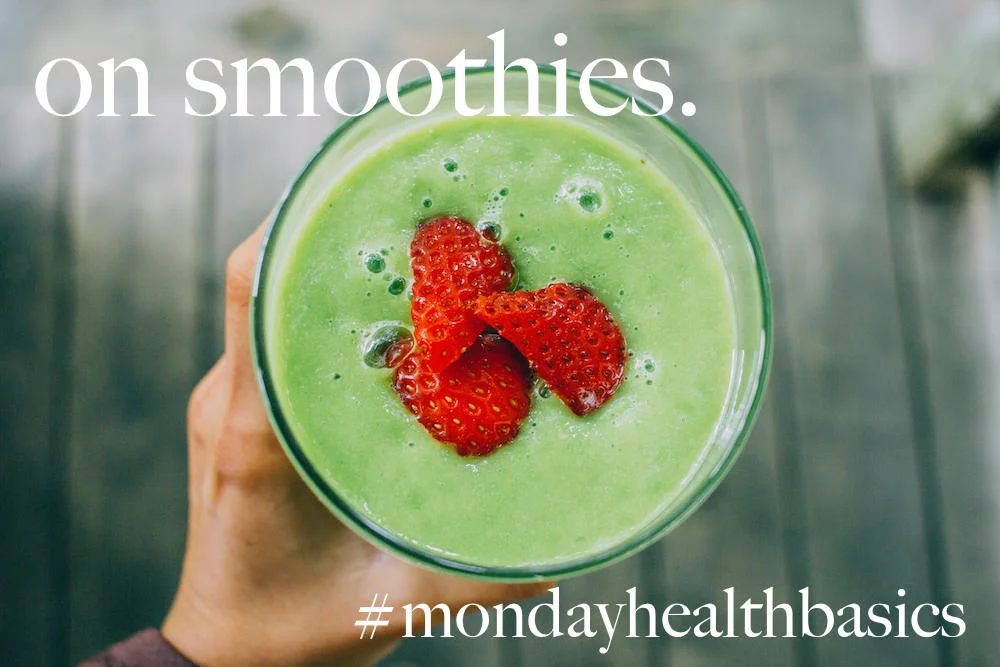
THURSDAY BASICS: on smoothies.
This week's Thursday Health Basics blog post is zeroing in on one of the most oft questions I get: what do I think of smoothies? How do I build a good smoothie?
For you, my bullet-breakfast loving friend, here is my spiel on smoothies.
Click on the image for a full exploration on Building A Top Notch Smoothie.
Another Thursday, another throwback! Let’s take a peek at one of the old #mondaybasics series of 2016.
Today’s post is one that is suitable to those who often reach for liquid nourishment, first thing in the morning. How you build your smoothie can have a big impact on your blood sugars and hormones for the day; if not prepared well, you could be stoking those fires of inflammation.
ON SMOOTHIES.
COLES’ NOTES:
1. This is about optimizing digestion - because you are what you assimilate. Make sure you’re breaking your foods down into nutrients as best you can!
2. This is about nourishing your body from the get-go in the morning, in order to balance blood sugars + hormones over the course of the day.
3. This is about looking after your gut lining + microbiome, nourishing things deeply here, provide the body with nutrients to help move chronic inflammaiton out.
It’s a long one, but a good one. Read on to get a recipe / template to get you started on how to build a deeply nourishing smoothie!
This week's Thursday Health Basics blog post is zeroing in on one of the most oft questions I get: what do I think of smoothies? How do I build a good smoothie?
For you, my bullet-breakfast loving friend, here is my spiel on smoothies.
There are clearly two camps when it comes to smoothies: those that say 'yea' and those that say 'nay'. I sit on the fence. I really do.
I think they can be fantastic vehicles for nutrient density; I think they can carry lots of goodies if you're looking to increase your intake of fruit and veg for those all important nutrients, vitamins and minerals to best help support a body.
I wonder how much we are by-passing normal parts of digestion when we just 'drink up' our breakfast (or snack or meal).
I mean, I think we have teeth for a reason. I really believe we were always meant to chew our food; chewing activates the proper cascade of events we need to go through in order to optimize digestion.
And if you know me, you know what I'm going to say: you are what you assimilate. If you aren't digesting properly, you will have trouble getting nutrients out of the foods you're eating. Our bodies utilize nutrients after all; not food. We need to be able to properly break down our foods in order to get at the nutrients within.
If you look back in history, no one, nowhere was making smoothies. We were all chewing what we had on hand, what was in the larder, and what we found or hunted on the field or in the woods. Or kept in the coop out back.
It was all slow food all the time. So I really think there is something to the business of chewing our breakfast, and taking our time for that important first meal of the day.

Digest well
My recommendation here then is, if you're going to make a smoothie for breakfast or for a snack, you should aim to chew it in your mouth in order to start the digestive process properly.
Really swish it around your mouth so that you can start building what is called a bolus: from the greek, meaning a soft, roundish mass or lump, especially of chewed food. You need to work your saliva in the mix here in order to help initiate that important breakdown of carbohydrates.
Know that if your smoothie is cold, the temperature can halt or hinder digestion. It is best to warm it up a bit before you consume it in the morning. You can warm it up by adding a spot of hot water, or a mugful of tea!
Conversely, this means no more ice cubes added to your smoothie base. That stuff’ll knock your digestion right off track!
The Fat of the Matter
It is important to ensure your smoothie is loaded with the good stuff. I do a breakdown of what to include and why, and offer suggestions below.
One of my key recommendations to anyone who makes smoothies for meals, is to ensure you have a good fat and/or protein in the mix. This is essential to slowing down the release of sugars found within the smoothie (which can make its way into your system so quickly if your food processor or vitamix has blitzed it in to such small particles).
I have talked before about the addition of full fat at length, and invite you to read up on past Monday Health Basics posts for the refresher.
You'll find an earlier post on navigating fats here (which ones to choose, which ones to ditch)
I focus on going full fat here, especially dairy! Options galore!
choose your animal-based fat sources to come from grass-fed and grass-finished animals
ways to explore including EFAs or Omega 3 fats in your diet (and smoothies!) found here
All good reasons and explanations behind including those good fats found by clicking on the items listed above.
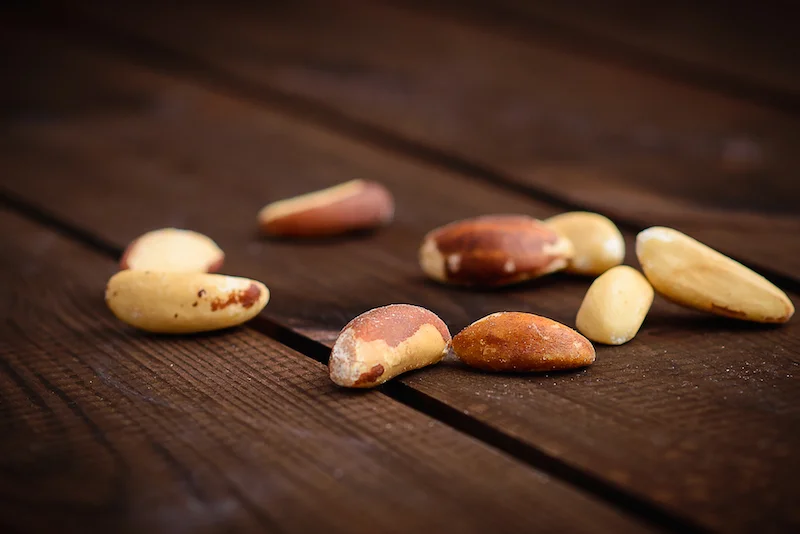
You may recall a write up earlier in the year where I spoke about the importance of soaking your nuts and seeds before using them as a base for your smoothie. You can find that write up here, including an easy recipe and how-to for pre-soaking your nuggets.
I love using nuts and seeds in a smoothie: they add wonderful healthy fats, give a good plant-based hit of protein and offer some vital vitamins and minerals that are essential to the body's functioning.
As if that wasn't enough, they are also good sources of fibre, helping to bulk up your stool and move spent metabolic waste and toxins out of your body so that your engine can run clean. GOOD WORK.
Smoothies are an integral part of the Wahls Protocol, a protocol developed by a Functional Medicine Doctor in the United States named Terry Wahls who was diagnosed with Multiple Sclerosis a number of years ago. She did extensive research into how diet and nutrition could play a role in her health and wellness; she developed a protocol based on nutrient density and foods that would help 'mind her mitochondria'. Dr. Wahls is a big believer in loading up on a variety of colours in your fruit and veg, and ensuring the good things are in the mix here.
YOUR RECIPE / TEMPLATE TO BUILDING A NOURISHING SMOOTHIE
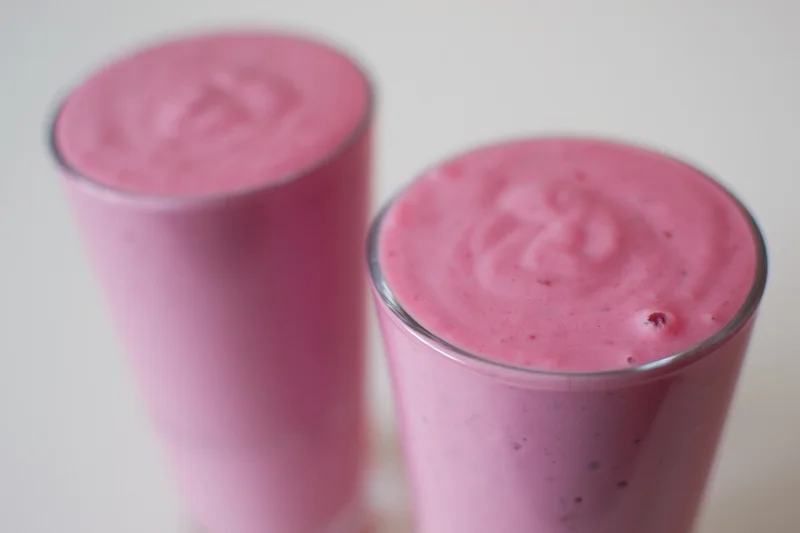
So let's break down the template, shall we? Here is my smoothie equation for you:
Greens + Berries + Fat + Fibre + Extras
+ The Liquid
Let's go item by item to get the gist of what this means.
GREENS
This is an important part of the smoothie, and a great way to boost the nutritional content in your smoothie. You can find an extensive write up as to why greens are good for you here at an earlier MHB post. These foods are mineral rich and offer great support for detoxification and overall lowering of inflammation. Including a handful of greens or a cup of chopped greens or herbs in your smoothie is a super idea.
If you have a thyroid condition, consider using swiss chard instead of kale or spinach, as these last two foods have goitrogens, which have been shown to slow down your thyroid's function. Reach for romaine, or add some herbs as greens. Mint imparts a most delicious flavour, and ensures those minerals you are looking for here.
Smoothie-approved greens (1-2 cups):
kale
collards
spinach
swiss chard
lettuce
parsley
sprouts
bok choy
beet greens
sorrel
dandelion greens
nasturtium leaves
borage leaves
Organic is always best, as greens have been shown to have a pretty high pesticide residue and so are listed on the 'Dirty Dozen' list as ones you should pay the extra dollar for. Find that information here.
Another idea you can try is to dry your own greens and mince them up, adding a tablespoon of them to your smoothie. Find the how-to here.
BERRIES
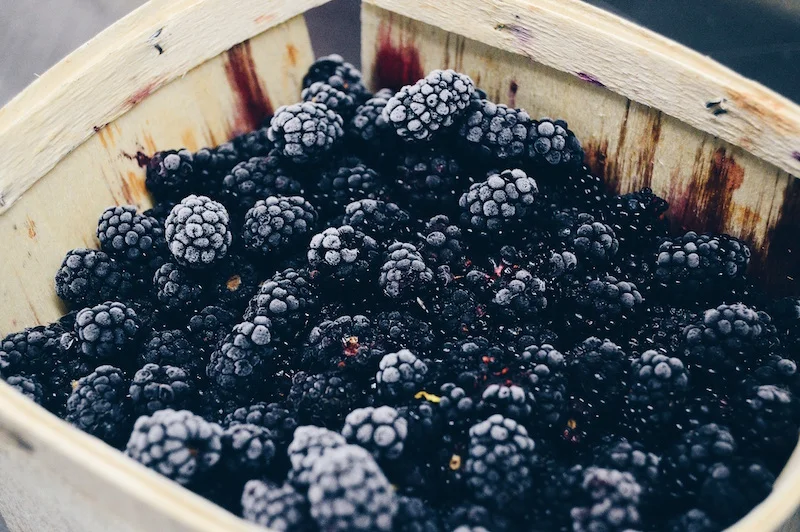
Smoothies are typically sweet tasting. Adding fruit is a wonderful idea and a brilliant natural way to add that sweet taste. My recommendation here though is to stick to low glycemic load fruit, things like berries, or maybe apples or pears.
I highlight berries because they're easy to keep in the freezer. They don't spoil as readily when purchased frozen. I love the idea of frozen berries too, seeing as they typically freeze freshly picked berries close to where they were picked. (True for other fruit and veg as well.) This allows the berries to fully ripen on the vine, which ensures a more nutrient-dense end product.
Go for frozen berries. Warm them up a bit before tossing into the smoothie, in order to continue supporting digestion - remember, cold shuts down digestion!
Add a good cup or cup and a half per serving.
Vary your berries from one purchase to the next, in order to offer a variety of nutrients. You should know, most berries are fairly high in pesticide residue as well; it is something you may want to purchase organically. Read up on the why here.
Another benefit to berries is the high fibre content, and also the high amount of antioxidants found in these deeply hued berries. These antioxidants help neutralize that free radical damage that happens in our bodies, especially helpful in slowing down the aging process and protecting our cells from the inside out. These nutrients are of tremendous support to the liver in keeping your engine running clean.
FAT
In addition to the points mentioned above, fat is also critical in helping balance hormones, and keeping us satiated. Fats are key providers of nutrients necessary to reduce inflammation.
My fave smoothie go-to-fats (choose 1 or 2):
1 tablespoon of coconut oil, cacao butter, nut or seed butter or straight up butter/ghee
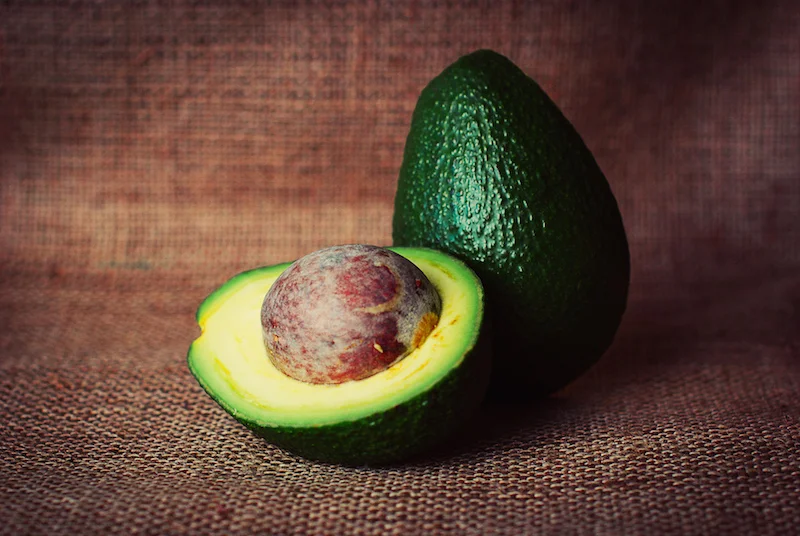
keep it plant-based by adding a half an avocado
1 tablespoon of olive oil
a handful of nuts or seeds (pre-soaked and activated of course!)
you can use 1/4 cup to 1/2 cup of homemade creme fraiche (the how-to is here)
1/2 cup of homemade greek yogurt (read up on why it's wise to make your own here, including full instructions)
FIBRE
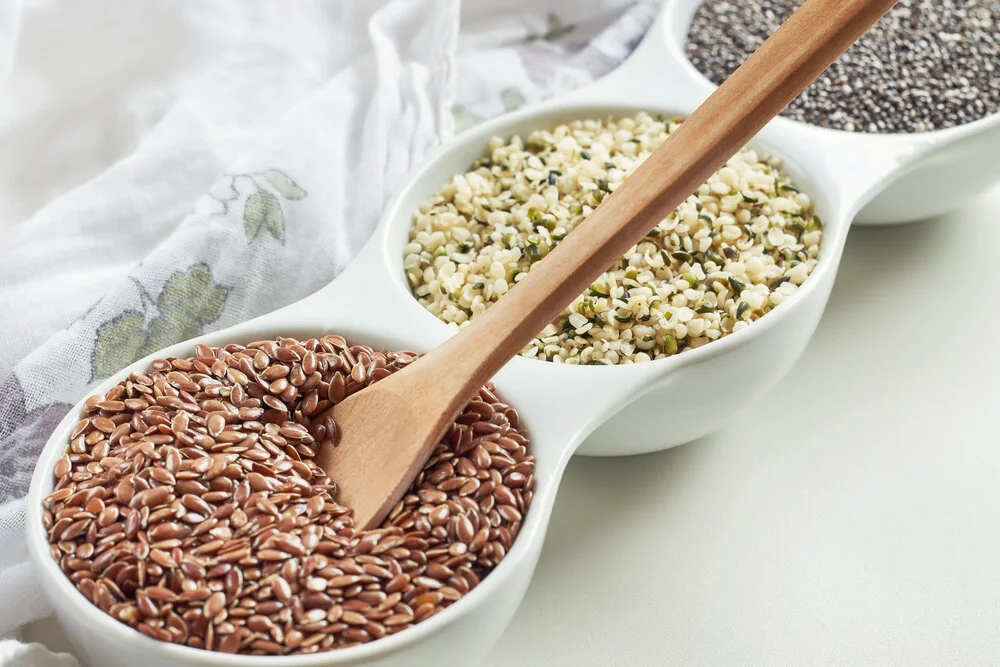
Fibre is just so integral to helping usher out spent metabolic waste and toxins our body is looking to get rid of. I did a wee blog post on the importance of including fibre here. The seeds listed below also happen to have a good amount of omega 3 fatty acids, which will help in reducing inflammation.
I recommend here you include 1-2 tablespoons per person:
chia seeds
hemp seeds
flax seeds
EXTRAS
This is where you get to be creative. Depending on what kind of health concerns you are currently working through, seeing a Holistic Nutritional Consultant may be of benefit when it comes to figuring out this piece. I know a gal. I can hook you up.
These are all optional; you can pick none, or one, or three to add to your smoothie. Look for these at your favourite local health food store, or check out The Light Cellar on Bowness Road in the NW of Calgary. (* denotes you should only add at the time you are blitzing the smoothie together)
1 tsp matcha green tea powder or 1 tsp moringa leaf powder– great for adrenal support!
1/2 to 1 tsp minced seaweed – extra mineral boost, liver support (spirulina is my fave)
1/2 tsp to 1 tsp of cinnamon
1/2 tsp to 1 tsp of fresh minced ginger – liver support, reduces inflammation
1/2 tsp to 1 tsp of fresh minced or dried turmeric – anti inflammatory
1 tsp of vanilla powder – antioxidant support
1 tsp of cocoa powder – if it's raw, extra antioxidant support
1 tsp colostrum – immune and gut support, balance blood sugars
1 tsp of medicinal mushroom powder – good write up found here on The Light Cellar's website
1 tbsp of dried nettle leaves - liver and inflammation support
1 tsp of holy basil loose leaf tea (aka tulsi tea) – excellent support for histamine intolerance issues, migraines, inflammation and adrenal support
1/2 tsp bee pollen - for inflammation, although not recommended for pregnant women or women hoping to get pregnant
a scoop of collagen powder* - for gut support (this one is my preferred)
a raw egg yolk* – make sure your chickens were pastured; conventionally raised eggs have possible contamination issues like E.coli and salmonella
1-2 tsp of cod liver oil – nutrient density at its finest, good for your entire body (find a lemon flavoured one - the best)
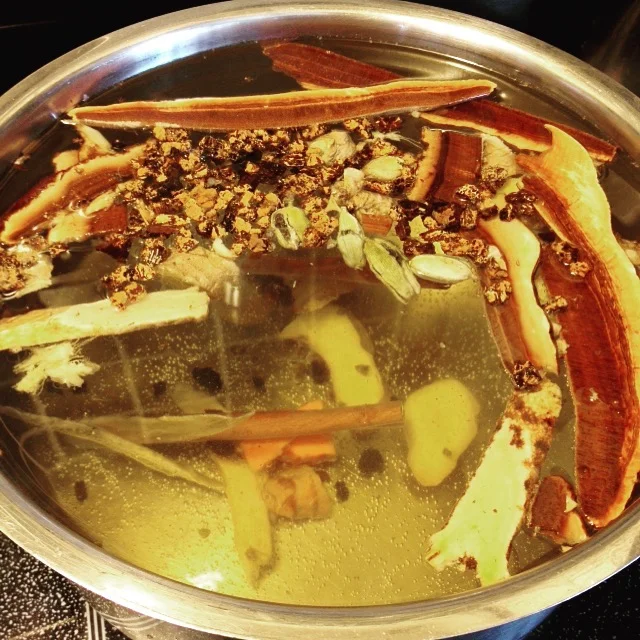
My medicinal mushroom tea with reishi, chaga, astragalus, ginger, cardamom, turmeric, pepper
THE LIQUID
You obviously need to add some liquid to make this a smoothie. To the blender, I would add 1 cup of any of the following:
water (warmer is better - filtered is de rigueur)
tea – dandelion root, rooibos, rose hip, ginger, green tea, nettle, peppermint, lemon tea
kombucha
water kefir
any non alcoholic fermented beverage you have on hand – excellent way to include probiotics
milk kefir (or coconut kefir if you can't tolerate dairy)
a cup of any of these liver-loving teas (medicinal mushroom brew recipe included)
Make a big pot of medicinal mushroom tea, and stash in the fridge once it is complete. You can pull from this stash for a week at least.
BATCH PREP IS KEY
Batch cooking really is key here to making this a do-able thing. I recently spent a full day with a friend preparing meals for her freezer for easy retrieval; she was about to undergo major medical treatment and wanted some ready-made easy-prep things in her freezer to pull out in order to ensure proper nutrient density for those days when food wouldn't necessarily be so appealing, nor would the energy be there to prep a meal.
She purchased big containers or bags of greens, berries, ensured she had good fats, seeds for fibre and some tasty extras. We assembled about thirty little freezer bags of smoothie essentials. It took all of 15 minutes to put it all together.
We set medium-sized freezer bags propped open in a box, and dumped a handful of spinach in each bag, a handful of slivered chard (without the stems), a cup of berries, a few slices of peaches, a tablespoon of coconut oil, a tablespoon of chia seeds, a teaspoon of matcha green tea powder. We wrote on the bag to include some creme fraiche and a cup of kombucha for the day she will be using the baggies. Easy peasy.
On days where she wants a nutrient dense easy meal, all she has to do is take it out of the freezer, add in some liquid, some warm tea and blitz the whole thing in her blender. Voila. Talk about good fuel for her days, and her body's work ahead.
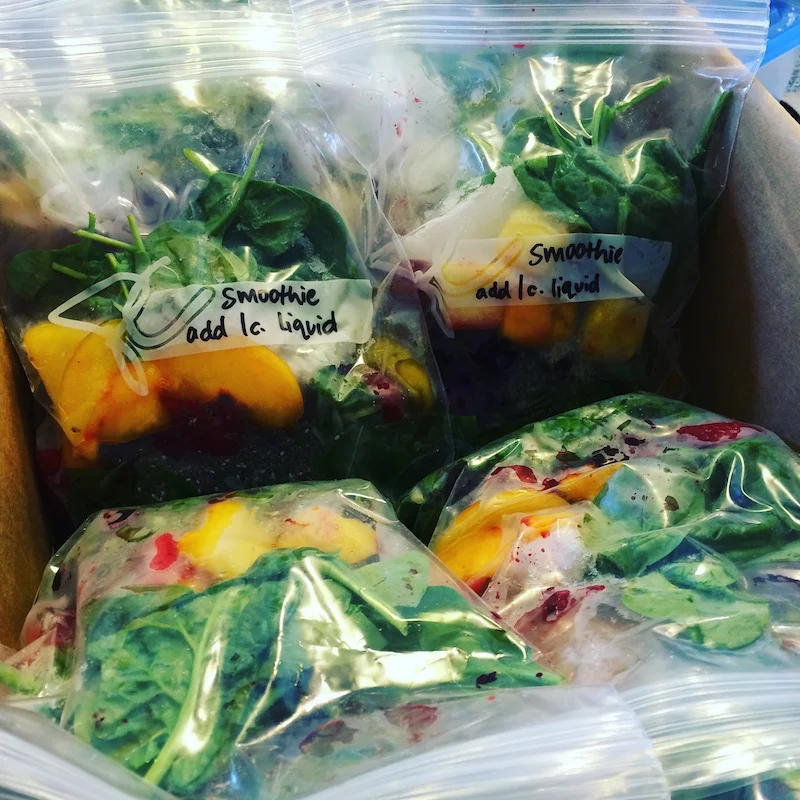
This is a wonderful gift you can put together for a friend in need, or for a loved one about to undergo extensive medical treatment. New moms would love the ease of a quick nutrient-dense meal like this. Your older parents may love the idea of an easy breakfast at hand to go along with their daily buttered toast. Your kiddos away at university may find this saves them on their early mornings. Your littler ones may enjoy helping put together a batch of these baggies so they can start making their own breakfasts in the mornings.
This was a long post. Phew. Extensive. But I hope you find the template a do-able thing, and an easy thing to follow.
Greens + Berries + Fat + Fibre + Extras
+ The Liquid
Now go play with your food.
The information provided in this post is not intended to replace your doctor's advice. This is for educational purposes only. If your current health status is giving you cause for concern, it is best to seek out the support of your Medical Team before consuming any of the foods mentioned in this post.
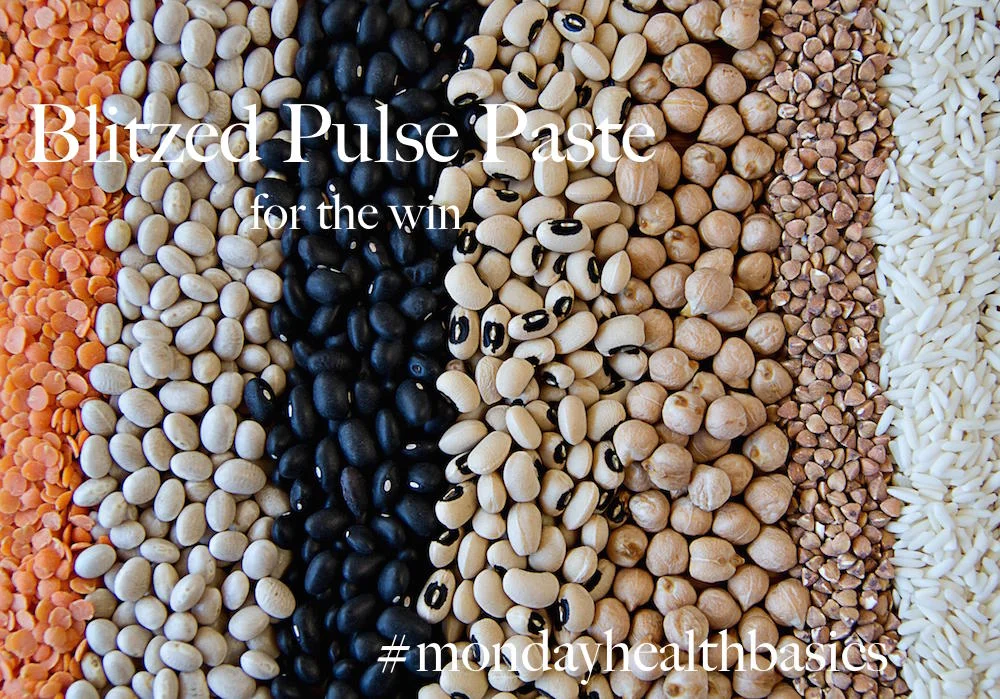
THURSDAY BASICS: blitzed pulse paste for the win.
Today's simple-addition-trick-up-my-sleeve is one that takes a bit of forethought, but will bring lots of rewards should you choose to take this on. Allow me to introduce you to Blitzed Pulse Paste.
Click on the image for a full exploration on the why of this idea, and how to make it!
#tbt day here at #goodfoodHQ, as we look back on the #mondaybasics series of 2016. We are nearing the end!
This week’s re-missive is one of those ideas that go well when you’re planning a Batch Cook on the weekend. Think of this as Future-You-Will-Thank-You.
BLITZED PULSE PASTE
COLES’ NOTES:
Because fibre.
Because inexpensive.
Because proper prep is DE RIGUEUR. (translation - don’t skip this step!)
This is one of those brilliant make-an-8-cup-batch-in-one-whirlwind-prep-this-weekend in order to feed your future self. Read on for why you want to properly prep a batch of lentils — especially if you want to Tame the Inflammation Dragon — and where to use this versatile food!
Today's simple-addition-trick-up-my-sleeve is one that takes a bit of forethought, but will bring lots of rewards should you choose to take this on.
There were studies conducted by Health Canada in 2012 that looked into whether or not Canadian adults were getting adequate nutrients from the foods they eat, through food intake alone. (Find that report here.)
Amongst those nutrients, of particular interest was the fibre intake of the average adult. One of the key findings was a concern that the majority of the population is not meeting an adequate intake of this very important nutrient, which could have a pretty serious impact on the health of the population long-term.
How to help you reach those good levels, and why? We'll cover that in today's blog post; let me introduce you to Blitzed Pulse Paste.

WHY THE FUSS?
Fibre is an essential component of foods that should be in our every day regimen, and with good reason. We'll get there in a second.
But just what is fibre? It is the part of plant-based foods that our bodies can't digest, the stuff we can't break down like you would carbs, fats or protein.
There are two kinds, soluble and insoluble and that refers to whether or not they dissolve in water.
The soluble stuff becomes kind of like a gelatinous mixture when added to water. This stuff is golden! It plays an important role in reducing our blood cholesterol, binding to it and moving it out of our system.
Cholesterol shows up in our bodies in order to protect us from inflammatory things on the go; cholesterol is like our body's bandaids. When our blood cholesterol levels are up, it has been shown that our propensity for developing chronic diseases like cardiovascular disease, strokes, obesity, diabetes, cancer, dementia and alzheimer's goes up.
Adding fibre to your daily meals will help balance out your cholesterol levels!
THINK GUT STUFF
Soluble fibre also helps slow down our digestion in order to release any sugars from carbohydrates in our meal in a much more metered fashion. This is an important lifehack in order to Tame the Blood Sugar Beast from upping his/her demands!
Keeping your blood sugars level is integral to keeping inflammation down, and thus reducing your blood cholesterol. Consider the soluble fibre a double whammy in helping keep your cholesterol down!
The insoluble fibre is a bulk builder when it comes to your stool. (I like to call it poo-maker. (I have been called the Poo Whisperer. I'll gladly accept the title.))
This good stuff acts as a broom in your innards, sweeping stuff through and out the poop shoot. It helps promote movements of bulk through your intestines, and so is essential to helping someone struggling with constipation or for someone who struggles to go once a day.
Lucky you, pulses like beans, lentils and peas have loads of both the soluble and insoluble kind of fibre.
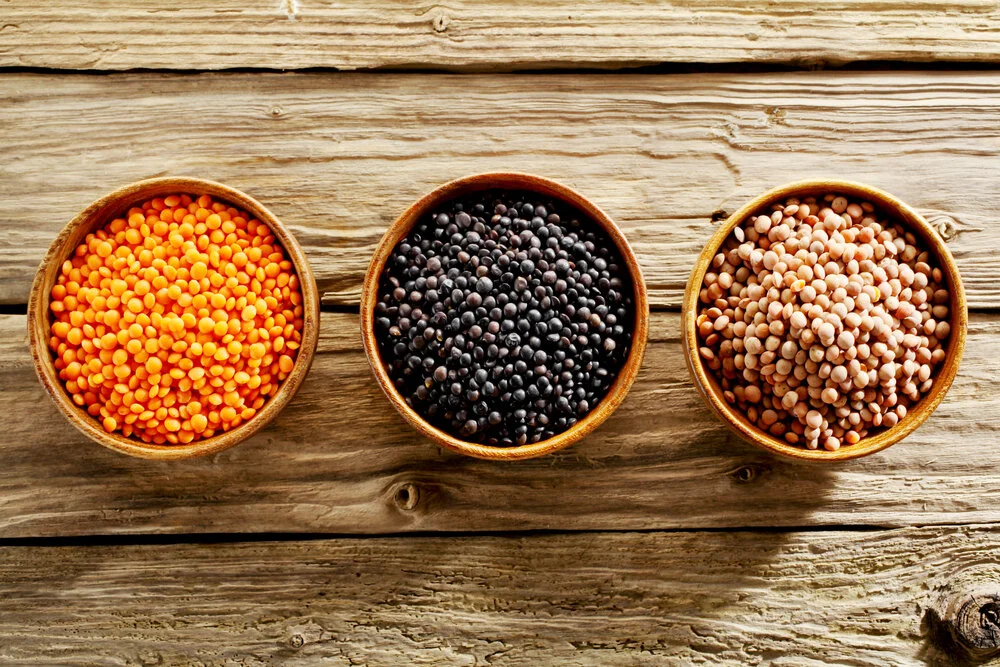
Poop like a champ
Fibre is the superstar that brings you washroom heavyweight titles. It bulks up your stool to make it easier to pass; it hangs on to water to soften your stool so that you can have an easier (and shorter!) time on the throne.
If your stool tends to be on the less-solid side of things (sorry for the visual), then fibre can also help you keep it all together, binding it to make it a better toilet experience for you.
Note that the addition of fibre for the benefit of improving your poops only works when done in tandem with adequate water intake.
So make sure you are reaching for water or herbal teas often during your day in order to make this fibre work for you and not against you.
AS IF THAT WASN’T ENOUGH…
Fibre also hangs on to spent hormones and waste products from your own body's inner workings that your body is ushering out. As your body packages that spent metabolic waste and spent hormones, it ushers it out in different ways, mainly re-packaged as bile made by your liver. (Your body is the ultimate reuser/recycler!)
That bile is meant to help emulsify fats (break them into smaller globules to make it easier for your enzymes to get at), and provides a big portion of your stool. If that bile/poop stays too long in your gut, those toxins found within end up getting re-absorbed into your body. This then re-circulates those spent hormones and metabolic waste, and your body has to work at filtering them out again. This means double-workload for your liver and your detox pathways in the body.
Where this poses the biggest threat: estrogen.

This hormone is only meant to be used once, but when recycled (due to slow motility in the gut, read infrequent poops; also, when not bound to the insoluble fibre) it starts to concentrate and can now contribute to hormonal imbalances in the body.
See, when it hangs out too long in your gut, it gets re-absorbed in to your bloodstream if you aren't moving it out fast enough.
From there, it heads to the liver. Your liver starts to slow down because its workload just got doubled, and as you can imagine, that excess estrogen makes the rounds again and again if not moved out properly.
Estrogen dominance is a real issue: with an excess of estrogen in the body, you could be at higher risk for hormonally-related acne, added contribution to PMS and menstrual complaints, and reproductive cancers for starters.
It is imperative we bulk up our stool and build our bile so as to bind to these fat-based hormones and usher them out the poop shoot once they’ve done their job, in order to reduce our chances of developing those dangerous hormonally-based cancers.

GUT LOVE
Fibre also provides important food for the good bugs in your gut! It's why they call it a prebiotic: the food that feeds the probiotics.
We can't break this stuff down, but the bugs in your gut can. They love this stuff!
See, in order to look after your intestines, you need to look after the bugs that reside there. (Hopefully you are already eating fermented foods; this is the best way to go about it. It's a pretty important part of my practice. Get the full low down here.)
If they're fed, they'll be happy and multiply, keeping your intestinal health in check and working in tandem with your immune system to promote optimal health.
These good bugs also help to build stool and facilitate the passing of said stool. So ferments plus fibre and water? A winning combo.
It wouldn't be a stretch to say that by adding some good fibre in to your diet then, you would be working on reducing inflammation and contributing to healthier blood pressure levels. You'd be moving toxins and spent hormones out much more efficiently, pooping like a champ.
A happy coincidence: those foods that are high in fibre are also high in other important nutrients like vitamins and minerals we need to keep our engines running clean.

Pre-soaking your pulses deactivates nefarious enzyme inhibitors and phytic acid that can negatively impact your body's ability to digest.
IT’S ALL IN THE PREP
One of my favourite little tricks to add fibre to my family's way of eating is to make this blitzed pulse paste.
The gist: you prepare any kind of pulse you have on hand be it lentils, beans or split peas. You blitz the cooked stuff into a paste and pop into an ice cube tray, freezing the lot. Pop those cubes out when they're ready and tuck into a container or freezer bag, and pull one out to add fibre to your meal! Pretty easy.
You can do this with canned beans if you like too, but know that there is an estrogen-mimicker hiding in the lining of those cans, the dreaded BPA. Using canned beans might negatively contribute to your estrogen levels, so best to do this practice with pulses you have prepared from the dried stuff.
THE HOW-TO
Pre-soaking your pulses will make them easier to digest, turning off those enzyme inhibitors and phytic acid that could be negatively contributing to your body's ability to digest them. (Remember the story of the fox? That explains it in greater detail.)
This recipe is for lentils, split peas and beans. Only do one kind at a time!
It’s easy to double/triple/quadruple this recipe, as long as you have a big enough pot to cook them in.
Measure out 1 cup of your pulses, and rinse under running water. Pick out stones and debris.
Pop your pulses into a 1L glass jar.
Top with filtered water until covered by at least 2 inches.
Add 1-2 tbsp of either apple cider vinegar, juice from a ferment, or lemon juice. (This helps break down nefarious things) Put a lid on it.
Leave on the counter for 12 hours, adding more water if it gets absorbed.
For beans and split peas, drain your water and go through the same process again, soaking with filtered water and apple cider vinegar or juice from a ferment or lemon juice for a second 12 hours. Lentils only need 12 hours.
When your soaking time is up, drain your pulses.
For lentils, cook on a simmer in 3 cups of filtered water for 30-40 minutes, depending on the type of lentil, until cooked to your liking.
For beans and split peas, cook on a simmer in 7 cups of filtered water for anywhere from 1 hour to 4 hours along with a piece of kombu/kelp seaweed, until cooked to your liking. Check often to see if they're ready. Make sure to add more water if it is starting to dry out.
Drain your pulses well, add a touch of salt. Allow to cool a bit.
Add your cooked pulses to a blender or food processor and process until into a good paste, adding water as needed to reach your desired consistency (I like it rather thick).
Pop this paste into an ice cube tray and tuck in the freezer for 2-3 days.
Pop the ice cubes out into a container of plastic freezer bag.
They are ready for use!
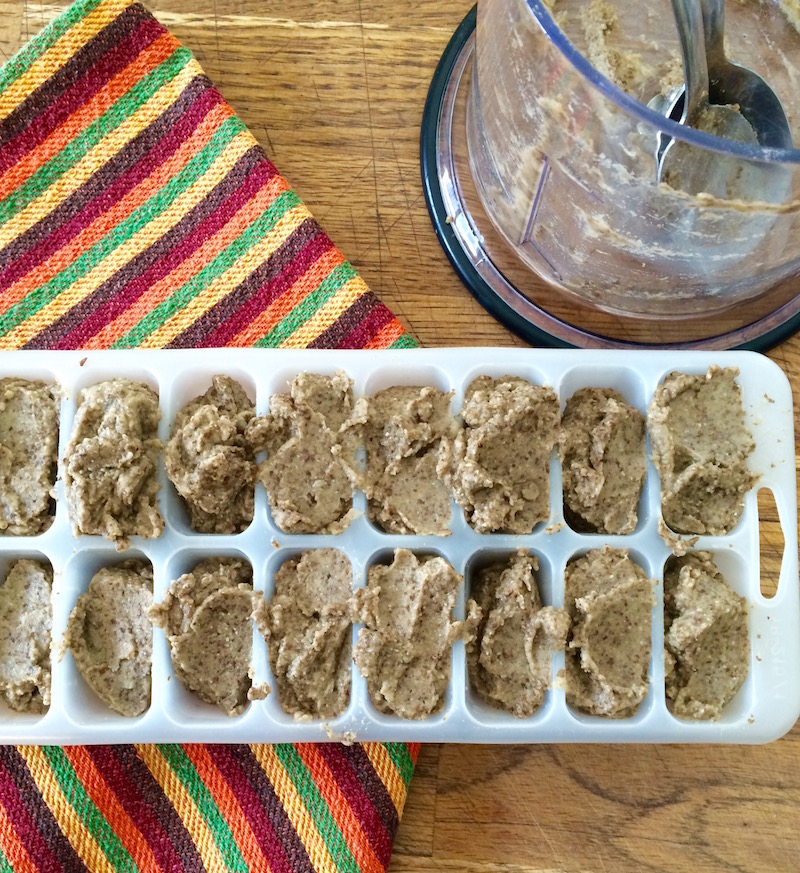
These were puy lentils, but you can use any lentil, bean or split pea here.
I just like to say it: blitzed pulse paste cubes.
How you use them is limited only by your imagination.
Throw a few cubes in to your soup as it cooks, your spaghetti sauce, chili, whatever kind of sauce you have going on that could use a little bulking up.
Add some to thicken your gravy perhaps (not sure how that would work, but just an idea.)
Pan cook with some onions and chili powder for a yummy refried beans kind of side dish!
Toss some in your omelette in the morning to set the tone for the day.
Opt to not salt them and toss a cube or two in to your smoothie.
Add some to your favourite dip, hot or cold.
Make a five layer dip with this paste as one of your layers, salsa, guacamole, sour cream and grated cheese for a delicious hot summer night's treat when friends come over to play cards!
Defrost a cube to spread on a tortilla as a base for a yummy nutrient-dense wrap.
I often like to toss leftover meat with leftover veggies in a pan and serve on top of salad greens for a quick lunch. Why not throw in a cube of this blitzed pulse paste in at the same time and a cube of pesto to add flavour! Delish.
I love how 2016 has been designated the International Year of Pulses. So apropos.
How would you use these blitzed pulse paste cubes?
Share in the comments below.

THURSDAY BASICS: love your immune system.
Without fail, the colder weather creeps up on us as it does this time every year. And with the temperature dropping, we often start talking about taking care of the ole immune system. Let's cover some basics today, and talk those easy things we can do to love up our immune system.
Click on the image for a full rundown on the ways you can support Immune Function.
#tbt day here at #goodfoodHQ, time to dive back in to the #mondaybasics series of 2016.
As the colder climes set in, so our attention usually turns to this trend of waning immunity. It doesn’t have to be so, you know?
LOVE UP THE IMMUNE SYSTEM.
COLES NOTES:
1. Learn the five key points to supporting your immune system. (Guess where ground zero for immune system lovin is?)
2. Garner a deep understanding of why stress/trauma/worries can tip the scales when it comes to immune health.
3. Learn which foods help, and which hinder in the picture of immune system support.
This is about your foundation of health. It’s a long one - I’m pulling this in to a full class in the new year. Keep your eyes peeled for that. Better yet, sign up for my newsletter to get in on the action first-hand!
Without fail, the colder weather creeps up on us as it does this time every year. And with the temperature dropping, we often start talking about taking care of the ole immune system. Let's cover some basics today, and talk those easy things we can do to love up our immune system.

Your immune system does so much for you: it, along with your gut, is your foundation to good health. Let's go over the components you can put in place that are essential to immune health.
FIVE KEY COMPONENTS ESSENTIAL TO IMMUNE HEALTH
Look after your gut
Eat Real Foods
Prioritize sleep
Reduce stress
Reduce your toxin load
Let's break these down in to the practical, shall we?
LOOK AFTER YOUR GUT
You gotta love your guts. See, there are estimations that roughly 70% of your immune system resides in your gut. The two work hand in hand in keeping you well, in keeping potential harm at bay and moving it out in a timely fashion so that you can get through your days.
It is your immune system that acts as your main line of defense against everything you come across, from cuts and bruises to incoming pathogens like bacteria and viruses. It has a pivotal role in keeping cancer at bay.
This part isn't news to you; what might be news is how intricate the connection is between our gut and our immune system.
The good bacteria living in your gut (called your “microbiome”) have developed intricate interconnections with your intestinal and immune systems; they help calibrate your immune system so it is working in tip top shape, able to recognize what is 'you' and what is 'other'.
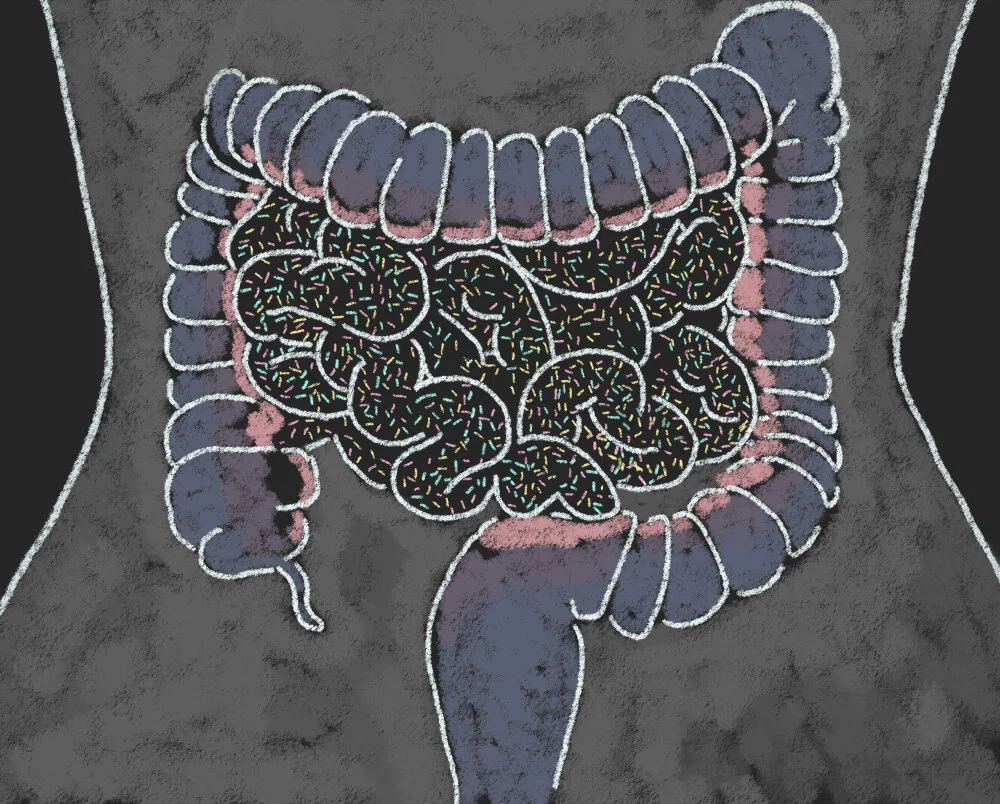
Your microbiome plays a big part in regulating overall body inflammation, starting in the gut and radiating outwards to all of your organs and body systems. Those little bugs? Well they are also key players in supporting overall immune health.
As we embark on this new season where we are finding ourselves more indoors than out, it is imperative we give our immune systems a little support by looking after our Good Gut Guardians, our microbiome.
THE GOOD GUT GUARDIANS
There are a few good ways to repopulate your gut with those healthy bugs: a good place to start is by slowly introducing live or raw fermented foods into your diet. These foods contain the 'good bugs' that contribute to keeping your microbiome in good stead. Think probiotics, only in food form. And when those things come via foods, they are part of the traditional ways our ancestors before us would have had them, and ways our bodies will be able to assimilate.
One of the key components then to loving your gut, is to make sure you get some fermented foods into your belly. They'll take care of the rest. (If you are new to the idea of fermented foods, look to this article for a comprehensive look at how to go about it.)
FEED THE GOOD GUYS
We also need to provide your body with those foods that will best fuel the cells of your intestinal lining. Ensuring these foods on a regular basis will go miles in supporting your immune system, and reducing overall inflammation.
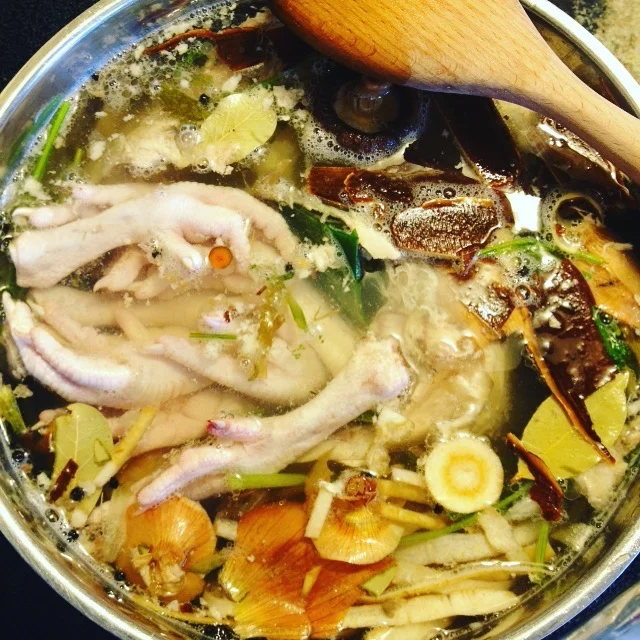
My top pick? Why it's my good friend, Mrs. Meat Stock! Look for a full write-up including a recipe at this fairly recent post.
Next up, you'll find butter on the list of foods. While I love it for the nutrients it provides to your immune system for optimal function, I also looooooove the nutrients it provides to your intestinal lining, ensuring integrity in this very important area. Plus it's delicious. Check in here for more reasons you can love butter. (You're welcome.)
FIGURE OUT WHAT’S OFFENDING
Food allergies and sensitivities place a stressor on our immune system. It is important to look into what foods are contributing to a negative impact on your digestive system, and do that work to support the gut lining and improve your body's ability to digest, in order to reduce the impact of food sensitivities and allergies on your immune system. *Get in touch if you’re trying to figure this piece out. I’ll be your ally.
Gut love is where it's at, my friend.
EAT REAL FOODS
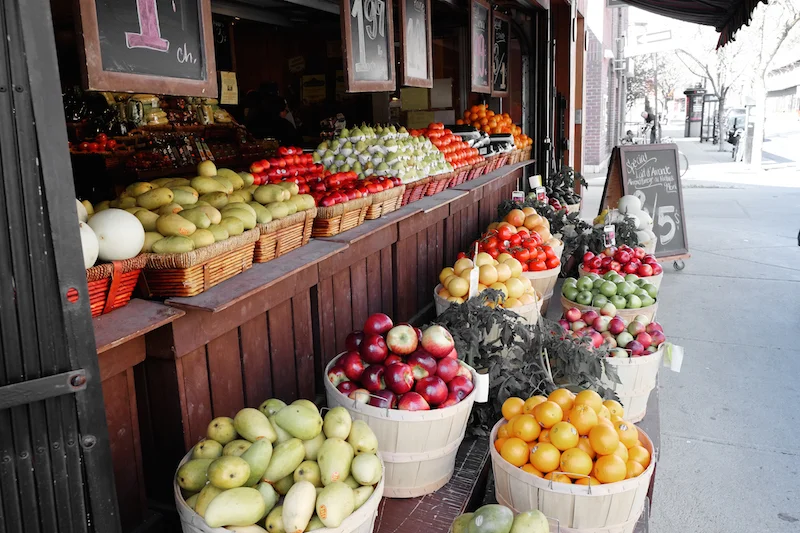
There are loads of nutrients that offer targeted support to your hardworking immune system. Protein is one of those key foods, providing the building blocks that are being assembled for the response when there is a perceived threat at hand. Reaching for good quality protein is important.
If you're able to, ensuring your animal products come from animals that were raised on pastured will afford your body a better complement of nutrients to help support the immune system and lend a protective effect to the gut. Look for a more in-depth article on the importance of sourcing your animal products from grass-fed sources here.
FOODS + NUTRIENTS TO ADD IN
In the same vein, ensuring good quality wild-caught fish will best serve this system. Both the pastured meats and wild caught fish will also provide an excellent source of those all-important Essential Fatty Acids. Read up on the hard work these nutrients do in the body here, and how they play an essential role in your body's immunity.
There are so many nutrients necessary to proper immune function. I would rather you get hung up on the foods that will best support your endeavours though, instead of trying to micro-manage what you're getting and what you need to get. If you are looking for a more focused approach on micro-nutrients, this is where the help of a Nutritional Consultant may be of benefit. (Get in touch!)
I have pulled together a list of foods I would recommend, providing your body with important micronutrients necessary to immune function, but also abundant in nutrients supportive to the intestinal lining. Eat the ones in bold more often, and make sure you're reaching for the others on a regular basis:
cod liver oil
garlic and onions
organ meats
avocado
asparagus
all berries
beets
brussels sprouts
cabbage
carrots
cauliflower
cinnamon
cranberries
horseradish
kiwi
lemon
oranges
oysters
papaya
pineapple
sardines
shiitake mushrooms
thyme
wild caught salmon
pumpkin + sunflower seeds
FOODS TO TAKE OUT
Reducing your intake of simple sugars and refined carbohydrates will serve you well, as they suppress your immune system. I remember one of our profs in school, a local Naturopathic Doctor mentioned one teaspoon of sugar ties your immune system up for eight hours. EIGHT. HOURS. !!!!
While I can't find the exact study that explains this on PubMed, I did find this article that would support the notion.
I think it's important to note here that I would also lean towards the idea of regulating your blood sugar levels, which would of course involve curbing your intake of refined flours and simple sugars. I would also add you need to look at consuming some good fats my friend, to help balance those sugars. Read here if you want to explore the concept further.
And hey, want help on the real food front? I have a program for that.

PRIORITIZE SLEEP
I have written a lengthy article about the benefits of sleep. In it, I talk about how important it is to make this a priority, as it is where our body's repair and rebuilding work happens. Look for that article here, along with some good tips on how to achieve better sleep.
The take-away?
Aim for at least 7-9 hours a night. Turn your cell phones to airplane mode, or better yet, take them right out of the room. Get some serious black-out curtains. Reduce your exposure to electronics in the last hour before beddy-byes. Sleep like a baby.
Nay, rather more like a teenager.

REDUCE STRESS
I know I know, sometimes by just saying' reduce stress!' the end result is we've ramped it up. But you really should know that science indicates (as do your memories of exam days whilst in University if you go back!) that stress really does weaken the immune system. It's really important to keep a positive frame of mind to help support your immune system.
One of my top recommendations is to GO HAVE SOME FUN. Prioritizing the good times can play a pretty big part in bringing down stress, and have a protective effect for your immune system.
Here is my favourite list of ideas for you, may you find one or two that resonate:
go for a walk – everyday! (so simple. So good.)
head out to a cafe to play cards with a friend or honey
host a games night with friends and neighbours
find the comfy chairs at the library and settle in with a good book
start a book club
visit a nearby town and check out antiques or farmers' markets
schedule a little me time (self care is the best!)
soak in the tub; make it an epsom salts soak, bonus points!
take your littles (or your friend's littles!) to the park or an indoor water park
downsize your commitments (Simplicity Parenting by Kim John Payne was a huge book for me that helped me figure this one out)
start a garden
join a yoga class
take up pottery like you always meant to
check out a comedy night in town
check out some new local music, head out to a local club
have a movie night with the fam
take a cooking class
get season's tickets to one of our fabulous theatre companies or orchestras in town
schedule in regular date nights. In pen. Don't back out.

REDUCE YOUR TOXIN LOAD
I love that you've read this far. Let's get to this one last important component in supporting the immune system.
Toxins in your life, be they from toxins you ingest through your skin via personal care products or compounds found in the air you breathe, toxins found on our foods, toxic thoughts even, or toxins produced in our bodies via regular metabolic functions, they all add up to compromising our immune function. You can add in here the toxins produced in your body from the interactions you have with the toxic people in your life.
Ugh. Sorry.
Here is a start for ideas on how to reduce your toxin load:
consider stopping smoking
start your day with a glass of water with lemon to support liver's detox
consult the Dirty Dozen and Clean Fifteen to reduce exposure to pesticides and herbicides
change your furnace filter on a regular basis
open your windows in the car when you first get in to help air out dangerous chemicals emitted in that 'new car smell'
place a few houseplants in different areas of the home to clean your air
OK gang. What are the five main points for immune lovin again?
Take care of your gut.
Eat Real Food.
Sleep like a champ.
Destress like a three toed sloth.
And reduce those toxins.
Do what you can. Baby steps. One thing at a time. You got this.