
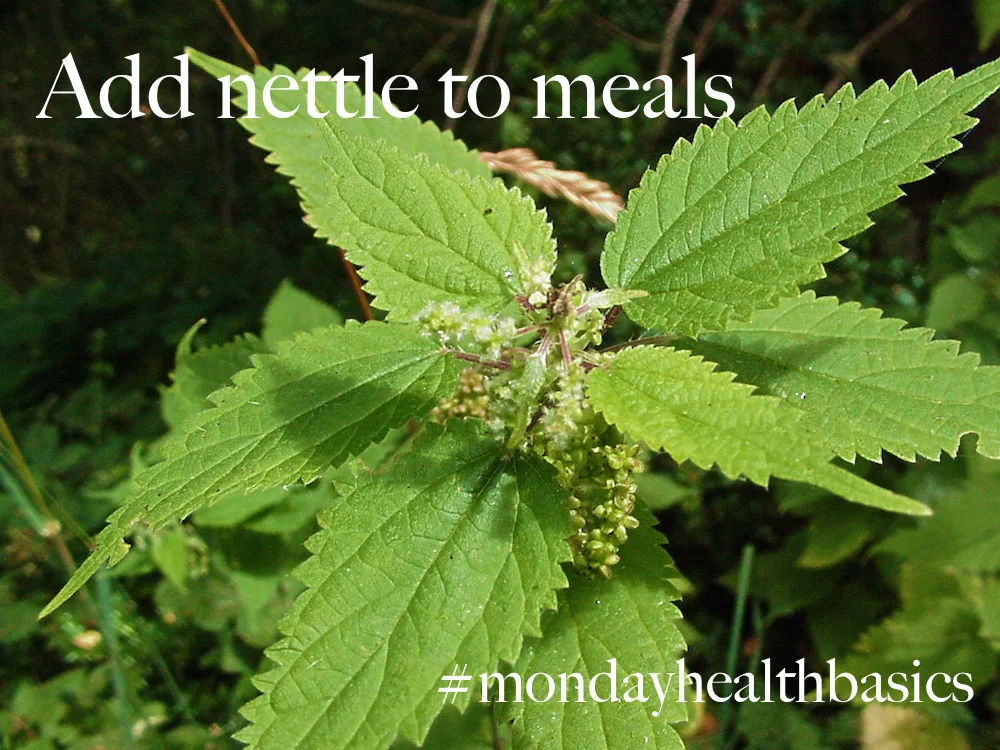
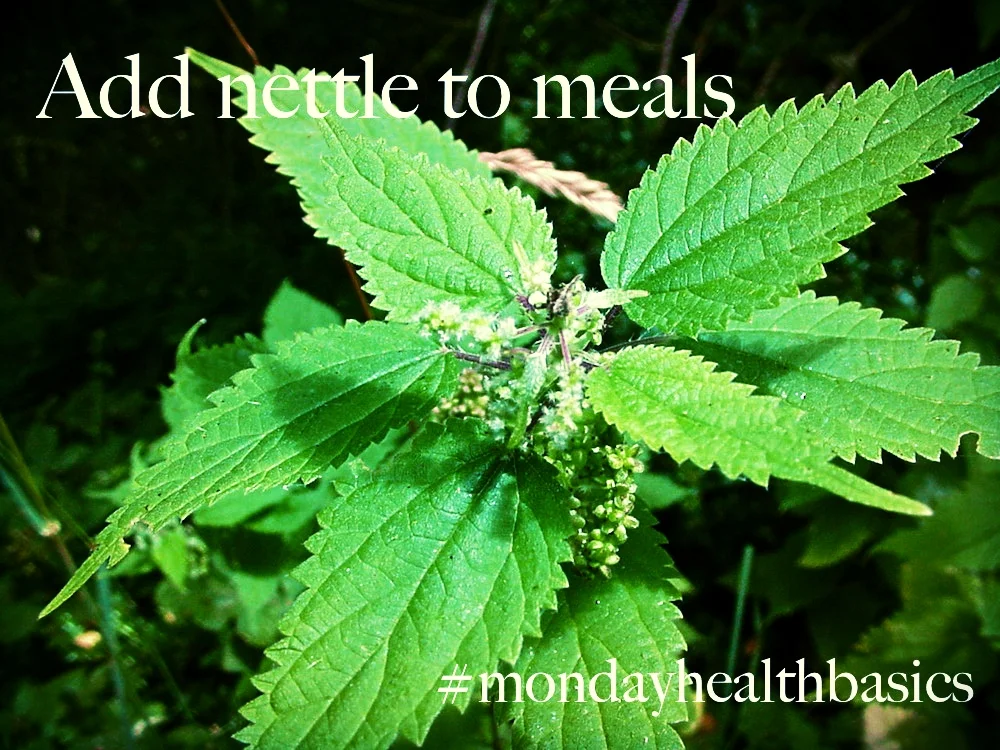
THURSDAY BASICS: Add Nettle to Meals
Welcome to Thursday. This week’s throwback blog arms you with an idea on how to get to Level 400 of Holistic Nutrition: add in the nettle. For the love of all body parts + systems, won’t you?
Click on the image for a full exploration of why + how to introduce nettle into mealtimes.
#tbt day here at #goodfoodHQ, as we look back on the #mondaybasics series of 2016.
Today’s post is kinda Holistic Nutrition Level 400. Wanting to up that nutritional ante on a day to day basis, adding in something that will benefit all your body parts?
ADD THE NETTLE.
COLES’ NOTES:
This is about increasing the minerals in your day to day.
It’s also about harnessing the power of Ma Nature - this stuff grows everywhere + is wildly prolific! Talk about loving us up.
Read on for tips on how to use it, where to find it, and why you may want to!
This is one of those fundamental changes that will slowly and irrefutably support increasing your digestive fire, reduce inflammation, support immune function and love you up from the guts on out.
Kick chronic disease to the curb, friend! Tell that histamine that YOU are boss! Nettle it up.
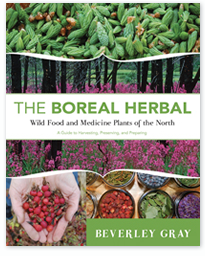
My week got off to a roaring start with a thoughtful gift from one of my sisters, a book from boreal herbalist wunderkind Beverley Gray called The Boreal Herbal: Wild Food and Medicine Plants of the North – a Guide to Harvesting, Preserving and Preparing.
Oh the joy. Oh the possibilities! (I am so lucky to have two awesome sisters. I love them so!)
See, I am a forager at heart and as I dig a bit deeper into our family's history, I realize I come by this quite honestly. My paternal grandmother was quite the herb gatherer; and the grandmothers that came before me and her, they always worked foods from the wild into their meals, cups of tea or in the every day.
This book has been on my radar for years since a good friend shared the knowledge within. But leafing through this new tome to my collection last night got me dreaming of things I want to uncover in places near by.
As the book cover suggests, “(this) is an indispensable guide to identifying and using northern plants for food and medicine.” In this book you will find profiles of plants, berries, herbs and trees that will help you identify them in the wild.
These profiles will help you figure out how and when to gather and preserve these goodies, with safety tips. You'll find lots of recipes and how-tos with detailed information on how best to gather these medicinal foods and make the most of the plants growing wild in the recesses of your back yard to the more remote spots found in nearby wilder areas.
Leafing through the book last night, I zoned in on the Stinging Nettle, or Urtica dioica. Yes yes yes, the same plant that gives you the very intense zing-like needling you would experience were you to chance upon a patch without knowing it. (Found that out time and again while exploring the English and Irish countryside a few years back!)
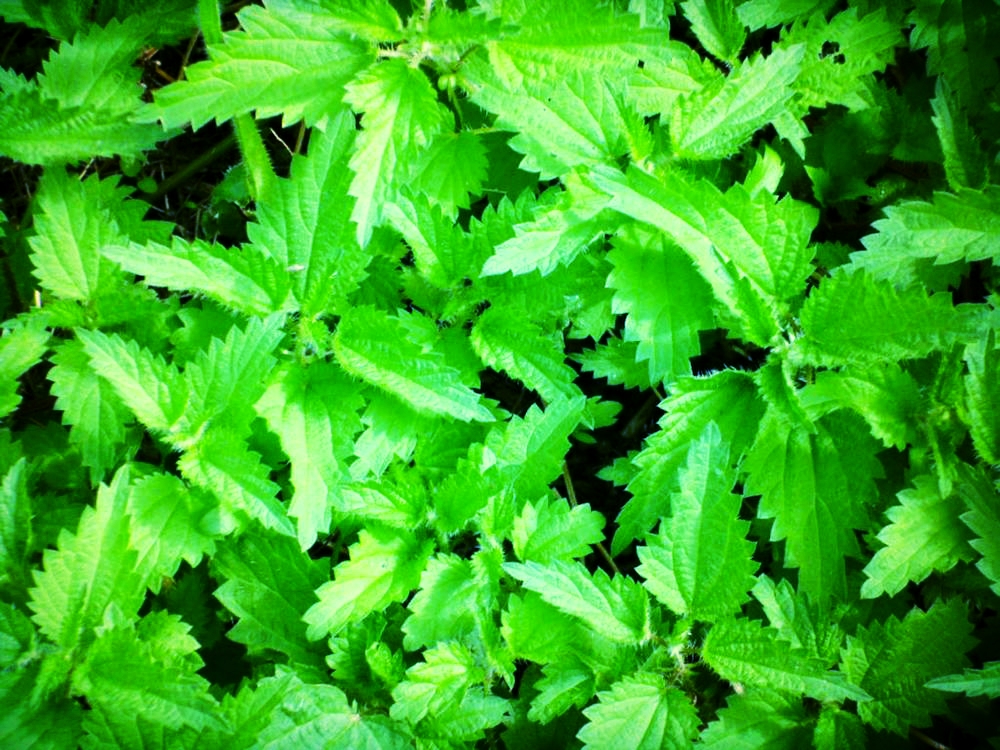
This perennial plant runs wild in almost every nook and cranny of this planet where there are wetter areas or where the soil has been disturbed. It loves rich damp soil. And when spring seems to be just around the corner, it will be one of the first wild plants that will pop up for early harvesting. But don’t think you need to be a harvester to get in on this nourishing action!
I love nettle for so many reasons: it grows wild and can be found quite easily if you know where to look and what to look for.
It's a super green, providing a rich source of iron (we need for energy and oxygen transport in our bodies) and silica (a mineral necessary for our body's structural force so think strong bones, nails, skin and hair).
It's a power house of vitamins and nutrients, a good source of vitamin K, magnesium, chlorophyll, vitamins A and C too. My favourite thing in nettle is the high calcium content: 1 cup will supply your body with roughly 40% of this important mineral for the day! All of this to say that nettle is a food that will promote the good health of bones and teeth, my friend. And these things we need strong for this world, yes?
The Boreal Herbal book explores the folklore behind this nutrient-dense herb, stating it is a blood purifier. It's purported to help your kidneys and liver. There are new studies looking into the efficacy of this herb in the treatment of BPH (benign prostatic hyperplasia), a non-cancerous growth of the prostate gland. So fellas, this one is for you too!
This herb is a fabulous anti-histamine herb, and as such would be of tremendous support for anyone dealing with allergies or the kinds of reactions we would associate with hayfever like itchy watery eyes.
HELP NOURISH TO COMBAT CHRONIC INFLAMMATION
My favourite superpower of nettle: the leaves have also been shown to help combat inflammation. This translates that those who struggle with arthritis or gout, eczema or psoriasis, cardiovascular disease, Type II Diabetes, any of the degenerative nervous system diagnoses or mood related diseases, truly any chronic disease of any kind (including autoimmune!) would do well to add to their daily regimen.
Nettle has a diuretic effect as well, so if you are someone who tends to retain water, this would be a good herb to add to your arsenal. Love your kidneys and lymph up, my friend.
Some companies have added it to their hair care products in order to help control dandruff. There are even manufacturers out there who have figured out how to utilize the fibres of the plant to produce textile. Fabric! All because of how easily and prolifically it grows. (Some folks call this a weed. A weed to you is a herbal delight to me.)
WHERE TO FIND THE GOODS
Now not everyone is up for hiking through dense marshy areas in search for this perennial herb. And fair enough. (I am not a super experienced forager, so I will forego sharing any tips or ideas on how or where to find nettle. I don't want to send you in the wrong direction or fail to give you the full and complete information you would need to ensure the plant you have in your hand is indeed the nettle plant. Plus, I don't want you to get hurt. BUY THE BOOK. It's about all I can say.)
So where would one find this amazing herb then, you ask, should one prefer to go the surer route? There are quite a few favourite local haunts where I have seen them on the shelves, or where I have purchased bags of the good stuff. Make sure to check your local favourite health food stores like Amaranth, Community or Blush Lane. You can also pick some up at The Light Cellar next time you're in Bowness.

Dry nettle leaves
HOW TO CONSUME THE GOODS
I'd forego trying the stuff raw. Imagine it stings you. While you're chewing. I'm just not that much into extreme food sports, you know? I mean they're called stinging nettles for a reason: there are hairs on the plant's stems and leaves that, when they come into contact with your skin, well they STING! And that feeling is just not pleasant.
But once you cook them, that stinging property disappears and you are left with a wonderfully dense, nourishing green that will provide your body with the good food. One of the easiest ways to consume the benefits of this herb is to steep it in a tea. Just toss the lot in with some water, and simmer for a short time if you prefer a weaker tea, or go ahead and let it simmer for longer for a deeper greener taste. I myself like to throw it in with other herbs in my thermos for the day's tea, depending on what I have in my pantry or what organ I want to support at that time. Nettle is always in the mix, every single day.
If you go digging around the internets, you'll find some wonderful recipes like this Potato, Golden Beet and Nettle Soup that sounds scrumptious. The good folks at The Kitchn have compiled a comprehensive list of recipes for clever ways to consume nettle in things like pestos, pastas, pies and pizzas here. You'll also find a wonderful compendium of recipes featuring this herb at a website solely dedicated to the health properties of Nettle.
I'm not so calculated, I tend to cook from the hip. I throw a handful of dried nettles in lots of things from meatballs to soups and stocks; I've been known to throw some in with the ground beef or bison I'm cooking for a taco salad or add it in to spaghetti sauce or a chili. Anywhere you want a little more green, my friend. It's as easy as that. Toss it in with your morning egg scramble; add it to the shredded sweet potato pancakes you have on tap for dinner tonight; simmer them a bit in a cup of meat stock for snack time; add it to your herbal profile when making a bouillon salt; add it to the greens you're cooking up for a yummy Palak Paneer; throw it in with the vegetables in your next ferment.
Whatever you do my friend, you best
GO PLAY WITH YOUR FOOD.
THURSDAY BASICS: Batch Cook.
This week's Thursday Basics idea is one that I have implemented in my weekly approach to making meals an easier and more attainable task, and has evolved over time. In the last six or seven years, I have slowly winnowed out packaged and prepared foods from our family's regimen and have been aiming for more and more whole foods from scratch. It all started with my few years of working in the kitchen at my daughter's school, helping to prepare the school's hot lunches. Batch cooking is really at the heart of making meals for large groups, and some of these tenets can be taken into your own kitchen, albeit on a much smaller scale.
Let me save you that five years' of ruminating I did, and skip to the good part. BATCH COOKING ON THE WEEKEND. In do-able chunks.
#tbt day here at #goodfoodHQ, as we look back on the #mondaybasics series of 2016.
This week’s missive is about making your kitchen work FOR YOU. This blog post has now morphed into one whole module in my new program, the Real Food Reset. It’s the practical side of things!
BATCH COOK! 🍲🥘🍵
COLES NOTES:
1️⃣Maybe a Big Cook is in your future.
2️⃣Maybe a mini version of the Big Cook.
3️⃣Or may I propose we keep it simple, and you aim for one batch item a week?
In the interest of keeping it real and meeting you where you’re at, think about doing one batch item a week. It is one of those essential practical things to put in place where older you will reap the benefits of younger (and wise!) you!
#mondayhealthbasics: batch cook.
Monday Health Basics: a weekly blog post where we explore simple things to add, in order to support ourselves to aim for optimal health. If you're new to the blog, or curious to peruse the other posts on the subject, might I recommend you click on the tag at the bottom that says “monday basics”? Good fodder there to get you started.
This week's idea is one that I have implemented in my weekly approach to making meals an easier and more attainable task, and has evolved over time. So let’s talk BATCH COOKING!
In the last six or seven years, I have slowly winnowed out packaged and prepared foods from our family's regimen and have been aiming for more and more whole foods from scratch.
It all started with my few years of working in the kitchen at my daughter's school, helping to prepare the school's hot lunches. Batch cooking is really at the heart of making meals for large groups, and some of these tenets can be taken into your own kitchen, albeit on a much smaller scale. Let me save you that five years' of ruminating I did, and skip to the good part.
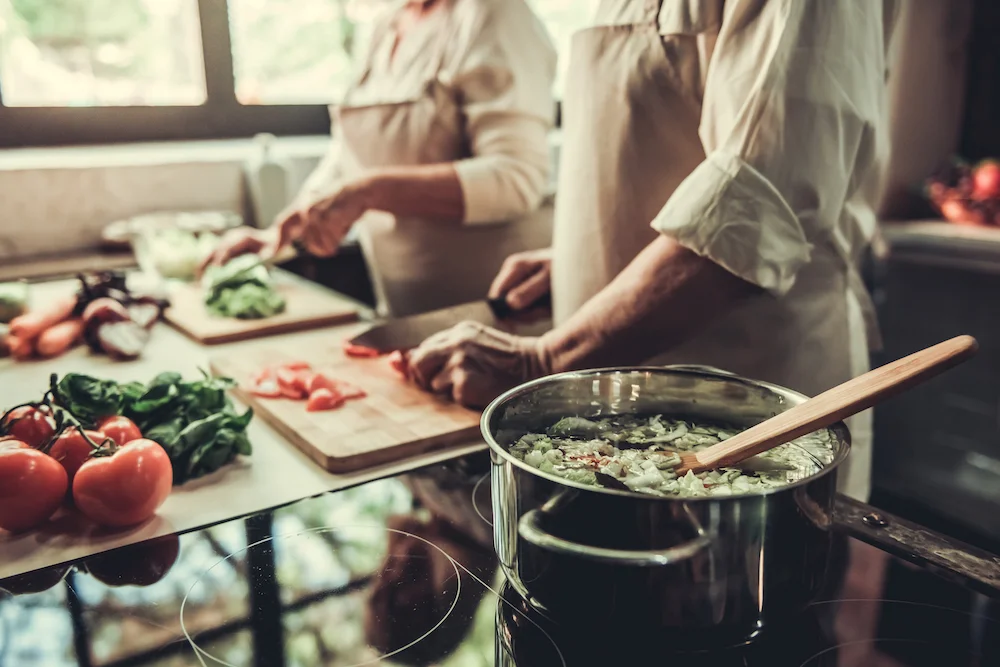
The concept of batch cooking might not be as foreign to you as you think. Some people call it The Big Cook, others get a gaggle of friends together to make a shwack of meals (yes, that's the technical term) for everyone to divvy up and take home.
I participated in one of these group sessions for meal making, and it was a breeze. We decided on the recipes before hand and sent our grocery list to the woman hosting, and then spent that whole day assembling meals in foil containers and freezer bags. We each took home two full family-sized servings of every meal that was pulled together that day. It was amazing!
I can't imagine how much organizational work went in to it on behalf of my superstar friend organizer Cindy, but it truly brought such a fabulous group of women together, and we all ate better for those next few weeks, let me tell you. It was a gargantuan grocery bill as you can imagine, but we all divvied up the cost and the labour, and if you can add 40 family-sized meals to your freezer for the coming days and weeks with only one day's work, I'd say you're way ahead of the game. Thank you for that memorable day, Cindy.
I have joined with friends since then to do mini versions of this big cook idea, and had great success. It really does make meal prep in the ensuing weeks immensely easier. I'm up for anything that takes a load off and makes things easier.
KEEP IT REAL
I don't know about you though, but I can't sustain a day or a full afternoon of batch cooking every few weeks. I simply don't have the time, unfortunately. And so I have winnowed this idea down over the course of these last few years, to make it an accessible task for myself when it comes to meal prep for our family.
I aim to do one batch cook prep item per weekend for the week's meals ahead.
How I come to choose which item, well that depends on a few things. Some weeks, I will pick an easy enough condiment that will be the base of many of the coming week's meals. (Mayo anyone?) I have been known to prepare big batches of lentils, nuts or seeds and allowing them to pre-soak in order to deactivate anti-nutrients. Doing a whole shwack (see a pattern?) means I only do it once for a bevy of meals down the road. And yes, I have two freezers.

Making a double or triple batch of Butter Chicken is a great batch item!
When out for groceries for the week's meals, I sometimes come across some incredible savings on produce and so stock up. Once back at home, I tuck these discounted veggies into bags destined for the freezer. Other weekends I may have a pot of meat stock happily bubbling on the stove for meal plans in the week ahead. It really all depends what I have going on, or what kinds of things I need to stock up on.
And so today, my food-loving friend, I wanted to offer my suggestion on how to make this whole-foods journey a bit easier, and a more manageable task. Every weekend, I think of one thing I need to make in order to make the coming week's supper time a more manageable task when it comes to preparing food for my family. Below, you will find my list of ideas; click on the titles to find spots online for recipes or how-to.
To be clear, just choose one thing to make on the weekend!
Next weekend, it will be something entirely different. But slowly, over the course of time, you will be building your resources and stock piling some delicious offerings that will help make mid-week meal prep an easier task. I'd love to hear what kinds of tips you can share that have worked for you!
Easy One Batch Cooking Ideas
for weekend planning to ensure ease of meal making in the week ahead (click on items that interest you for full instructions and how-to)
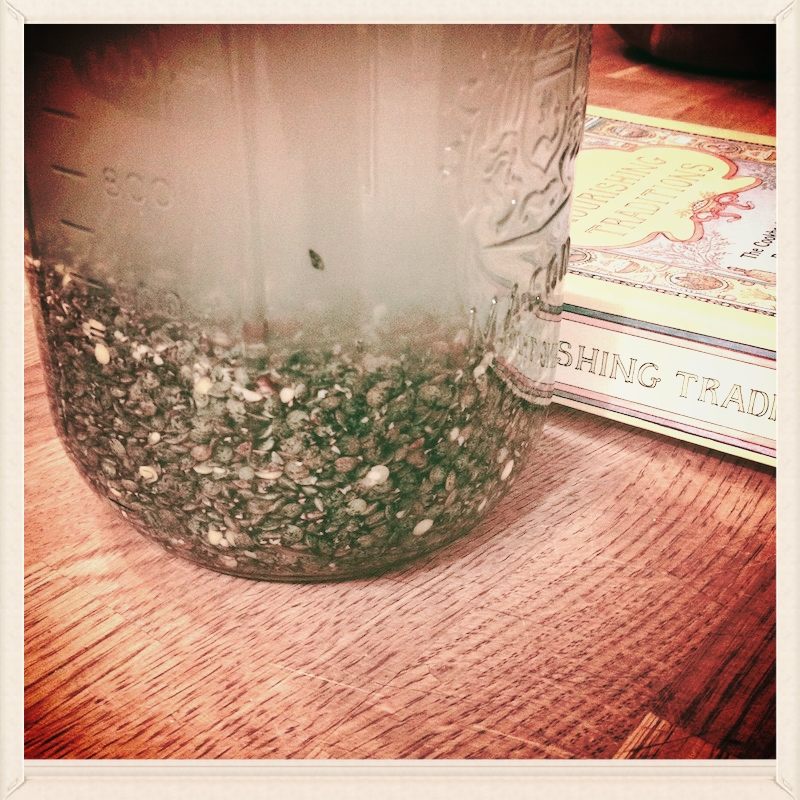
Pre-soak 8 cups of lentils for 12 hours along with 2 tbsp apple cider vinegar, drain then cook 40 minutes or until cooked to desired consistency. Tuck in smaller portions in freezer bags for future quick protein for salads, soups and lunch bowls. (Follow this link to find more info on how to properly soak & cook beans and legumes)
Make a big batch of pizza sauce and freeze in ice cube trays for easy retrieval on pizza night
If you are planning to order a side of beef or pork, ask your farmer if they would sell you the fat from the animal and intend to make a batch of lard or tallow (couldn't be easier!)
Make a curry paste from Jamie Oliver's fab set of recipes, and intend to use it up in myriad ways in the coming weeks
Have milk going bad soon? Make your own yogurt!
Go the easier route with dairy that is going off (or that 50% whipping cream at the grocery store). Make a big batch of creme fraiche! It will extend the shelf life of your dairy by at least 3 weeks.
If chicken is on sale, consider throwing it all in your slow cooker with a 1/2 cup of water for 8 hours on low. Shred the meat off of the bones and tuck in freezer bags for quick protein additions to later meals, and save the stock that has gathered. Delicious.
Make a batch of meat stock - great base for all kinds of meals.
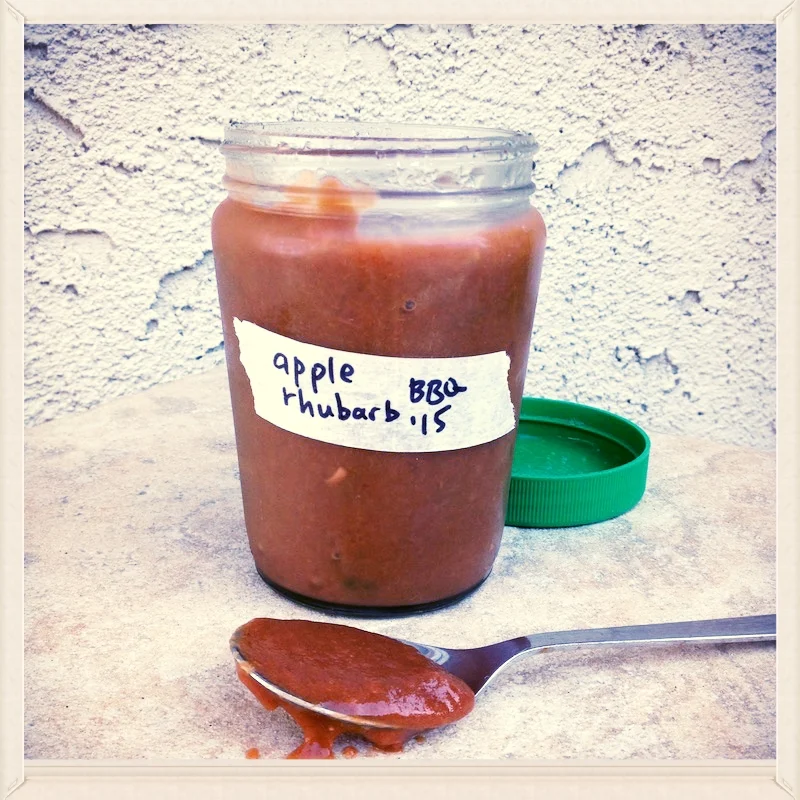
Make a homemade ketchup or BBQ sauce (bonus points if you try your hand at fermenting them!)
Homemade bread is so much better than store bought. Whip up this batch of Artisan Bread in 5 minutes a day, and it will keep in your fridge for up to 12 days. You need only pull out enough to make a loaf, tuck the rest in the fridge for later that week.
Double or triple a big batch of soup or chili on the weekend, and tuck into individual-sized containers in to the freezer for quick lunch grabs or dinner re-heats on hockey night.
Greens getting wilty in the fridge because you never got around to them during last week's dinner intentions? Get some fresh herbs and make some pesto or chimichurri by replacing half of your herbs for those wilty greens
Making your own mayo is infinitely easy and serves as a great base for flavours in this week's meals. Look for some great alterations to standard mayo recipe to dress up the next days' meals here.
Make a big batch of easy homemade kale chips
Pre-soak and sprout one kind of nut or seed at a time, and dehydrate. Do this in as big a bulk you can afford and have room for, and tuck in freezer bags in to the freezer for easy retrieval.
Buy three or four vegetables for the meals coming up. Wash and peel if necessary, and chop into individual containers in the fridge for quick add-ins to the meals you have in mind. Cuts down on your prep time during busy weeknight meals!
Roast a half dozen sweet potatoes while prepping Sunday night's dinner, and keep them in the fridge again for easy suppers mid-week.
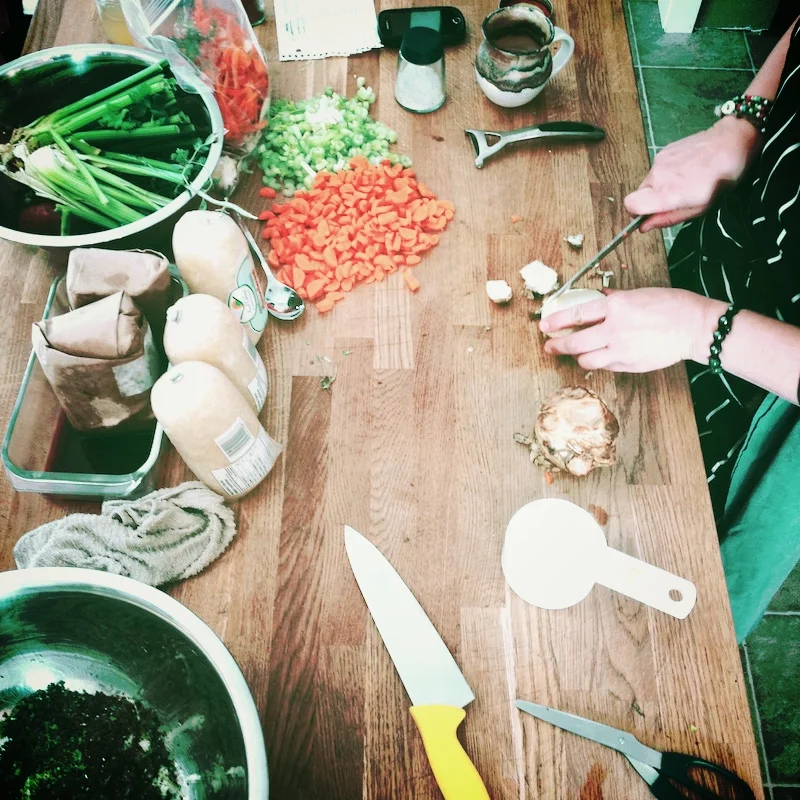
Batch cooking day with a friend.
Keep it simple
There you are. Just a few ideas to get you started. My idea here is to offer some ideas on doing one good thing a weekend to prep for meals coming in the week ahead. As you build on this one-thing-a-weekend, soon your pantry and freezer will be loaded with quick things you can add to your week's meals. At the core of it all, I want to underline the word simplicity. Keep it simple. Good-enough-meals are just what should be on the table. No company is coming over, nothing fancy nor drastic is required. Just simple, and good enough.
Please go play with your food. And comment below with ways you keep it simple and tasty!
THURSDAY BASICS: reduce the packaged goods.
This whole series is about touching on some keystones that are important in reducing inflammation, and are key contributors to reducing your body's toxin load. All of these posts have been aimed at supporting gut health; loving your guts has a tendency to reverberate outwards, to all other systems in the body. Today, we're exploring why you may want to work on reducing the packaged goods in your pantry, and how to go about it.
Another Thursday, another revisit to the now-rejigged Monday Health Basics from 2016.
This is perhaps one of the biggest needle movers you can introduce. Read on to understand the method behind the madness here, and why it doesn’t have to mean you will be permanently stuck to the kitchen. Read on for some good inspo on the topic.
This week’s topic: REDUCE YOUR RELIANCE ON THE PACKAGED GOODS
COLES’ NOTES:
1. Start slowly, one meal a week if this is brand new to you.
2. When buying packaged foods, check your labels and choose one that lists more real food ingredients, and forego the one that has words you can’t pronounce.
3. A few more tips to make it manageable - keep it simple, meal plan, batch prep, and do your best! Then get on with it.
This is all part of PLAYING WITH YOUR FOOD. I will forever advocate for this method to the madness.
This whole series is about touching on some keystones that are important in reducing inflammation, and are key contributors to reducing your body's toxin load. All of these posts have been aimed at reducing inflammation, nourishing resiliency and so also supporting gut health; loving your guts has a tendency to reverberate outwards, to all other systems in the body.
Today's post is a simple idea, but a big needle mover. We've touched a bit on this concept on the post aimed at J.E.R.F. But today, we're exploring why you may want to work on reducing the packaged goods in your pantry, and how to go about it.
This post is inspired by a short presentation I led a few years ago with a group of young girls aged 8 to 10. There were four groups, and each group's task was to come up with a list of ingredients that they would use to make a specific food item at home.
One group had chocolate chip cookies, another mashed potatoes, one group worked on homemade mac and cheese and a fourth had to come up with the list of ingredients for a homemade chicken noodle soup.
They weren't allowed to rely on anything coming from a box, all of their recipes had to come from the idea of 'from scratch'. The girls all understood the exercise, and had fun coming up with the list of tasty things they could add to make a delicious version of their item. Butter chicken and veggies version of mac and cheese? Yea I'd like that. Homemade meat stock and the how-to, before even making the soup? Oh how I love these kids.
It was great to see how they easily came up with those ingredients that belong in their kind of dish or dessert. I then broke out packaged boxes of those items that were on sale at the local grocery store that day. There were name brands in there, and store brand versions as well.
Next, I invited one girl from each group to read the list of ingredients that went in to the making of these items. They were perplexed at some of those items listed, and wondered what it was their purpose was in the final recipe. I didn't point out what ingredient does what, nor did I want to scare them into thinking that these chemicals with hard to read names were nefarious for them; I just wanted to emphasize the idea that in order for something to come to us in such a pre-packaged state that requires we only add water and stir, it takes a lot more ingredients, ones we don't even know what they are. (Mechanically separated chicken? Mmm. Sign me up. Blerg.)
And then we went on to introduce the idea of balance to this scenario. I didn't want them to fear any foods they may be served in their own homes after our little exercise; I wanted them to be aware and just to start asking questions of their own, and maybe start to develop an interest in making their own homemade versions of cookies or mac and cheese at home. They certainly all seemed to know what types of ingredients it would take.
Why it's important to reduce your reliance on packaged foods
The idea for today's article centres around reducing the amount of irritants to your digestive tract and to your system. It's all about the gut love.
Packaged foods are foods that are chemically produced in a factory. I get that some may think that cookies, if made at home, are made from processed food ingredients. Sure, I'll give you this one: it takes a certain amount of processing to convert grain into ground up flour.
What I am talking about today though, is those ingredients listed on your package that aren't things we have typically consumed in human history except for the last 20 or 30 years. I am specifically talking about additives, preservatives, other chemicals added to the final product in order to mimic the flavours and textures of the real thing, homemade.
Some of these ingredients we are talking about are known to be irritating to the gut lining: things like carrageenan have been studied with animals, and links have been made to inflammation in the gut with consumption of this food-grade seaweed extract. (It comes from food, isn't that enough evidence? Not necessarily. Not in these amounts.)
My number one reason I'd steer away from packaged foods and look to reduce it in our meals at home is because these foods are where manufacturers add in extra sugar to the product, sweetened with sugar and other ingredients that are, for all intents and purposes, more sugar. (High fructose corn syrup, glucose/fructose, etc.) Adding sugar to their product makes it tastes delicious!
We are hard wired to love the taste of sweet.
From an evolutionary aspect, this makes so much sense: before the advent of grocery stores and convenience foods, the sweet taste of a fruit or vegetable was our signal that the plant food at hand was at its peak freshness. When something is at peak freshness, that sweet taste signals to our bodies that it is at its most nutrient dense peak. Eating an under-ripe tomato? Not sweet. Not so much Vitamin C, either. But the sweetest, juiciest, still sun-warmed tomato that is a deep deep orangey red colour? So much Vitamin C. Factoring in evolution, those people who developed a sweet tooth were also better able to choose foods based on that delicious flavour, meaning they had a higher intake of those all important antioxidants that are late to develop on the fruit on the vine. Higher antioxidants meant good fuel to ensure those people lived longer and better lives, and were better able to reproduce and guarantee progeny, therefore survival of the species. Good work body.
But somehow, things went awry along the way. Food scientists figured this piece out, and realized that if they filled their packaged products with sugar, people would love the taste, and come back for more, ensuring consistent sales of their products. That meant the scientists had jobs. (I'm going all conspiracy on you on this one, I know. Stick with me.) But truly, it meant the business would be around, guaranteeing their customer base would stick around and keep them alive. The people behind these food manufacturing companies have figured out the sugar bit, and have tweaked it to the point of understanding how much sugar it takes in a final product to create a dependency on the product. Good work companies. Sorry people who will be eating now more sugar than we were ever meant to handle. (We'd better evolve, and FAST.)
THE INFLAMMATORY LOOP
Why am I not a fan of added sugar? These refined white substances and super processed corn- or other starch- based syrups contribute to blood sugar imbalances, which further feeds the inflammation loop. Yes yes yes: sugars contribute to inflammation. Which is at the root of just about every chronic disease out there.
How do you work to reduce your chances of developing inflammation? Look to reduce your consumption of refined sugars. Check your labels: even your tomato soup may be hiding some sugar! I was quite taken aback when I found it listed on my favourite tetra pack of emergency soup for weeknight suppers. (I still rely on it from time to time, but aim to have more homemade soups now in order to work towards balance.)
With the girls, I pulled out a few different packaged foods and noted how many grams of sugar were in each serving, and had them figure out how many servings there were in the whole package by just reading the Nutrition Facts label on the back of the box. I set my little digital scale up, and had the girls count how many sugar cubes it took to weigh out the amount of sugars listed on the label for each item.
They were quite taken aback at how much sugar was in a little juice box, even though there was no sugar listed on the label! They couldn't believe that sugar was added to tomato soup. What was it even doing in the mix?
And why did they need to add so many cubes of sugar to a can of soda? Could you even drink a glass of water or a cup of tea with that much sugar dissolved in it? It was great to witness their discovery, and the questions that came up afterwards. I expect a few questioning emails from parents any day... (sorry gang! It was in the name of good food and good health, I promise you!)
BUT IS IT EVEN FOOD?
My other beef when it comes to packaged and refined foods is that when you read that list of ingredients, there are a whole lot of artificial ones in the mix. These ingredients are things made up in a lab, created to help develop the flavour or mouth-feel of the product, make it seem closer to the real thing. These chemicals are not foods as recognized by our digestive tract necessarily; they too can contribute to our liver's toxin load, that work it has to do to move stuff out. (Read up on this article to remember what that toxin load is, and how important it is we look after moving that stuff out.)
These chemicals may be there acting as preservatives, or they could contribute to the colour, or the flavour profile. They may also help develop the texture in order to try to mimic the real thing. (When was something meant to mimic ever as good as the real thing?)
Not only that, but some words like 'artificial flavour' or 'artificial colour' are industry labels that mean 'a proprietary blend that we are legally bound to keep secret so that no one copies what it is we are making'. Who knows how many more chemicals are making up a part of that 'artificial colour'. To be clear, all of these chemicals do have to pass rigorous testing in the food industry; they all have to be deemed 'safe' by the Canadian Food & Drugs Act & Regulations division of Health Canada. But when it comes to choosing our foods, I tend to err on the side of what types of foods people have been eating for centuries including my ancestors, as opposed to relying on a recipe dreamed up in a chemistry lab meant to mimic the real thing.
THE FAT OF THE MATTER
My other beef with processed foods is their use of hydrogenated vegetable oils and soybean oil. These types of oils are contributing to our body's inflammation by throwing the balance between omega 6s and omega 3s right off. Ergo, processed foods can exacerbate any kind of inflammation already going on! I invite you to read this earlier post on what fats are the good kinds, and why certain fats should be avoided.
These processed foods are typically also quite low in nutrients when you compare them to the real version. Manufacturers need to make a living, and so they tend to use cheaper ingredients in order to turn a profit. Don't we all need to turn a profit? I get it.
But at the expense of my health and that of my family's? I choose no.
Cheaper ingredients may have relied on the use of glyphosate in their growing season; glyphosate is a chemical that show evidence of disrupting the gut bacteria. It is this gut bacteria we want to keep happy, as they are key players in keep inflammation at bay and supporting healthy digestion.

The packaging used in these processed foods are also contributing to the picture here. There are endocrine disruptors in the plastics and in the lining to cans that we come across in our day to day life; this means they mess with your hormones, negatively impacting many of our bodily processes. All processed foods come in some sort of packaging; the ingredients found in those foods can pull some of those chemical compounds out of the packaging and into the foods we the consume. Choosing to eat real food instead will drastically reduce those harmful effects from the possible endocrine disruptors. Opt to purchase anything tomato-based or with any fat content from a glass jar: a much safe non-BPA and non-BPS bet.
Your secret to improved health then?
Reducing your reliance on processed foods, and doing so gradually (in order to make it do-able!). Cook from scratch. Eat more simply. Meal planning can help. Choosing a box of prepared food whose list of ingredients is much shorter than that found on the other box on the shelf next door. Read your labels!
Do a bit of digging to find a product that lists a pretty clean list of ingredients, like this Calgary-based manufacturer of delicious Butter Chicken and other curry sauces. These are often on our menu for those busy weeks; and they're delicious!
Check out your grocery stores and health food stores that take a special interest in stocking their shelves with local specialty items, or those shops who look to facilitate your success in the kitchen with health first and foremost. I saw some harissa sauces in glass jars with a pretty clean list of ingredients at the grocery store last week: you can bet your bottom dollar I'll be dreaming these up into recipes in my future instagram posts!
Here's a round up of ideas I pulled together for you to get you started:
use soaked seeds and nuts as protein in your smoothies instead of a protein powder
do one batch cook item a week for the meals at hand for the coming week
make your own curry pastes! So easy! So delicious! So much more flavour!
make your own electrolyte drinks! Ditch the funky coloured super sugary drinks
great link here to use homemade mayo and ghee as a base for low carb sauces
make your own meat stock or bone broth for nutrient density!
look here for a compendium on harvesting ideas I culled in 2015 (good ideas here on lots of things)
Keep it real my friend, and keep it do-able.
Knowledge is power; read your labels, and opt for those packages that are lower in chemicals. If your body is working extra hard on health things, know that providing it with more nutrient dense foods and reducing the toxins found in packaged foods may be of benefit to you at this time. Most of all, please do play with your food.
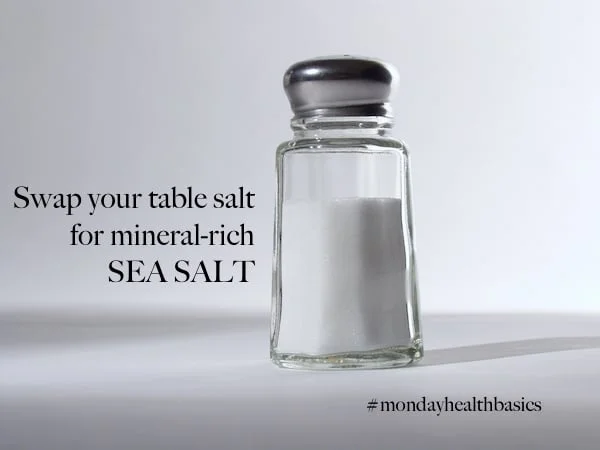
THURSDAY BASICS: Swap your table salt for sea salt
This Thursday Basics series is a revisit of the 2016 series I wrote, the Monday Health Basics. It was always meant to be a quick read on one manageable task you can implement in order to best support optimal health. Updated and improved, this week's topic is one that is a pretty basic change that is fairly easy to implement, but is one topic that also raises many questions and controversy. We're talking SALT.
New week, new topic to tackle. These Thursday revisits are meant to inspire you to work at implementing ONE GOOD IDEA at a time, in order to support your optimal health. This week's topic is one that is a pretty basic change that is fairly easy to implement, but is one topic that also raises many questions and controversy.
This week’s topic: SWAPPING YOUR TABLE SALT FOR MINERAL RICH SEA SALT
THE COLES NOTES:
1. Salt: we NEED it. For biochemical function in the body.
2. It’s about the minerals. We’ll talk Iodine specifically, but the others too.
3. Colour in your salt is a good indicator of mineral density.
Now go forth and support vitality, will you? #quest4vitality
This Monday Basics series is a new thing up here on my blog, meant to be a quick read on one manageable task you can implement in order to best support optimal health. This week's topic is one that is a pretty basic change that is fairly easy to implement, but is one topic that also raises many questions and controversy. We're talking SALT.
Without getting too analytical about it, (although if you're interested, there are some fascinating articles here, here and here if you'd like to read up on interesting studies and conclusions that have been drawn) salt is really an essential nutrient to life. We need it. We wouldn't be alive without it. We came from the ocean, evolutionarily speaking; our insides are virtually a delicate balance between water and salt.
For those in a rush, here's my take home message: toss your table salt, and swap it out for a good high quality unrefined sea salt. Read on if you want to know more.
LET’S TALK MINERALS
There are many reasons to go the sea salt route; chief among them, sea salts have a mineral profile much richer than that found in table salt, from some 60 to 80+ minerals, depending on the variety you are purchasing. These minerals are essential to our wellbeing; you will find calcium, magnesium, sulfur, zinc, iron, iodine, silicon, phosphorus and vanadium to name a few, and small amounts of iodine in addition to the potassium and chloride, which make up roughly 84% of the salt.
But in table salt? You will find present solely potassium and chloride as minerals, making up a bit more than 97% of the salt's content. Every other mineral has been stripped from this salt in the manufacturing process. Table salt is made from crude sea salt that has been heated to 1200ºF; in this process, most minerals are stripped away and other additives are thrown in the mix and the original structure of the salt is altered, making it harder for our body to identify it and use it. You'll find some aluminum derivatives, anti caking agents to keep the salt from clumping; you may also find either MSG or small amounts of white sugar in the mix to make up that +2% remainder.
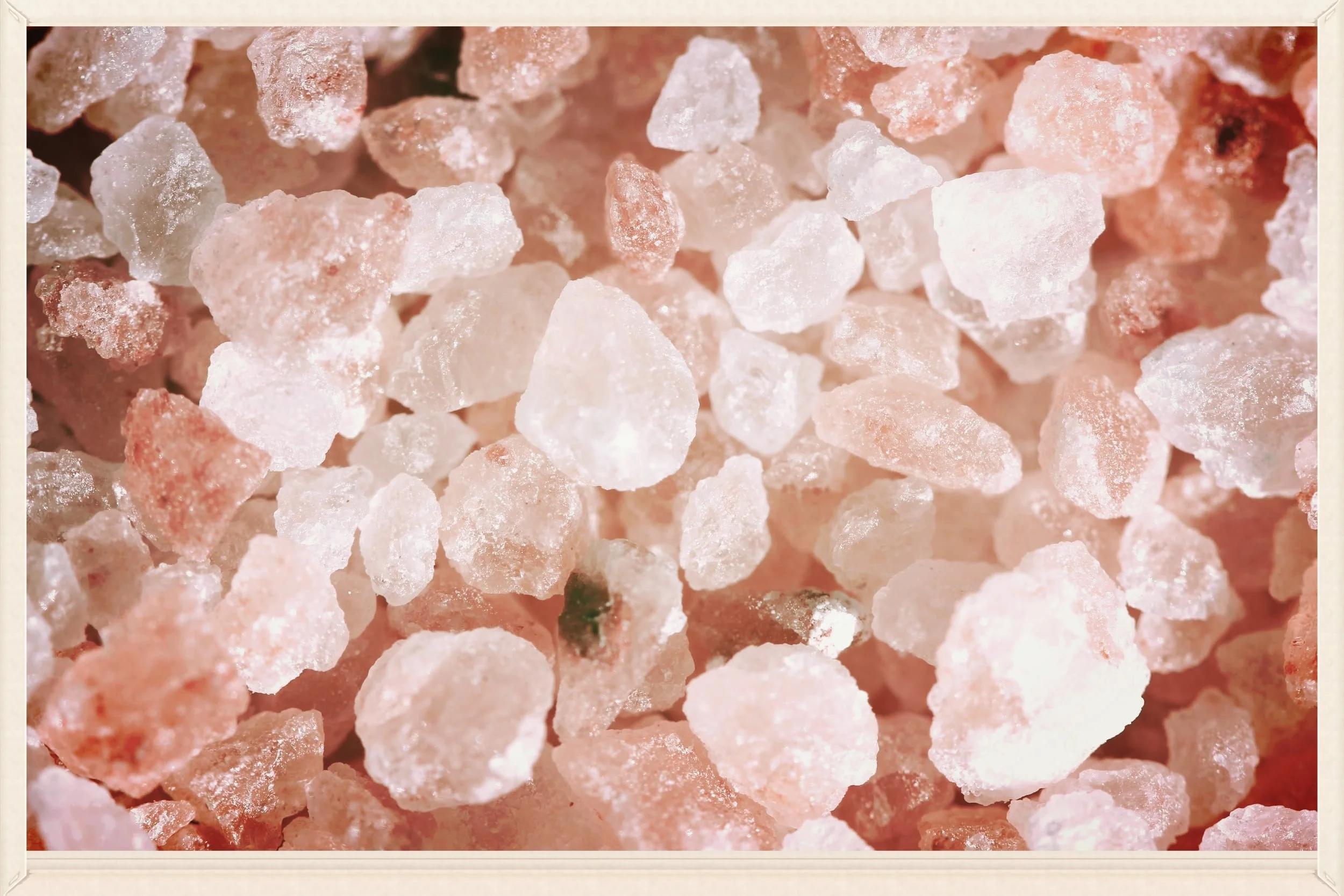
Himalayan sea salt crystals up close
SALT AS AN ESSENTIAL NUTRIENT FOR BIOCHEMICAL FUNCTION
Why do we need salt? In the sea salts, you will find some vital minerals that are necessary to proper adrenal and thyroid function as well as immune and brain function. If you're craving salty snacks, it may be your body's way of requesting more of the minerals found in sea salts, indicating you may need some adrenal or thyroid support.
We need salt for our digestion as some of those minerals found in sea salt are needed for enzymatic reactions in the body in order for us to break down foods we are ingesting.
These trace minerals also help us stay hydrated, they also ensure our itty bitty sodium-potassium pumps found in each cell are in good working order, needed for our energy cycle called ATP.
These trace minerals also help maintain our blood's pH in a normal range; they are needed to help balance blood sugars, necessary to good brain function and supporting our immune systems.
And let's not forget the heart! These trace minerals help regulate our heartbeat and blood pressure and are a major component of blood plasma! Magnesium is a big one found in unrefined sea salt, and this mineral is needed to maintain good bone health, regulate nerve and muscle impulses helping to prevent muscle cramps.
LET’S TALK IODINE
One comment I hear often when the subject of table salt vs. sea salt comes up is iodine, and this is an important thing to talk about. Iodine is integral to our body's healthy thyroid function; manufacturers started adding iodine to their table salt to help prevent the occurrence of goiters. As our soil levels of iodine have been depleted over the last century, so have the iodine in our food sources gone down (you just can't make iodine out of thin air!).
Problem is, table salt has such a high amount of iodine that it ends up having a negative impact on the thyroid. If you are concerned about losing your iodine intake by going the sea salt route (know that there is some iodine found in sea salts), the idea then would be to reach for food sources that are still rich in iodine: think seaweeds, any fish or shellfish hailing out of the ocean.
SALT IS AN ESSENTIAL NUTRIENT TO LIFE.
LET’S GET PRACTICAL
Here is how to add this nutrient to your daily life:
Choose a good high quality product, looking for the words 'unrefined' or 'not treated' on the package. (good varieties include 'celtic', 'himalayan', or Utah's 'RealSalt').
Salt your food to taste (everyone's tastebuds will require different amounts!).
If the sea salt is white in colour, really read the package as most of the time, the salt will have been stripped of some of the minerals in order to make it look appealingly white.
Your salt should have colour; it is this colour that indicates what minerals are found within.
Check with your medical practitioner if you have heart disease, high blood pressure or kidney troubles before making any changes to your diet especially in regards to salt.
Because I have a hard time deciding, I actually purchase three kinds of sea salts in bulk, and mix them all together in order to get a balance of minerals.
Because I'm saying unrefined sea salt is good for you, don't think it's reason you can go hog wild; eat it in moderation (use your noggin).
If you're concerned about not getting enough iodine, reach for seaweed, choose fish or shellfish that are wild caught (not farmed).
Who knew salt was such a necessary tool in your toolkit?
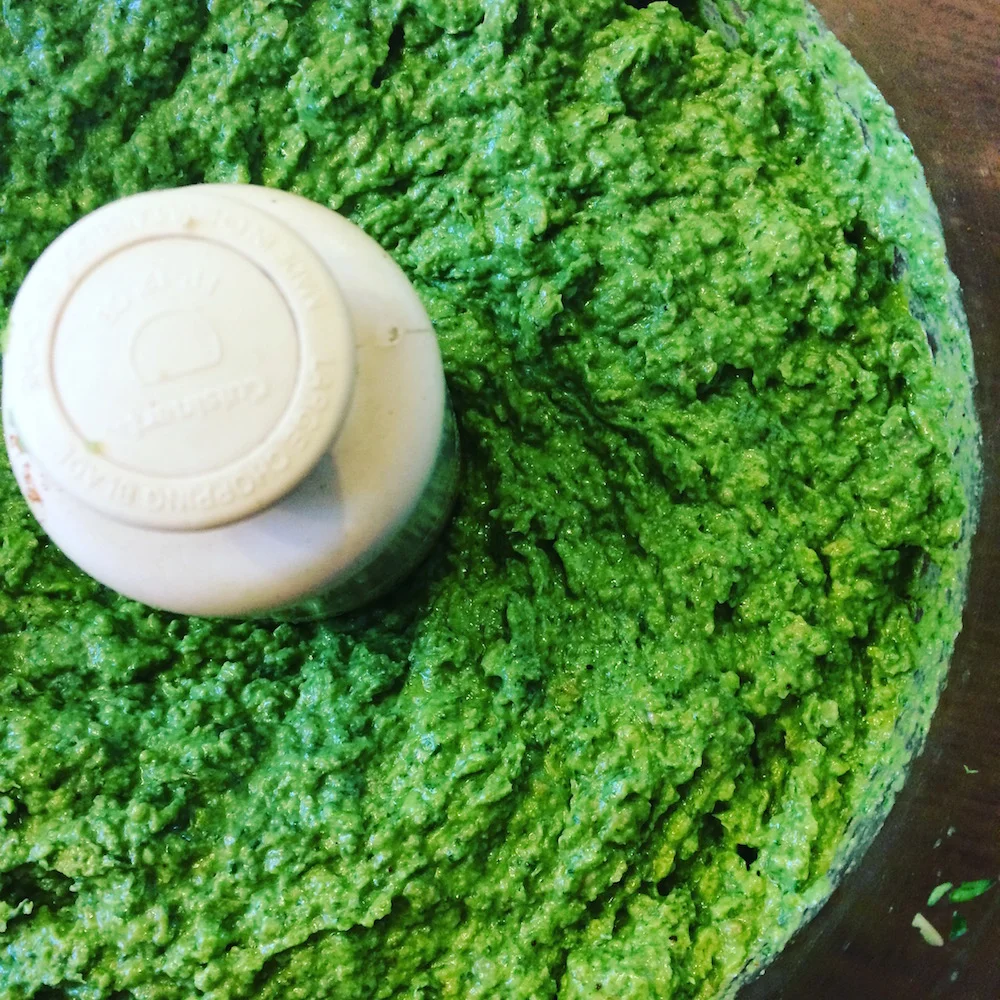
Pesto Template
Easy recipe for a pesto template. A brilliant way to support your liver, and provide your body with a cornucopia of vitamins, minerals and phytonutrients!
Happy New Year, my goodfoodies! I wish for you the most delicious and nourishing year yet, in 2018.

I thought this would be the perfect time to share with you a recipe I share with my clients. It's a template for any kind of greens you have on hand, helping to increase the intake of these delicious vegetables (read up on why you should eat your greens here!). It's a flavour booster that can easily re-invent leftovers into something delicious and new. I always have frozen ice cubes of pesto in the freezer at the ready. You can also choose to freeze them in portioned bags like Melanie at Full Bloom Herbals does it. (Thank you Melanie!)
This recipe calls to use whatever nut or seed you have on hand. It goes without saying that properly activating your seeds/nuts before eating them will increase your ability to digest them, and provide you with a better variety of nutrients too. Activate/sprout/soak if you can! (Or purchase ones already sprouted.) In my cilantro pesto, I find a combo of pumpkin seeds and sunflower seeds is divine.
As for the greens, you can mix and match or use up what you have in your fridge already. If you're looking to use some cilantro, I love the combo of one bunch of cilantro (properly washed! - it's grown in sand and can often impart a grittiness if not washed properly first) with a bunch of arugula. When trying new combos for the greens, think a cup of leafies like spinach or kale, and 1 cup of aromatic herb like basil or mint; do a whole 2 cups of spinach if that’s what you have on hand. I love using sorrel as one of my greens, this perennial grows readily in the garden, and can be found in the early days of spring.
PESTO TEMPLATE
2/3 cup of nuts or seeds
2 cloves of garlic, peeled
2 cups of greens
1/4 tsp sea salt
1/3 cup of good quality olive oil (I love the olive oil at Blue Door)
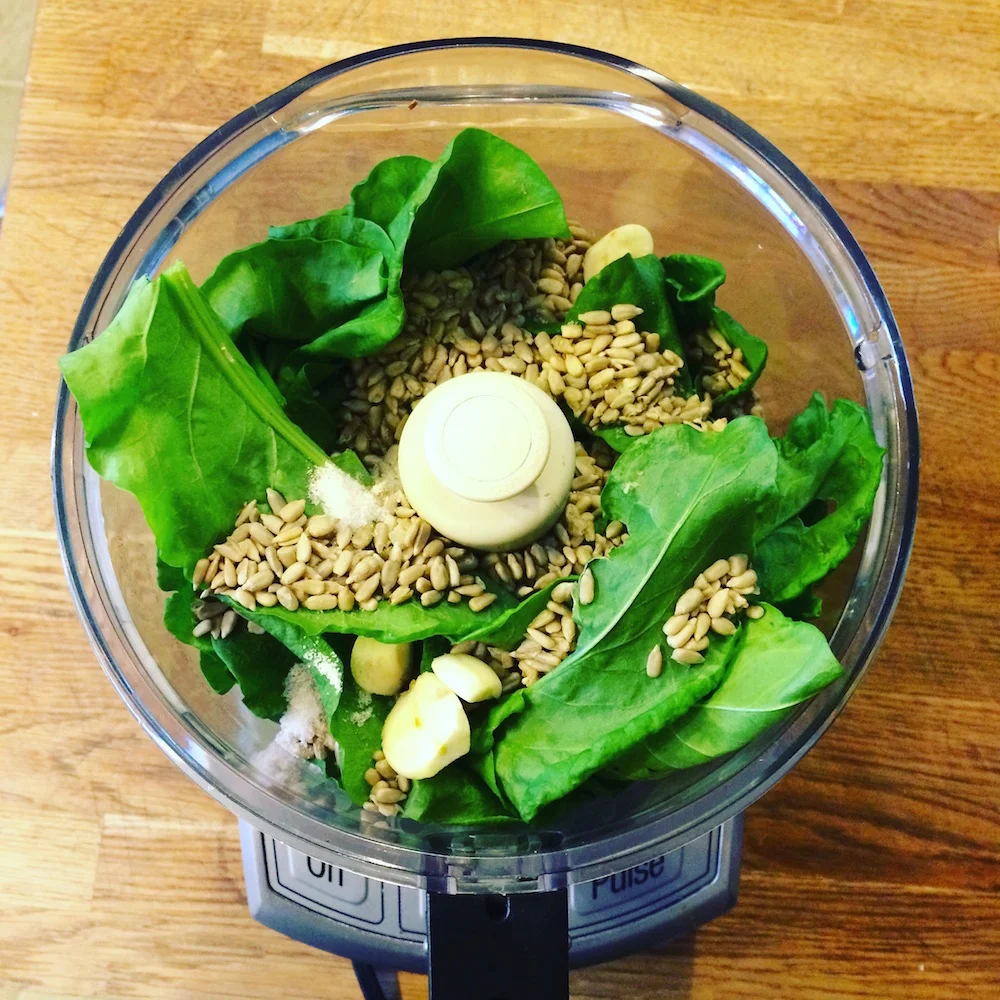
METHOD
- In a blender or food processor, pulse your nuts and/or seeds in order to mince.
- Add the remainder of your ingredients except the olive oil to the blender or food processor and pulse again to roughly combine.
- Mix in the olive oil by hand at the end, or drizzle it in bit by bit with the food processor. Store in a glass jar in the fridge and plan to use up in 5 days. Alternately, freeze all leftovers in to an ice cube tray for 3 days, and then pop out in to labelled freezer bags for easy retrieval.
This is my most favourite flavour upgrade. You could add some sundried tomatoes to the end product as well to add a tomato flavour. Toss in a handful of edible flower petals if it is deep summer and your garden is plentiful. Play with the flavours and ingredients! Keep it dairy free when you make it, and consider only adding something like a good quality Romano or Parmesan at the time of meal assembly. It offers you more versatility with an extra big batch.
How to use this pesto: use a cube of pesto tossed in to a few handfuls of shredded cabbage, carrots and mushrooms and cook up in a pan; use it to toss with roasted spaghetti squash strands, along with bacon and a bit of creme fraiche; toss in a cube or two with some roasted veggies (tomato, corn and peppers) to make a kind of pesto-ish side salad; toss some pesto in with a pound of ground meat and some minced mushrooms for an easy and flavourful dinner idea, wrapped in lettuce leaves; use some pesto with some shredded leftover chicken, add in some chili powder and use that on top of greens with a delicious homemade caesar dressing. Add a few cubes in with your leftover gravy, thinned with more meat stock and some shredded meat and voila, Soupe Pistou! What way would you use this pesto? Comment below!
Now go play with your food! And may your 2018 be your most delicious year yet.