
MONDAY BASICS: eat your greens.
The age-old adage often attributed to mothers of yore with something along the lines of eat your vegetables! is completely bang on, and even more so in 2016. See, your mother (or your mother's mother, or the mother that came before her) was on to something. Vegetables are a good thing. (I think most of us would agree.) And yes, sometimes the younger demographic turns their noses at some of the vegetables on offer at the dinner table. But your mother was right. And today, we'll focus on a specific group of these vegetables. Eat your greens, mon ami(e).
The age-old adage often attributed to mothers of yore with something along the lines of eat your vegetables! is completely bang on, and even more so in 2016. See, your mother (or your mother's mother, or the mother that came before her) was on to something. Vegetables are a good thing. (I think most of us would agree.) And yes, sometimes the younger demographic turns their noses at some of the vegetables on offer at the dinner table. But your mother was right. And today, we'll focus on a specific group of these vegetables. Eat your greens, mon ami(e).
In this post, my aim is to arm you with knowledge so that you can better navigate the food and eating waters. I plan to give you some quick tips on how to include more greens into your daily food regimen. I will share a quick template for a weeknight staple at our house, ye olde Meatballs (a superfoods vehicle in my opinion).
So when I say greens, for the sake of today's post,
I am talking leafy greens.
This means anything that is a leaf typically found on a plant, and a leaf we can eat. This means your obvious ones like kale and lettuce; I also aim to include those lesser obvious ones like herbs and spices, pungent-tasting greens like watercress or sorrel (perhaps my current garden perennial favourite). And by leafy greens, do not shy away from found-in-the-wild kind of foods like seaweed or nettle.
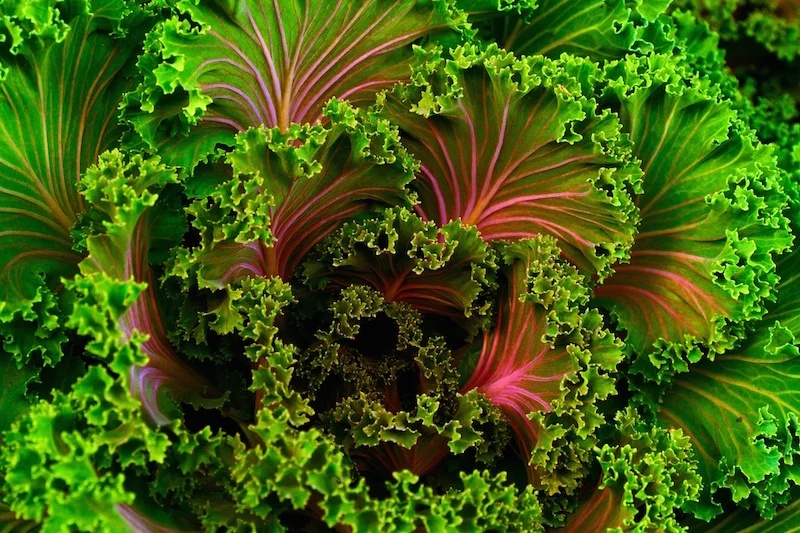
the vibrant kale
WHY THE GREENS
Flashback to your grade six science class: every plant has a few different parts, among them the leaf. This part of the plant allows it to harness energy from the sun in the form of photosynthesis, thereby storing energy necessary for the building and maintenance of the entire plant. In order for the process of photosynthesis and the storage of said energy in to chlorophyll, magnesium must be made available. Magnesium is actually at the center of the chlorophyll molecule, much like iron is at the centre of our red blood cells. Therefore, it would be safe to say that by eating any leafy green of any kind, be it originally from land or water, one could be assured they would be consuming good amounts of magnesium.
Why do we need magnesium? Where calcium helps our muscles contract, so magnesium helps to relax the muscles. Where calcium helps our nerves send electrical impulses, so magnesium helps to quiet those electrical impulses. Magnesium is known as the calming mineral. Suffer from leg cramps? Charlie horses a regular occurrence? Hard time falling asleep at night, thoughts are racing? Maybe upping your leafy greens could be a part of how food could best support you.
We also need Calcium and Magnesium to be in the right ratio, along with lots of other vitamins and minerals in order to properly build and maintain bones and bone density. So eating greens? Yea, they're good for your bones. (Bonus: dark leafy greens are also a pretty stellar source of calcium.) On the subject of bones, greens are also high in manganese, another essential mineral in the building and maintenance of bones.
Magnesium is also a very important electrolyte in the body, and so by ensuring a good intake via foods, you would be supporting a healthier blood pressure and overall cardiovascular health.
Magnesium is also an important mineral in the manufacturing of enzymes, mightily involved in the entire digestive process including how your body handles glucose. It is also a necessary component in the chemical reactions that happen in the brain in order to convert amino acids into neurotransmitters. So greens? Yeah, they're good for your digestion and brain too.
In addition to magnesium, greens are typically good sources of potassium, another important electrolyte, especially important for heart and kidney health.
Dark leafy greens are good for your skin too: manganese plays an important role in your body's manufacturing of collagen.
Greens are also good sources of vitamin K, another key player in bone health and mental health as well. You'll find lots of B vitamins in the greens as well: these water-soluble vitamins are utilized constantly in adrenal health, stress management, skin health, mental health, hormone building, detoxification, enzyme manufacturing and digestion. Oh yes, also necessary if you are building a human being in your uterus.
DETOX SUPERSTARS
They are power houses of minerals and vitamins like vitamins A, C, K that assist your body in the detoxification work, helping to clean out your blood, and have been shown to lower your risk of developing cancer.
The more bitter tasting greens are of tremendous support to the liver, supporting digestion by inducing it to produce more bile which is the body's natural way of re-packaging spent metabolic waste and toxins and shipping them out the regular route of elimination, #2.
Greens are usually good sources of fibre too, which helps escort those toxins out of the body. Some of this fibre also goes to fuel the bugs in your gut, those good guys we want to have in our innards. You could say that eating your greens is essential to disease prevention then.
ANTI-INFLAMMATORY POWERS
Greens are shown to help lower cholesterol, thereby assisting in reducing inflammation. (Where inflammation occurs, cholesterol builds.) They are also fabulous purveyors of those all important flavonoids that will help mitigate inflammation and reduce oxidative stress on your body.
There is a fascinating video available online, an anecdotal video from Dr. Terry Wahls who worked through the devastating diagnosis of MS. She tells the tale of how her food choices helped support her body recover, fuelling her mitochondria, the energy manufacturing engines of each and every cell of her body. She specifically speaks to the idea of consuming 9 cups of vegetables a day, with three cups coming from leafy greens. It has been taken away from the TEDx's roster as they state it falls outside their curatorial guidelines. You can still find a version here.
In conclusion, it's safe to say that if you have a body and want to maintain its regular functions,
all of them, you need to eat your greens. Every day.
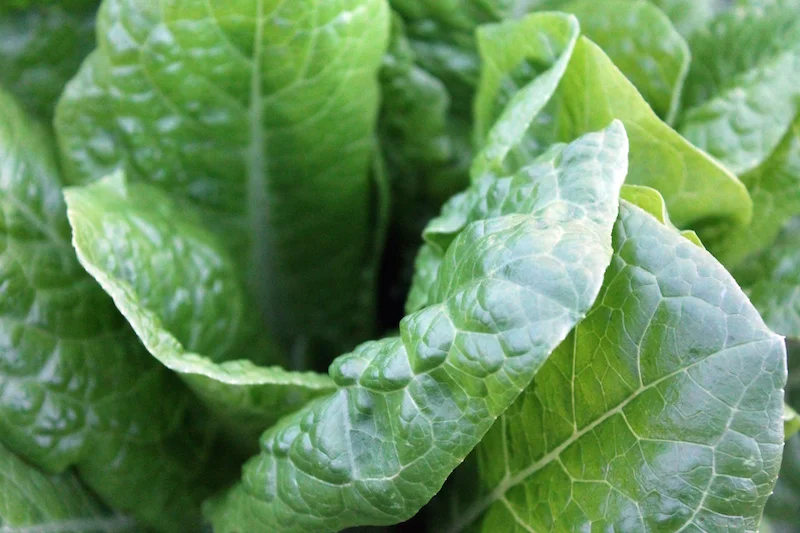
the humble romaine.
WHAT KINDS OF GREENS
Well it's clear that when we talk greens, you probably are thinking of the obvious players like spinach and kale, or maybe arugula or dandelion greens for the more bitter ones. I want you to think outside the box. Let's draw a list, shall we?
GREENS
spinach
kale
bok choy
lettuce
romaine
swiss chard
collard greens
mustard greens
beet greens
turnip greens
cabbage
brussels sprouts
BITTER GREENS
sorrel
dandelion greens
arugula
endive
raddichio
escarole
frisee
mizuna
watercress
chicory

Parsley - a perfect herb for a summer garden!
HERBS
basil
parsley
dill
cilantro
chives
green onions
oregano
lovage
mint
rosemary
OFF THE BEATEN PATH
seaweed
green tea
spirulina
chlorella
broccoli leaves
amaranth leaves
nettles (careful if foraging, they really do sting!)
nasturtium leaves (yes! you can eat these! and the flowers too.)
borage leaves (young ones)

Nasturtiums leaves and flowers are edible. And peppery!
OK so they're good for you. I get it, you're saying to yourself. But how do I eat them? I had enough creamed spinach growing up, thank you very much. Let's go over a few ideas here.
LET'S EAT
Here's a good recipe round-up, if you're looking for ideas (click on the titles, as some of these will link out to a recipe):
cook simply in a good fat like butter, and add S+P
even fancier, you can cook your greens up in coconut oil with ginger and garlic, and at the last minute drizzle sesame oil over top
perhaps the most obvious, but make a salad, and use more than just one green
blitz together a bit of spirulina or chlorella with some pumpkin seeds for a breakfast topping
throw them in smoothies (the greens like kale and spinach can contribute to inhibiting proper thyroid function, so best to reach for other greens like lettuce, chard or watercress, or herbs like mint)
whip up a greens curry (like my Palak-a-la-Ginny)
mince finely and toss in soups or on eggs or sauces; your picky eaters will think it's flavouring
toss in some dried seaweed or minced herbs in to your next ferment
deydrate your pock-marked greens from the garden and crumble into everything!
if you grow broccoli or cauliflower in your garden, keep those leaves and dehydrate them!
toss that s**t in everything
In June of last year, I put together a blog series called A Month of Salads. Find the round up here.
Find a whole post already on how to incorporate more nettle in to your life. Same goes for how to bring more seaweed into your daily meals, a mineral superhero for sure!
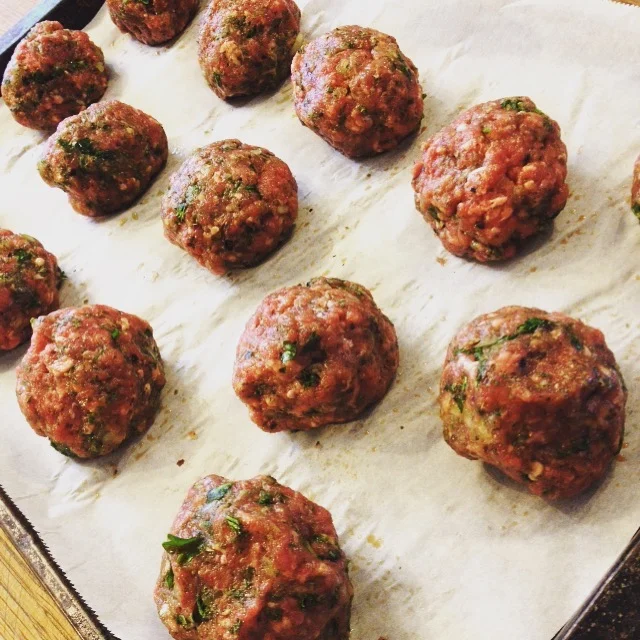
A weeknight staple with loads of greens: the meatball.
MEATBALLS TEMPLATE
Here is my template for an easy weeknight meal that will help curb inflammation, fuel your sweet body with those good nutrients necessary for optimal health. I like to think of meatballs as flavour and super foods vehicles. The sky is the limit here; you will soon discover what you like and will make this recipe your own. I look forward to hearing about it.
THE PLAYERS
1.5 lbs grass fed beef or pork, or bison, or chicken or turkey
2 eggs (brain superfood)
1/2 bunch minced fresh herbs like parsley or cilantro or basil (super green)
1/2 onion, minced (liver loving)
2 tbsp minced seaweed (mineral and iodine rich)
2 tbsp dried herbs like oregano or marjoram, or 1 tbsp dried thyme
1 tbsp lemon juice
Add any dried crumbled greens from your garden if you have them (I use lovage all the time, or the dehydrated hail-damaged greens that are inevitable every summer in Alberta)
1.5 tsp sea salt (minerals!) and ground black pepper
THE HOW-TO
Bake in a preheated 375F oven for 25 min. You can turn them once if you like, but it isn't necessary. Once they're in the oven, now you can go make the sides to accompany the meatballs. Eat them right when they come out of the oven.
GO PLAY WITH YOUR FOOD.
MONDAY BASICS: on eggs.
This Monday Health Basics post centers on one of my favourite foods: EGGS. These nourishing morsels of goodness have been unjustly disparaged in recent years. Today's blog post aims to get you on board the egg train. Eggs: nutrient density at its finest.
This Monday Health Basics post centers on one of my favourite foods: EGGS. These nourishing morsels of goodness have been unjustly disparaged in recent years. Today's blog post aims to get you on board the egg train.
Eggs are one of my favourite foods, for so many reasons.
My favourite: they're pretty affordable! It must be said that not all eggs are created equal, however. Lisa Leake, the author behind the brilliant cutting-out-processed-foods book 100 Days of Real Food (and the blog of the same name) gives a complete rundown in both her book and her blog on what to look for in terms of words on the label. Go on over to get the rundown on what means what.
Eggs are my faves because they're usually quite easy to prepare, in good time. Eggs are a perfect busy-night kind of anchor to your meal. Toss veg in your hot pan with a good fat, add some flavours, and toss an egg on top and pop under the broiler for 10 minutes or so. Voila! Dinner is served.
Not sure which kind of eggs to buy for your family? I like to advise my clients to purchase the eggs they can best afford. With eggs, it really is a question of you get what you pay for. It's one of those foods that you really should budget to include the better kind on your grocery run. I myself tend to ask questions of the staff at my grocery store, wondering which kind they best recommend in terms of nutrition and bang-for-your-buck. You can also ask questions of folks working the stalls at the Farmer's Market too, they will be able to provide you with those important factors that will help you make your best informed decision on which eggs to purchase.
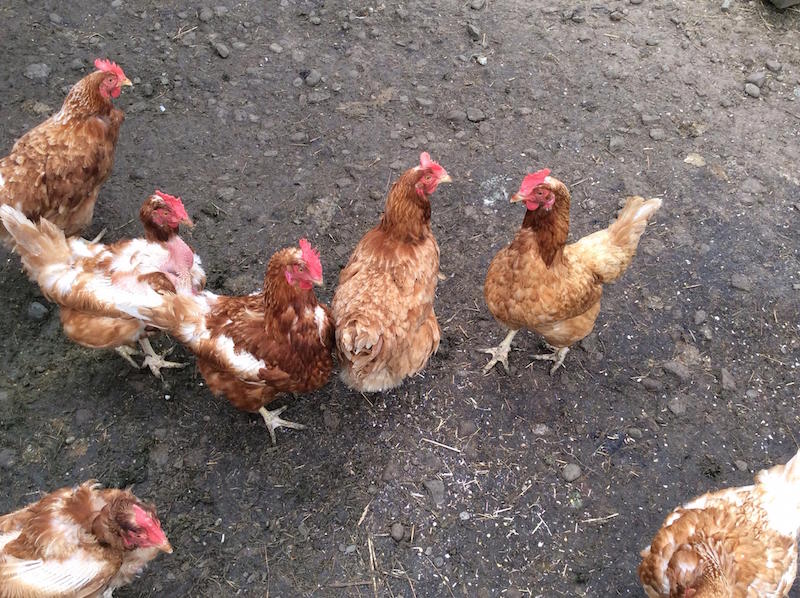
As for me, I have lucked in to two egg co-ops in town where we purchase the eggs from the farmers directly. I feel confident in supporting these smaller producers, knowing the product I am getting is from chickens that have safe access to the outdoors (free-range, pastured), with a nutrient-dense feed that best supports their lives as well. After all, you are what you eat eats. As Joel Salatin says, we must allow the chicken “to express its chickenness”. In so doing, we allow the animal to live as it should, which means it will produce nutrient-dense eggs as it should.
An animal that lives under stressful or unnatural conditions will produce far inferior eggs, lacking in those nutrients our bodies require to do the work of being and staying well.
I include eggs in our every day here at the house for nutrient density reasons. They are a wonderful source of complete protein, readily offering up those building blocks necessary for our body's building and repair work. The entire egg, both the whites and yolks contain protein, but it is interesting to note that the whites are mostly strictly protein. Protein is one of those important macronutrients you want to aim to include in every meal in order to help balance blood sugars, a key component to keeping inflammation at bay and supporting your adrenals.
The yolks are my favourite part of the egg, however. Do not toss those out! They contain those all-important fat soluble vitamins A, D, E and K. These vitamins play important roles in the maintaining the integrity of your intestinal lining which goes miles in keeping systemic and chronic inflammation at bay; they are key players in mental health and brain health. They are also key to healthy bone and teeth building, density and maintenance. These vitamins keep your skin healthy, and your heart and cardiovascular system pumping like a champ.
Lots of water-soluble vitamins are also found in the egg yolks. Look for B12, the vitamin linked to energy. Choline is also plentiful in pastured eggs – a crucial vitamin in the B family that we need to build cell membranes, keeping our cells as safe as Fort Knox. Choline is a key player in mental and nervous system health, as it is the precursor to important neurotransmitters, playing important roles in muscle control and memory.
Your eyesight benefits from regular consumption of eggs: they contain the antioxidants lutein and zeaxanthin. These beta-carotene powerhouses have been studied and show that they have protective effects for the eyes, reducing your risk of developing things like macular degeneration and cataracts.
Eggs are a fabulous source of cholesterol. This word is one that can ignite people, either for or against. I have two feet firmly planted in the pro-cholesterol-in-foods camp. The negative rap given to cholesterol (and saturated fats, of which there are loads in eggs!) was based on a research paper published by Ancel Keys in the 1950s that has since been disproven. It is a hot button topic, and one that may be a bit too big for a Monday Health Basics post. For a concise article outlining the health benefits of cholesterol, I invite you to read this article by Dr. Mercola, in order to get the goods. Suffice it to say, in conclusion, the cholesterol we eat does not have a big impact on the cholesterol levels in our blood.
Cholesterol is an integral component to all cell walls, keeping them rigid and strong. Cholesterol is an integral component to all hormones, as well as a part of every bile acid your body produces. Without adequate cholesterol, your ability to digest may suffer. And if that isn't enough, 60% of your brain is made of cholesterol. You need this cholesterol to form and retain memories, and to learn new tricks. Ergo, eggs are a BRAIN SUPERFOOD!
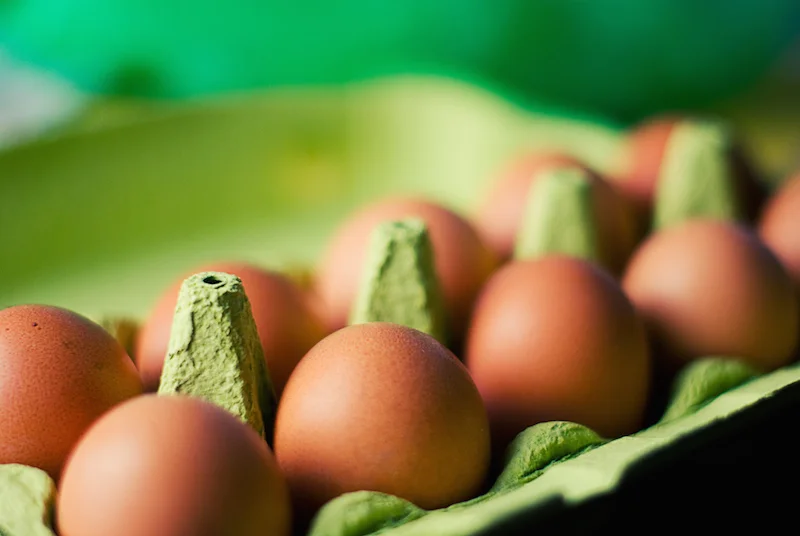
Speaking of brain food, if you are buying your eggs from a good pastured source, you can also count on those nuggets to contain the all-important Essential Fatty Acids! (EFAs). These are the fats we need to keep inflammation at bay, and our brain running like the well oiled machine it is. EFAs also contribute to healthy skin, improved digestion + elimination, heart health and eyeball health too. And liver health. Oh geez, those EFAs.
In case this needs mentioning again, healthy sources of fat like those found in eggs help mitigate the negative effects of blood sugar spikes, keeping all things level. This means then that including good fats in one's diet will go miles in supporting adrenals, and in keeping low-grade chronic inflammation at bay. Yay fat!
Lest we forget, eggs offer us a gamut of essential minerals in our diet, especially those that may be a bit tricky to find. They offer us a good source of selenium, an essential antioxidant that also plays a key role in our thyroid health. Iodine is also provided here, supporting the thyroid and helping protect against certain cancers, especially breast cancer. Iron is another important mineral readily available in eggs, helping replenish the iron stores for women during their monthly cycle, and a mineral essential to energy. As if that wasn't enough, you'll also get a good hit of zinc in your meal if you are having eggs, an important antioxidant integral to immune health and digestive wellbeing.
How to know if your eggs are top shelf?
You want to make sure your egg yolk is closer to orange in colour as opposed to yellow. Hens that have access to the bugs and grass outside will have a richer complement of nutrients, which will translate to a more orange-hued yolk.
Have a question about white egg vs. brown egg? The colour of the shell has nothing to do with the nutrients found within. Rather, it has to do with different breeds of chickens; some produce brown eggs, others white, and yet another kind will give you a greener hued egg. Or pinky. Really, it's all the same. As long as you are sourcing eggs from hens that have been able to have safe access to the outside world, and given a protein-rich feed, you are good to go.

How best to prepare your eggs:
You want your yolk to be as runny as you can take it. Allowing it to stay runny means it will be closer in nutrient content to the raw yolk, which is the most nutrient-dense way to consume eggs. Cooking the yolk alters the content of the yolk, but it is still good! Just aim to be on the runnier side when making your eggs tomorrow morning, and you will be well served. (We call them eggs with yellow sauce at our house. Yum.)
I have had the chance to lead a group of Junior High students in a weekly cooking class for the last two years. Our first class is always about the humble egg; I must tell you we always start with Russian Custard, a raw yolk and honey delight. So far, no one has refused to try it! And they have all enjoyed the rich and satisfying taste of this easy peasy snack, save for one student. My caveat here, if you are consuming raw egg yolks, is to make sure it is from eggs that have been allowed out on pasture; conventionally-raised eggs carry a higher risk of salmonella poisoning.
I used to work with a fellow who was well versed in food and nutrition things. He said he thinks of his eggs as his source of multi vitamins; he aims to have at least two a day, in order to best supply his body with those nutrients necessary to optimal health. On the GAPS protocol, a gut-supportive protocol that profoundly affects my practice as a Holistic Nutritionist, the author Dr. Natasha Campbell-McBride recommends daily consumption of eggs once the initial Intro stages are done. She recommends one can consume up to 8 eggs a day, once you are able to safely digest them.
Eggs. Nutrient density at its finest.
How do you prepare your eggs?
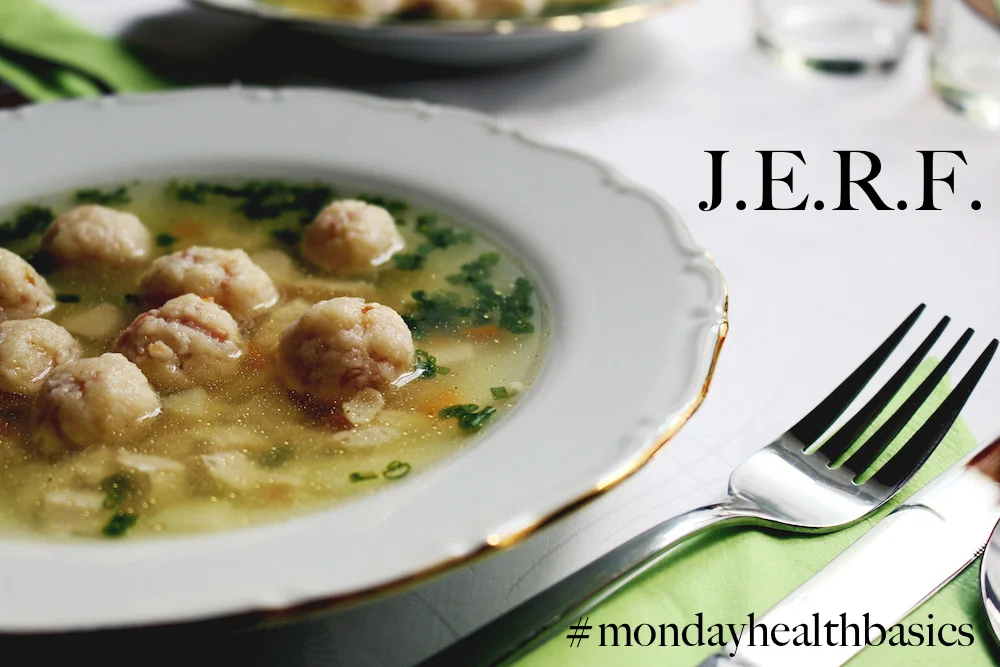
MONDAY BASICS: J.E.R.F.
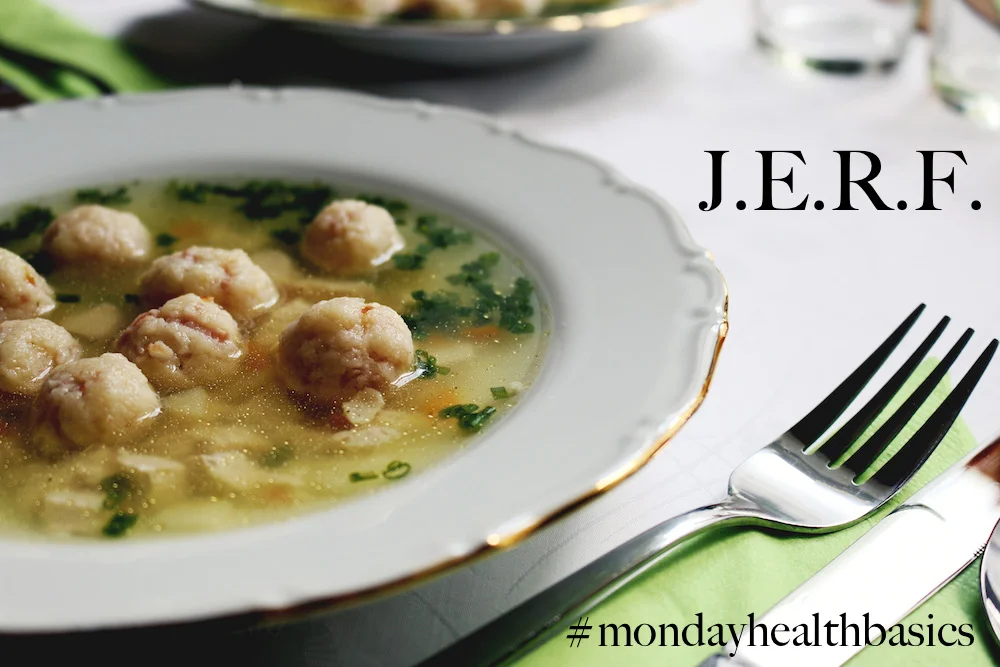
Next up in this year-long series called Monday Health Basics is perhaps one of the most revolutionary actions you can take in order to ensure yours and your family's optimal health. It's about JERF. Just. Eat. Real. Food.
Next up in this year-long series called Monday Health Basics is perhaps one of the most revolutionary actions you can take in order to ensure yours and your family's optimal health. It's about JERF. Just. Eat. Real. Food.
I've been catching up on a little television these last few days, holed up with a pretty good bout of the flu. I've had the chance to watch a few episodes of the Netflix series Cooked by Michael Pollan. (I highly recommend you track this one down.) In it, he explores food and our relationship to it through four different lenses: fire, water, air and earth. It's not about rocket science (although how that fellow roasts pig is pretty darn close to rocket science I think); it's more about what it means to be nourished by food, what food means to a community and culture. And how our way of cooking has changed in these last fifty plus years, and how this is affecting our overall health.
This series explores how much our food choices have been usurped and have altered in these last fifty years or so. One of the reasons is because of the immediate availability of ready-made meals and snacks that are easier to pick up on the way home than it is for us to make a full fledged meal. How do they get us to keep buying those ready made meals? They load them up with salt, sugar or fat; these are all things that we are hard wired to like and so we tend to reach more and more for these kinds of foods. We actually crave them! And that is the idea here, the manufacturers have scientists in their midst in order to develop that perfect mouth-feel for their customers, that perfect balance of salt/sweet/savoury in order to get us to keep buying their products over and over. Those flavours and the sugar factor is something we've evolved to like: when something has good fat in it, it will satiate us and make us feel fuller, longer. When something has a sweet taste to it, we developed an affinity for this as it indicated the vegetable or fruit at hand was at its peak freshness. Consuming sweet foods, and thus craving them, allowed us to eat a more nutrient-dense diet! That is, until processed foods came along.
The problem here is that these prepared foods, while they may taste amazing, are made with the cheapest and most refined ingredients possible, in order for the company making these foods to turn a profit. They don't end up supplying our bodies with as many nutrients to fuel us through our days as if we were making our own foods at home. There are many ingredients in these products that could contribute to inflammatory things we have going on in the body. They may also contribute negatively to our body's ability to digest. They may provide our bodies with some rancid oils, especially things like soybean oil. These rancid oils wreak free radical damage in our bodies, setting us up for some health concerns along the way.
Looking up statistics online, I found that on average, a Canadian household spends just short of $6000 per year on groceries. Money spent at restaurants is just over $2200. These stats are for 2014, the latest year available online. These numbers indicate to me that on average, most families are eating out quite a bit if the money spent outside of the home is equal to a third of what they spend on their grocery bill!
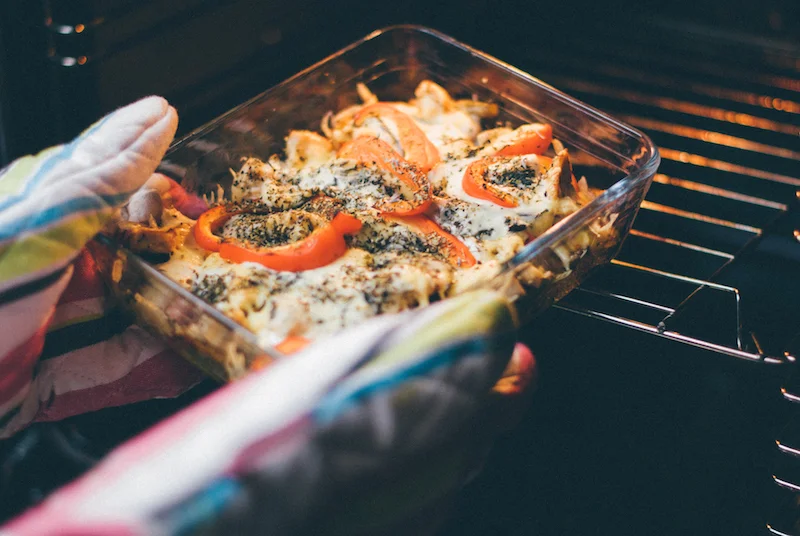
The simple act of cooking at home is perhaps one of the most revolutionary acts you can do.
In cooking from scratch, you are inherently using better ingredients than those found in processed and packaged foods. You are reaching for fresher produce which will better provide those necessary antioxidants, vitamins and minerals to help your engine run clean. And we're not talking gourmet meals here, friends. We're talking simple, delicious and easy meals that are good enough. And good enough is good. And that's enough.
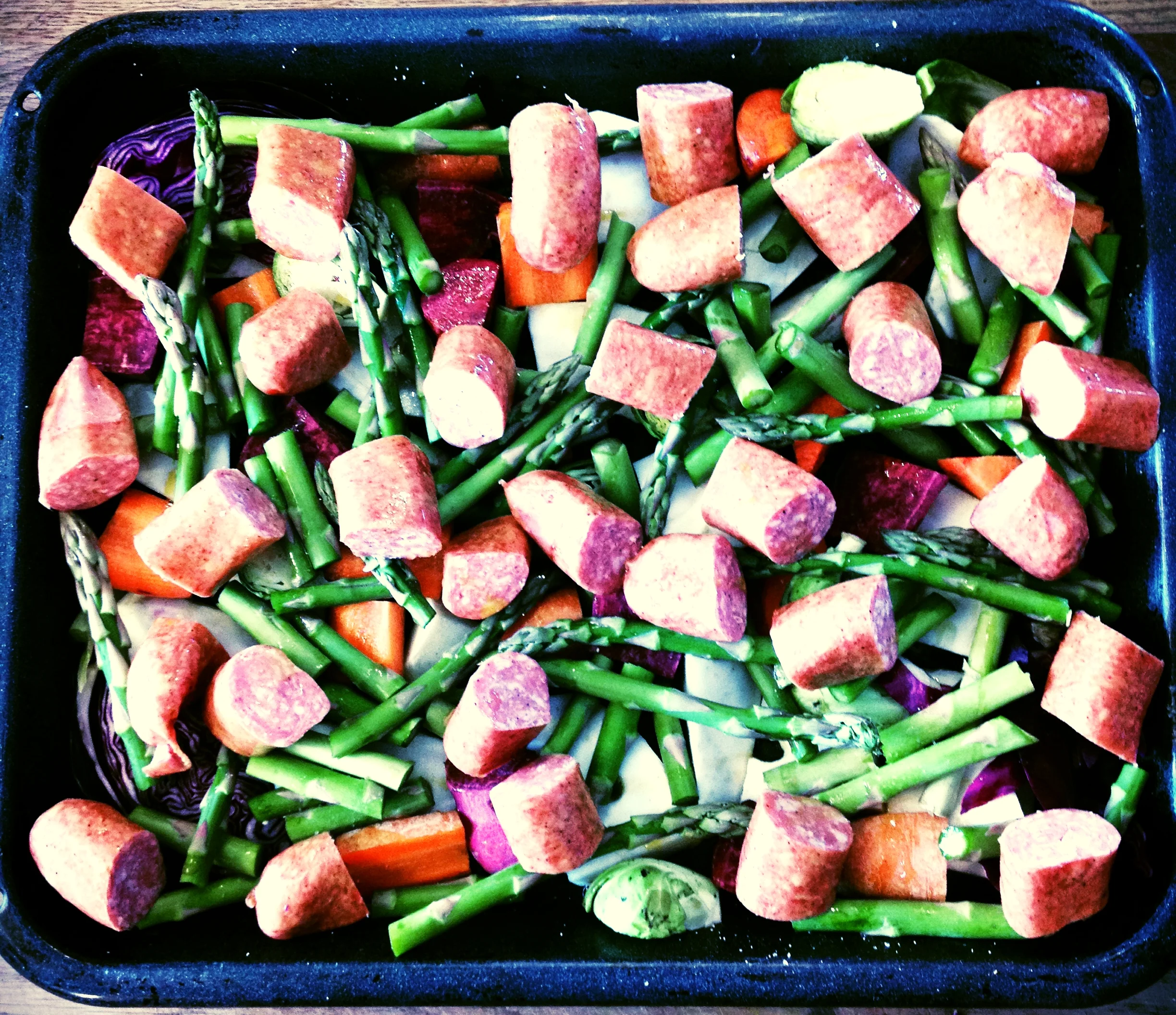
EASY SHEET PAN DINNER
If you have time, turn your oven on to 350F.
If you're in a rush, turn your oven on to 425F.
Slather a roasting pan with a good fat (I love to use bacon fat here, but butter will work or any other fat you have on hand).
Chop the veggies you have in your crisper. I added purple yams here, celery root, carrots, Brussels sprouts, purple cabbage and asparagus. You can also add frozen veggies to the mix. The only limit is your supply and your imagination.
You can add sausage if you like, or chunks of chicken. Chop them into bite size and scatter on top of the veggies.
Drizzle with olive oil (I used a basil flavoured one here from Blue Door Oil + Vinegar)
Sprinkle with salt + pepper, and any herbs if you'd like (rosemary or paprika is good!)
Pop in your oven, if it's at 350F it will take an hour. If it's at 425F, it should take 30 minutes or so.
#JERF
Other easy home-made meals: fry an egg and use it as topper to whatever veggies you got, throw some kimchi on the side for more flavour. Cook some easy veggies in a bit of fat, S+P and finish them by roasting in the oven at 375F. Make your own salad dressing of olive oil + apple cider vinegar, tossed over some shredded veggies like cabbage, green apple, carrots and green onions. Toss some asparagus in melted butter and squeeze some lemon juice over top. Perhaps the easiest and most nutrient dense meal idea: hard boiled eggs with some vegetable sticks. Roast a few chickens at a time, and shred the extras into freezer bags for easy retrieval on those busy weeknights. Toss leftovers together with some stock and maybe a bit of pasta, and flavour with some pesto.
If you're looking for a bit of support as you start easing in to cooking more at home, I urge you to check out Gluten-Free Girl and the Chef, they just recently launched a brilliant service called 'Feeding Our People'. It is a subscription recipe service, where you get one email a week outlining three recipes along with a shopping list. That first recipe is a 'big batch' kind of recipe, it is usually a fairly basic thing (like say, cooking a big batch of beans). The other two recipes show you different ways of using up this batch item you have prepared, making it go for at least three meals. This is a brilliant service, and one that will celebrate cooking simply at home, and making flavourful foods part of your repertoire.
Bon appetit!
MONDAY BASICS: choose pastured.
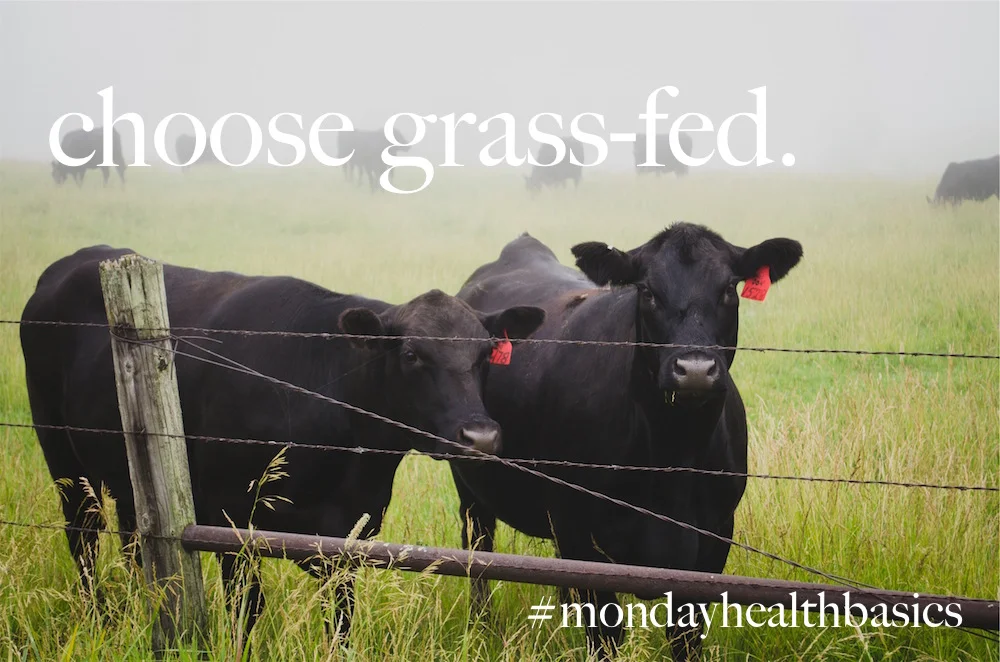
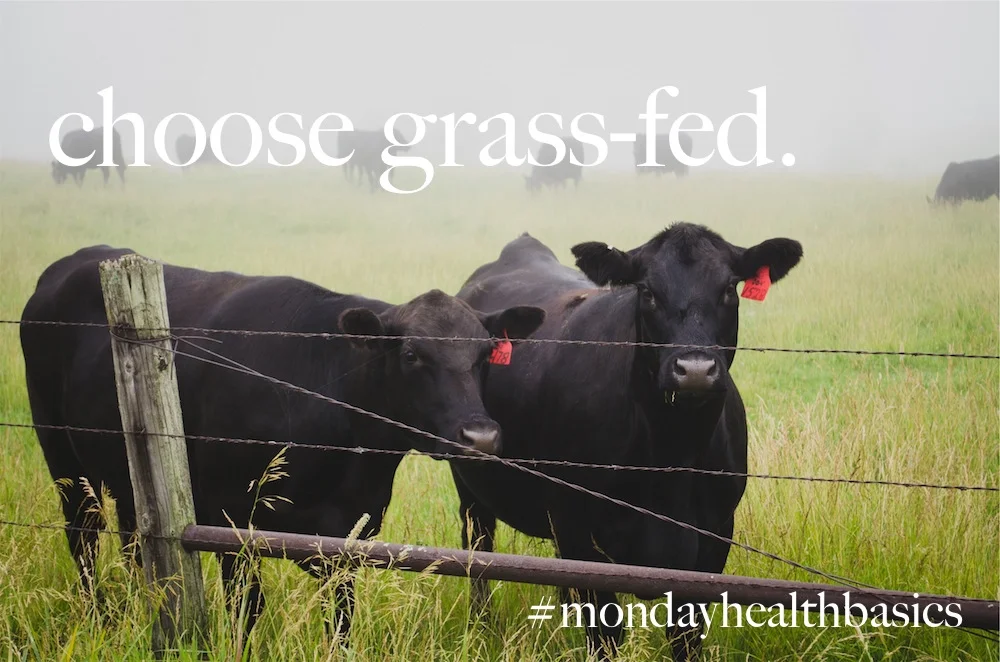
This week's topic is one that can be a bit of a hot button topic for some, and while I love a good debate, I will be talking simpler here. The impetus behind these weekly blog posts is to get the discussion going on how to choose our foods and make those lifestyle choices that are in support of optimal health, not to stir the pot. So this week's topic is about choosing meats, and reaching for grass-fed or pastured options when you're able to.
This week's topic is one that can be a bit of a hot button topic for some, and while I love a good debate, I will be talking simpler here. The impetus behind these weekly blog posts is to get the discussion going on how to choose our foods and make those lifestyle choices that are in support of optimal health, not to stir the pot. So this week's topic is about choosing meats, and reaching for grass-fed or pastured options when you're able to.
This blog post is not a debate on whether or not to eat meat. This blog post is not about the environmental impact of animals. (In fact, if ever you have a free three hour block, I'd love to chat about how animals can be of incredible benefit to the maintenance and building of our soils, adding those good minerals and compounds necessary to maintaining healthy soil, which means healthy produce. The status of our soils, friends! It's impacting everything! Barring our three hour convo, check out Joel Salatin either for his approach to farming as stated on his website, or in the chapter where author Michael Pollan visits Salatin's farm and has a pretty insightful conversation in the necessary-read The Omnivore's Dilemma. First and foremost, Salatin considers himself a grass farmer. The animals on his farm just help to grow grass and build soil.)
GRASS FED/PASTURED vs CONVENTIONAL
So what does it mean to purchase meat that is grass-fed, or pastured, or grass-fed/grain-finished and how does it differ from conventionally raised meat? It turns out that what the animal eats during its life can have a pretty big impact on the quality of the food.

For the animal allowed to live on pasture when possible, their diet closely resembles what has been a traditional diet for that animal for the last few hundred years. It is a low-stress way of living for the most part, and allows for the animal to munch on the foods they have been designed to consume. These foods are incredibly nourishing to the animal, providing key nutrients and easy-to-digest foods so that they can develop and grow at a natural and normal rate.
What does this mean for us?
The meat from these animals then is low in inflammatory compounds, seeing that the animal was able to consume foods as it was meant to consume. This means your pastured beef and bison will provide you with a good source of the anti-inflammatory powerhouse Omega 3 Fatty Acid, along with other fat-soluble vitamins and their precursors A and E, essential vitamins to retain the integrity of our intestinal lining, our skin and keeping free radical damage at bay. As if these antioxidants weren't enough, important compounds glutathione and super-oxide dismutase, also antioxidant powerhouses are in good numbers in grass-fed products. These nutrients are necessary for keeping our engines and liver running clean.
Let's talk fats
Oh yes, let me be clear: this is not just about the meat we are consuming. This is also about the other products we consume from animals, specifically the dairy. When milk comes from a pastured animal, the vitamin content will be higher in those all-important fat soluble vitamins A and K, necessary for skin health, intestinal lining integrity, brain health and bone health too.
For the animals that are to live their lives out in a conventional way (aka CAFOs, or confined animal feeding operations), their diet is drastically different than what their systems were meant to handle; they are also supplemented with extras like antibiotics to help support their health, as a health management tool if you will in order to ensure good profits for the farmers. Surprise though, those antibiotics end up actually fattening the animals up faster, in order to get them sooner to slaughter. The problem is, an estimated 80% of the world's antibiotics is being used in agriculture. Such a huge amount of antibiotic use is now contributing to creating superbug infections in humans, due to antibiotic resistance as outlined by the World Health Organization. What does this mean? The frequent use of those antibiotics will harbour a space where bugs can build resistance, and no longer respond to our number one weapon, our antibiotics.
Furthermore, the antibiotics in the animals remain in the meat we consume, and these contribute to wiping out our own gut flora. This means consuming meat that has been raised conventionally will have a negative impact in throwing our microbiome/gut bugs/flora/probiotics out of balance, which will contribute to further inflammation in our bodies and toxin load on our livers.
Antibiotics are not the only supplement these feedlot animals are fed. Some get hormones and steroids supplemented, and their feed is not the kind of food the animal was meant to consume, nor made to digest. Imagine when you have a serving of a food you have trouble digesting. Know how you feel? Imagine having that meal every day. While being crammed in a small space. With a lot of other animals that feel like you do. Those are not conditions that are supportive to the animal; they contribute to higher stress levels too.
Back to the fat
And where do these toxins get stored? Always in the fat. So consuming fats from pastured animals will better serve you, my friend than reaching for the sources from conventional animals. By choosing butter or milk from a pastured cow, you will be reducing the toxin load your body has to deal with. And will get better nourishment from those food sources, as they will be higher in the fat-soluble nutrients.
But dairy is not the only fat source from an animal; if you are consuming cuts of meat from a pastured animal, go ahead and eat the fat! Rendered fat from a pig is called lard and fat from a cow is called tallow. When the lard or tallow comes from a pig or cow that was fed on pasture, the nutritional profile reads such great amounts of Vitamin A in retinol form, the animal version we need for the health of our intestinal lining. It is also a fabulous source of Vitamin D, a key player in thyroid function, essential to our immune health and bone building and maintenance to mention a few.

happy pigs
Consume meat from an animal that has been raised on pasture and you will be making a choice that will support your gut flora, not to mention up the nutritional ante of your meals. Those fat-soluble vitamins are critical for our optimal health!
For the love of your skin, your intestines, your brain, your bones, your glandular system, your reproductive system, heck for your lovely body from head to toe, aim to reach for animal products from animals that were fed on grass more often than conventional sources and your body will thank you.
If you're new to pastured meats or grass-fed products, may I suggest contacting Alberta Farm Fresh Producers Association, an organization working to connect local farms and local people. Come August this year, Alberta Open Farm Days will be on again; follow their missives on how they work to connect local farms with people in the province at their website.
I also have connected with a few local small farms that specialize in pastured animals; look for them via my facebook page (Scroll down to 'Liked by This Page'). If you're a local producer, I would love to connect!
And it's a good-better-best kind of scenario, friends. If you're new to consuming pastured products and are put off by the higher cost, start by going 40/60, and adding a few good things at a time. Or purchase cheaper cuts of meat to get started; you can also eat smaller amounts of meat, knowing it is more nutrient-dense you don't have to consume big cuts.
You will find an interesting series exploring Red Meat online here. Chris Kresser explores the health benefits of nutrient-dense red meat in a series of articles, and includes some yummy recipes too. Looking to explore the environmental impact a bit more? This series may be for you.
And if you're really curious to understand a bit more about the health and environmental benefits of consuming products from animals raised on pasture, might I point you to this comprehensive article from the Weston A. Price Foundation called Splendor From the Grass.
If you've read this far and are interested in further discussion on the health benefits mentioned above, I will be talking about this in Tuesday night's presentation on NAVIGATING FATS, happening in the NW of Calgary. Follow this link for more information on the presentation; pre-registration is required. $20 per person, plus a demo on how to make a nutrient-dense delicious addition to your pantry. I'd love to see you there!

Phat Fats & a Giveaway
My dearies. I have an evening workshop on WHY FATS and WHAT FATS and PHAT FATS (I think that should be the new working title, no?). It's coming up next Tuesday evening the 22nd, so next week. I'd love to have you come to the event! (Full event details by clicking here) So...
I AM DOING A GIVEAWAY.
Because I want you to come.

SHARE this post (handy dandy 'share' button at the bottom of the blog post) and your name will go in a draw next Monday morning for a chance to attend this talk next Tuesday night. I'll be giving away TWO tickets for this event, so that you can bring a friend if you like! Because friends let friends eat the good fats.
Contest closes at noon on Monday March 21st, 2016. Share away! And then fire me word via the facebooks or email at lukasymons@gmail.com to let me know you did just in case. (And let's talk fats too, shall we?) xx

THE DEETS:
In this current era of instant-information and seemingly contradicting information on what foods are good for you, which ones we should omit, it can sometimes be overwhelming trying to 'do the right thing'. In this one-hour presentation, followed by a Q&A, Holistic Nutritionist and local foodie Luka Symons will be helping you navigate through the information on Why Fats are Good, which ones to choose, which ones to omit from your diet and recommendations on how to include the good guys in your every day meal plan.
From heart health to immune health to hormonal balance and the all-important brain health, including healthy fats is a quintessential component to supporting our bodies for the work they do every day. In traditional cultures, fat was an essential daily component of the diet, and with good reason. We will look at saturated, unsaturated, cholesterol and heat tolerance. We'll look at which fats to use where in your cooking as well. As a bonus, I will demo how to make your very own creme fraiche at home, a full fat lactose-free dairy delight, sure to tempt your palate.
Cost is $20 per person, and seating is limited. In order to reserve your spot, please contact Renewal Homeopathy and Wellness at 403.202.8507.
I look forward to seeing you there!