
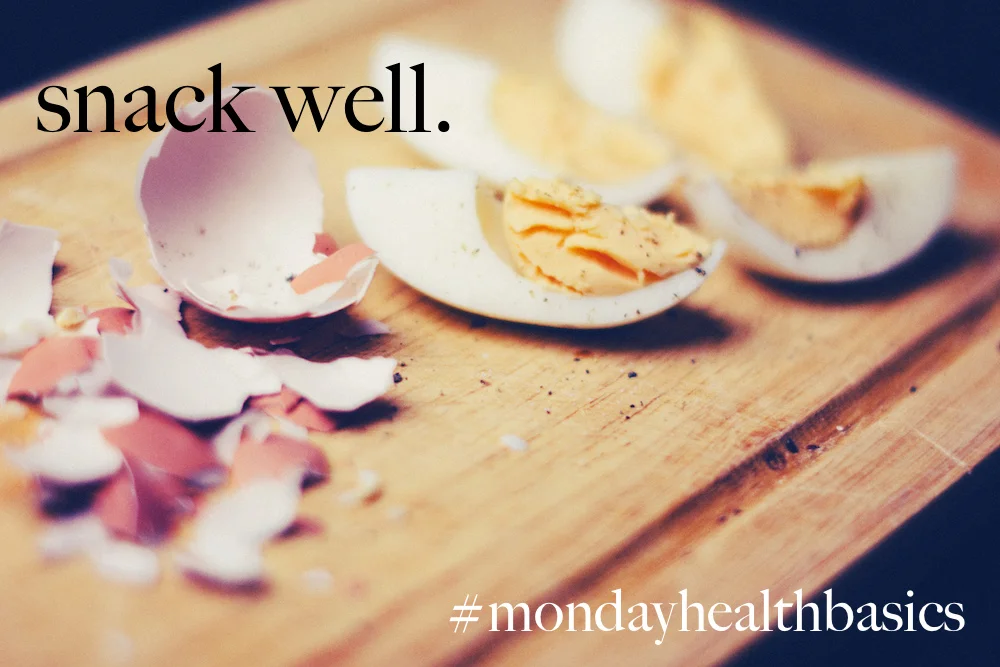
MONDAY BASICS: snack well.
I am a big believer in feeding the hungry beast, aka your belly. It's 2016, you say. Your days are full up. You have places to be, people to see, and sometimes grabbing food on the go is what is called for. And I get that! Eating nutrient-dense meals when out and about can feel impossible at times.
But today's post is about being prepared: if you have the good things at hand, you will be snacking well. And snacking well will serve you well for the people to see and those things to do that are on today's agenda.
This post is meant to inspire a sort of template to think about, when it comes to packing snacks. Whether you're an all-day-nibbler, busy at work with clients and short breaks, traveling or out-and-about, this list of nutrient-dense munchies is sure to nourish your body to get at the work at hand.
I am a big believer in feeding the hungry beast, aka your belly. Before I jump in to the idea behind snacking well, I want to make it clear that I really believe that if you are eating nutrient-dense meals and supplying your body with some good eats on a regular basis, foods that fill you up, you will drastically reduce those between-meals hunger pangs and cravings to a dull roar, or in my particular case, to not even a whimper. If you want a good primer on how to eat real food, inherently making your foods nutrient-dense, check out this past blog post o'mine. Know that I have on the horizon a write up on just what is nutrient density.
But it's 2016, you say. Your days are full up. You have places to be, people to see, and sometimes grabbing food on the go is what is called for. And I get that! Heck I am writing this from my parents' kitchen counter late night about to travel all day tomorrow. It's what is fuelling this post. Eating nutrient-dense meals when out and about can feel impossible at times. But today's post is about being prepared: if you have the good things at hand, you will be snacking well. And snacking well will serve you well for the people to see and those things to do that are on today's agenda.
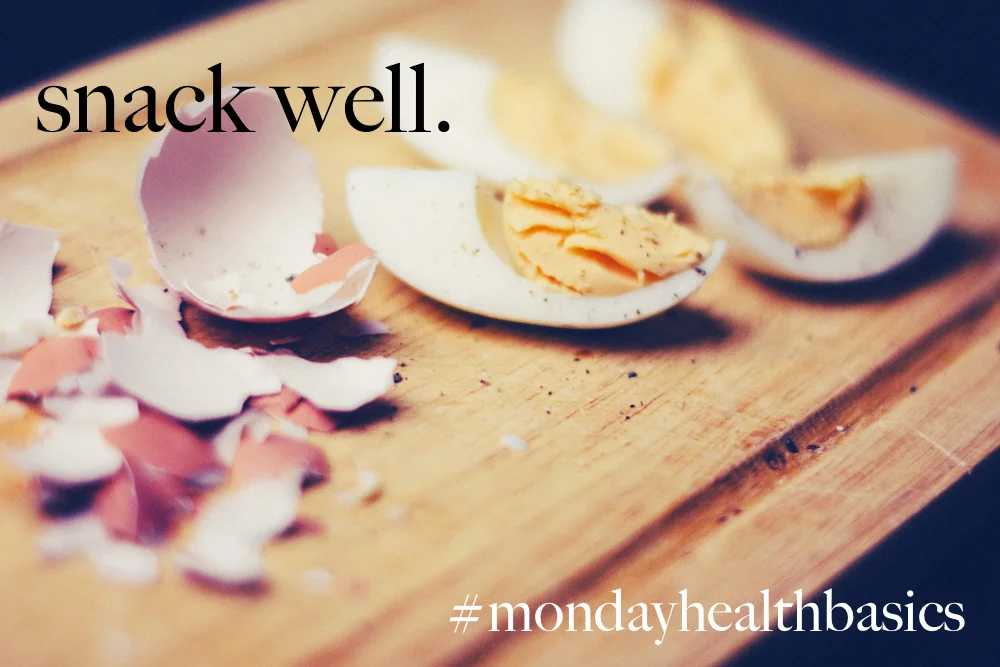
This post is meant to inspire a sort of template to think about, when it comes to packing snacks.
Of course if you're an all-day-nibbler, these can be the perfect way to fuel your day. If you're the kind of person who gets 15 minutes between clients and can only manage to get some food down the gullet in that short turn-around time, then this post is for you too. If you're the kind of person who gets caught up in the day's work and your to-do list, then my wish is you will find in this post some ideas on how to best fuel your day's work. If you have some traveling in your near future and want to have some snacks at hand for yourself or for any littles in your company, this is a great way to have those edibles ready for when the moment strikes. Pair a few of these together for a picnic in the park! Tis the season, after all.
How I approach this idea:
I like nutrient density. This means primarily reaching for foods that will have a healthy amount of good fats or solid hits of protein. Carbs happen to be almost an after-thought, and certainly not the main impetus behind the snacks.
Not sure as to what is considered a good fat? Check this previous #mondayhealthbasics post here for a good rundown.
When I say good hits of protein, I mean both animal and plant-based proteins. When it comes to the animal products, I encourage you to seek out meat and dairy from animals that have been raised as they were originally intended, on pasture. Check out this previous #mondayhealthbasics post for the run-down on why you should choose grass-fed.
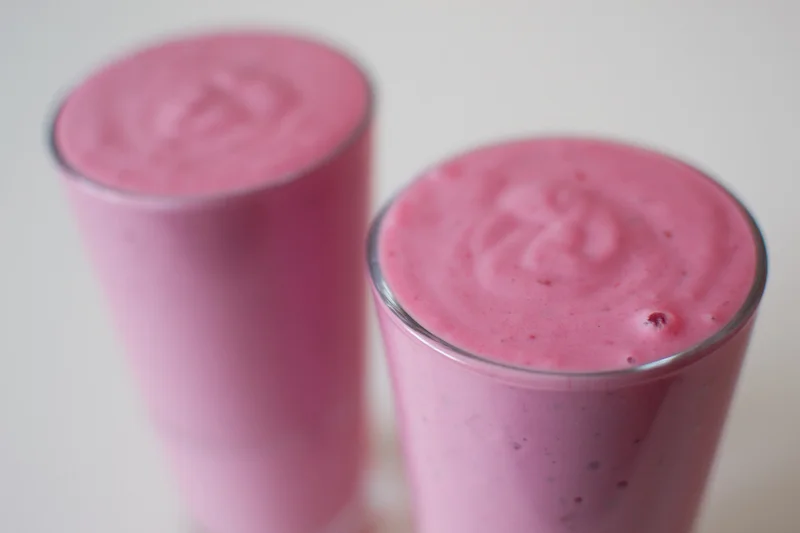
Smoothies can be a nourishing way to get good foods in your belly. Ensure a good fat or protein is in the mix!
This list is one that I often share with clients, in order to help inspire them to draw up their own list of quick and easy nutrient-dense grabs that they can easily take with them on their way to work, or for the day of errands or traveling.
I am a big lover of all things plant-based, and pastured animal products too. I often tend to join together a good fat along with a low-glycemic fruit, or a satiating protein coupled with a veg or fruit. What I am looking to provide your body here is the nutrient-density that will slow the release of the nutrients found within the snacks, helping to keep your body satiated for a longer period of time. Eating a fruit by itself will be digested fairly quickly; it gets converted to simpler carbohydrates and sugars into your blood stream within 20-30 minutes, providing a quick hit of energy but then setting you up for a rapid slump. Eating foods high in carbohydrates and available sugars like fruit on its own (or that flaky pastry in the meeting room you just can't pass up) will contribute to blood sugar imbalances, setting you up for a crash in energy soon after, foggy brain, and further upsetting your hormonal balance.
It is this hormonal balance that plays a part in influencing your body's food cravings. By providing your body those nutrient-dense foods full of good fats and protein, you slow down the release of the entire snack to your bloodstream as it takes longer to break down fats and proteins. This slower release of nutrients will supply you with a more steady and reliable fuel source to best nourish you through your day, helping again to balance those blood sugars and assisting in balancing hormones too.
Nutrient dense munchies (plant sources)
olives
nuts
seeds
avocado half, drizzled with olive oil; add chopped tomato and cilantro to make it guacamole-ish
fat bombs (find easy DIY recipes here)
make a smoothie to take to work, ensure you add a good fat to the mix (coconut oil, a nut butter, MCT oil, cocoa butter, pre-soaked nuts and seeds )
hummus
no-bake cookies like these almond + oats ones from local CHN Lisa Gillespie
DIY granola (I love this paleo version here)

Nutrient dense munchies (animal sources)
hardboiled eggs (So easy! And so filling! And so nourishing!)
pepperoni sticks from pastured animal sources, no nitrates
leftover bacon
wrap bacon around avocado slices or asparagus or green beans, bake in 400F oven until crispy
chicken livers wrapped in bacon, baked in 400F oven until crispy + cooked through
shrimp
smoked salmon
mash a can of sardines or tuna with half an avocado, add curry powder, S+P
cheese
cottage cheese
cup of meat stock, add chopped chives and seaweed
make quick smoothies to take to work high fat yogurt or milk kefir as your base
add a scoop of collagen powder to your smoothies
chicken liver pate (this one looks delicious)
make big batches of easy meatballs (ground bison, onions, shredded carrots, greens)
Pair a good fat with a fruit or veg
Slather almond butter on banana slices, sprinkle cinnamon to make it fancy
Mix 1 tbsp butter with 1 tsp honey, you have frosting for your apple
make your own greek yogurt and add pesto for a dip with crudites (carrots, jicama, peppers, celery)
mix yogurt with berries and maple syrup, sprinkle on hemp seeds for added protein and fats
make your own guacamole with crudites or sprouted nacho chips
chicken liver pate with chopped veggies
air-popped popcorn (organic!) with lots of butter, good parmesan and hot sauce
core an apple, slice in rings, slather in PB and sprinkle on coconut shreds
almonds in raspberries
DIY trail mix of a nut, a seed, a dried fruit, coconut ribbons, cacao nibs
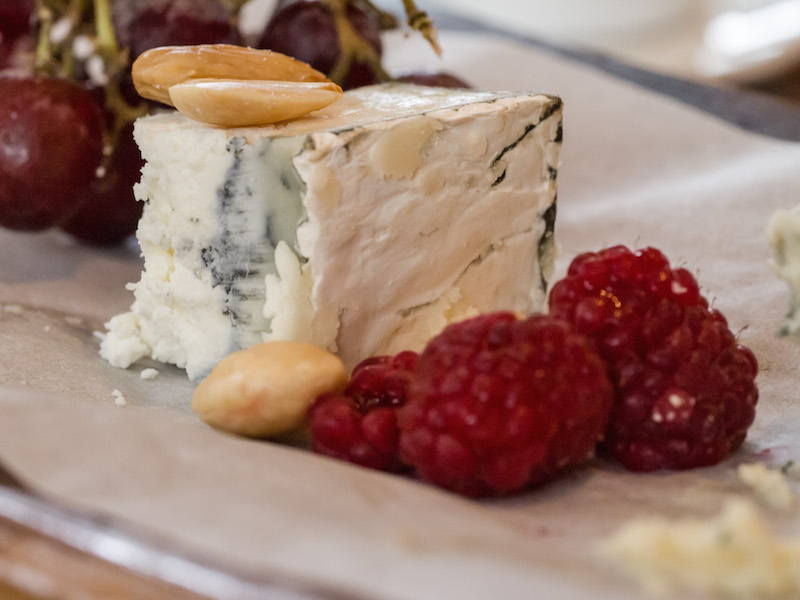
cheese and fruit (blue cheese and raspberries; gouda and apple; brie and blackberries)
celery sticks with nut butter, raisins (ants) or cranberries (fire ants)
tzatziki with veggie rounds
make easy kabobs on bamboo skewers (cheese, veg, leftover sausage pieces, etc)
wrap peaches or nectarines with good quality prosciutto
sprouted grain crackers with cream cheese and strawberries

If you don't feed the beast, you may find yourself unable to say no to that flaky pastry from the lunch room. And the black coffee.
Straight up packaged foods when you need to keep a stash at work
dark chocolate coconut bars (skip the agave, aim for high fat content)
kale chips
coconut chips (read your labels – watch the oils, choose one with few ingredients)
good quality nut butter cups, low in sugar (read your labels – say no to agave)
sprouted nuts/seeds trail mix
halvah
nutrient-dense energy balls (check the ingredients)
What kinds of snacks do you reach for on your busy days? How do you play with your food when your days are busy? I'd love to know!
MONDAY BASICS: make your own dressing.
Pardon my late posting, I am on holidays. But I am still eating food! And today's blog post, albeit a short one, is one that is an easy thing to swap in. We'll talk about how to manage this at home, and how to manoeuvre this idea whilst on the road. Today's post is about how to DIY your own salad dressing, and why you might want to.
Pardon my late posting, I am on holidays. But I am still eating food! And today's blog post, albeit a short one, is one that is an easy thing to swap in. We'll talk about how to manage this at home, and how to manoeuvre this idea whilst on the road. Today's post is about how to DIY your own salad dressing, and why you might want to.
Let's take this down to brass tacks. Salad dressing is usually made of a liquid oil of one sort, and mixed in with a tangy or tart ingredient. Sometimes there's a creamy bit added, some recipes call for fresh herbs and other flavourings, but really it's all about the ratio between oil and tang, would you agree?
When you're making your own, it takes all of maybe 2 minutes to make, from taking your ingredients out and mixing until it tastes just to your liking. While I understand the convenience factor in reaching for the already-prepared jar in the fridge, today's post is meant to sway you over to the DIY camp, all in the name of better health.
Why I'm not a fan of bottled dressings
The oil used in manufactured dressings are usually lesser in quality than ones you use when making your own. Read your labels, and get to know which oils are good, and which ones you should refrain from consuming! I generally shy away from oils that are high in omega-6 fatty acids like canola, soy, sunflower, safflower, grapeseed oil. A typical diet in North America is quite high in omega 6s.
For our bodies to be efficient at keeping inflammation down, we need to look at a healthy ratio of omega 3s to omega 6s. We should be aiming to balance it out at 1 omega 3 for every 2 omega 6s, or in a ratio of 1:2 for omega3:omega6. The way we eat in our part of the world, our ratio is closer to 1:20 in terms of omega3:omega6. The oils listed above contribute to tipping the scales in the opposite direction of what we would like, increasing our intake of omega 6s and thus contributing to increased inflammation in our bodies. I have a post on this topic that goes into further detail if you're interested; head here for the full write up on EFAs.
In my case, I'd rather make my own salad dressings using fats that are excellent sources of omega 3s, in order to help close the gap and tip the scales in favour of decreasing the inflammation in my body. My favourite oil to use is a good quality olive oil, always an excellent source of those all-important omega 3 fats. In reaching for this health-supportive fat, I am looking at reducing my ratio from 1:20, bringing it closer to my goal of 1:2 omega3 to omega6. Avocado oil would be another healthy fat rich in omega 3s. Hemp oil has a good amount of omega 3s, but still contains a higher amount of omega 6s. It isn't my first choice.
Another good reason to ditch the bottled is because of the processing that happens in the processing plant with these oils. Mark's Daily Apple goes in to a thorough exploration of rancid oils and their health effects on our bodies; find that article here. When the dressings are processed and bottled, they go through a heating process in order to make them shelf-stable. A rancid oil is one that has been oxidized, in other words exposed to light, heat or oxygen. This has a negative impact on the vitality of each and every cell in the body, wreaking free radical damage and inviting inflammation in every organ at every level. It's just not worth it.
These liquid vegetable oils like canola oil are highly susceptible to becoming rancid, and so the food producers have figured out a way around the oils developing that tell-tale taste that tells you the oil has gone bad, giving it that rancid taste. They use chemical deodorizers in order to take that taste out, so that you are no longer able to detect whether or not the oil you have in your hands has gone rancid or not yet. This processing step typically relies on high heat and different chemicals to strip the taste out; as you can imagine, these processing steps contribute to further oxidation, thereby making these oils even more susceptible to being rancid.
And in case you're still reading and looking for another reason to ditch the bottled stuff, most of the oils used in these prepared dressings are ones that come from crops that were genetically modified. Genetically engineered foods are being studied to see what their impact is on our gut flora we are cultivating, a key player in our wish for optimal health. This isn't something you want to mess with.
I like you too much to see you consume bottled dressings. Reach for the jam jar friend, and mix your own.
Read on for some good ideas and templates later on down the post.

Why I love salad dressings
There are plenty of reasons to douse your salad in some good homemade salad dressing. There's the taste factor, of course; goes without saying. There's the assistance of an acidic addition (lemons, apple cider vinegar, balsamic) that will help rev up your stomach to be ready to digest the meal at hand. (This helps set a good pH for your stomach to turn your digestive enzymes 'on' in order to break down the protein in the meal at hand.)
My favourite though is that with the addition of a good fat, not only are you consuming more omega 3s (and thereby helping your body curb inflammation), you are also ensuring your body is better able to absorb the vitamins and minerals found in the salad you're eating. Some of the nutrients found within the veggies in your salad are fat-soluble ones, meaning you can't absorb them and get them in to your body working for you unless they are ferried in to your body with a good fat. (I did a wee post back in February of this year on what is a good fat. Find that article here.) A good way to think about it: you need the fats and enzymes contained in the dressing ingredients to maximize the nutritional content of your salad!
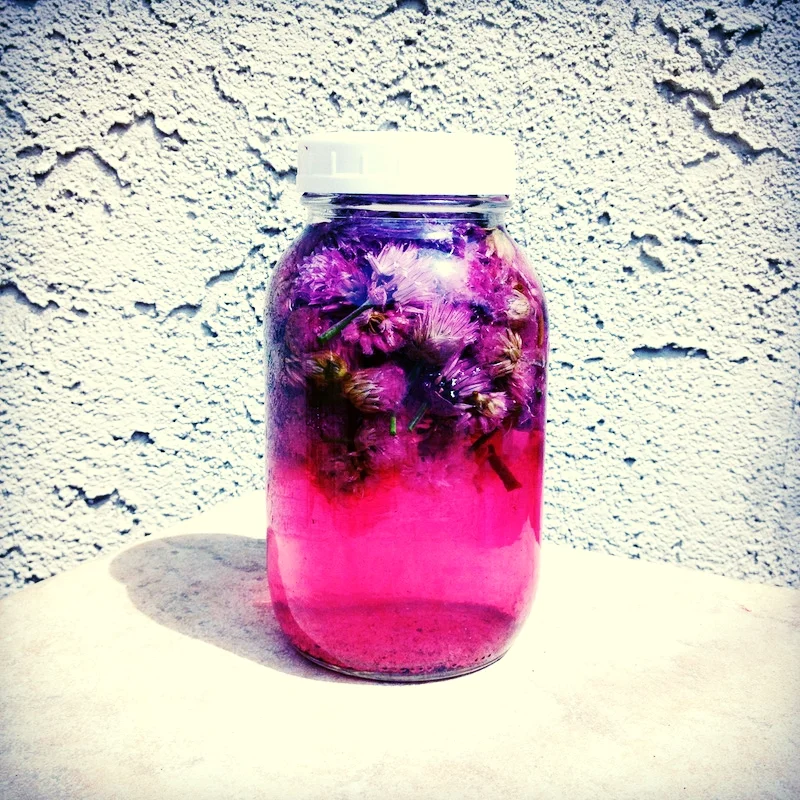
DIY chive blossom vinegar: in a jar, drop your chive blossoms. Cover with white vinegar, allow to steep on shelf for 1-3 months.
So hopefully by now, I have convinced you to try your hand at making your own dressing. It's really a pretty easy thing to make, and you can make just a little or a big batch of your favourite dressing, keeping it on hand for easy meals in the coming days and perhaps weeks.
General Salad Dressing Rules + Ideas
always dress your salad at the last minute if it is a greens-based salad, just before serving
if your salad is more robust with root veggies or grains as the main players, dress your salad early and allow the flavours to mellow and develop at least one hour before the meal
aim for a ratio of 3 parts oil to 1 part acid (vinegar or lemon)
always taste your dressing and adjust to your liking (more salt for deeper flavours, more lemon or vinegar for extra tang)
you want your dressing to jump out at you, as it will mellow once on your salad
if you are mixing in fresh garlic to your dressing and are using oil, use it up within 5 days of making it
consider adding fresh herbs, for added flavour, greens and health benefits
try different types of vinegars for different flavours, or flavoured balsamic vinegars for fun twists (I love the maple balsamic for summer salads, and the coffee flavoured vinegars for winter-y root salads)
on the same topic, reach for a flavoured olive oil from local small shops; my favourite is the fine folks at Blue Door Oil + Vinegar
aiming for a creamy dressing? toss in half an avocado in the blender, or use yogurt or creme fraiche as your base
instead of using vinegar or lemon juice, consider using the juice of one of your ferments (kimchi juice! Kombucha that was left out for too long! A fruity water kefir you can't get enough of!)
make your own infused vinegars for salads year long. My current favourite is my chive blossom vinegar, pictured above.
toss in a bit of a nut or seed butter if you want a creamier non-dairy dressing
if you are looking for salad and dressing ideas, head to my month-of-salads wrap-up from 2015
I love salads so much, and sometimes post my meals on Instagram, along with recipes. Connect!
I have a whole section on Pinterest focusing on salads and dressings. Check it out here!
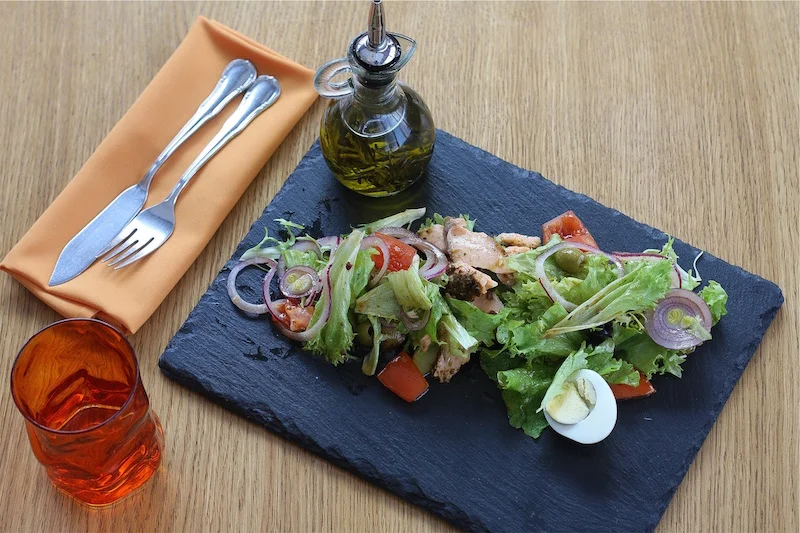
What to do if you're on the road or eating out
It can be tough to navigate a menu while out and about or on the road for a few weeks, with the idea of keeping things healthy. Sure, salads usually mean loads of veggies, but what about the dressing?
There's an easy way around this: simply ask your server what kind of ingredients are in that dressing you're wishing for. If it comes from a bottle, you may want to request a simple olive oil and balsamic dressing instead. I did this at a restaurant last night in fact; they brought me only olive oil. I just used a splash of the vinegar that was on our table, and a dash of S+P and let the veggies sing their flavours, instead of sickly-sweet-syrupy-fake dressing. (Can you tell how I feel about these things?)
You can also ask for the dressing to come on the side, in order to use less.
Bon appetit, mon ami(e). Now go play with your food.
MONDAY BASICS: flavour your water.
The heat is coming back to the prairies this week. I'm sure it's close to cranking up where you are at as well, dear friend. When the thermostat starts going up, it's time to increase the water intake, mon amie. This is to replenish those fluids lost in sweating, in order to keep our temperature in the safe zone. Never mind the heatwave, water is just all-round good for you. But sometimes plain water just doesn't cut it. Today's #mondayhealthbasics post explores good alternatives to plain-jane-water in order to wake up those tastebuds and inspire you to guzzle the good stuff.
The heat is coming back to the prairies this week. I'm sure it's close to cranking up where you are at as well, dear friend. When the thermostat starts going up, it's time to increase the water intake, mon amie. This is to replenish those fluids lost in sweating, in order to keep our temperature in the safe zone.
Never mind the heatwave, water is just all-round good for you. But sometimes plain water just doesn't cut it. Today's #mondayhealthbasics post explores good alternatives to plain-jane-water in order to wake up those tastebuds and inspire you to guzzle the good stuff.
First and foremost, let's be clear: water is so very good for you. My very first #mondayhealthbasics post touched on the importance of consuming water in your day, talking about the timing of your intake as well. You can find MHB post #1 right here. (Key point: stop drinking 30 minutes before a meal, try to reduce your water consumption in meals to none at all, and wait one hour afterwards to resume your drinking.)
It should also be noted that reaching for filtered water or spring water will be of benefit to you, as opposed to tap water. Find that MHB post here.
The third time we explored the importance of water, it was in the spirit of supporting your liver and detox function. Find that nugget here.
For this fourth time talking about this most integral component of our body's functioning, necessitating its daily consumption, we're going to look at easier ways to get that stuff down the gullet.
I personally love water, but I do find aiming to consume two litres per day can sometimes feel like a bit of a chore. Spiffing up the flavours of the water encourages my daughter to reach for a beverage more often. ... OK truth be told, not just her. Let's go over some ideas then, to get you started. I look forward to hearing the flavour combos you will dream up!
Stretching The Strawberries
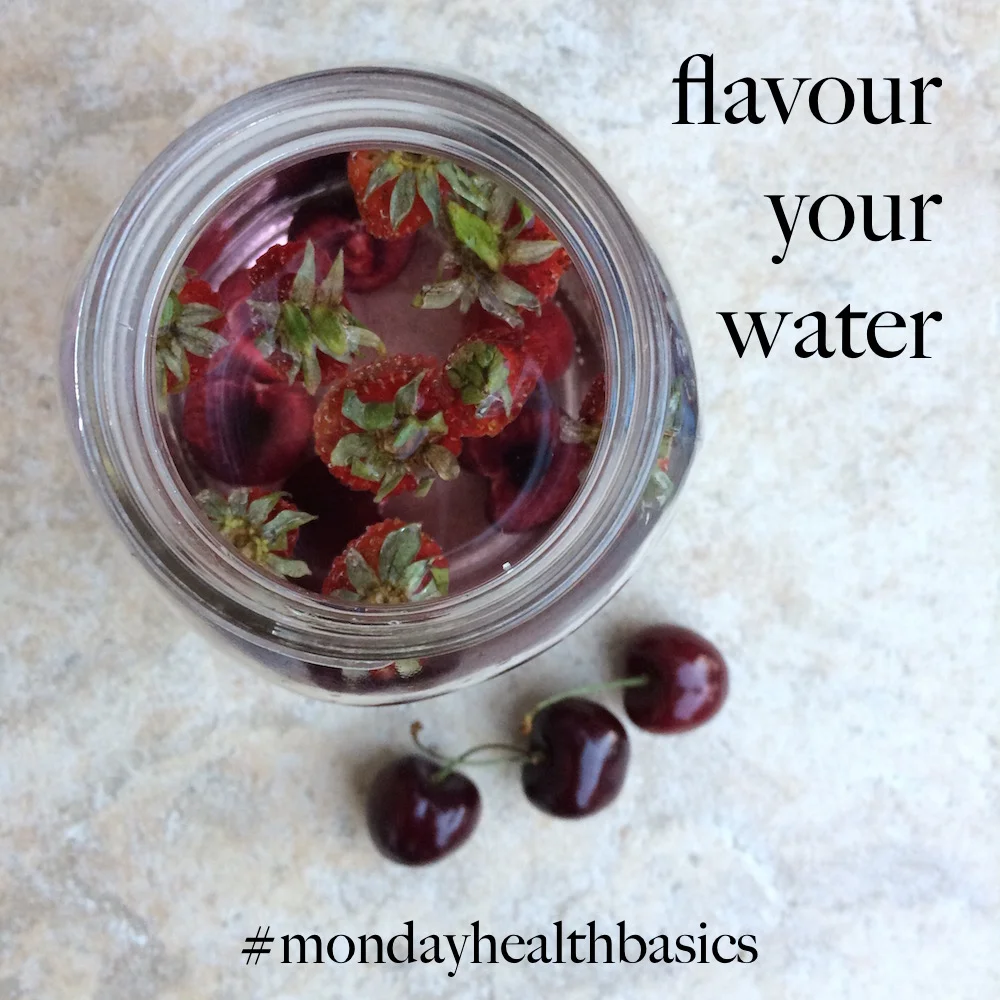
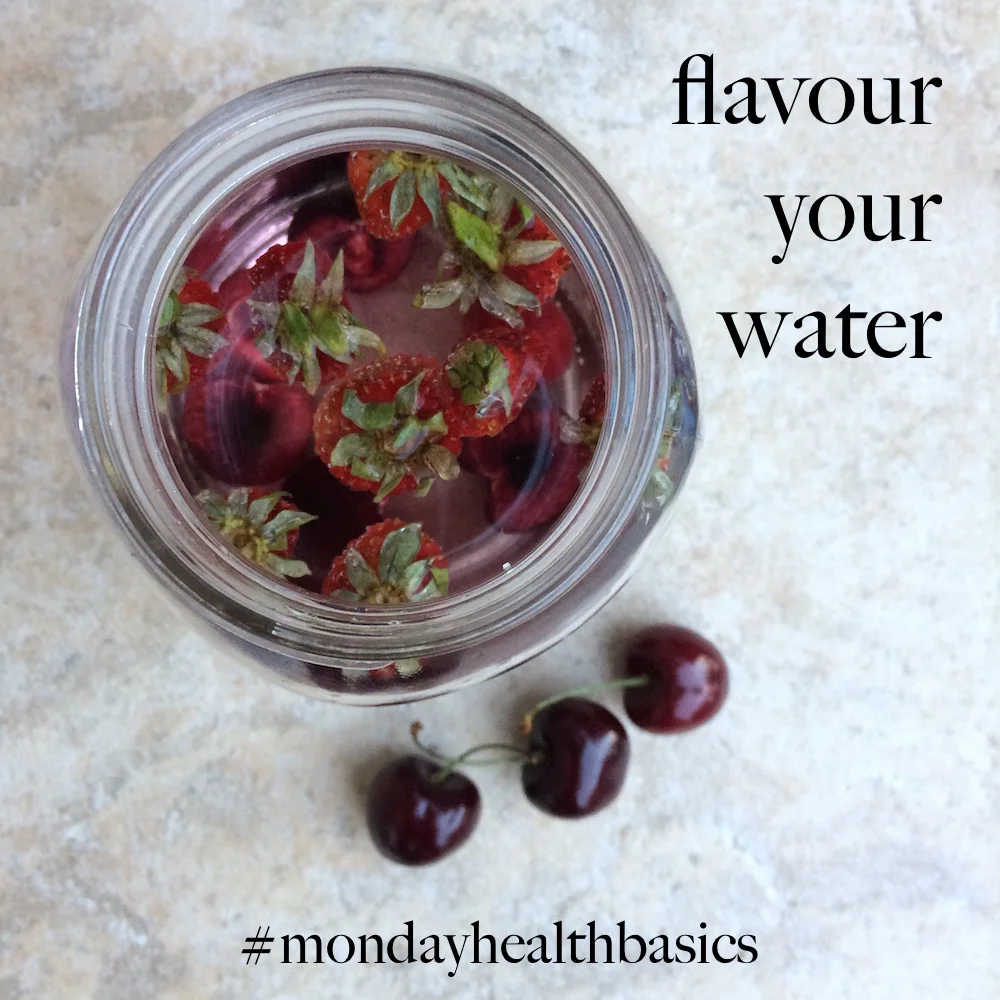
Berry season is upon us, and who doesn't love gorging on these delicious fruit when they are at their peak? I am a frugal one, and so this is how I like to stretch this abundant season, using up every morsel: after I wash the berries and before consuming them, one needs to trim the tops off, yes? I simply pop those in a jar, and top up with filtered water and tuck the jar in the fridge. Next day, yummy strawberry-flavoured water awaits.
You can also add other fruits or herbs to the mix here, fresh or dried. Imagine strawberry and basil, wouldn't that be yum? You can toss in a few chopped cherries to the mix too, a pinker hue shall ensue.
Minty Cuke Refresher
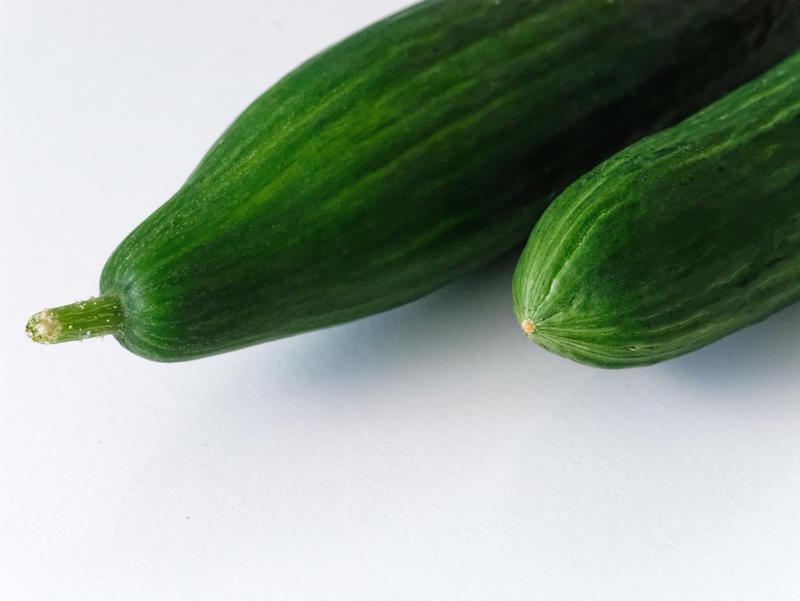
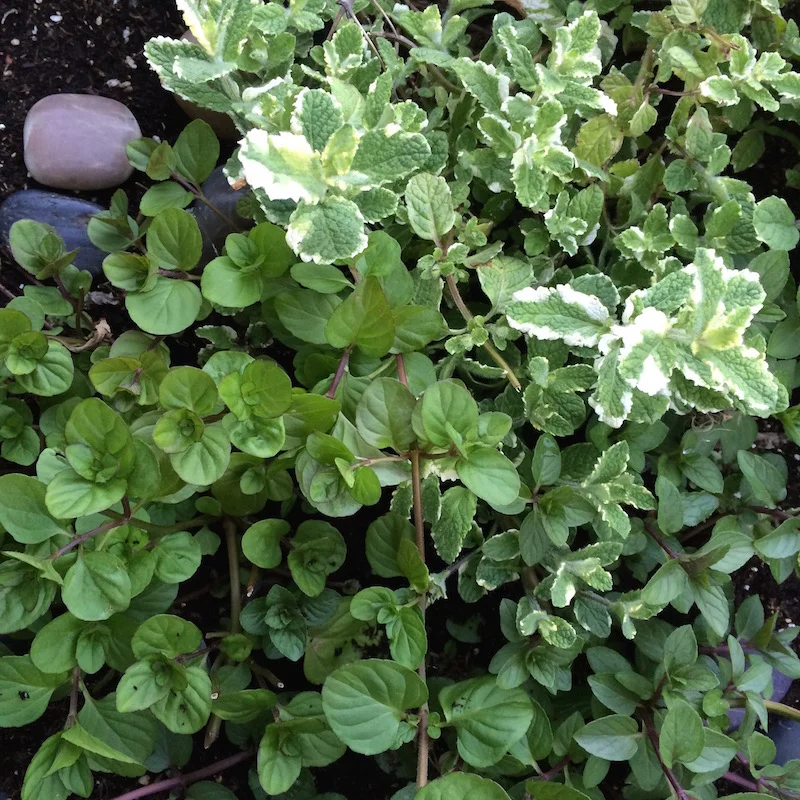
This combo is perhaps one of the most popular ways of adding zing to your plain-jane-water. Simply toss a few leaves of mint at the bottom of your jar, up to 1/4 cup if you are going for a full litre of water. Using the back of a wooden spoon or a proper muddler, bruise the leaves in order to release those volatile oils; this is the trick to really enhancing the flavour. Add in half a cucumber cut into rounds, and fill up the brim with filtered water and again, tuck in the fridge overnight. Tomorrow morning's water will have everyone at the office jealous of your tastebuds.
I grow a few different kinds of mint every year for just this purpose. It isn't too late to add a pot to the deck, and pick up a few interesting flavours of mints at your favourite local garden centre. This year, I planted Pineapple Mint, Chocolate Mint and Orange Mint. Yum!
Liver Loving Lemon + Citrus Delish
It may seem tried and true, but it's a stalwart for a reason: lemon is probably one of the most refreshing flavours out there. Double bonus, you get to take in some additional vitamin C whenever you add citrus to your drinking water! Lemon is a great liver-lover, helping you detoxify as the day goes on. (Remember that MHB post?) A good rule of thumb is to aim for about half a lemon per litre of water. You can juice it yourself, or slice the fruit up into quarter or rounds.
If you want to try something new, add some lime slices to your beverage. Or switch it up and toss in a few rounds of orange slices. Better yet, toss in all three and make it a citrus-y kind of day! Wouldn't grapefruit be incredible here? Best combo for the hottest day of the year, or for toting around to the events at Stampede or for Folk Fest.
Watermelon Quencher
I have a friend who used to bring her water bottle filled with watermelon to yoga classes. I was always jealous, and then I tried it myself. And realized sheesh it's as easy as pie, why hadn't I thought of this before?
Slicing up some watermelon, honeydew or cantaloupe into cubes adds an almost ice-cream kind of flavour to the water. You will get bonus points for adding fresh basil or mint to this combo.

The Tropical
So the heat is rising, and you start to wonder if you haven't ended up in the tropics: there's a drink for that. To your litre-sized glass jar, add a handful of fresh pineapple cubes along with your water, and allow to mellow in the fridge before consuming.
Want to jazz it up a bit? Grate some fresh ginger in the mix. Or toss in some cucumber here too. Could be a fool-proof way for your littles to get the water down in order to save them from heat stroke, keeping them cool!
The Sun Infuser
You don't have to simply use fresh things and allow them to meld in the cool of the refrigerator. Why not add a few dried hibiscus petals to your litre of water and allow to brew under the heat of the sun on your back deck for the day? Pop it in the fridge to cool it down, and consume this zinger over the course of the next day. Bonus again here, extra vitamin C for your sweet self. Why not try this way with any kind of flavoured tea brew or herbs? One of my favourites these days is the Okanagan Rooibos blend that I purchase at my favourite local health food store. It screams summer, mon amie.
The Ice Cube Method
Another option might be to blitz some fruit together a bit until chunky, and toss in an ice cube tray in the freezer. When fully frozen through, pop them out and tuck into a freezer bag and when you are ready to consume, simply toss a cube or two in some water first thing in the morning, allowing them to melt right into the water. A great way to prep for 5 minutes for a week's worth of flavoured water.
Combos I'm thinking of right off the top of my head: frozen mango and raspberries; lime and blueberry; peach mint and blackberries. The flavours are only limited by your imagination! I have some rosemary growing on the deck, I wonder what kind of fruit will work with it... rhubarb maybe? I'll have to report back. What about adding edible flowers to your ice cubes? Violets are gorgeous, and yummy.
Fizzy Water
There are no hard and fast rules here, other than aiming towards that 2-litres-of-water-a-day rule. Sure you can use filtered water or spring water, but why not try some mineral water for extra fizz? Might just hit the spot, plus give you that mineral boost.
And why stop at fizzy? Coconut water might be a delightful vehicle as well.
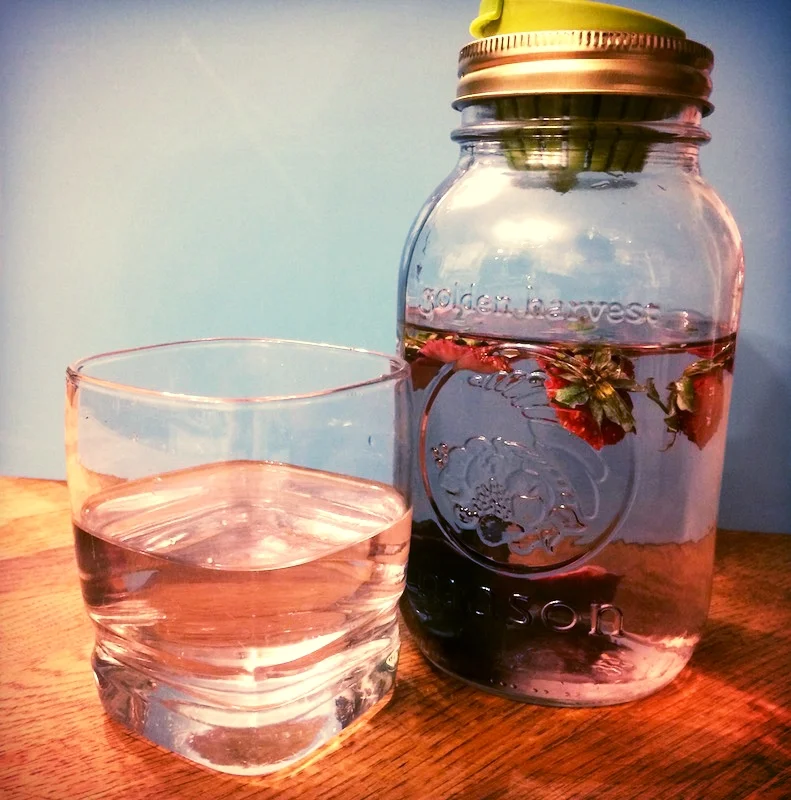
It is my intention to present you with some frugal and delicious ideas in today's blog post, in order to help veer you away from those powder packets they sell to you to add to your water. They're full of chemicals and sweeteners or 'alternatives' to sweeteners which really, are just chemical poop-storms.
This post is hopefully enticing you to also try something as an alternative to pop or juice; they too are full of added chemicals and white refined sugars. Say nay friend, to those nefarious drinks and say yay to the infused waters. Your body has been asking for you.
Go play with your bevvies!
MONDAY BASICS: eat your greens.
The age-old adage often attributed to mothers of yore with something along the lines of eat your vegetables! is completely bang on, and even more so in 2016. See, your mother (or your mother's mother, or the mother that came before her) was on to something. Vegetables are a good thing. (I think most of us would agree.) And yes, sometimes the younger demographic turns their noses at some of the vegetables on offer at the dinner table. But your mother was right. And today, we'll focus on a specific group of these vegetables. Eat your greens, mon ami(e).
The age-old adage often attributed to mothers of yore with something along the lines of eat your vegetables! is completely bang on, and even more so in 2016. See, your mother (or your mother's mother, or the mother that came before her) was on to something. Vegetables are a good thing. (I think most of us would agree.) And yes, sometimes the younger demographic turns their noses at some of the vegetables on offer at the dinner table. But your mother was right. And today, we'll focus on a specific group of these vegetables. Eat your greens, mon ami(e).
In this post, my aim is to arm you with knowledge so that you can better navigate the food and eating waters. I plan to give you some quick tips on how to include more greens into your daily food regimen. I will share a quick template for a weeknight staple at our house, ye olde Meatballs (a superfoods vehicle in my opinion).
So when I say greens, for the sake of today's post,
I am talking leafy greens.
This means anything that is a leaf typically found on a plant, and a leaf we can eat. This means your obvious ones like kale and lettuce; I also aim to include those lesser obvious ones like herbs and spices, pungent-tasting greens like watercress or sorrel (perhaps my current garden perennial favourite). And by leafy greens, do not shy away from found-in-the-wild kind of foods like seaweed or nettle.
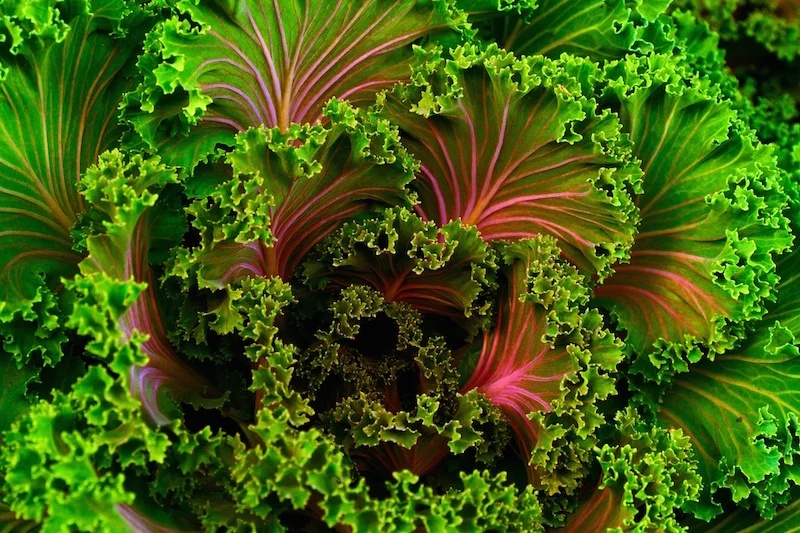
the vibrant kale
WHY THE GREENS
Flashback to your grade six science class: every plant has a few different parts, among them the leaf. This part of the plant allows it to harness energy from the sun in the form of photosynthesis, thereby storing energy necessary for the building and maintenance of the entire plant. In order for the process of photosynthesis and the storage of said energy in to chlorophyll, magnesium must be made available. Magnesium is actually at the center of the chlorophyll molecule, much like iron is at the centre of our red blood cells. Therefore, it would be safe to say that by eating any leafy green of any kind, be it originally from land or water, one could be assured they would be consuming good amounts of magnesium.
Why do we need magnesium? Where calcium helps our muscles contract, so magnesium helps to relax the muscles. Where calcium helps our nerves send electrical impulses, so magnesium helps to quiet those electrical impulses. Magnesium is known as the calming mineral. Suffer from leg cramps? Charlie horses a regular occurrence? Hard time falling asleep at night, thoughts are racing? Maybe upping your leafy greens could be a part of how food could best support you.
We also need Calcium and Magnesium to be in the right ratio, along with lots of other vitamins and minerals in order to properly build and maintain bones and bone density. So eating greens? Yea, they're good for your bones. (Bonus: dark leafy greens are also a pretty stellar source of calcium.) On the subject of bones, greens are also high in manganese, another essential mineral in the building and maintenance of bones.
Magnesium is also a very important electrolyte in the body, and so by ensuring a good intake via foods, you would be supporting a healthier blood pressure and overall cardiovascular health.
Magnesium is also an important mineral in the manufacturing of enzymes, mightily involved in the entire digestive process including how your body handles glucose. It is also a necessary component in the chemical reactions that happen in the brain in order to convert amino acids into neurotransmitters. So greens? Yeah, they're good for your digestion and brain too.
In addition to magnesium, greens are typically good sources of potassium, another important electrolyte, especially important for heart and kidney health.
Dark leafy greens are good for your skin too: manganese plays an important role in your body's manufacturing of collagen.
Greens are also good sources of vitamin K, another key player in bone health and mental health as well. You'll find lots of B vitamins in the greens as well: these water-soluble vitamins are utilized constantly in adrenal health, stress management, skin health, mental health, hormone building, detoxification, enzyme manufacturing and digestion. Oh yes, also necessary if you are building a human being in your uterus.
DETOX SUPERSTARS
They are power houses of minerals and vitamins like vitamins A, C, K that assist your body in the detoxification work, helping to clean out your blood, and have been shown to lower your risk of developing cancer.
The more bitter tasting greens are of tremendous support to the liver, supporting digestion by inducing it to produce more bile which is the body's natural way of re-packaging spent metabolic waste and toxins and shipping them out the regular route of elimination, #2.
Greens are usually good sources of fibre too, which helps escort those toxins out of the body. Some of this fibre also goes to fuel the bugs in your gut, those good guys we want to have in our innards. You could say that eating your greens is essential to disease prevention then.
ANTI-INFLAMMATORY POWERS
Greens are shown to help lower cholesterol, thereby assisting in reducing inflammation. (Where inflammation occurs, cholesterol builds.) They are also fabulous purveyors of those all important flavonoids that will help mitigate inflammation and reduce oxidative stress on your body.
There is a fascinating video available online, an anecdotal video from Dr. Terry Wahls who worked through the devastating diagnosis of MS. She tells the tale of how her food choices helped support her body recover, fuelling her mitochondria, the energy manufacturing engines of each and every cell of her body. She specifically speaks to the idea of consuming 9 cups of vegetables a day, with three cups coming from leafy greens. It has been taken away from the TEDx's roster as they state it falls outside their curatorial guidelines. You can still find a version here.
In conclusion, it's safe to say that if you have a body and want to maintain its regular functions,
all of them, you need to eat your greens. Every day.
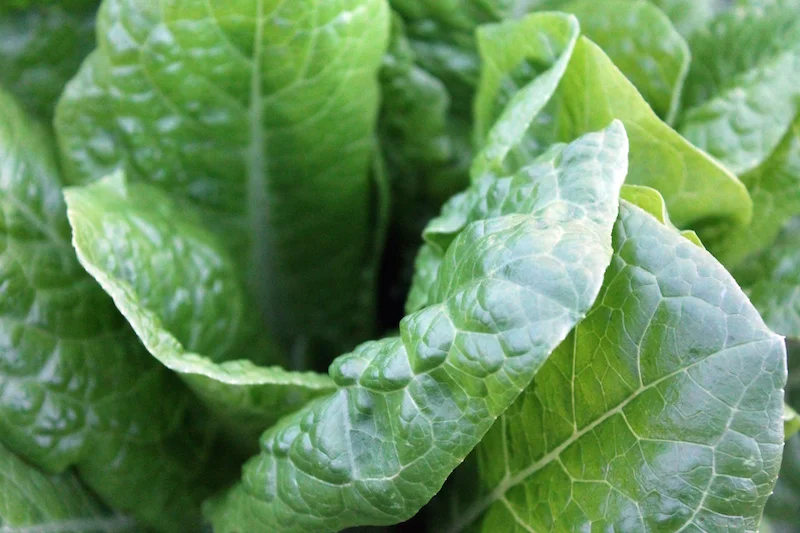
the humble romaine.
WHAT KINDS OF GREENS
Well it's clear that when we talk greens, you probably are thinking of the obvious players like spinach and kale, or maybe arugula or dandelion greens for the more bitter ones. I want you to think outside the box. Let's draw a list, shall we?
GREENS
spinach
kale
bok choy
lettuce
romaine
swiss chard
collard greens
mustard greens
beet greens
turnip greens
cabbage
brussels sprouts
BITTER GREENS
sorrel
dandelion greens
arugula
endive
raddichio
escarole
frisee
mizuna
watercress
chicory
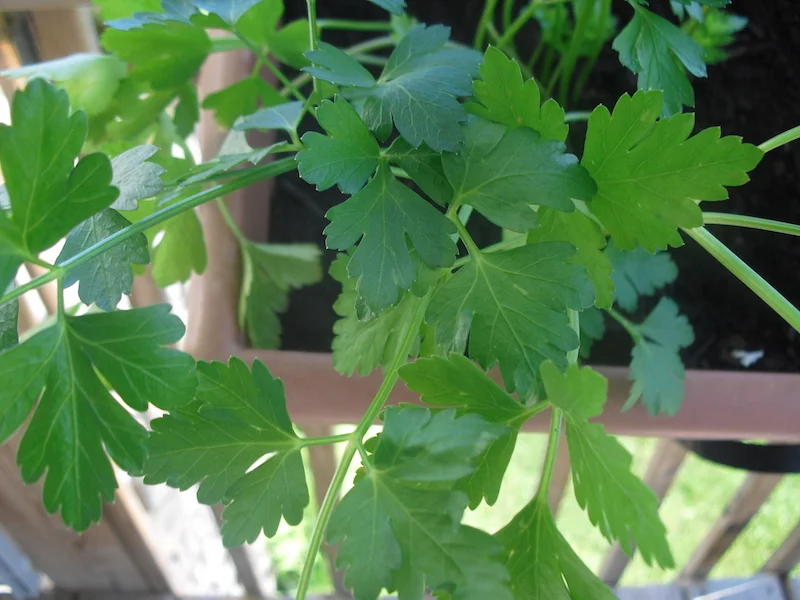
Parsley - a perfect herb for a summer garden!
HERBS
basil
parsley
dill
cilantro
chives
green onions
oregano
lovage
mint
rosemary
OFF THE BEATEN PATH
seaweed
green tea
spirulina
chlorella
broccoli leaves
amaranth leaves
nettles (careful if foraging, they really do sting!)
nasturtium leaves (yes! you can eat these! and the flowers too.)
borage leaves (young ones)
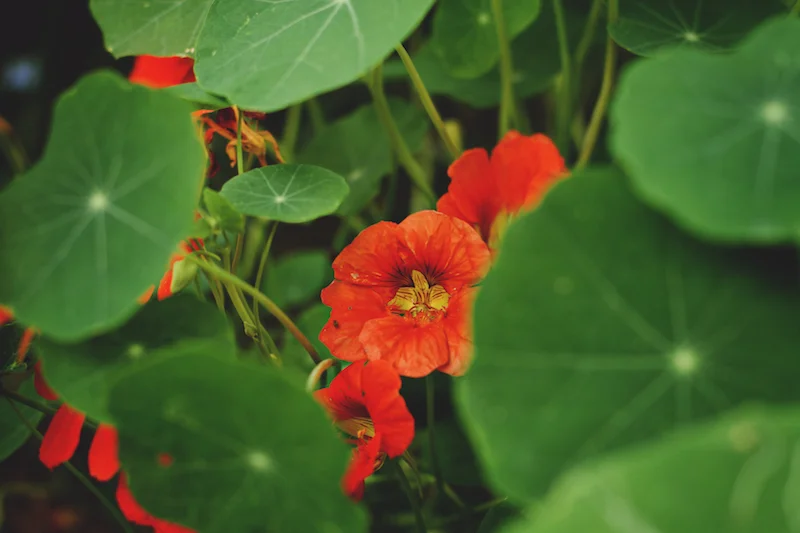
Nasturtiums leaves and flowers are edible. And peppery!
OK so they're good for you. I get it, you're saying to yourself. But how do I eat them? I had enough creamed spinach growing up, thank you very much. Let's go over a few ideas here.
LET'S EAT
Here's a good recipe round-up, if you're looking for ideas (click on the titles, as some of these will link out to a recipe):
cook simply in a good fat like butter, and add S+P
even fancier, you can cook your greens up in coconut oil with ginger and garlic, and at the last minute drizzle sesame oil over top
perhaps the most obvious, but make a salad, and use more than just one green
blitz together a bit of spirulina or chlorella with some pumpkin seeds for a breakfast topping
throw them in smoothies (the greens like kale and spinach can contribute to inhibiting proper thyroid function, so best to reach for other greens like lettuce, chard or watercress, or herbs like mint)
whip up a greens curry (like my Palak-a-la-Ginny)
mince finely and toss in soups or on eggs or sauces; your picky eaters will think it's flavouring
toss in some dried seaweed or minced herbs in to your next ferment
deydrate your pock-marked greens from the garden and crumble into everything!
if you grow broccoli or cauliflower in your garden, keep those leaves and dehydrate them!
toss that s**t in everything
In June of last year, I put together a blog series called A Month of Salads. Find the round up here.
Find a whole post already on how to incorporate more nettle in to your life. Same goes for how to bring more seaweed into your daily meals, a mineral superhero for sure!
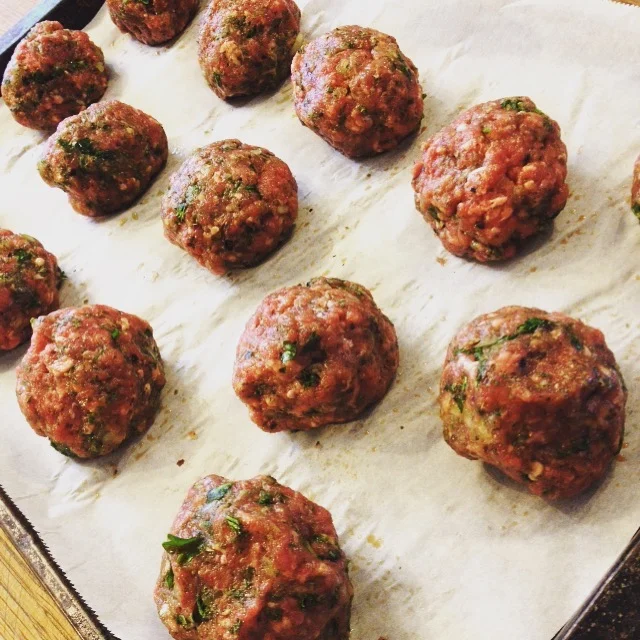
A weeknight staple with loads of greens: the meatball.
MEATBALLS TEMPLATE
Here is my template for an easy weeknight meal that will help curb inflammation, fuel your sweet body with those good nutrients necessary for optimal health. I like to think of meatballs as flavour and super foods vehicles. The sky is the limit here; you will soon discover what you like and will make this recipe your own. I look forward to hearing about it.
THE PLAYERS
1.5 lbs grass fed beef or pork, or bison, or chicken or turkey
2 eggs (brain superfood)
1/2 bunch minced fresh herbs like parsley or cilantro or basil (super green)
1/2 onion, minced (liver loving)
2 tbsp minced seaweed (mineral and iodine rich)
2 tbsp dried herbs like oregano or marjoram, or 1 tbsp dried thyme
1 tbsp lemon juice
Add any dried crumbled greens from your garden if you have them (I use lovage all the time, or the dehydrated hail-damaged greens that are inevitable every summer in Alberta)
1.5 tsp sea salt (minerals!) and ground black pepper
THE HOW-TO
Bake in a preheated 375F oven for 25 min. You can turn them once if you like, but it isn't necessary. Once they're in the oven, now you can go make the sides to accompany the meatballs. Eat them right when they come out of the oven.
GO PLAY WITH YOUR FOOD.
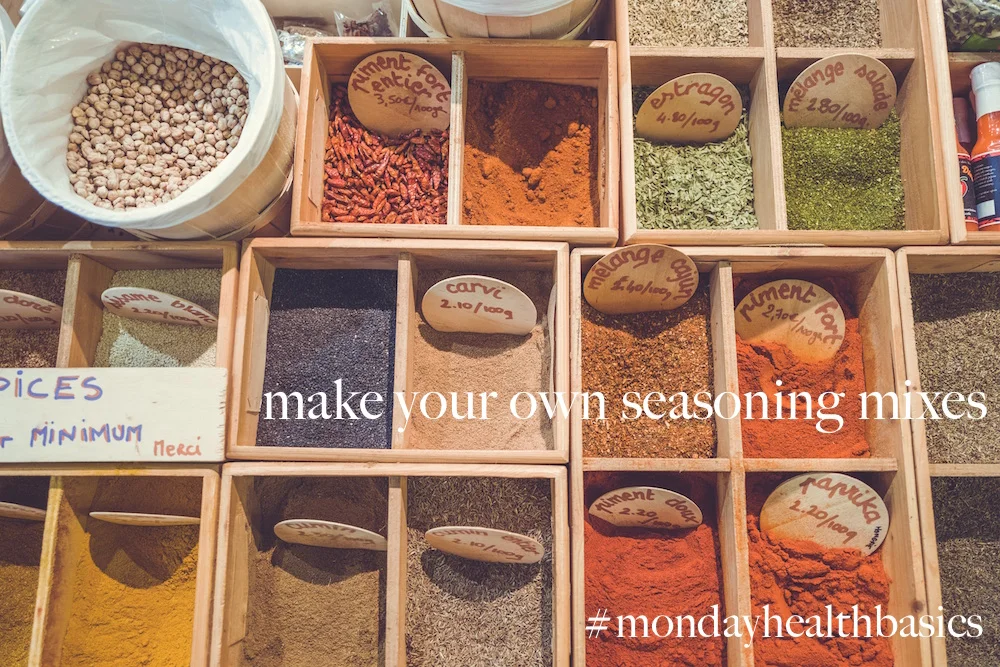
MONDAY BASICS: make your own seasoning mixes.
This week's easy tweak is a fairly simple thing you can do in your kitchen, in order to bring down the list of additives and other nefarious ingredients in your meals. We're looking to simplify here, friends. We're looking to eliminate food additives. We're looking to eliminate hidden sugars and genetically modified trickster ingredients. We're looking to keeping it real food, mes ami(e)s. In the spirit of the DIY, I present to you the idea of making your own seasoning mixes.
This week's easy tweak is a fairly simple thing you can do in your kitchen, in order to bring down the list of additives and other nefarious ingredients in your meals. We're looking to simplify here, friends. We're looking to eliminate food additives. We're looking to eliminate hidden sugars and genetically modified trickster ingredients. We're looking to keeping it real food, mes ami(e)s. In the spirit of the DIY, I present to you the idea of making your own seasoning mixes.
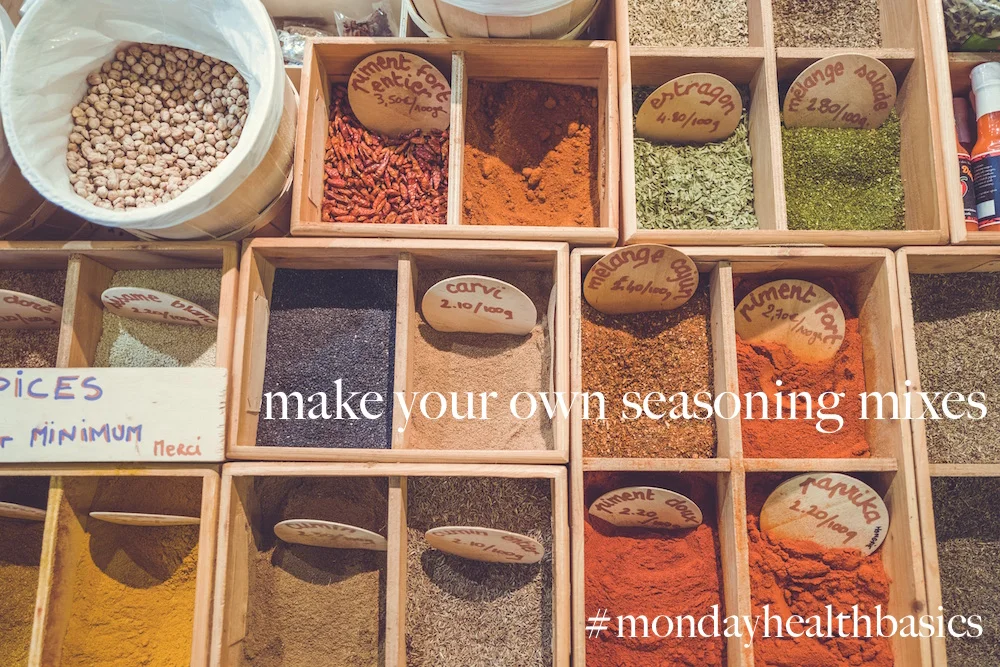
I love spices. I love flavours. I am a big fan of savoury things. Oh sure, I also love salty things, and find I crave them. I am also a fan of quick meals, and making the daily evening task of making supper an easier and tastier bet. (Have you seen this one? I bust a gut because IT'S TRUE.)
Today's post is about veering from the prepared, and relying on something you can make yourself in advance. Think of this as a mini batch cook session, ditching the pre-made spice mixes for something that will not only taste better, but be more supportive to overall health.
The problems with pre-made spice packages
Those little packages you get in some of those 'box-o-tacos' contain some suspicious ingredients in some cases. Were you to investigate, you could find that the packet you are holding in your hand is packed with monosodium glutamate, aka MSG. This is not something you want to consume; the research shows this additive can wreak havoc on your nervous system, bringing on the dreaded inflammation. If you're not sure about the status of MSG or why it isn't something you'd want to consume, I urge you to go read this article. Kristen Michaelis does a bang up job sifting through the science and traditional food ideas on why MSG should not be in your grocery cart.
Search the list of ingredients on the package in your hand, and chances are it may also list maltodextrin fairly high up in the list of ingredients. Maltodextrin is added to mixes to add a sweetness to the finished product. This is a super processed food 'product' that is a straight sugar, quickly entering your bloodstream and sending your levels through the roof in no time flat. This sweetener is derived from some type of grain, usually corn or rice. Most of these grains are genetically modified (unless marked from organic sources I suppose), and GMO foods have been shown to wipe out the gut flora you are trying to cultivate. These two facts alone make this food additive a super inflammation-builder; it's best to avoid it altogether.
Some spice mixes also use certain additives that prevent the mixes from clumping together. These additives are not a part of the flavour profile, nor will they be there if you mix your own blends yourself, thus reducing yet more “food-like” additives. One of the biggest culprits is listed as 'cellulose'; it's essentially wood pulp. Mmm. Delicious.
Do we need to talk about the amounts of salt and sodium typically found in these packets? They're the main driver of the flavours you will get when you use some of these pre-made mixes in your home. They're also quite high in sodium content; I encourage you to read your labels to learn just how much salt is included. But making your own mixes? Well now, you get to control the amount of salt in the final product. Your heart will be pretty glad of that.
The benefits of spices
Using spices in cooking brings so many benefits. Of course, boosting flavours is one. Traditionally, spices were seen as carrying medicinal benefits, and the science now backs this up. Ensuring your spices are freshest will mean these beneficial properties will remain higher, providing the very best health support to you.
Did you know cinnamon helps balance blood sugars?
I know someone who swears by regularly drinking peppermint tea and carrying peppermint tablets in order to best mititgate the effects of her IBS.
It is well documented that turmeric (a yellow-hued root in the same family as ginger) provides anti-inflammatory support to the body, protecting the liver.
Garlic doesn't just ward off vampires, it appears to also help keep high blood pressure at bay, warding off colds and flus and lowering blood cholesterol.
These are a just a few examples of benefits, follow through to this post to get the low down on even more superstar spices.
Many spices provide good amounts of important vitamins and minerals, those all-important micronutrients we need to manufacture so many important things in our body's functioning. In fact, spices are notably quite high in some of these micronutrients, packing quite a punch in a small amount.

Make your own seasoning packets
I am a diehard recipe follower when it comes to seasoning mixes. I don't need to re-invent the wheel, see? It's already out there. In spades. And so I provide you with a link to my favourite mixes, my go-to spots online when I'm preparing one of my favourite blends. Simply click on the title, and you will be redirected.
My tips:
You can always add salt after cooking, but can never take away the salt if you've added too much. It's also a completely subjective thing for each person at the table. Hold back or use half the amount in the recipes, and allow everyone to salt their food to their liking at the table instead.
Make a double or triple batch of your favourites, and store in old jam jars or mason jars; these jars retain the freshness. Keep them out of direct sunlight too, in order to keep those flavours and antioxidants vibrant.
Use these spice mixes as inspiration for a meal: imagine the Zaatar spice blend in homemade meatballs say, and now you can picture a delicious parsley-tomato-cucumber salad to accompany it. A lot of these links also offer suggestions as to how to use these mixes when preparing meals.
The Round-up:
Arabic Seasoning
Buffalo Spice Mix
Chai Spice Mix
Chimichurri Spice Rub
Curry Seasoning, nightshade-free
Everything Bagel Seasoning
Greek Seasoning
Italian Spice Mix
Jamaican Jerk Seasoning
Montreal Spice Mix, homemade
Morrocan Seven Spice Mix
Pickling Spice Mix, for those who can and ferment
Pumpkin Pie Seasoning
Ranch Mix
Taco Seasoning
Tandoori Seasoning, nightshade-free
Zaatar, a brilliant Middle Eastern flavour profile
Wanting to explore some more mixes? Search here for a list of 16 mixes including a killer Cajun mix. This post shares a solid 9 mixes, including an Indian Sweet Spice mix.