
MONDAY BASICS: on eggs.
This Monday Health Basics post centers on one of my favourite foods: EGGS. These nourishing morsels of goodness have been unjustly disparaged in recent years. Today's blog post aims to get you on board the egg train. Eggs: nutrient density at its finest.
This Monday Health Basics post centers on one of my favourite foods: EGGS. These nourishing morsels of goodness have been unjustly disparaged in recent years. Today's blog post aims to get you on board the egg train.
Eggs are one of my favourite foods, for so many reasons.
My favourite: they're pretty affordable! It must be said that not all eggs are created equal, however. Lisa Leake, the author behind the brilliant cutting-out-processed-foods book 100 Days of Real Food (and the blog of the same name) gives a complete rundown in both her book and her blog on what to look for in terms of words on the label. Go on over to get the rundown on what means what.
Eggs are my faves because they're usually quite easy to prepare, in good time. Eggs are a perfect busy-night kind of anchor to your meal. Toss veg in your hot pan with a good fat, add some flavours, and toss an egg on top and pop under the broiler for 10 minutes or so. Voila! Dinner is served.
Not sure which kind of eggs to buy for your family? I like to advise my clients to purchase the eggs they can best afford. With eggs, it really is a question of you get what you pay for. It's one of those foods that you really should budget to include the better kind on your grocery run. I myself tend to ask questions of the staff at my grocery store, wondering which kind they best recommend in terms of nutrition and bang-for-your-buck. You can also ask questions of folks working the stalls at the Farmer's Market too, they will be able to provide you with those important factors that will help you make your best informed decision on which eggs to purchase.
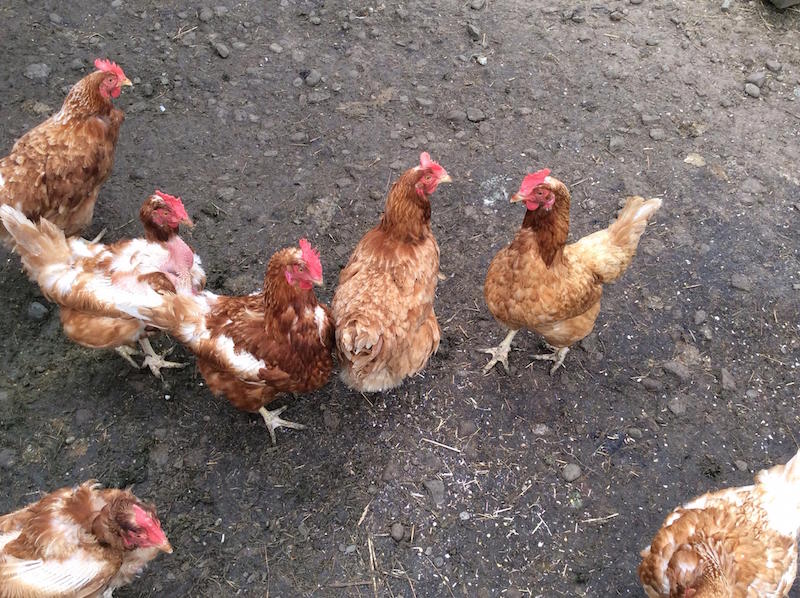
As for me, I have lucked in to two egg co-ops in town where we purchase the eggs from the farmers directly. I feel confident in supporting these smaller producers, knowing the product I am getting is from chickens that have safe access to the outdoors (free-range, pastured), with a nutrient-dense feed that best supports their lives as well. After all, you are what you eat eats. As Joel Salatin says, we must allow the chicken “to express its chickenness”. In so doing, we allow the animal to live as it should, which means it will produce nutrient-dense eggs as it should.
An animal that lives under stressful or unnatural conditions will produce far inferior eggs, lacking in those nutrients our bodies require to do the work of being and staying well.
I include eggs in our every day here at the house for nutrient density reasons. They are a wonderful source of complete protein, readily offering up those building blocks necessary for our body's building and repair work. The entire egg, both the whites and yolks contain protein, but it is interesting to note that the whites are mostly strictly protein. Protein is one of those important macronutrients you want to aim to include in every meal in order to help balance blood sugars, a key component to keeping inflammation at bay and supporting your adrenals.
The yolks are my favourite part of the egg, however. Do not toss those out! They contain those all-important fat soluble vitamins A, D, E and K. These vitamins play important roles in the maintaining the integrity of your intestinal lining which goes miles in keeping systemic and chronic inflammation at bay; they are key players in mental health and brain health. They are also key to healthy bone and teeth building, density and maintenance. These vitamins keep your skin healthy, and your heart and cardiovascular system pumping like a champ.
Lots of water-soluble vitamins are also found in the egg yolks. Look for B12, the vitamin linked to energy. Choline is also plentiful in pastured eggs – a crucial vitamin in the B family that we need to build cell membranes, keeping our cells as safe as Fort Knox. Choline is a key player in mental and nervous system health, as it is the precursor to important neurotransmitters, playing important roles in muscle control and memory.
Your eyesight benefits from regular consumption of eggs: they contain the antioxidants lutein and zeaxanthin. These beta-carotene powerhouses have been studied and show that they have protective effects for the eyes, reducing your risk of developing things like macular degeneration and cataracts.
Eggs are a fabulous source of cholesterol. This word is one that can ignite people, either for or against. I have two feet firmly planted in the pro-cholesterol-in-foods camp. The negative rap given to cholesterol (and saturated fats, of which there are loads in eggs!) was based on a research paper published by Ancel Keys in the 1950s that has since been disproven. It is a hot button topic, and one that may be a bit too big for a Monday Health Basics post. For a concise article outlining the health benefits of cholesterol, I invite you to read this article by Dr. Mercola, in order to get the goods. Suffice it to say, in conclusion, the cholesterol we eat does not have a big impact on the cholesterol levels in our blood.
Cholesterol is an integral component to all cell walls, keeping them rigid and strong. Cholesterol is an integral component to all hormones, as well as a part of every bile acid your body produces. Without adequate cholesterol, your ability to digest may suffer. And if that isn't enough, 60% of your brain is made of cholesterol. You need this cholesterol to form and retain memories, and to learn new tricks. Ergo, eggs are a BRAIN SUPERFOOD!
Speaking of brain food, if you are buying your eggs from a good pastured source, you can also count on those nuggets to contain the all-important Essential Fatty Acids! (EFAs). These are the fats we need to keep inflammation at bay, and our brain running like the well oiled machine it is. EFAs also contribute to healthy skin, improved digestion + elimination, heart health and eyeball health too. And liver health. Oh geez, those EFAs.
In case this needs mentioning again, healthy sources of fat like those found in eggs help mitigate the negative effects of blood sugar spikes, keeping all things level. This means then that including good fats in one's diet will go miles in supporting adrenals, and in keeping low-grade chronic inflammation at bay. Yay fat!
Lest we forget, eggs offer us a gamut of essential minerals in our diet, especially those that may be a bit tricky to find. They offer us a good source of selenium, an essential antioxidant that also plays a key role in our thyroid health. Iodine is also provided here, supporting the thyroid and helping protect against certain cancers, especially breast cancer. Iron is another important mineral readily available in eggs, helping replenish the iron stores for women during their monthly cycle, and a mineral essential to energy. As if that wasn't enough, you'll also get a good hit of zinc in your meal if you are having eggs, an important antioxidant integral to immune health and digestive wellbeing.
How to know if your eggs are top shelf?
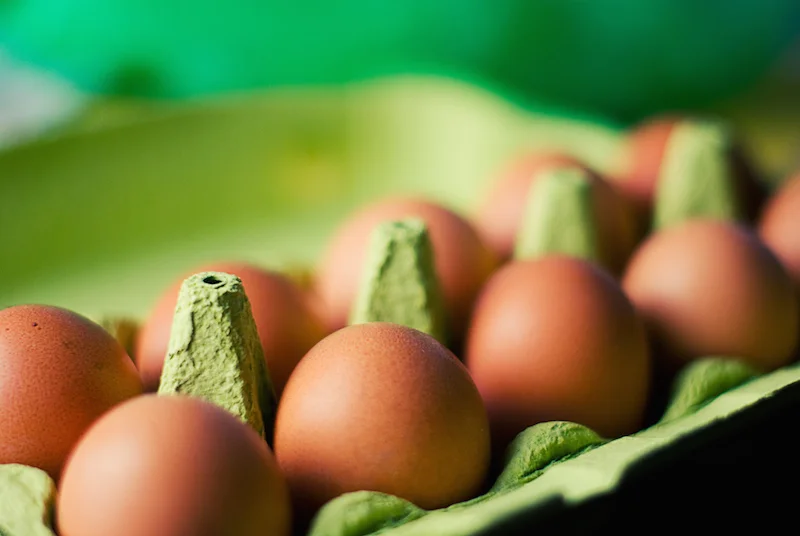
You want to make sure your egg yolk is closer to orange in colour as opposed to yellow. Hens that have access to the bugs and grass outside will have a richer complement of nutrients, which will translate to a more orange-hued yolk.
Have a question about white egg vs. brown egg? The colour of the shell has nothing to do with the nutrients found within. Rather, it has to do with different breeds of chickens; some produce brown eggs, others white, and yet another kind will give you a greener hued egg. Or pinky. Really, it's all the same. As long as you are sourcing eggs from hens that have been able to have safe access to the outside world, and given a protein-rich feed, you are good to go.

How best to prepare your eggs:
You want your yolk to be as runny as you can take it. Allowing it to stay runny means it will be closer in nutrient content to the raw yolk, which is the most nutrient-dense way to consume eggs. Cooking the yolk alters the content of the yolk, but it is still good! Just aim to be on the runnier side when making your eggs tomorrow morning, and you will be well served. (We call them eggs with yellow sauce at our house. Yum.)
I have had the chance to lead a group of Junior High students in a weekly cooking class for the last two years. Our first class is always about the humble egg; I must tell you we always start with Russian Custard, a raw yolk and honey delight. So far, no one has refused to try it! And they have all enjoyed the rich and satisfying taste of this easy peasy snack, save for one student. My caveat here, if you are consuming raw egg yolks, is to make sure it is from eggs that have been allowed out on pasture; conventionally-raised eggs carry a higher risk of salmonella poisoning.
I used to work with a fellow who was well versed in food and nutrition things. He said he thinks of his eggs as his source of multi vitamins; he aims to have at least two a day, in order to best supply his body with those nutrients necessary to optimal health. On the GAPS protocol, a gut-supportive protocol that profoundly affects my practice as a Holistic Nutritionist, the author Dr. Natasha Campbell-McBride recommends daily consumption of eggs once the initial Intro stages are done. She recommends one can consume up to 8 eggs a day, once you are able to safely digest them.
Eggs. Nutrient density at its finest.
How do you prepare your eggs?
MONDAY BASICS: liver loving brews
Ah yes, the birds are chirping, the bees have been busy, and the yellow fields have been greening up as spring is here upon us in the prairies and foothills. Hooray for spring! In Traditional Chinese Medicine, spring is the season best associated with the liver, as TCM practitioner Efrem Korngold states,
“The organ that shares the character of this season is the Liver, tasked in Chinese medicine with the job of instigating movement and arousing the mind by allowing tension and pressure to build. As spring signals the rising of sap in the trees, so the Liver lifts the blood upward and spreads it outward. Alternately gathering and releasing our rivers of blood, the Liver modulates the intensity and force of all body movement and process. “
I like to think of tea and herbal brews as necessary (and delicious!) tools in one's medicine chest. And so, in the spirit of the season, we will look at some liver loving brews you can add to your food arsenal, in order to best support this hard working organ. This is the perfect time of the year to do so.
Ah yes, the birds are chirping, the bees have been busy, and the yellow fields have been greening up as spring is here upon us in the prairies and foothills. Hooray for spring! In Traditional Chinese Medicine, spring is the season best associated with the liver, as TCM practitioner Efrem Korngold states,
I like to think of tea and herbal brews as necessary (and delicious!) tools in one's medicine chest. And so, in the spirit of the season, we will look at some liver loving brews you can add to your food arsenal, in order to best support this hard working organ. Perfect time of the year to do so.
First things first. Your liver is your main detoxification organ, and does something like 500+ jobs in the body. It hangs out just under your rib cage on the right hand side of your body (unless of course, if your inner organs are hanging out on the other side. In our cadaver lab at school, we got to witness this incredible phenomenon – FASCINATING. But I digress.)
Did you know it's actually a gland?
The liver's main tasks are to cleanse your blood and build blood-clotting factors, move the waste and toxins out, break down hormones, build up new ones. It gets rid of so much stuff, like chemicals, junk produced during metabolism and packages them back up in to bile. This good stuff helps emulsify the fats you eat, which means it makes those fats easier to digest and better to assimilate the nutrients found within. So bile is the perfect recycling tool, see? Isn't your liver a star?
The liver also regulates the sugars in your blood, and is the key player in metabolizing carbs, fats and proteins. It builds proteins from the smaller building blocks called amino acids. The liver is also a storage house for some good things like extra vitamins (the fat soluble ones, my favourites), and extra blood just in case. It is also a key player in your immunity, and is the principal organ that deals with inflammation in the body. Enzymes are made by this organ. As if it didn't have enough of a workload...
My favourite part about this big organ – IT REGENERATES LIKE A DREAM. It loves to repair and rebuild. Itself. Multi tasking, folks. That's what this organ's main super power is. It is the only organ in the body that can do this.

Herbs and Teas
There are so many things we can do to love our livers up, ways to let them know we appreciate their workload and are thankful for all they do. (Who's game to start having Liver Day, in addition to Mother's and Father's Day? I think it is warranted.)
Today's post is focusing on beverages that are best suited to this wonderful gland.
You can seek out Burdock root at your favourite local health food store and steep the dried parts in simmering water for a good 20 minutes. I personally like to throw in a few slices in when making good ole meat stock. Chicory root is another one that benefits the liver, and is a great alternative to coffee if you're looking to curb your caffeine intake. Know that chicory helps stimulate bile production, and so thus could help get your colon rollin. You can sometimes find a good coffee alternative that will include both of these liver-supportive roots in the mix.
Yellow Dock Root might be worth seeking as well: it has been shown to help purify the blood and super bile inducing. Astragalus root is a traditional Chinese herb that has been shown to be of wonderful support to the immune system, as well as showing promise of supporting liver metabolism, especially in those diagnosed with diabetes. I share a recipe on how to use it below.
Imbibing bitter brews will help support the liver, and influence it to produce bile. Think hot lemon with water, or nettle tea. (Remember my good friend nettle?) Peppermint tea, while not of the bitter persuasion, can stimulate the bile production as well. It's good at bringing down cholesterol as well, double bonus!
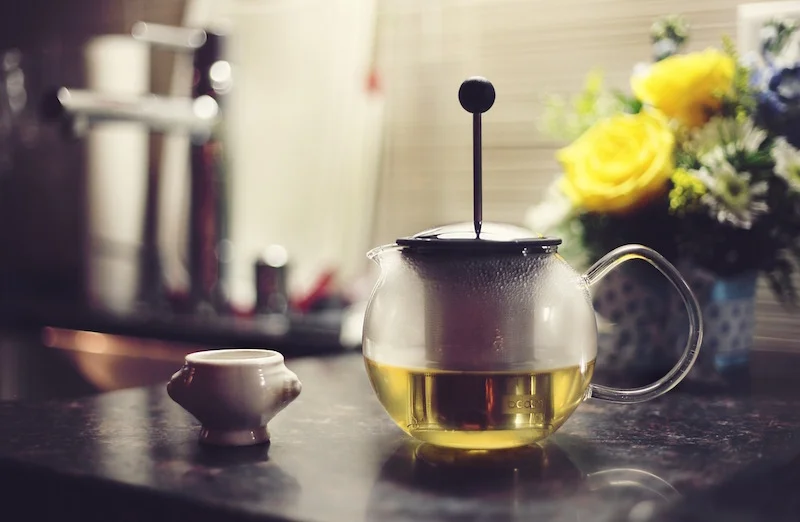
I am a big fan of the delicate notes of Green Tea as well, when it comes to liver support. The polyphenols found in the tea protect your cells from free radical damage, possibly contributing to slower aging and keeping certain diseases such as cancer and heart disease at bay. Be forewarned, green tea supplements may not be a good idea and in fact may prove to be toxic to some folks' livers. Consult your medical team before embarking on this new brew.
There are two roots I routinely use in my cooking and brew-making that you may want to get to know better: ginger and turmeric. They are in the same rhizome family, and are both wonderful protectors of the liver. They are adept at reducing overall inflammation, and are excellent sources of antioxidants, those all-important compounds that help reduce free radical damage at the cellular level. One of the active chemical compounds found in these rhizomes is called curcumin: it has been shown to be liver-protective, also helping to up the production of bile. They also help stimulate your liver to produce enzymes that will flush toxins out. How to make a brew: check out Toronto-based nutritionist Meghan Telpner's site for a good one. You can also easily purchase ginger tea in prepared bags for simpler preparation, or for taking on the road.
Rooibos tea is another good one you may already have in your cupboard. A 2008 study found that this loose leaf tea native to Southern Africa is high in antioxidants and may be a good tea for those wanting to support their liver.
Rose Hip tea is another popular wild-foraged food that can be made into a Vitamin C rich brew by allowing the rose hips to steep in just-boiled water for a time. This essential vitamin is a key player in this organ's detoxification work.
The wonderful world of medicinal mushrooms is an ancient practice that is seeing new light these days. Find your way to this article to read on the benefits of Reishi mushroom in particular, noting that it is a liver-protective herb that can be a key player in mitigating the effects of chronic inflammation and supporting the immune system, a system intricately linked to the liver.
Chaga is another wonderful medicinal mushroom that grows on birch trees and has been used traditionally for many centuries. (My sister has some growing on her property and recently shared some of her winter harvest with me!>. This mushroom serves as a potent blood purifier, and excellent at reducing chronic inflammation as well, providing the body with key nutrients necessary for the body's detoxification and antioxidant protectors. Check this article from Calgary's local lovelies The Light Cellar for a comprehensive write-up, including tips on how to prepare your own brews.
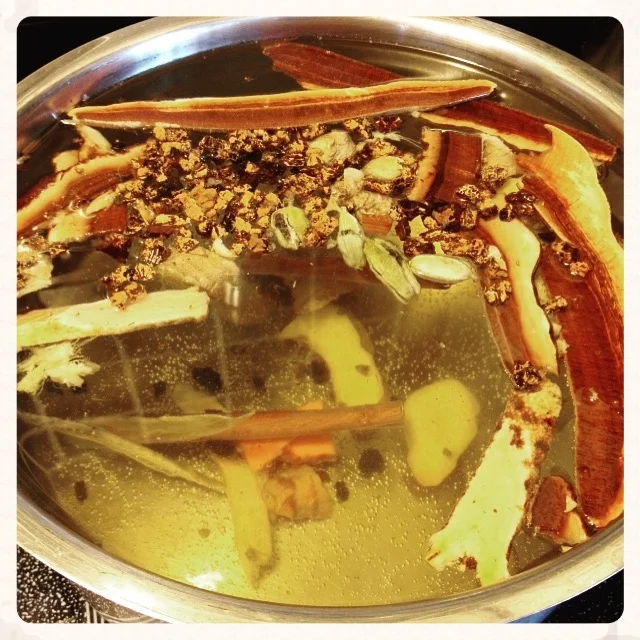
I like to prepare my own concoction at home to support my liver. Every few weeks, I set a pot of this goodness to simmer for the better part of the day, with the intention of consuming a good mugful every day until the pot is empty. I leave it on the stove top and bring it back to a good boil once a day before consuming it. I sweeten it with some delicious local honey to taste.
LIVER and IMMUNE SUPPORTING BREW
Steeping on a low simmer for six hours:
8 cups of filtered or spring water (the chlorine in tap water is an added toxin the liver has to handle)
5 slices dried Reishi mushrooms
1.5 tbsp chaga pieces
4 slices astragalus
2 cinnamon sticks
2" fresh ginger, sliced
1" fresh turmeric, sliced
4 cardamom pods cracked open
Dandelion Root Tea is a popular one in our house; it is a wonderful liver tonic. (Did you know the word dandelion comes from the french word 'Dent de lion'? I find that funny because the french name for this flower is 'pissenlit'. Which literally means pee the bed. And Dandelion root tea is a diuretic. See what they did there? Those smart frenchies.) I think this one may be my absolute favourite liver loving brew. It helps incite your liver to rebuild and function at a higher capacity. Read on for more information on this magical brew.

What kind of cuppa will you prepare next?
The information provided in this post is not intended to replace your doctor's advice. This is for educational purposes only. If your liver is currently giving you cause for concern, it is best to seek out the support of your Medical Team before consuming any of the brews mentioned in this post.
MONDAY BASICS: take a walk.
I've been talking lots of food ways to up the health ante these past few weeks. You know, the whole new list bit, talking coffee, J.E.R.F. and a few others. It's time to get practical, kids.
I've been talking lots of food ways to up the health ante these past few weeks. You know, the whole new list bit, talking coffee, J.E.R.F. and a few others. It's time to get practical, kids.
Getting outside for a walk a day, even if it's a short walk,
will do wonders to help support your body
through the work it wants to do.
The benefits are manyfold – I mean name a system in the body, and you are sure to find that walking would support that system's function, nay I'd go so far as to say improve that system's work.
DIGESTIVE: As stress shuts down the digestive system, walking helps here. See, walking helps reduce stress; therefore you can better do that digestive bit your system needs to do! So by walking after a meal, you use up the sugars that are being released in your blood stream, and utilizing them right away means you are helping keep your blood sugars balanced. Anxiety and stress are more pronounced when your blood sugars aren't balanced.
INTESTINAL: Reduces constipation. Supports peristalsis! Helps keep you regular!
IMMUNE/LYMPHATIC: Walking engages the lymphatic system and assists your body in doing its house-cleaning and detoxification work. Walking can then help your body move those toxins out. Fresh air outside is one of the best immunity system builders there is.
GLANDULAR/ENDOCRINE: Gentle walking is also good exercise that will not contribute to increasing stress on your system, in fact it helps dissolve it and use up the nutrients in your body that are part of the load on your adrenals. Therefore, walking reduces stress. Which helps alleviate anxiety too and support your adrenals. Which just helps everything else. And your thyroid? Why yes, it benefits from this gentle form of exercise too, by boosting thyroid function.
NERVOUS: A change of scenery can do good things to help bolster moods, as endorphins are released during exercise and these have been shown to provide relief from low moods. These endorphins act by diminishing your perception of pain as well. What's not to love? If that's not enough to convince you, good exercise like walking has been shown to contribute to improved sleeping; it also shows signs of slowing mental decline and can lower your risk of developing Alzheimer's.
REPRODUCTIVE: Exercise like walking helps reduce the risk of certain hormone-related cancers like breast cancer. As all of our systems inter-relate, physical activity plays an important influencing role on our fertility too.
STRUCTURAL: Regular physical activity is important in maintaining healthy bones, helping reduce the risk of bone fractures. So walk to help keep osteoporosis and osteopenia at bay, walk to support your joints as the walking motion helps to keep them well lubricated and in good working condition. This gentle form of exercise can be of tremendous support to someone with arthritis.
CIRCULATORY/CARDIOVASCULAR: Walking has been shown to help lower blood pressure. It helps increase energy levels by providing more oxygen to the blood and muscles, and is heart-protective. Walking and exercise improve circulation and can help prevent strokes.
RESPIRATORY: Daily walking has been shown to benefit those with chronic lung diseases like COPD. Walking is a gentle enough exercise that if done at a leisurely pace (consult your doctor first!), can help improve the health and vitality of your lungs.
URINARY: Walking helps move fluids that can accumulate in your veins in your legs during sedentary periods. If you tend to sit all day, that excess fluid can mean you'll be visiting the loo more often at night, just to move those fluids out. How to help? Take a walk or three during the day, the muscles that contract in the legs during the walking motion will help flush them out, at a more reasonable hour.

That's not all. Daily walks have been linked to a longer life, even adding 7 years to your lifespan! It might be obvious, but walking can be of good support to help strengthen muscles and can lead to weight loss. We went over the idea that exercise helps use up the sugars released in the bloodstream, and so by ensuring a good walk a day, you'll be reducing your risk of developing diabetes.
Another way to spell it out:
Walking helps improve your body's
control of blood glucose.
It helps to uptake excess blood glucose circulating in your veins. Better blood sugar regulation is what you want in order to keep chronic inflammation and all diseases associated with inflammation at bay. (That's almost every slow-moving chronic disease under the sun, friend.)
If your exercise takes you outside, then double bonus for you: you'll be soaking up some rays and enhancing your body's ability to manufacture the all-important vitamin D! This vitamin is essential to bone health and maintenance, thyroid and endocrine function and can help prevent cancer. Of course it's pretty important to immune health and is also noted to help reduce your risk of diabetes and hypertension.

My guy Max, and one of our favourite spots in town: Paskapoo Slopes.
The How-To:
Get outside. A gingerly pace is good. A slower pace works too. You set the tone.
Grab a coworker and go for a good jaunt during your lunch break. Have walking meetings! Walk to your next appointment, if it's within reasonable distance.
Take your sweetheart for a walk around the block after dinner at night. (Geez I could also delve into the importance of connecting with loved ones – do you see how walking can facilitate that?) Family outings! Joining a walking group might get you motivated. If the weather isn't cooperating, you may want to do a few laps at the mall every morning. You could meet a friend for a few laps before you go for a cup of tea to visit.
Head outside and find some new hiking trails on the weekend. Walk through a new neighbourhood, discover your city. Head out to spot the northern lights if it's dark. Get a dog. Borrow the neighbour's dog. Go for the aromatherapy at different times of the season, to see and smell what's in bloom.
Why I love it:
No special equipment save maybe shoes. It's inexpensive. The tools are at the ready, and the venue can change or remain the same. It's whatever will work for you. YOU'RE THE BOSS.
Walking is good for your brain and your heart. It's good to reduce stress and boost mood. It revs up the immune function. It's good for you, it's good for me. Get grooving my friend.
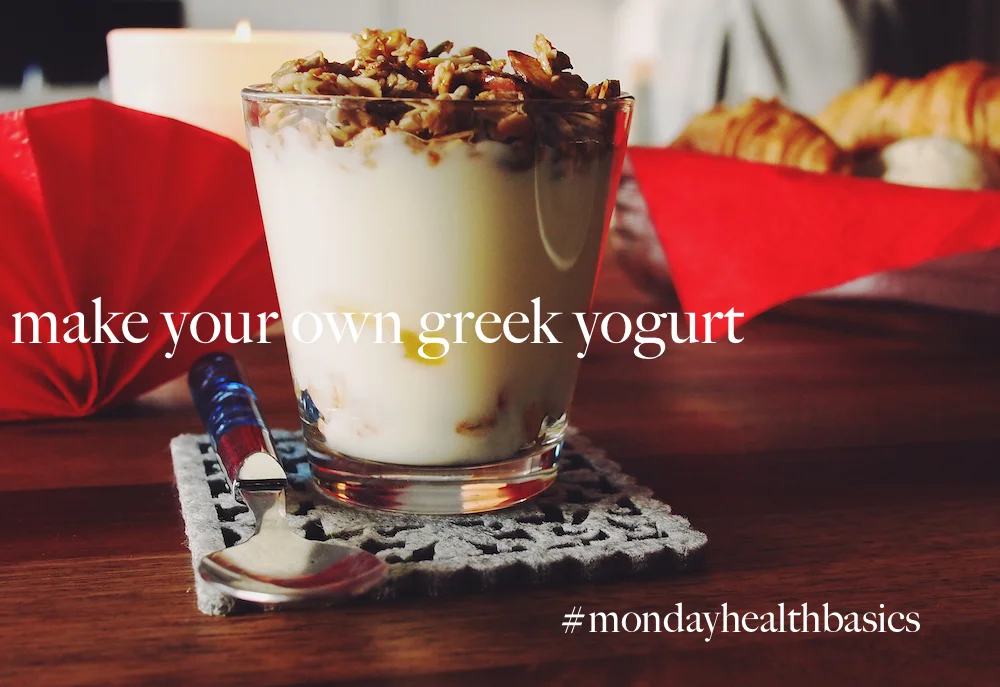
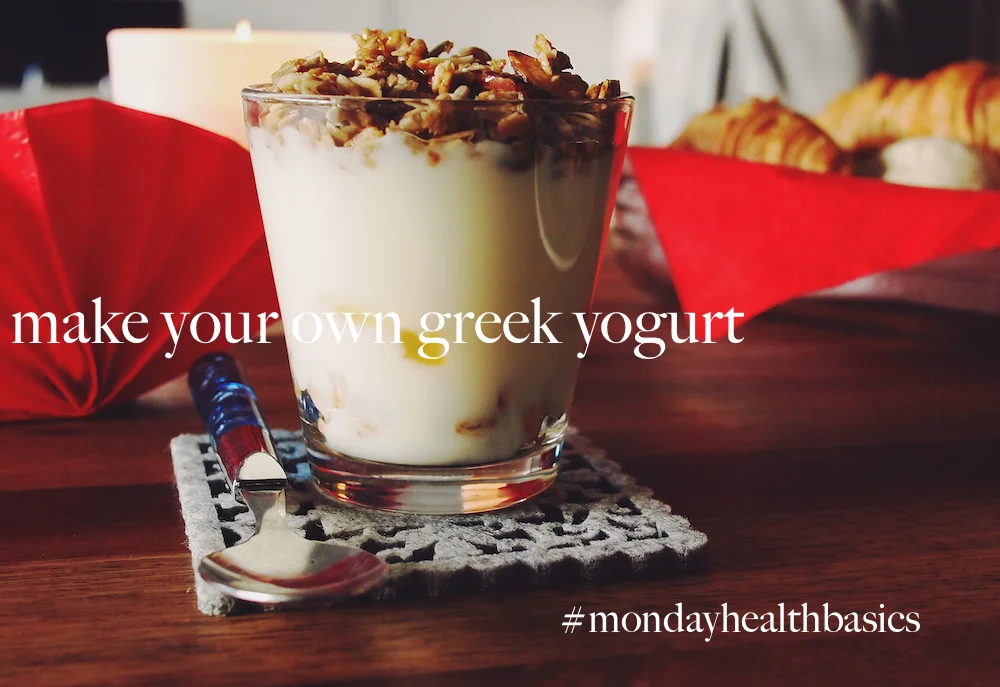
MONDAY BASICS: make your own greek yogurt
Good Monday morning! This week's Monday Health Basics post is a quick and dirty one – and one close to my heart. It talks about two of my favourite things: dairy and fermentation. This blog post is for you if you like dairy. This blog post may also be for you if you are saying to yourself right now “Well Luka, I can't do dairy because I'm lactose intolerant”. It may also be something you want to check out if you find yourself reaching for that greek yogurt at the grocery store.
Yep, I'm a DIY kinda gal. Yep, I'm a good food kinda kid. Today's post is about how to maximize that probiotic hit, lowering the lactose and making sure that greek yogurt in your breakfast bowl is best going to support you through the day ahead.
Good Monday morning! This week's Monday Health Basics post is a quick and dirty one – and one close to my heart. It talks about two of my favourite things: dairy and fermentation. This blog post is for you if you like dairy. This blog post may also be for you if you are saying to yourself right now “Well Luka, I can't do dairy because I'm lactose intolerant”. It may also be something you want to check out if you find yourself reaching for that greek yogurt at the grocery store.
Yep, I'm a DIY kinda gal. Yep, I'm a good food kinda kid. Today's post is about how to maximize that probiotic hit, lowering the lactose and making sure that greek yogurt in your breakfast bowl is best able to support you through the day ahead.
First things first.
For people who have a hard time with dairy, it is usually due to one of two things. Either you have an issue with the protein found in yogurt (casein), or the lactose (sugars) is causing you ills. And discomforts. And just not usually worth it. If your issue is with casein, this is not a blog post for you. Sorry friend. Return next Monday for something entirely different.
But you say lactose may be the culprit of your turning away from dairy? I may just have a wee trick up my sleeve for you.
Store-bought yogurt is fermented anywhere from a short stint of thirty minutes to six hours. The timeline depends on the company's manufacturing process, and also on the strains of probiotics they are using to do the fermentation. Depending on the manufacturer and their methods, at this point they add their extras (sugar, agave, fruit, honey, artificial or real flavours, sometimes colouring, in some cases a thickener, sugar disguised as something else) and then packageit up and off to the stores they go. (If you want a more well-rounded version of this process, you may want to check this article out.)
If you are not yet aware of the magic of fermentation, might I send you here for a primer. The beauty of fermentation when it comes to dairy products is that the process itself takes care of the lactose, conjugating it out of the mix. What this means: the probiotics that are introduced to the milk get in there and cleave apart the double sugars or disaccharides called lactose, leaving behind two simple sugars or two monosaccharides, namely glucose and galactose. Poof, like magic, no more lactose! Well, sort of. It all depends on the amount of time the milk and probiotics have together in a warmed environment in order to do that work. And in that short time of a half hour or even six hours, that is just not enough time to get all the lactose converted into the simpler sugars glucose and galactose. So what can we do to make that yogurt we purchased a lactose free delicacy? Read on, yogurt loving friend.
First off, get yourself some delicious yogurt. Make sure it is plain, with no additives thrown in to alter the chemical make up of your yogurt. Vanilla yogurt does not count here. Vanilla is a flavour. PLAIN JANE. You want to choose a yogurt that has no fruit, no sugar, no colours, and a yogurt that still has the bacteria alive in there; in other words, you want your yogurt to be probiotic.
How to make sure it's a probiotic yogurt: somewhere on the label, you will read the word 'live' or 'probiotic' or 'with probiotic cultures'. It may also list the strains of bacteria that were used in the fermentation process. Even better. (The discussion on whether or not to purchase yogurt made from milk that has been homogenized or not is a question for another day. But I would caution you to reach for organic yogurt whenever possible. Curious as to good brands to find in Alberta? Point your browser here to Organic Alberta.)
Now that you've taken home your plain jane probiotic yogurt, you are going to leave it on the counter.
Yes, on the counter in the kitchen. Pop your lid a smidge, just to let it breathe should the container expand during the extra fermentation process. You are going to allow this container of yogurt to remain on the counter for a full 24 hour period. If you purchased a still-live yogurt product, this is a perfectly fine thing to do. As the product is fermented and still contains those live cultures, your yogurt is a very stable product, and will not be prone to developing funky things or harbour bad bacterial cultures. After that full 24 hour period, you are going to seal up the yogurt container and put it in the refrigerator.
What you have allowed in that 24 hour period is an opportunity for the probiotics found within the product to further ferment, thereby increasing the numbers of probiotics. (That means more bugs. More probiotics.) And not only that; those good bugs went through and cleaved even more of the lactose molecules, freeing them up into those simple sugars that are easily recognizable and good fuel sources for the body and your brain. GOOD WORK. And thank you probiotics.
Incidentally, if you are a DIY yogurt maker at home, after that initial incubation period, allow your yogurt to remain on the counter to finish up a twenty four hour cycle in order to allow those lactose molecules to be broken in two.
Voila, just-about-lactose-free yogurt!
IF YOU ARE A GREEK YOGURT LOVER, READ ON.
So now that you have the lactose free bit, you're ready to add another tool to your arsenal of tricks.
Greek yogurt seems to be just about everywhere these days. The main reason people reach for this thicker yogurt is for the higher protein content. Folks also like the thicker consistency; it makes for a pretty yummy and substantial smoothie first thing in the morning. I challenge you to read your labels though: take a gander to see what is included in the list of ingredients on that greek yogurt container. I bet you the list will include things like skim milk powder, or corn starch, or carrageenan, or some other kind of stabilizer, emulsifier or thickener thrown in to keep it just-so. I am not a big fan of additives, as they aren't things that have been traditionally found in our diets. I just don't think we're able to evolve fast enough in order to assimilate and utilize the additives we ingest. And I don't want to leave it to chance, in the hopes that I can evolve fast enough.
Here are my issues: skim milk powder is a by-product of food manufacturing. It is a processed food. And not lightly so: the whole process of making skim milk powder involves quite the protocol, and the end result is that the cholesterol naturally found in milk ends up becoming oxidized cholesterol. Oxidized cholesterol has been shown to contribute to the production of plaques in the arteries, or atherosclerosis. Carrageenan is derived from seaweed (which I love) but it is in such quantities that it has been shown to contribute to increased inflammation in the body, creating havoc in the digestive system.
I like my food as it was meant to be: food. And so my dear thick-yogurt-loving-friend, I have an easy DIY way for you to make it at home.

MAKING YOUR OWN GREEK YOGURT
Line a sieve with a clean doubled-over tea towel. (*make sure the tea towel hasn't been thrown in the dryer with any dryer sheets – the chemical residue is not something you want to ingest!)
Dump the container of yogurt into the strainer, allowing it to separate at room temperature. (This can be a part of your 24 hours on the counter timing if you are aiming for a lactose-free final product.)
What will drip through to the bottom of the bowl will be a yellowish-clear liquid: this is your WHEY. Don't throw this goodness out! I will speak to this in a moment.
The milk solids remain in the strainer; when the yogurt/milk solids are a consistency to your liking, this is when your DIY greek yogurt is ready. Scoop it out with a spatula, and tuck it into a container of sorts in to your fridge, it is ready to consume. And nary an additive to be found!
As for the remaining whey that dripped through the tea towel, this is liquid gold. It is protein-rich, and a fabulous addition to your morning smoothies; you can use it to help sprout, soak or 'activate' nuts / seeds / grains / beans / legumes. You can add it to soup stock in order to increase the protein and add probiotic benefits (but only do so after you have taken the soup off the heat). Whey is full of probiotics that help improve and support optimal digestion, and provide your body with the precursors to glutathione, helping your liver to do the detoxification work in the body.
Put that greek yogurt on everything.
It's yummy mixed in with berries and maple syrup. Try a big dollop on top of protein pancakes. Mix it in to your butter chicken instead of using cream, and now your lactose-intolerant friend can partake in dinner! Blitz it with a bit of honey and some lemon juice, and you have yourself the perfect salad dressing. Slap it together with some chopped strawberries and some granola, and breakfast will now render you a champion. I mean you can't go wrong, amiright?

MONDAY BASICS: how to think about coffee
I am not going to lie to you. I love coffee. I love my morning cuppa. I look forward to it, I relish it, I miss it when it isn't in my routine. We often travel with our thermos-like french press, ready to make good java on the road at any point in time. I really really love my cuppa joe come morning time. I love the heat of the mug, the creaminess of the cream, the chocolate-y tones to the darker roast. I love how satisfying this mug of goodness is. I love my coffee so much that whenever we go on holidays, it is one of the first things we do when in a new town: we scope the place for the best cup of joe. We're not afraid to ask around. Two of the best cups of coffee I've ever had in my life were in Madison Wisconsin at a little cafe off the beaten path, and the other in Bath, England at a little corner cafe, where the cool stone benches were a welcome respite from the sweltering summer heat, a few blocks from the historic Roman Baths. I love me some good coffee.
For today's Monday post, I aim to go over some things to think about if you love your cup of joe as much as I do. If you're looking for optimal health, that is.
I am not going to lie to you. I love coffee. I love my morning cuppa. I look forward to it, I relish it, I miss it when it isn't in my routine. We often travel with our thermos-like french press, ready to make good java on the road at any point in time. I really really love my cuppa joe come morning time. I love the heat of the mug, the creaminess of the cream, the chocolate-y tones to the darker roast. I love how satisfying this mug of goodness is. I love my coffee so much that whenever we go on holidays, it is one of the first things we do when in a new town: we scope the place for the best cup of joe. We're not afraid to ask around. Two of the best cups of coffee I've ever had in my life were in Madison Wisconsin at a little cafe off the beaten path, and the other in Bath, England at a little corner cafe, where the cool stone benches were a welcome respite from the sweltering summer heat, a few blocks from the historic Roman Baths. I love me some good coffee.
For today's Monday post, I aim to go over some things to think about if you love your cup of joe as much as I do. If you're looking for optimal health, that is.

First things first. There is a lot of hubbub about coffee out there, and it might be a tricky situation to navigate. If you look hard enough, you can find a mountain of evidence to support consumption, and you can find just as much information there to suggest you quit cold turkey.
THE GOOD
Let's start on this side of the fence, shall we? Coffee is a seed, and looks a bit like a mix between a cherry and a cranberry when it is picked by hand off of the plant. (Check this page out if you're curious to know the whole process from planting to brewing. At some point in this whole harvesting, the beans are fermented. Yes, fermented! (All the best things are fermented, no?) Once dried, the beans get roasted, and either get ground before they get to you or you can opt to do the grinding yourself. These ground beans get brewed into what one hopes is a delicious cup of coffee.
Know this: the coffee plant is one of the most pesticide-heavy crops out there. By opting to purchase organic coffee beans, you will be reducing the pesticide load and easing the burden on your digestive tract, as well as your liver. Good work.
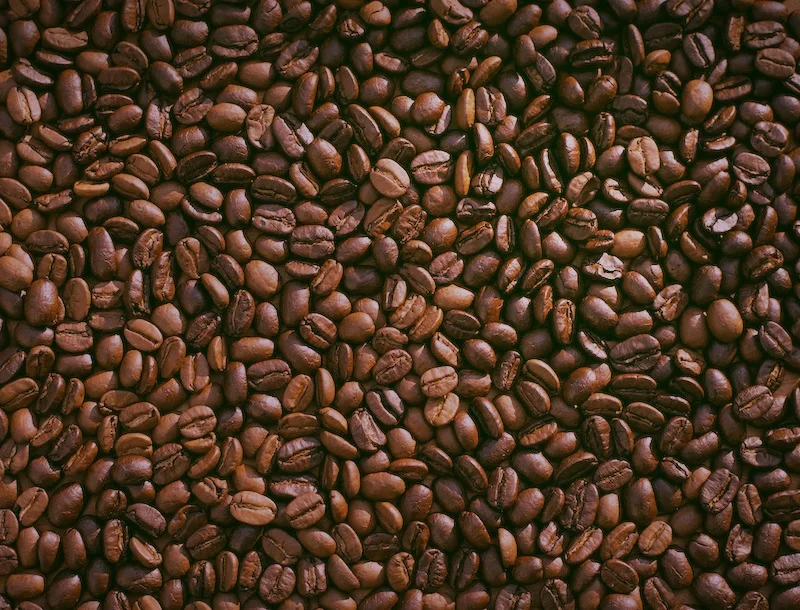
Coffee is rich in antioxidants, organic compounds that are known to reduce the risk of major chronic degenerative diseases, among them diabetes. It would seem that coffee is protective to the liver, your main detoxification organ. The consumption of caffeine found in coffee appears to be a protective agent against the development of Parkinson's (mostly in men, sorry ladies.) This study points to necessary further exploration of the benefits of caffeine in protecting one against Dementia and Alzheimer's. For more benefits of coffee, head to this article for a more thorough look at some of the science backing these notions. This article points to the benefits of caffeine for athletes. (I love it when they post things like 'Coffee Makes you More Intelligent.' That there is bait, and I fell for it. Who am I to dispute?)

THE BAD
As you probably well know, it is the caffeine found in coffee that is the main culprit of the negativity surrounding this beverage. Caffeine acts as a stimulant on your adrenals, prodding them to work overtime releasing excess cortisol. This cortisol being released triggers your body to release sugar in that ole bloodstream, which could feed opportunistic yeasts. They start to gain hold in your gut, and these bums now send out chemical triggers to your adrenals to release more cortisol so that insta-sugar hit can get into the bloodstream so they can be fed. Again, coffee (or rather, caffeine) contributes to this picture. Taking caffeine (and carbonated beverages with caffeine in them!) out of the picture will take some of the load off of your spent adrenals, and in turn, will start diminishing the sugars available to these yeasts with the idea of starving them. Sugar cravings are all part of this cycle; once that cortisol comes out and glucose is quickly released, your blood sugar spikes, insulin comes out to help level the sugar spike at the pass, but those levels aren't sustained for very long. That sugar level then dips quite low, and your brain starts to go on survival mode and sends out messages to your adrenal to release more cortisol again in order to get that glucose back into your bloodstream so that your brain doesn't starve. (Glucose is its main food). Again, taking coffee out of the picture would help alleviate some of the stress on your adrenals, and would contribute to helping to level blood sugar levels. If you're the kind of person who reaches for the 8th cup of coffee at 2pm, you might feel you are being kept captive by this cycle of blood sugar ups and downs. You would be a good contender to look at reducing that caffeine intake, and mitigating those cups you do have with some healthy fats.
Caffeine has been linked to increased blood pressure too; this is all part of the body's fight-or-flight reaction, originally meant to get us out of the saber-toothed tiger's way. While this survival mechanism served us well those many moons ago, consuming caffeine in excess can induce our body to be in that fight-or-flight mode more often than necessary. When this happens, we are setting the stage for low grade chronic inflammation, which is at the root of so many chronic diseases.

HOW TO STILL HAVE COFFEE AND MITIGATE THE EFFECTS OF IT:
Make it a dessert-y kind of coffee by adding something high in fat. Having the fat in the mix will help slow down the absorption of caffeine to the blood stream, which in turn will help moderate your adrenals' response. You can add a tbsp of ghee or coconut oil - coconut oil is best for someone with no gallbladder, as it is the easiest fat for your body to digest. Coconut butter or cocoa butter are good options here as well. You can use full fat whipping cream, it doesn't take much. Aim to not have any sugar in your beverage as well, as sugar further contributes to the tax on the adrenals and further exacerbating the whole fight-or-flight mechanism.
Another good idea if you are a regular consumer of coffee, in order to mitigate that extra stress on your adrenals, is to make sure to consume your coffee after a good meal. If your body is busy digesting and assimilating the eggs and avocado on toast you had for breakfast, it will release that hit of caffeine much slower to the bloodstream instead of a quick jolt you would get on an empty stomach. Slower release of caffeine ensures you aren't triggering that fight-or-flight reaction as well; unfortunately, when the fight-or-flight reaction is engaged, your body shuts down digestion in order to concentrate on the task at hand. Having a coffee solo first thing could contribute negatively here.
Additionally, some of the compounds found in coffee have been found to be mild irritants to the stomach lining and that of the intestinal lining; ensuring a good meal before having your cuppa will help protect those sensitive mucosal linings.
If you are curious to read more from the 'cut out the coffee consumption' camp, make sure to read this article. They explain the correlation between adrenals and mood, and how caffeine plays a big part here.
ALTERNATIVES
If you are someone who is wanting to love up your adrenals, keen to balance the blood sugars, realizing not everyone starts their day with 10 cups of coffee, or if you are wanting to reduce your consumption of caffeine, if you find you are wavering towards the no-coffee camp, there are some excellent options out there. Invest in some liver-loving Dandelion Root Tea, or better yet, harvest your own! (Skip the soy milk he suggests here, and go for one of the good fats mentioned above.)
On the subject of tea, you can switch one or more of your coffee cups for a steeped cuppa tea. While some tea does contain caffeine, it is much less than you would find in coffee. Green tea for instance is a fabulously rich in antioxidants tea that would benefit your adrenals, while satisfying that need for a warm bevy.
Wanting to take the caffeine right out? Reach for antioxidant-rich liver-loving herbal teas like rooibos and fruit flavoured herbal teas. You can also make yourself a medicinal mushroom hot chocolate like the one found here. There are many other options out there too, alternatives like chicory root or pre-made coffee alternative mixes you can find at your favourite health food store. Go play with your food!
One quick thing to note: caffeine is a diuretic, which means it pulls water out of your body and increases your urine output. (Yes, you pee more if you drink coffee.) Knowing this, just make sure you are replenishing those fluids and having an extra cup of water.
Good work my friend. I'm off to have my one cup of joe for the day. And you better believe I'm going to savour it and enjoy it. Thoroughly.