

THURSDAY BASICS: love your immune system.
Without fail, the colder weather creeps up on us as it does this time every year. And with the temperature dropping, we often start talking about taking care of the ole immune system. Let's cover some basics today, and talk those easy things we can do to love up our immune system.
Click on the image for a full rundown on the ways you can support Immune Function.
#tbt day here at #goodfoodHQ, time to dive back in to the #mondaybasics series of 2016.
As the colder climes set in, so our attention usually turns to this trend of waning immunity. It doesn’t have to be so, you know?
LOVE UP THE IMMUNE SYSTEM.
COLES NOTES:
1. Learn the five key points to supporting your immune system. (Guess where ground zero for immune system lovin is?)
2. Garner a deep understanding of why stress/trauma/worries can tip the scales when it comes to immune health.
3. Learn which foods help, and which hinder in the picture of immune system support.
This is about your foundation of health. It’s a long one - I’m pulling this in to a full class in the new year. Keep your eyes peeled for that. Better yet, sign up for my newsletter to get in on the action first-hand!
Without fail, the colder weather creeps up on us as it does this time every year. And with the temperature dropping, we often start talking about taking care of the ole immune system. Let's cover some basics today, and talk those easy things we can do to love up our immune system.

Your immune system does so much for you: it, along with your gut, is your foundation to good health. Let's go over the components you can put in place that are essential to immune health.
FIVE KEY COMPONENTS ESSENTIAL TO IMMUNE HEALTH
Look after your gut
Eat Real Foods
Prioritize sleep
Reduce stress
Reduce your toxin load
Let's break these down in to the practical, shall we?
LOOK AFTER YOUR GUT
You gotta love your guts. See, there are estimations that roughly 70% of your immune system resides in your gut. The two work hand in hand in keeping you well, in keeping potential harm at bay and moving it out in a timely fashion so that you can get through your days.
It is your immune system that acts as your main line of defense against everything you come across, from cuts and bruises to incoming pathogens like bacteria and viruses. It has a pivotal role in keeping cancer at bay.
This part isn't news to you; what might be news is how intricate the connection is between our gut and our immune system.
The good bacteria living in your gut (called your “microbiome”) have developed intricate interconnections with your intestinal and immune systems; they help calibrate your immune system so it is working in tip top shape, able to recognize what is 'you' and what is 'other'.
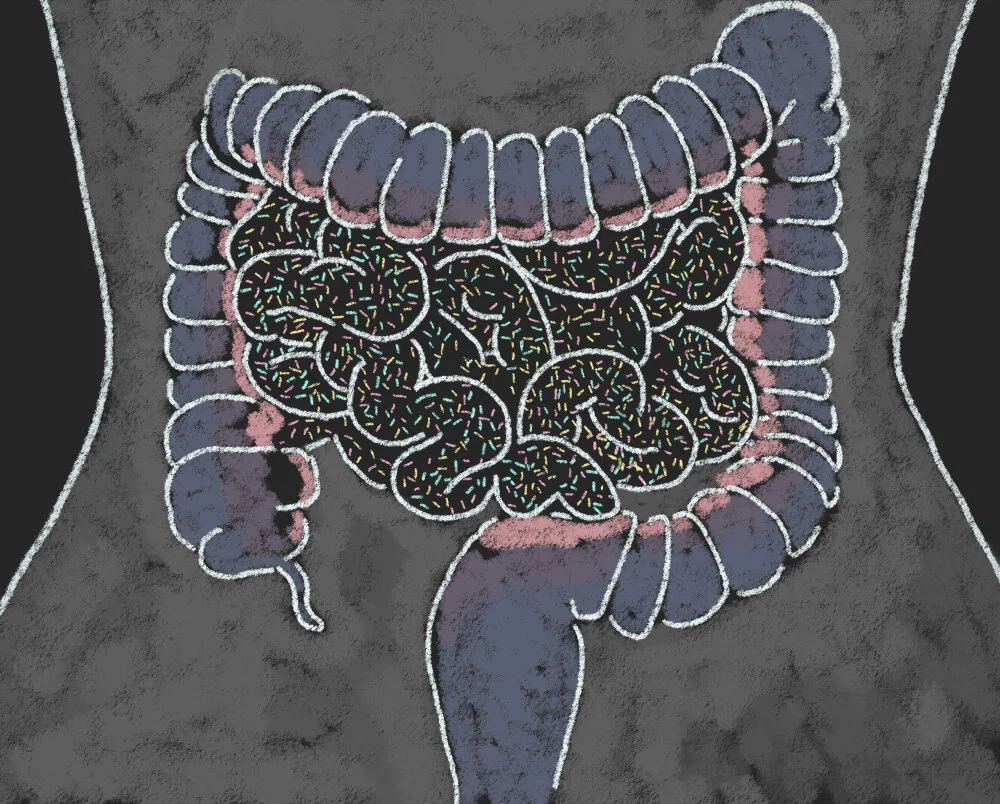
Your microbiome plays a big part in regulating overall body inflammation, starting in the gut and radiating outwards to all of your organs and body systems. Those little bugs? Well they are also key players in supporting overall immune health.
As we embark on this new season where we are finding ourselves more indoors than out, it is imperative we give our immune systems a little support by looking after our Good Gut Guardians, our microbiome.
THE GOOD GUT GUARDIANS
There are a few good ways to repopulate your gut with those healthy bugs: a good place to start is by slowly introducing live or raw fermented foods into your diet. These foods contain the 'good bugs' that contribute to keeping your microbiome in good stead. Think probiotics, only in food form. And when those things come via foods, they are part of the traditional ways our ancestors before us would have had them, and ways our bodies will be able to assimilate.
One of the key components then to loving your gut, is to make sure you get some fermented foods into your belly. They'll take care of the rest. (If you are new to the idea of fermented foods, look to this article for a comprehensive look at how to go about it.)
FEED THE GOOD GUYS
We also need to provide your body with those foods that will best fuel the cells of your intestinal lining. Ensuring these foods on a regular basis will go miles in supporting your immune system, and reducing overall inflammation.
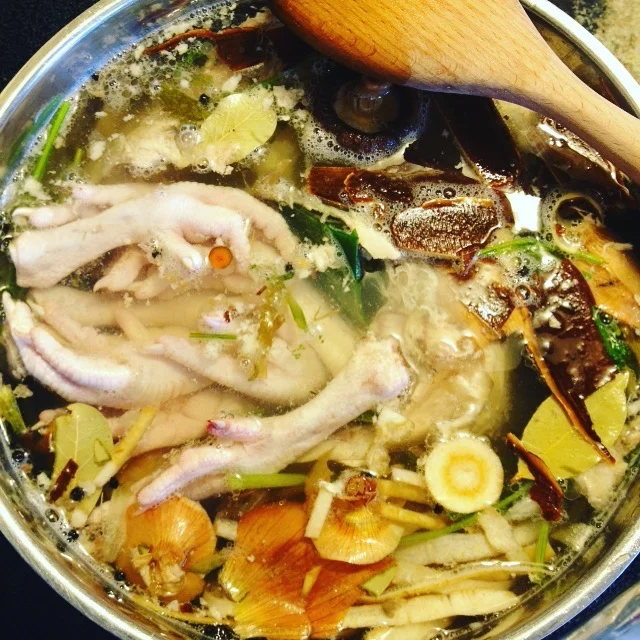
My top pick? Why it's my good friend, Mrs. Meat Stock! Look for a full write-up including a recipe at this fairly recent post.
Next up, you'll find butter on the list of foods. While I love it for the nutrients it provides to your immune system for optimal function, I also looooooove the nutrients it provides to your intestinal lining, ensuring integrity in this very important area. Plus it's delicious. Check in here for more reasons you can love butter. (You're welcome.)
FIGURE OUT WHAT’S OFFENDING
Food allergies and sensitivities place a stressor on our immune system. It is important to look into what foods are contributing to a negative impact on your digestive system, and do that work to support the gut lining and improve your body's ability to digest, in order to reduce the impact of food sensitivities and allergies on your immune system. *Get in touch if you’re trying to figure this piece out. I’ll be your ally.
Gut love is where it's at, my friend.
EAT REAL FOODS
There are loads of nutrients that offer targeted support to your hardworking immune system. Protein is one of those key foods, providing the building blocks that are being assembled for the response when there is a perceived threat at hand. Reaching for good quality protein is important.
If you're able to, ensuring your animal products come from animals that were raised on pastured will afford your body a better complement of nutrients to help support the immune system and lend a protective effect to the gut. Look for a more in-depth article on the importance of sourcing your animal products from grass-fed sources here.
FOODS + NUTRIENTS TO ADD IN
In the same vein, ensuring good quality wild-caught fish will best serve this system. Both the pastured meats and wild caught fish will also provide an excellent source of those all-important Essential Fatty Acids. Read up on the hard work these nutrients do in the body here, and how they play an essential role in your body's immunity.
There are so many nutrients necessary to proper immune function. I would rather you get hung up on the foods that will best support your endeavours though, instead of trying to micro-manage what you're getting and what you need to get. If you are looking for a more focused approach on micro-nutrients, this is where the help of a Nutritional Consultant may be of benefit. (Get in touch!)
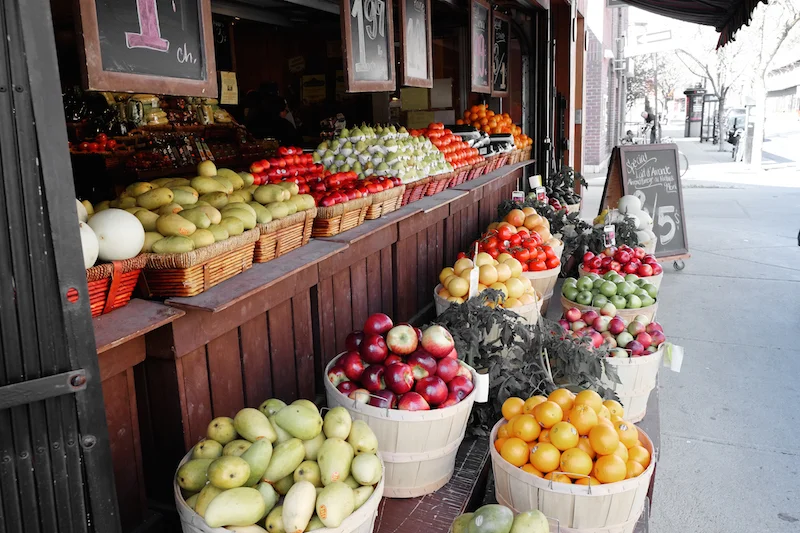
I have pulled together a list of foods I would recommend, providing your body with important micronutrients necessary to immune function, but also abundant in nutrients supportive to the intestinal lining. Eat the ones in bold more often, and make sure you're reaching for the others on a regular basis:
cod liver oil
garlic and onions
organ meats
avocado
asparagus
all berries
beets
brussels sprouts
cabbage
carrots
cauliflower
cinnamon
cranberries
horseradish
kiwi
lemon
oranges
oysters
papaya
pineapple
sardines
shiitake mushrooms
thyme
wild caught salmon
pumpkin + sunflower seeds
FOODS TO TAKE OUT
Reducing your intake of simple sugars and refined carbohydrates will serve you well, as they suppress your immune system. I remember one of our profs in school, a local Naturopathic Doctor mentioned one teaspoon of sugar ties your immune system up for eight hours. EIGHT. HOURS. !!!!
While I can't find the exact study that explains this on PubMed, I did find this article that would support the notion.
I think it's important to note here that I would also lean towards the idea of regulating your blood sugar levels, which would of course involve curbing your intake of refined flours and simple sugars. I would also add you need to look at consuming some good fats my friend, to help balance those sugars. Read here if you want to explore the concept further.
And hey, want help on the real food front? I have a program for that.

PRIORITIZE SLEEP
I have written a lengthy article about the benefits of sleep. In it, I talk about how important it is to make this a priority, as it is where our body's repair and rebuilding work happens. Look for that article here, along with some good tips on how to achieve better sleep.
The take-away?
Aim for at least 7-9 hours a night. Turn your cell phones to airplane mode, or better yet, take them right out of the room. Get some serious black-out curtains. Reduce your exposure to electronics in the last hour before beddy-byes. Sleep like a baby.
Nay, rather more like a teenager.

REDUCE STRESS
I know I know, sometimes by just saying' reduce stress!' the end result is we've ramped it up. But you really should know that science indicates (as do your memories of exam days whilst in University if you go back!) that stress really does weaken the immune system. It's really important to keep a positive frame of mind to help support your immune system.
One of my top recommendations is to GO HAVE SOME FUN. Prioritizing the good times can play a pretty big part in bringing down stress, and have a protective effect for your immune system.
Here is my favourite list of ideas for you, may you find one or two that resonate:
go for a walk – everyday! (so simple. So good.)
head out to a cafe to play cards with a friend or honey
host a games night with friends and neighbours
find the comfy chairs at the library and settle in with a good book
start a book club
visit a nearby town and check out antiques or farmers' markets
schedule a little me time (self care is the best!)
soak in the tub; make it an epsom salts soak, bonus points!
take your littles (or your friend's littles!) to the park or an indoor water park
downsize your commitments (Simplicity Parenting by Kim John Payne was a huge book for me that helped me figure this one out)
start a garden
join a yoga class
take up pottery like you always meant to
check out a comedy night in town
check out some new local music, head out to a local club
have a movie night with the fam
take a cooking class
get season's tickets to one of our fabulous theatre companies or orchestras in town
schedule in regular date nights. In pen. Don't back out.

REDUCE YOUR TOXIN LOAD
I love that you've read this far. Let's get to this one last important component in supporting the immune system.
Toxins in your life, be they from toxins you ingest through your skin via personal care products or compounds found in the air you breathe, toxins found on our foods, toxic thoughts even, or toxins produced in our bodies via regular metabolic functions, they all add up to compromising our immune function. You can add in here the toxins produced in your body from the interactions you have with the toxic people in your life.
Ugh. Sorry.
Here is a start for ideas on how to reduce your toxin load:
consider stopping smoking
start your day with a glass of water with lemon to support liver's detox
consult the Dirty Dozen and Clean Fifteen to reduce exposure to pesticides and herbicides
change your furnace filter on a regular basis
open your windows in the car when you first get in to help air out dangerous chemicals emitted in that 'new car smell'
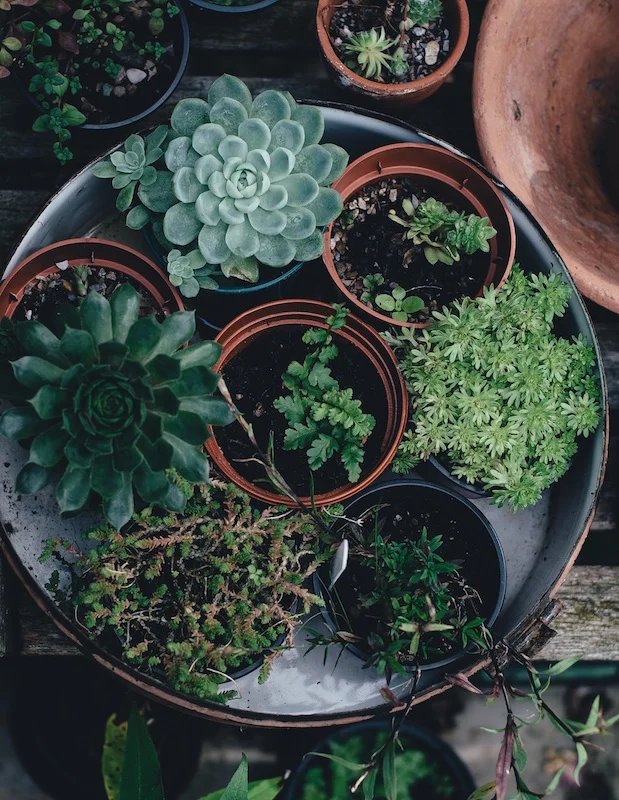
place a few houseplants in different areas of the home to clean your air
OK gang. What are the five main points for immune lovin again?
Take care of your gut.
Eat Real Food.
Sleep like a champ.
Destress like a three toed sloth.
And reduce those toxins.
Do what you can. Baby steps. One thing at a time. You got this.
THURSDAY BASICS: lunchbox planning.
This blog post is one that is the most popular with my one on one clients. Read up for a full list of new ideas and easy hacks to keep lunch kit building a delicious breeze!
Click on the image for a full exploration on this topic, and food jumping off points.
#tbt day here at #goodfoodHQ, as we look back on the #mondaybasics series of 2016.
This post is the one that I share most often with my one on one clients. It zeroes in on how to make lunchtime count, with ideas on how to pair things up to make a nourishing meal time. For littles AND bigs.
LUNCHBOX PLANNING! 🍎🥑🥕🧀🥚🥓🍕🍜🍱🥡
COLES NOTES:
1️⃣Use this as a jumping off point on how to build a lunch. Tips + sanity hacks included.
2️⃣Routine is key. Thinking ahead, too. Make extras!
3️⃣Full comprehensive list of new ideas to help inspire and shake up lunch time.
It's a blog post that originally came up just before the start of a new school year. Isn't lunch making relevant just about every day of the year? Dig in.
The cooler nights are here. The tomatoes are ripening on the double. You've pulled out your first pair of socks in two months. You've stood in amazement at how much your little one has grown in the past two months in the sun. It can only mean one thing: it's time to think of lunch boxes.
Obviously it means more than one thing. But today's blog post is about developing a method to the lunchtime madness, be it for your littles who are away at school or daycare, or be it for the bigs in your life (including you!) who are keen to amp up the good food and make lunch a tasty and nourishing thing. We'll round it all out with a good list of quick ideas for lunches, and point you to a few good spots online for tote-friendly recipe roundups.
If this meal is for a little
Keep it simple.
Repetition is a-ok. In fact, some children really thrive on predictability and the security of knowing what their lunchbox contains. If your child is one who likes surprises, still stick to the same lunches but add one small compartment with a surprise in it that is different every day.
Involve your children in the preparation!
They are never too young to participate in food choice and prep. I think it is a big part of parenting and guiding them in this world, so get them in the kitchen. Take them grocery shopping, and give them the choice of veggies and fruit they would like to try in the coming week's meals. If they pick a packaged item from the shelf, read through the list of ingredients with them and help them decide if this is something with which they want to fuel their bodies.
Have them help with a batch cook prep session on Sundays say, where they chop those veggies and fruit they're going to eat this week. They can cut them in to pieces and in to containers in the fridge. This will make meal assembly a breeze in the coming days.
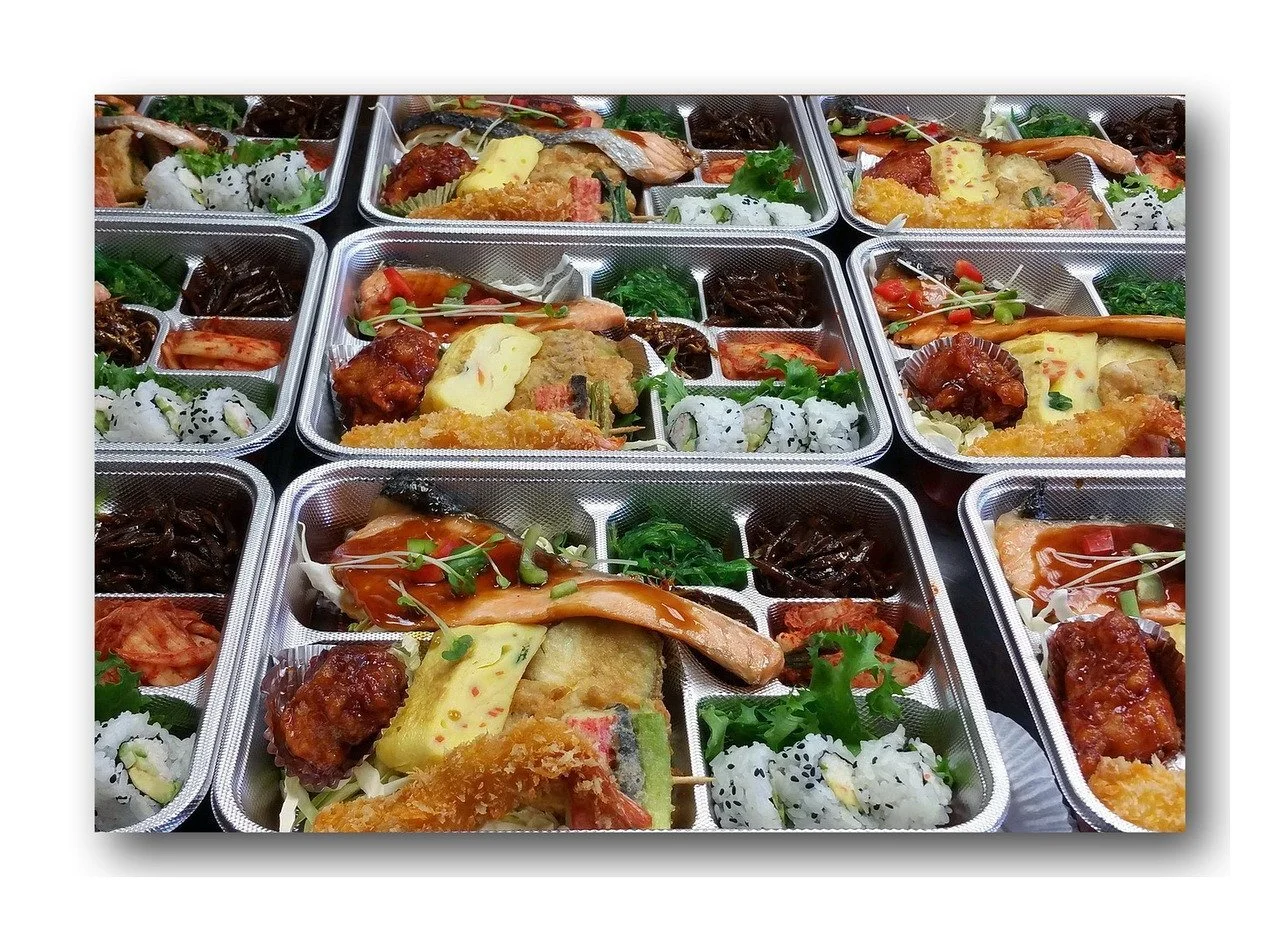
Who wouldn’t love to open their lunch kit to something like this? This is Level 400 lunch box prowess.
For my daughter, as she is now preparing her own lunch, we sat down together to drum up a list of what type of meals she can pack for herself on what days. She has always loved the security of a routine, and so loves to have the same meal every Monday (tuna salad), and every Tuesday she counts on a mini pizza, and Wednesdays are for thermos meals, and so on and so forth. It takes the guesswork out of what to make, almost like the plan has been pre-decided and all she has to do is follow the plan. Which is easy, and certainly do-able for her.
The building blocks of a good lunch
We went over the concept of what types of things to include in her lunches, always ensuring there is a good protein and a good fat, along with a vegetable and/or fruit or two every day. Not only does she enjoy making her lunches (I know, the school year hasn't yet started... (I promise she did this last year and was a champ)) she actually eats more of it too, meaning she has the fuel she needs to get through the day of school work and play. And I am throwing less soggy, spent good food in the garbage at the end of the day.
Jumping off points for lunch box planning
Think of themes for those days as a jump off point perhaps. Mondays = tacos; Tuesdays = soups; Wednesdays = eggs; Thursdays = salad; Fridays = pizza. This list can come from a 10 minute brainstorm session where everyone pitches in. What are your family's favourites?
We have a hand-drawn calendar on our corkboard in the kitchen that my kiddo refers to when preparing her lunch the night before. They can design it themselves; or you may want to use a pre-made one. I found a few bright and colourful what they call free 'printables' online, you may want to check them out.

Practical tips + hacks to ensure good lunch boxes for all
Whether you are preparing a kid-friendly lunch or a meal at your desk or in the work lunchroom (think of the $$ you will save from not going out! and how much more nourishing the food will be!), there are a few good tips that apply to both.
Freezing smaller portions of things like roast chicken, extra pulled pork meat, or other things of the like can be done in easy portions by first doling them out in to silicone muffin trays or ice cube trays. Once they've had a few days to firm up in the freezer, pop them in to a freezer bag to keep them fresher and to keep them from drying out. They'll make for easy peasy meal prep in no time flat! Look for a list of ideas using this method below.
One of my favourites is to freeze pesto into cubes. Adding one to last night's dinner makes it a whole new meal for lunch today! Add one to some frozen stock, throw in the leftover side veggies from supper and add some roast chicken and lunch is served.
Invest in good canning jars
Interested in bringing something liquid to lunch? Salad dressing? Apple sauce? Yogurt + fruit? I highly recommend picking up a flat of 1/2 cup sized glass 'mason-style' jars from Canadian Tire or your favourite grocery store.
They seal up like a dream, preventing those sloppy messes from taking over the backpack or briefcase. Bonus, they're fairly easy for littles to open at school.
I hand these half cup jars out at some of my classes; they're the perfect size to make enough salad dressing for a few days so that you only need bring it to work on Mondays. It can stay in the fridge at work for the rest of the week, one less step to think about when preparing your meals for the rest of the week. (Remember this post on making your own salad dressings? Worth a recap to understand WHY you'd want to make your own.)

olives + cheese are great additions to lunch boxes - hooray for fats!
Think of ingredient quality + ways to keep it interesting
Sandwich or wrap popular ideas chez vous? Might I recommend you go for a sprouted grain product instead of straight up white or brown bread (whether gluten-free or gluten-full). It's the same idea behind this story here about the fox; choosing a sprouted grain product will be immensely easier to digest, and kinder to your system.
Think of swapping things out: use lettuce leaves for 'boats' instead of corn tortillas for build-your-own-taco lunch. Use nori leaves to wrap the tuna salad for lunch (although I'd recommend they are assembled only at eating time, otherwise they go soggy).
Instead of the wrap, keep the inside components but make it a salad instead. Have them with sprouted grain chips or sprouted crackers instead. Use your liver pate or smoked salmon + cream cheese + chives spread as a dip for veggies!
Another way to have an easier time with grains is to reach for a true sourdough bread instead of a regular loaf. Sourdough is a naturally fermented process which breaks down those nefarious anti-nutrients in grains, inherently making the job of digestion easier. How to know it's a true sourdough? Make sure there is no yeast on the list of ingredients.
Double up and make extra
Next time you're making a pot of soup, or a stew in the slow cooker, consider making a bit extra. If you're roasting a chicken, it's worth throwing in a second one just for the meat you'll have at the ready for easy lunch planning. The extras can easily be frozen in containers or bags into the freezer in single-serving sizes.
Taking them out the night before works well, or bringing them to work frozen first thing in the morning prevents them from leaking on the way to work. See? There's a plus to every side, my friend.
A note on thermoses: it's best to preheat the container with some boiling water for 10 minutes, as you are heating up the meal that will be going in. Just make sure to dump the hot water before you put your food in. I've been caught a few times with my eyes half open...
I have a wee list of things below, based on whether they're plant powered or animal powered. You'll find a list of thermos-friendly ideas, and freezing-friendly things too. Please add your ideas in the comments below! It takes a village, friend.
Throw some of these ideas together for a nourishing meal in a flash.
Plant-powered small bites
nuts + seeds
olives
avocado
sweet potato chunks
carrot 'coins'
vegenaise + pesto = dip
kale chips
seaweed crackers
popcorn + coconut oil/butter + hot sauce + parmesan (opt)
salad of vegs + salad dressing in a small glass jar
fruit
berries
smoothies (make sure there's a good fat – coconut oil, full fat yogurt, nut butter, cocoa butter)
nut butters on fruit
celery sticks with nut butter and goji berries (fire ants on a log!)
shredded coconut
homemade trail mix (seed + nut + dried fruit + cocoa nibs)
use sprouted grain bread or true sourdough for sandwiches and wraps
use nori leaves for wraps
make nori rolls with tahini, cukes, avocado, sprouts and cut into sushi like pieces
things-on-a-stick (fruit salad this way! Or veggies + cheese!)
easy homemade mini pizzas (naan bread + sauce + toppings)
guacamole + sprouted crackers or chips
pickles (fermented dilly sticks are a great first ferment, and tasty bites)
hummus or babaghanoush with veggies
sprouted corn chips with salsa
apple sauce
fruit crisp
Animal-powered bites
yogurt or creme fraiche + maple syrup + berries
yogurt + granola + berries
cheese
veggies + ranch dip
mayo + pesto = dip
sardines + mayo + celery + curry powder
hardboiled eggs
egg salad
deviled eggs
protein pancakes
pepperoni sticks (with clean ingredients)
farmer's sausage (with clean ingredients)
jerky
pâté or liverwurst
smoked salmon
shrimp
bacon strips
tuna salad (or salmon, or sardines); fish + celery + smashed avocado + curry powder
roast an extra chicken and shred that meat in muffin cups, store in freezer bag for easy portion retrieval
send lettuce or corn tortillas for your person to make their own tacos (+salsa +cheese +sour cream)
Meat salad in a wrap: chicken, apple, creme fraiche, celery, pickle relish
sushi salad (smoked salmon + leftover rice + nori leaves + sesame seeds + chives + avocado)
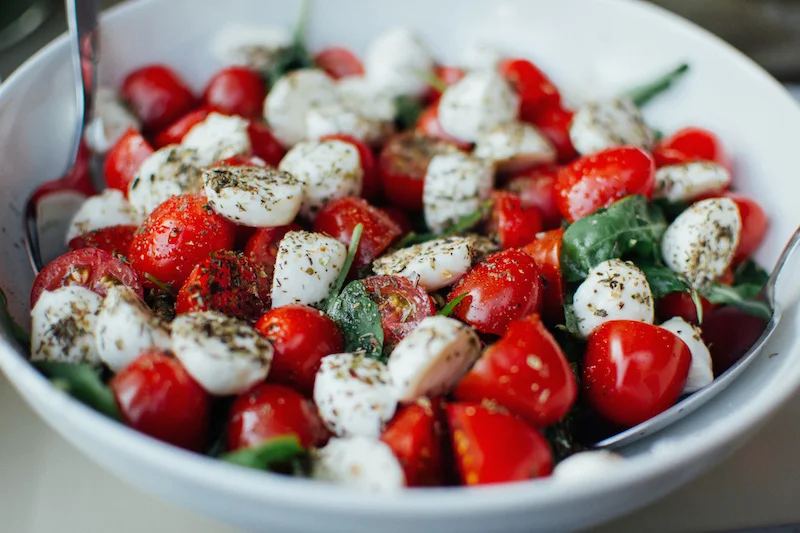
salad of cherry tomatoes + peppers + cucumbers + bocconcini cheese + basil + balsamic
tzatziki + cukes + snap peas
celery stick + cream cheese
1 tbsp butter + 1 tsp honey = frosting, along with an apple or pear to dip
yogurt + chia jam

Good meals to cook extra for the thermos
cook extra sausages at dinner
meat stock + seaweed + chives
chili
make a big batch of soup or stew and freeze in individual portions for easy retrieval
make a double batch of your famous meatballs and freeze for easy lunches
make a double batch of your family's best crockpot recipe and freeze for easy lunches
make an extra shepherd's pie and divy it up into single sized portions
refried beans
keep your stock hot in your thermos, and make your own noodle soup with ingredients in a glass jar (veg, garlic, sesame oil, cellophane noodles, herbs); add stock only just before eating
last night's dinner
frozen stock cubes + frozen shredded chicken + frozen pesto cube + hit of salsa or cube of pizza sauce = instasoup
Use silicon muffin trays or ice cube trays to freeze small portions, pop in freezer bags + label
meat stock / bone broth
leftover meat
roast an extra chicken for dinner, and shred the meat for quick easy grab protein
double your recipe for pulled pork and freeze the meat for quick easy grab protein
pesto (great way to jazz up lots of things, and change the flavour of a leftover)
pizza sauce
blitzed pulse paste (great to add fibre and protein to a quick pieced together meal)
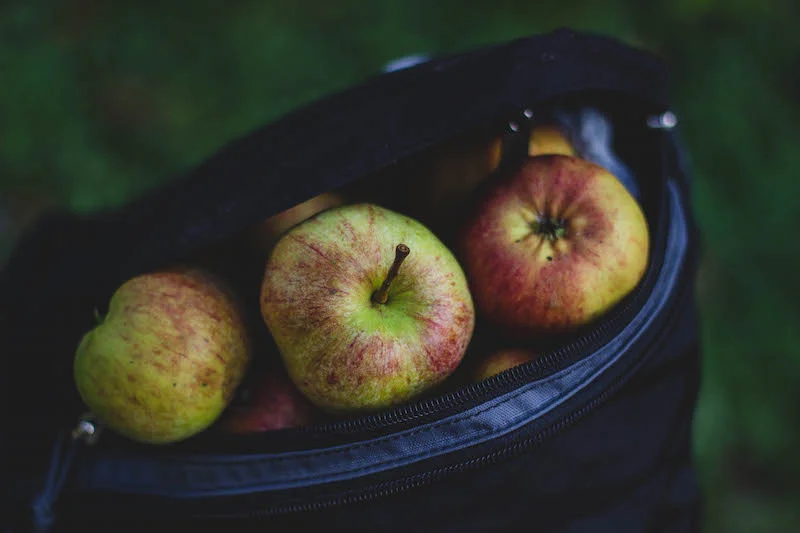
Find more ideas at the blog post on snacking well.
A full roundup of pack-friendly lunch ideas on a pinterest page of mine here
You'll find loads of recipe round ups when it comes to lunch ideas via pinterest. My fave is here.
My only rules: Keep it simple. Routine is key. You got this.
Good luck on your lunch planning! Now go play with your food.
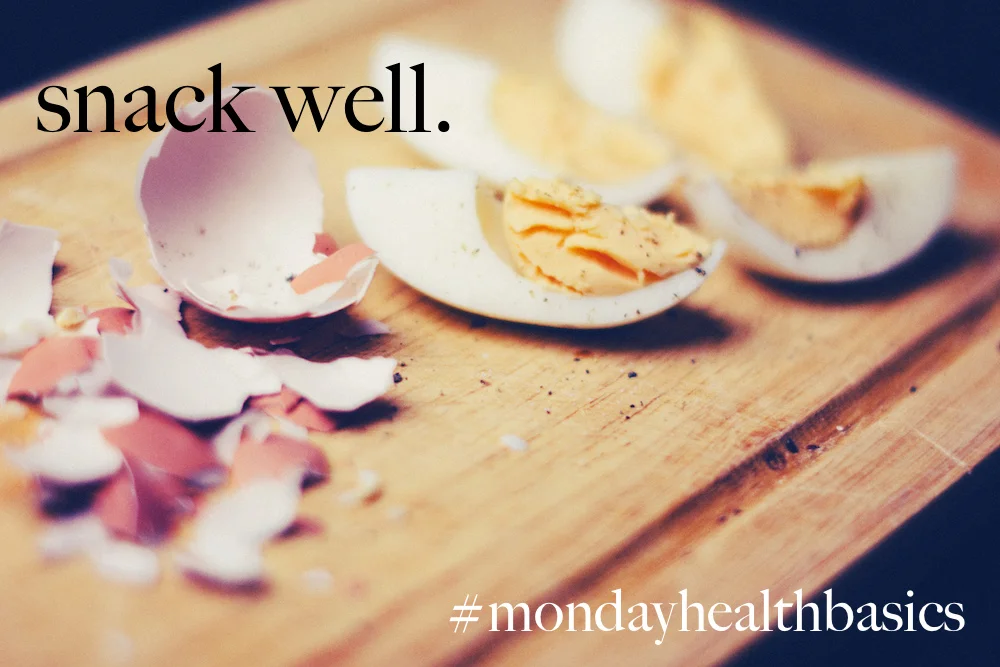
THURSDAY BASICS: snack well.
I am a big believer in feeding the hungry beast, aka your belly. It's 2019, you say. Your days are full up. You have places to be, people to see, and sometimes grabbing food on the go is what is called for. And I get that! Eating nutrient-dense meals when out and about can feel impossible at times.
But today's post is about being prepared: if you have the good things at hand, you will be snacking well. And snacking well will serve you well for the people to see and those things to do that are on today's agenda.
Click on the image for a full run down and ideas on how to Snack to help Tame the Inflammation Dragon.
#tbt day here at #goodfoodHQ, taking a gander at the #mondaybasics series of 2016.
What to eat, what to eat. Day in, day out, this can sometimes feel like a chore. What if we fuelled up with some good snacks? How can snacks help fight inflammation, and keep us well?
SNACK WELL 🍎🥥🥓🌰🥜
COLES’ NOTES:
This is about keeping blood sugars in check.
It’s about balancing hormones, too.
Nourishing the beast with nutrients to help tame that inflammation dragon!
This is about reaching for nutrient density - what that is, and why it works. Think of these as components to build into meal times when time is short! Snacking is for champs.
I am a big believer in feeding the hungry beast, aka your belly.
Before I jump in to the idea behind snacking well, I want to make it clear that I really believe that if you are eating nutrient-dense meals and supplying your body with some good eats on a regular basis, foods that fill you up, you will drastically reduce those between-meals hunger pangs and cravings to a dull roar, or in my particular case, to not even a whimper.
If you want a good primer on how to eat real food, inherently making your foods nutrient-dense, check out this past blog post o'mine. Know that I have a full program developed to help you achieve that - the Real Food Reset. Check it out here.
But it's 2019, you say. Your days are full up.
You have places to be, people to see, and sometimes grabbing food on the go is what is called for. And I get that! Heck I wrote this from my parents' kitchen counter late night about to travel all day the next day. It's what fuelled this post.
Eating nutrient-dense meals when out and about can feel impossible at times. But today's post is about being prepared: if you have the good things at hand, you will be snacking well. And snacking well will serve you well for the people to see and those things to do that are on today's agenda.
This post is meant to inspire a sort of template to think about, when it comes to packing snacks.
Of course if you're an all-day-nibbler, these can be the perfect way to fuel your day.
If you're the kind of person who gets 15 minutes between clients and can only manage to get some food down the gullet in that short turn-around time, then this post is for you too.
If you're the kind of person who gets caught up in the day's work and your to-do list, then my wish is you will find in this post some ideas on how to best fuel your day's work.
If you have some traveling in your near future and want to have some snacks at hand for yourself or for any littles in your company, this is a great way to have those edibles ready for when the moment strikes. Pair a few of these together for a picnic in the park! Indoor parks when the weather is roaring, and outdoor parks when the sun is shining!
How I approach this idea:
I like nutrient density. This means primarily reaching for foods that will have a healthy amount of good fats or solid hits of protein.
Carbs happen to be almost an after-thought, and certainly not the main impetus behind the snacks.
Not sure as to what is considered a good fat? Check this previous #thursdayhealthbasics post here for a good rundown.
When I say good hits of protein, I mean both animal and plant-based proteins.
When it comes to the animal products, I encourage you to seek out meat and dairy from animals that have been raised as they were originally intended, on pasture. Check out this previous #thursdayhealthbasics post for the run-down on why you should choose grass-fed.
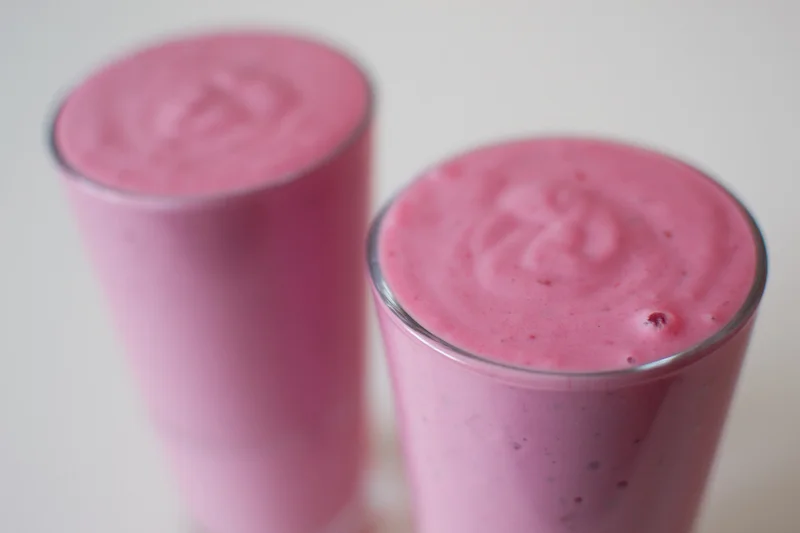
Smoothies can be a nourishing way to get good foods in your belly. Ensure a good fat or protein is in the mix!
This list is one that I often share with clients, in order to help inspire them to draw up their own list of quick and easy nutrient-dense grabs that they can easily take with them on their way to work, or for the day of errands or traveling.
I am a big lover of all things plant-based, and pastured animal products too. I often tend to join together a good fat along with a low-glycemic fruit, or a satiating protein coupled with a veg or fruit.
What I am looking to provide your body here is the nutrient-density that will slow the release of the nutrients found within the snacks, helping to keep your body satiated for a longer period of time.
Eating a fruit by itself will be digested fairly quickly; it gets converted to simpler carbohydrates and sugars into your blood stream within 20-30 minutes, providing a quick hit of energy but then setting you up for a rapid slump.
Eating foods high in carbohydrates and available sugars like fruit on its own (or that flaky pastry in the meeting room you just can't pass up) will contribute to blood sugar imbalances, setting you up for a crash in energy soon after, foggy brain, and further upsetting your hormonal balance.
It is this hormonal balance that plays a part in influencing your body's food cravings.
By providing your body those nutrient-dense foods full of good fats and protein, you slow down the release of the entire snack to your bloodstream as it takes longer to break down fats and proteins.
This slower release of nutrients will supply you with a more steady and reliable fuel source to best nourish you through your day, helping again to balance those blood sugars and assisting in balancing hormones too.
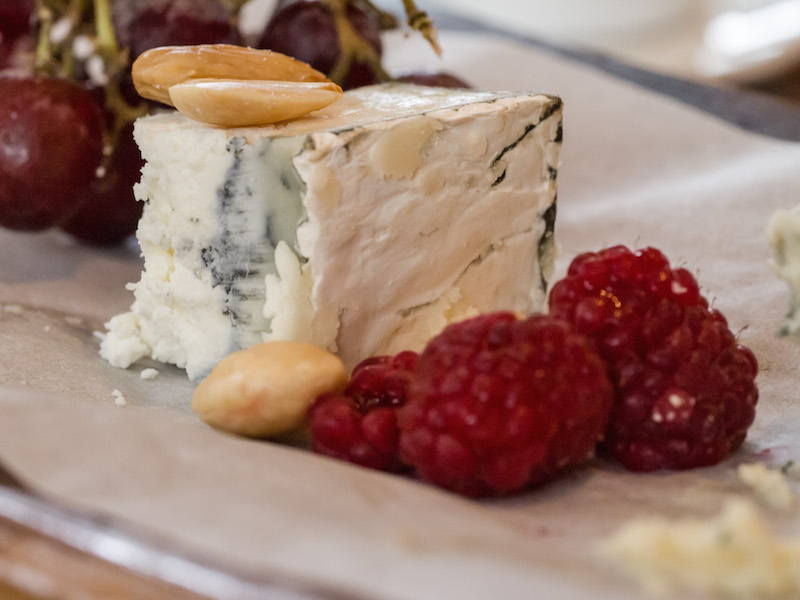
Nutrient dense munchies (plant sources)
olives
nuts
seeds
avocado half, drizzled with olive oil; add chopped tomato and cilantro to make it guacamole-ish
fat bombs (find easy DIY recipes here)
make a smoothie to take to work, ensure you add a good fat to the mix (coconut oil, a nut butter, MCT oil, cocoa butter, pre-soaked nuts and seeds )
hummus
no-bake cookies like these almond + oats ones from local CHN Lisa Gillespie
DIY granola (I love this paleo version here)

Nutrient dense munchies (animal sources)
hardboiled eggs (So easy! And so filling! And so nourishing!)
pepperoni sticks from pastured animal sources, no nitrates
leftover bacon
wrap bacon around avocado slices or asparagus or green beans, bake in 400F oven until crispy
chicken livers wrapped in bacon, baked in 400F oven until crispy + cooked through
shrimp
smoked salmon
mash a can of sardines or tuna with half an avocado, add curry powder, S+P
cheese
cottage cheese
cup of meat stock, add chopped chives and seaweed
make quick smoothies to take to work high fat yogurt or milk kefir as your base
add a scoop of collagen powder to your smoothies
chicken liver pate (this one looks delicious)
make big batches of easy meatballs (ground bison, onions, shredded carrots, greens)
Pair a good fat with a fruit or veg
Slather almond butter on banana slices, sprinkle cinnamon to make it fancy
Mix 1 tbsp butter with 1 tsp honey, you have frosting for your apple
make your own greek yogurt and add pesto for a dip with crudites (carrots, jicama, peppers, celery)
mix yogurt with berries and maple syrup, sprinkle on hemp seeds for added protein and fats
make your own guacamole with crudites or sprouted nacho chips
chicken liver pate with chopped veggies
air-popped popcorn (organic!) with lots of butter, good parmesan and hot sauce
core an apple, slice in rings, slather in PB and sprinkle on coconut shreds
almonds in raspberries
DIY trail mix of a nut, a seed, a dried fruit, coconut ribbons, cacao nibs
cheese and fruit (blue cheese and raspberries; gouda and apple; brie and blackberries)
celery sticks with nut butter, raisins (ants) or cranberries (fire ants)
tzatziki with veggie rounds
make easy kabobs on bamboo skewers (cheese, veg, leftover sausage pieces, etc)
wrap peaches or nectarines with good quality prosciutto
sprouted grain crackers with cream cheese and strawberries

If you don't feed the beast, you may find yourself unable to say no to that flaky pastry from the lunch room. And the black coffee.
Straight up packaged foods when you need to keep a stash at work
dark chocolate coconut bars (skip the agave, aim for high fat content)
kale chips
coconut chips (read your labels – watch the oils, choose one with few ingredients)
good quality nut butter cups, low in sugar (read your labels – say no to agave)
sprouted nuts/seeds trail mix
halvah
nutrient-dense energy balls (check the ingredients)
What kinds of snacks do you reach for on your busy days? How do you play with your food when your days are busy? I'd love to know!
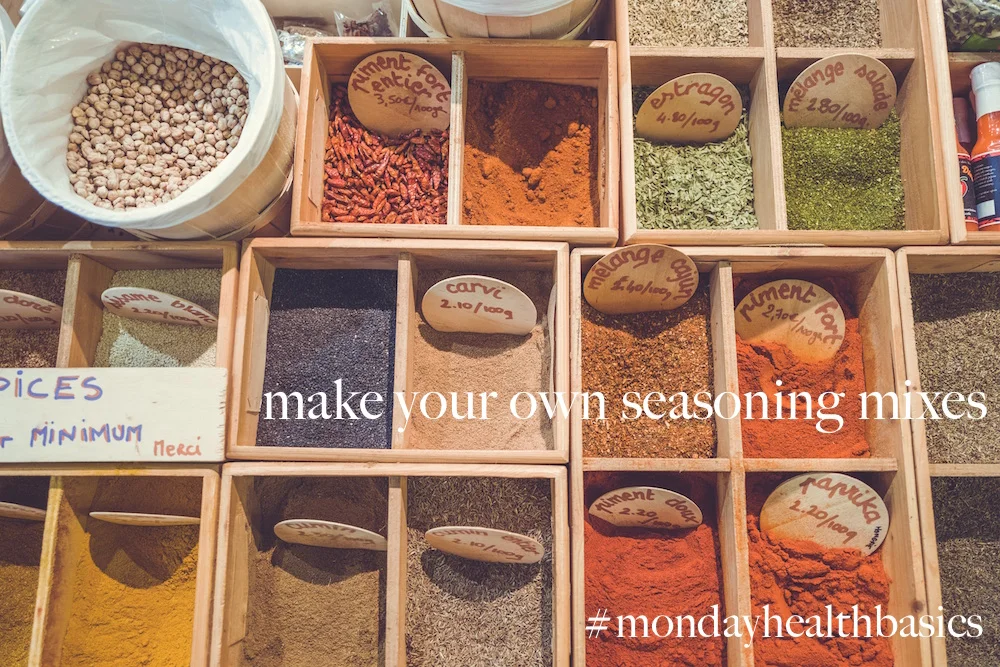
THURSDAY BASICS: make your own seasoning mixes.
This week's easy tweak is a fairly simple thing you can do in your kitchen, in order to bring down the list of additives and other nefarious ingredients in your meals. We're looking to simplify here, friends. We're looking to eliminate food additives. We're looking to eliminate hidden sugars and genetically modified trickster ingredients. We're looking to keeping it real food, mes ami(e)s. In the spirit of the DIY, I present to you the idea of making your own seasoning mixes.
Another Thursday, another throwback! Let’s take a peek at one of the old #mondaybasics series of 2016.
So you’re fully committed to this Real Food Thing. GOOD WORK.
Take it one step further — how’s that spice blend you have in your pantry?
MAKE YOUR OWN SEASONING BLENDS
COLES’ NOTES:
1. Read the list of ingredients on your packaged seasoning blends. Some of them have some pretty serious inflammatory ingredients in there!
2. It’s about reducing inflammation-promoting ingredients, and genetically modified ones too. These wreak havoc at your gut lining!
3. If you’re going to chase flavour — make it COUNT.
Plan on a wee batch prep sesh on the weekend. Your future self will thank you!
This week's easy tweak is a fairly simple thing you can do in your kitchen, in order to bring down the list of additives and other nefarious ingredients in your meals.
We're looking to simplify here, friends.
We're looking to eliminate food additives.
We're looking to eliminate hidden sugars and genetically modified trickster ingredients.
We're looking to keeping it real food, mes ami(e)s.
In the spirit of the DIY, I present to you the idea of making your own seasoning mixes.
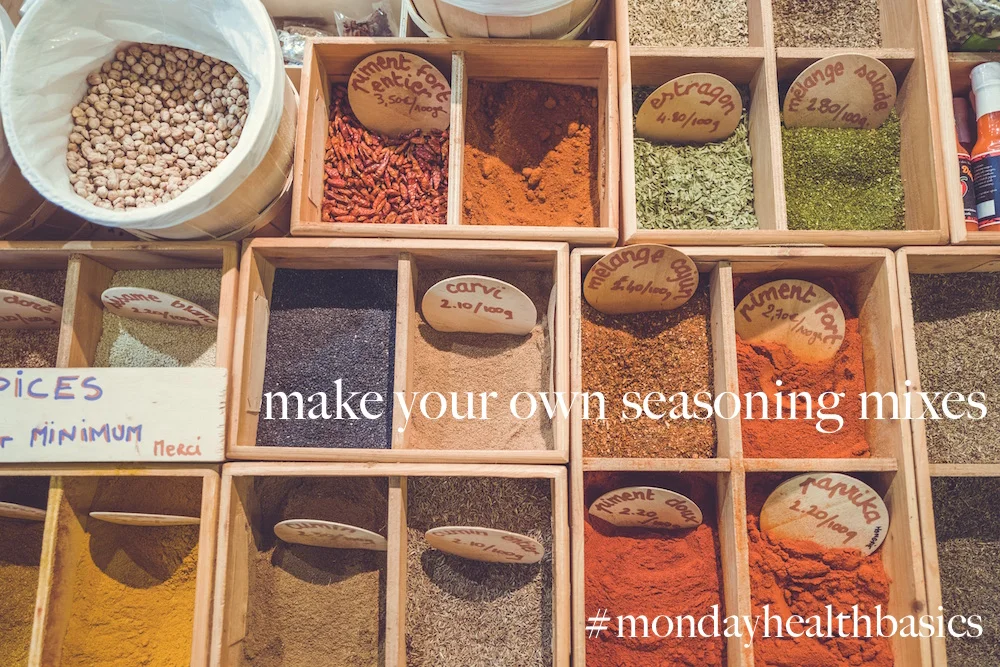
I love spices. I love flavours. I am a big fan of savoury things. Oh sure, I also love salty things, and find I crave them. I am also a fan of quick meals, and making the daily evening task of making supper an easier and tastier bet. (Have you seen this one? I bust a gut because IT'S TRUE.)
Today's post is about veering from the prepared, and relying on something you can make yourself in advance. Think of this as a mini batch cook session, ditching the pre-made spice mixes for something that will not only taste better, but be more supportive to overall health.
The problems with pre-made spice packages
Those little packages you get in some of those 'box-o-tacos' contain some suspicious ingredients in some cases. Were you to investigate, you could find that the packet you are holding in your hand is packed with monosodium glutamate, aka MSG.
This is not something you want to consume; the research shows this additive can wreak havoc on your nervous system, bringing on the dreaded inflammation.
Search the list of ingredients on the package in your hand, and chances are it may also list maltodextrin fairly high up in the list of ingredients. Maltodextrin is added to mixes to add a sweetness to the finished product. This is a super processed food 'product' that is a straight sugar, quickly entering your bloodstream and sending your levels through the roof in no time flat.
This sweetener is derived from some type of grain, usually corn or rice. Most of these grains are genetically modified (unless marked from organic sources I suppose), and GMO foods have been shown to wipe out the gut flora you are trying to cultivate. These two facts alone make this food additive a super inflammation-promoter; it's best to avoid it altogether.
THE IMPACT ON YOUR GUT
Some spice mixes also use certain additives that prevent the mixes from clumping together. These additives are not a part of the flavour profile, nor will they be there if you mix your own blends yourself, thus reducing yet more “food-like” additives. One of the biggest culprits is listed as 'cellulose'; it's essentially wood pulp. Mmm. Delicious.
Do we need to talk about the amounts of salt and sodium typically found in these packets? They're the main driver of the flavours you will get when you use some of these pre-made mixes in your home. They're also quite high in sodium content; I encourage you to read your labels to learn just how much salt is included. But making your own mixes? Well now, you get to control the amount of salt in the final product. Your heart will be pretty glad of that.
LEST YOU FEEL YOU CAN’T EAT ANY — The benefits of spices
Using spices in cooking brings so many benefits. Of course, boosting flavours is one. Traditionally, spices were seen as carrying medicinal benefits, and the science now backs this up. Ensuring your spices are freshest will mean these beneficial properties will remain higher, providing the very best health support to you.
And anywhere you chase flavour, why you’re helping improve digestion! Good digestion is ALWAYS a good thing for which to aim.
Did you know cinnamon helps balance blood sugars?
I know someone who swears by regularly drinking peppermint tea and carrying peppermint tablets in order to best mititgate the effects of her IBS.
It is well documented that turmeric (a yellow-hued root in the same family as ginger) provides anti-inflammatory support to the body, protecting the liver.
Garlic doesn't just ward off vampires, it appears to also help keep high blood pressure at bay, warding off colds and flus and lowering blood cholesterol.
These are a just a few examples of benefits, follow through to this post to get the low down on even more superstar spices.
Many spices provide good amounts of important vitamins and minerals, those all-important micronutrients we need to manufacture so many important things in our body's functioning. In fact, spices are notably quite high in some of these micronutrients, packing quite a punch in a small amount.

Make your own seasoning packets
I am a diehard recipe follower when it comes to seasoning mixes. I don't need to re-invent the wheel, see? It's already out there. In spades. And so I provide you with a link to my favourite mixes, my go-to spots online when I'm preparing one of my favourite blends. Simply click on the title, and you will be redirected.
My tips:
You can always add salt after cooking, but can never take away the salt if you've added too much. It's also a completely subjective thing for each person at the table. Hold back or use half the amount in the recipes, and allow everyone to salt their food to their liking at the table instead.
Make a double or triple batch of your favourites, and store in old jam jars or mason jars; these jars retain the freshness. Keep them out of direct sunlight too, in order to keep those flavours and antioxidants vibrant.
Use these spice mixes as inspiration for a meal: imagine the Zaatar spice blend in homemade meatballs say, and now you can picture a delicious parsley-tomato-cucumber salad to accompany it. A lot of these links also offer suggestions as to how to use these mixes when preparing meals.
The Round-up:
Arabic Seasoning
Buffalo Spice Mix
Chai Spice Mix
Chimichurri Spice Rub
Curry Seasoning, nightshade-free
Everything Bagel Seasoning
Greek Seasoning
Italian Spice Mix
Jamaican Jerk Seasoning
Montreal Spice Mix, homemade
Morrocan Seven Spice Mix
Pickling Spice Mix, for those who can and ferment
Pumpkin Pie Seasoning
Ranch Mix
Taco Seasoning
Tandoori Seasoning, nightshade-free
Zaatar, a brilliant Middle Eastern flavour profile
Wanting to explore some more mixes? Search here for a list of 16 mixes including a killer Cajun mix. This post shares a solid 9 mixes, including an Indian Sweet Spice mix.
Now go play with your food, will you?
THURSDAY BASICS: add seaweed
For this week's topic, I am going to work hard at not getting bogged down in scientific evidence and fancy words to try to extoll the virtues of seaweed or sea vegetables. We're talking adding seaweed to your regimen today on the blog. Because minerals. Because lignans. Because cancer protection. Because reducing inflammation. Read on if you need more evidence.
Click on the image above for a full exploration on the topic of seaweed.
#tbt day here at #goodfoodHQ, as we look back on the #mondaybasics series of 2016.
Last week, we dove in to adding in nettle, a sort of Level 400 Holistic Nutrition add-in if you will. This week, we add to your toolkit by adding in yet another Level 400 kind of food to your day to day.
ADD SEAWEED
COLES’ NOTES:
Because minerals.
Because lignans and fucoidans. (For cancer protection + reducing inflammation. (Code for chronic disease.))
Because chelation work to take out heavy metals.
This really is Level 400. Read on for the reasons behind this idea, what kinds of seaweeds to look for, and how to work them in to your every day. Because delicious!
For this week's topic for the #mondayhealthbasics series (now #thursdaybasics), I am going to work hard at not getting bogged down in scientific evidence and fancy words to try to extoll the virtues of seaweed or sea vegetables. (Although if you're looking for research behind some of these facts, simple hover over parts of the text and you're bound to find a link to something that may prove to be an interesting read, should you be wanting to delve further into the science side of things.)
We're talking adding seaweed to your regimen today on the blog. Because minerals. Because lignans. Because cancer protection. Because reducing inflammation. Read on if you need more evidence.
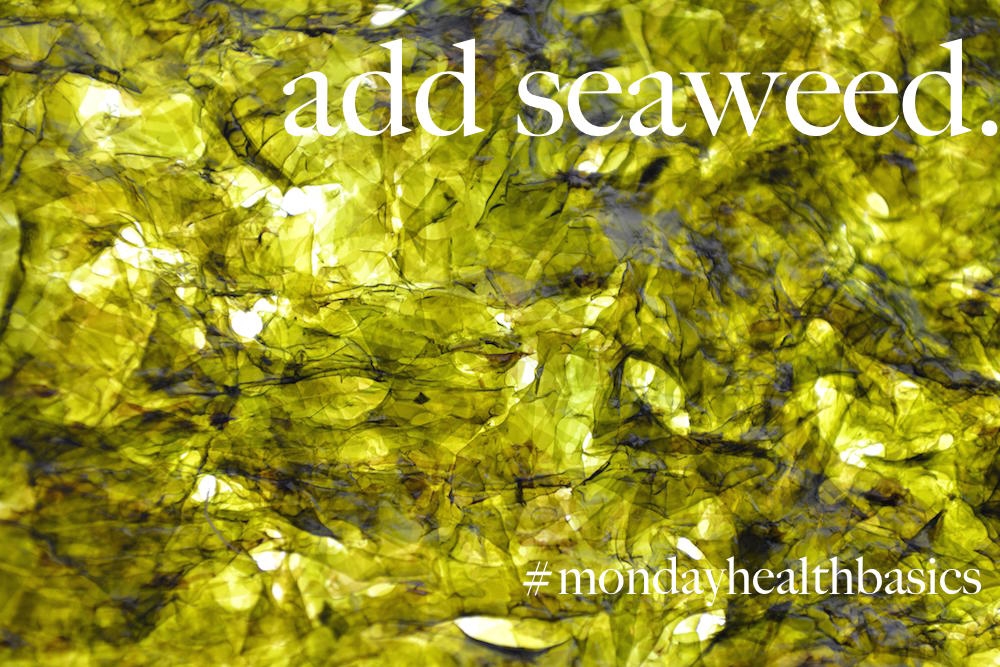
SEAWEED vs SEA VEGETABLES - ARE THEY THE SAME?
Some call them seaweed, others call them sea vegetables; they are one and the same. It might be obvious, but these culinary (and healthy!) delights live typically in marine waters (so think salty seas) and in some freshwater lakes too.
They are mainly lumped into one of three categories, based on their colour: brown, red and green.
Not all kinds are fit for consumption, but there are scores of edible sea vegetables you can include on your table. Some of my favourites include arame, hijiki, kombu, kelp, wakame, nori and dulse.
Most folks would be familiar with seaweed as the wrapping around sushi, or the floating green bits in their miso soup. So think Traditional Foods from the food-loving people of Japan and Korea.
I have a wonderful few recipes from Darina Allen in a book on traditional Irish cooking where she shares recipes on using Carrageen Moss to make pudding. Seaweeds have been a part of traditional culinary cultures living in proximity to ocean waters for many centuries, and with good reason!
LET’S TALK MINERALS
Why I love seaweed: they are a fabulous source of minerals. As we move away from traditional ways of cultivating our foods and harvest, our soils are losing some of their mineral content. This loss of minerals is reflected in the produce grown in these depleted soils.
As we consume these foods from depleted soils, so we start missing some key minerals in our diet. A good way to help support our health then would be to add in to our diet those foods that would help bridge that gap and provide those lost essential minerals. This is where seaweed comes in!
You'll find these sea vegetables are a good source of important minerals like magnesium and calcium (minerals that work in tandem for bone health, nerve health, heart health, adrenal and thyroid health too), iodine (thyroid health, protecting against breast cancer), a good source of folic acid (a critical B vitamin essential to nervous system health, cardiovascular health and reproductive things as well). You'll also find these vegetables to be good sources of iron, potassium, other B vitamins.
WHAT THE HECK ARE LIGNANS AND FUCOIDANS
But what you may not know is that they also supply us with good amounts of lignans and fucans or fucoidans: these two nutrients bring with them cancer-protecting properties (especially estrogen-dependant cancers) and help support the body in reducing overall inflammation, assisting in reducing blood cholesterol.
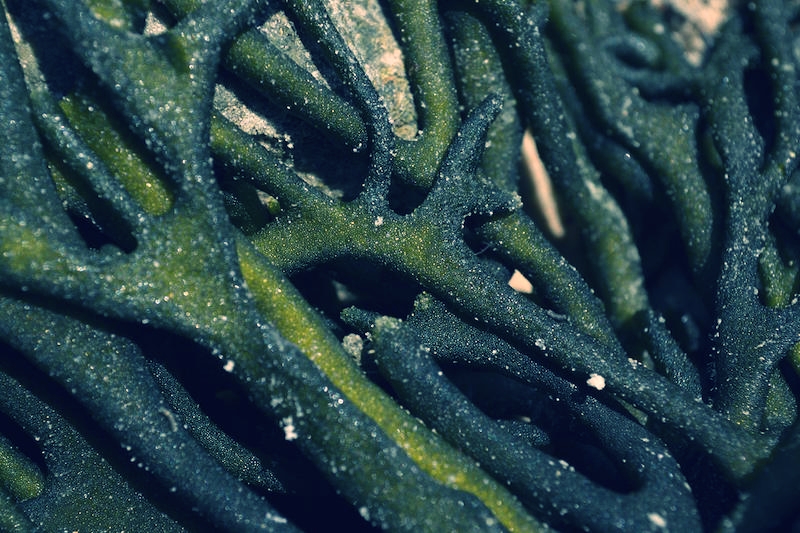
Sea vegetables are considered to be a blood tonic, supporting the kidneys and stomach function.
HEAVY METAL HELP
No, seaweed is not a member of a Heavy Metal Band you listened to in the 70s and 80s. Seaweed are excellent at chelating out heavy metal toxins from between your cells: I mean, COME ON! That's reason right there to include them at least once a day, if you know that heavy metal toxicity has a negative impact on hormonal balance, blood sugar balance and neurological function to name a few.
But how does one just start eating seaweed.
Does it mean I have to forage by the ocean and munch on the sandy rubbery mess?
Well, no. I mean you can if you want to try it out, but I don't recommend it. Yet. (Foraging for seaweed is something on my bucket list. I know. I'm a nerd. Deal with it.)
Know that you can find seaweed and sea vegetables in many different forms, either at your regular grocery store or at your local Health food store too. Look for seaweed that is dried, in packages.
You may also want to check out the bulk bins or spice racks, where you may find kelp powder, or other types of seaweed in powder form. Adding in a half teaspoon of chlorella powder to your morning smoothie or oatmeal bowl might be an easy place to start.
Simply switching a salt shaker on the table for ground up kelp powder can also be a fabulous and easy way to add the goodness of seaweed to just about every meal, without having to put much thought into it. Better yet, leave this shaker of powder by the stove top and sprinkle liberally every time you make some food!
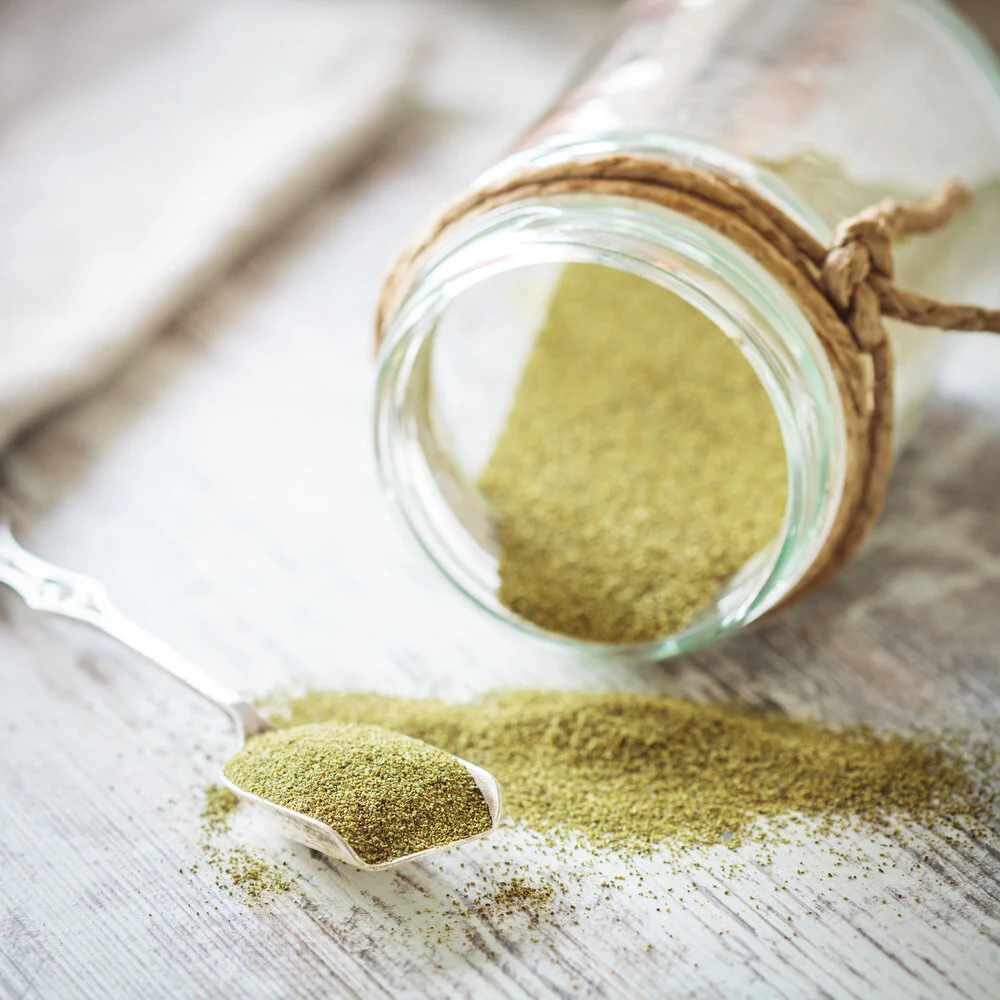
kelp powder - keep it next to the stove and use all the time!
OTHER WAYS TO INCORPORATE SEAWEED INTO YOUR DAILY REGIMEN
Other ways to incorporate these greens into your everyday: you can take a long strip of seaweed and soak it in filtered water for at least 30 minutes in order to soften it. This is one of the key steps in making the Japanese traditional stock called Dashi. (You can also make a bonito dashi, if you're feeling more adventurous and looking for deeper flavour)
Once soaked, you can chop it in bite sized pieces to include in any soups, stews or stir fries or to eat raw in salads. I have a recipe I came up with in my Month of Salads challenge I set up last June, this one uses arame, a noodle-like seaweed once soaked. Delish.
Speaking of noodles, there are a few gluten-free noodle options out on the market these days that are made strictly with seaweed. Some are better than others, so don't be discouraged if the first one you try is not to your liking. Play with your food! Look for the kelp noodles. Easy to incorporate into meals!
Of course you can easily use nori leaves to wrap your sushi in, but did you ever think to use these sheets as an excellent gluten-free alternative to a lunch time wrap? Or cut into squares as a base vehicle for mayo+smoked salmon+kimchi+capers? Easiest way yet: munch on these as crackers. Easy peasy and kid friendly to boot.
You can also chop nori sheets up into strips to toss into salads, soups and stews or one of my favourites, with butter over popcorn.
I toss a kombu strip every time I make a meat stock or bone broth; I have been known to sprinkle in minced Sea Veg Blend to anything I can sneak it in. This includes casseroles, soups, rice dishes, stews. I even sneak them in, along with dehydrated greens, to my meatballs and burgers.
Dulse is an easy one to include in anything soupy or stew-like, as it completely dissolves and is not recognizable in your prepared meal. It takes no time to cook!
USE SEAWEED IN YOUR FERMENTS
And fermenting? Why yes, yes I use seaweed in my ferments! And why wouldn’t you? You unlock access to more minerals and vitamins in the fermentation process, and so adding seaweed in to your ferments is a brilliant way to increase the nutrients available in your finished product.
Wakame is a wonderful addition, along with ginger to a sauerkraut; or tossing in strips of dulse in with your kimchi would be divine.
TRADITIONAL FOODS
Adding a strip of dried kombu when making a batch of beans is a Traditional Foods idea folks have been doing for yonks, and it appears to improve the digestibility of the beans, which means less gas for the consumers. And friends who are hanging out with said consumers in the hours following.

Know that these greens do come from the ocean, and so they will bring with them a bit of salt. Taste your finished product (with seaweed added in!) before salting your dish.
I am aiming for a toonie-sized piece of seaweed per day at our house. It isn't a recommendation set in stone and I certainly don't get bothered if I don't include it in the day's meals but I really do aim to include this goodness in just about every calendar day. There are so many benefits, how could I not?
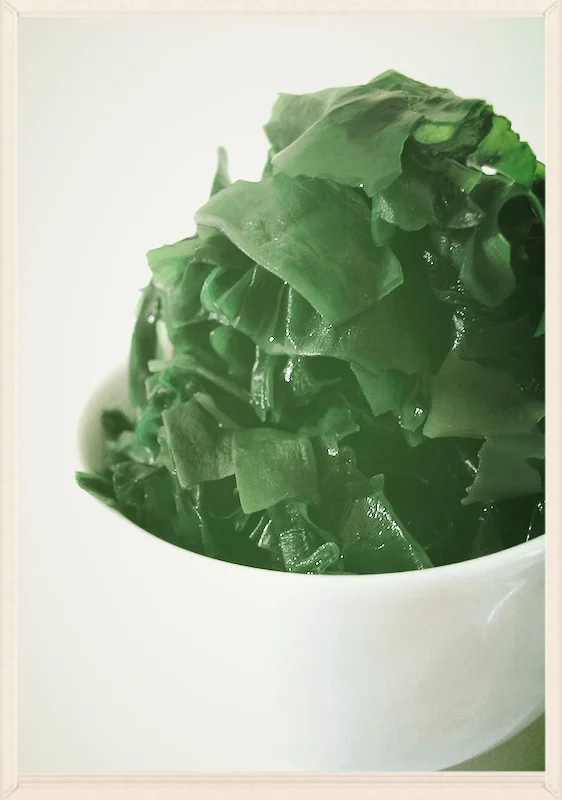
the humble seaweed.