
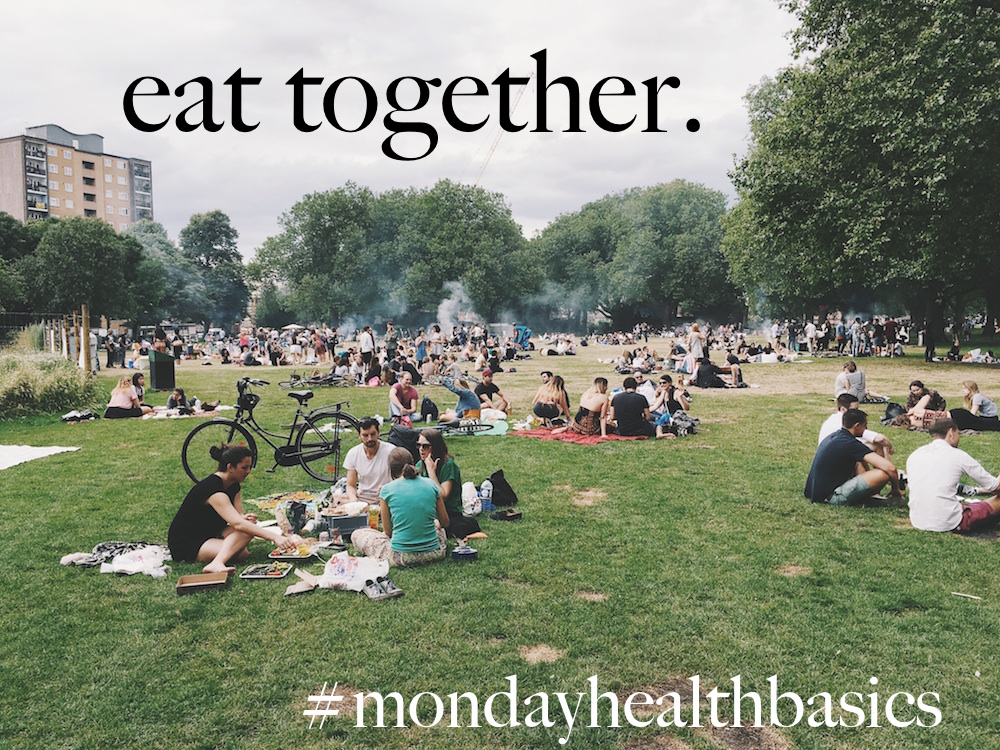
THURSDAY BASICS: eat together.
We have a golden rule in our house, and it's one that I will insist upon until the day I die. Dinner is a meal meant to be shared, a meal that requires we are all around the dinner table, together. Let's talk about the power of connection when it comes to mealtimes.
#tbt day here at #goodfoodHQ, as we look back on the #mondaybasics series of 2016.
This post is a golden rule in my house, every dang night of the year. There is a method to the madness, friends.
EAT TOGETHER.
COLES NOTES:
1. It's about CONNECTION and how this enables good digestion.
2. It's about your FAMILY CULTURE + having a sense of BELONGING.
3. If I may be so bold - it is about being HUMAN.
Why dinner together around a table is one of the secrets to keeping inflammation + chronic disease at bay - my wee love note to The Family Supper.
We have a golden rule in our house, and it's one that I will insist upon until the day I die. Dinner is a meal meant to be shared, a meal that requires we are all around the dinner table, together. Let's talk about the power of connection when it comes to mealtimes.

Because it's (now) 2019, you can easily find scientific reasons online that will support the idea of sharing meals as a family. There is evidence out there pointing to the fact that eating together as a family or a group is better for everyone's health: this article explores the importance of language development that happens at the dinner table for the very young, and goes on to explore the nutritional benefits of those children who predominantly eat at home. This study delves in to how eating as a unit can help protect children against asthma (!!!).
Looking for a little more light reading? This article explores how regular family supper hours can be protective for adolescents, keeping them away from high risk behaviours. You can uncover quite a few more articles fairly easily if you need the science to back this notion of eating together. (Click on the links within)
For me, it just makes sense with or without the scientific backing. It's a set time every day where our family can gather 'round the table, with some food and conversation at the ready.
IT’S A FAMILY AFFAIR
Before we sit down, we tend to work together to pull this meal together. Our daughter helps prepare the vegetables, is learning to make sauces and learning how to pull a good salad together. Sunday's dinner this past weekend saw her in charge of assembling the roasted beet / pistachio / goat cheese salad with dressing. It's important to me that she develop the sense of flavours, and to build confidence in preparing meals, knowing she can rely on her tastebuds to make a dish taste just right, not feeling she needs to stick to a recipe.
Cooking is really one of those essential cornerstones we as parents impart to our children I think. As a parent, it's up to me to make sure that my daughter can swim, that she enjoys reading, she consume some vegetables and that she can make herself a good meal. Getting her involved in the cooking process is key to developing these skills. They're also important components in raising a child who will be independent and able to care for herself.
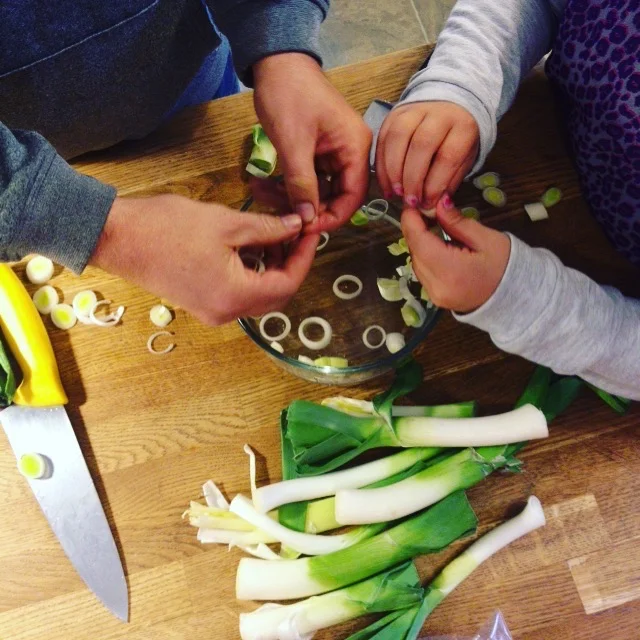
I think too, she starts to get to know some of the basics of cooking, and now has an appreciation for what goes in to preparing a meal. Perhaps because of my influence as a Nutrition gal, my girl now loves to read ingredients and nutrition panels on packaged foods, wondering what the chemicals are that are listed. You should hear her reactions, figuring out how to pronounce some of the words, wondering what kind of effects they have on us. I don't go on and on about it for her, however it is something that she has started questioning and wondering about on her own. Meal prep time is the perfect time to hash through these questions, address these concerns. (I think some of this stems from reading the labels on her Halloween candy stash; we are working on the concept of balance with her. (Parenting is HARD!))
Everyone is expected to participate at meal times. While I do the planning and defrosting and most of the cooking, my kiddo helps with prep for sides and salads, my husband will sometimes help with the finishing touches like grated cheese or making the gravy (if he's home in time). We set the table together most nights, clear it together, and the person who did not do the majority of the cooking is in charge of washing the dishes. Our daughter is the one loading the dishwasher and putting away the ingredients, while I'm putting away the leftovers and preparing lunches for the next day.
It's truly a family affair, and requires three people to get the whole thing done from start to finish. When someone is missing, we really feel their absence. I think it's important for our children to feel like their contributions matter, like they're part of a team and that when they are not there, they are truly missed.
I also know how much routine can be a nourishing part of the day, supporting a child's development. Not only that, but routine is exceptionally supportive to the adrenals, both young and old. This kind of routine is good for what ails ya, and if nothing's ailing ya, it's good for that too (as my father would say!).
In sitting down together we three to a meal every night, I think we are teaching our daughter how to be a part of society if I may be so bold: how to use cutlery and what kinds of manners are expected at the dinner table. Sure we sometimes have silly food nights where those manners can fly out the window; it is, after all, about balance.

It's about connecting (and disconnecting from media!)
My favourite part of dinner is that we get to connect. We do have a rule at our table that at dinnertime, there is no reading, no cookbooks, no comic books, no phones, no radio and no screens at all. No distractions. If you happen to call the house when we're eating, we won't be answering your telephone call (don't be mad!).
Dinnertime is when we get to sit around the table, and we take our time to eat the food in front of us. It's understood we all come to the table with stories about our day; it's a great time to find out how our daughter's apprehension at last night's supper table in regards to today's presentation in class was unfounded. We get to hear of her struggles and successes. We get the updates on the children in my husband's class, giving us a little window in to their day. Dinnertime is a great time to come up with solutions to problems, or talk through some of the issues plaguing us. We do eat at a leisurely pace most nights; my kiddo is a naturally slow eater, always taking her time. It used to infuriate me (although I tried to keep it inside) – now I make a point to sit with her while she finishes her meal, and it gives me an excuse to sit an extra five or ten minutes and really just hang out with her, without any distractions.
It took me a few years to realize we had to plan extra curricular activities later on in the evening in order to really allow the time for us to sit and share a meal, without the feeling of being rushed. Piano is now at 7.15 instead of 5.45. Swimming has now been relegated to Saturday mornings. You picking up what I'm putting down?
One important part for me is that just before tucking into the meal, we say a verse of gratitude. This is a prayer my family said before supper time growing up, and it's en français: it keeps a part of my youth and family's traditions alive at our table. This verse is very simple, and says thanks for the good food at the table and for everyone who had a hand in getting this food to the table. It ends with a wish for good food to be shared with those that are without. Short and sweet, but a ritual nonetheless.
I have pondered lately on the importance of including this verse before meal. I see it as a signal to our bodies that a meal is about to come in, and wondered if it helps 'turn on' digestion. I know the benefit of meditation and prayer in helping reduce anxiety; I can only imagine that this brief word helps settle any anxieties and introduce a sense of calm. It is in this mode you need to be in order for digestion to be optimal, this rest and digest mode. Just a thought.
I have been concentrating on the idea of meal time with your family unit, but please do not get stuck on this idea. A meal time can be a meal shared with friends, or a standing dinner date with your roommates. I had a standing weekly lunch date on Thursdays with a coworker, certainly a highlight in my week. Sharing a meal with someone is what we are talking about here, connecting with people who are important in your life.
Further to the idea of saying grace before a meal, I wrote an article earlier this year focusing on the benefits of being mindful at mealtimes, and how to go about it. I think you'll find this a good article to read for further scientific exploration of this concept, as well as practical suggestions on how to make this an attainable task.
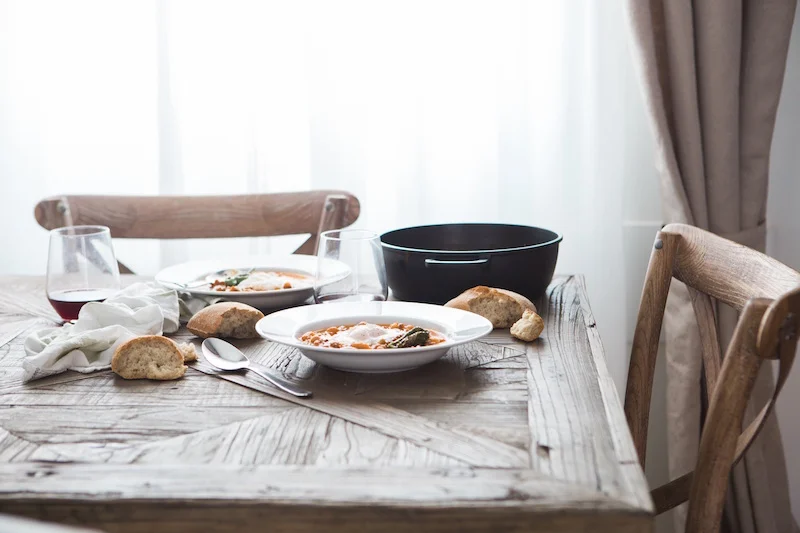
The idea of meal sharing is one of the tenets of the folks at Slow Food. I would recommend you check them out if you don't know about their good work yet! (There is a Calgary chapter too!)
If you feel intimidated by the idea of preparing meals during the week, consider doing a little batch cooking on the weekends, in preparation. At our house, meal planning has taken some of the post-school chaos out of the equation. I did a wee write up on this here, I urge you to reconsider if you, like me, originally scoffed at the idea.
If you are feeling a little lost, and are looking for direction on how to make dinnertime a family event minus the distractions, I found this wonderful post from The Family Dinner Project, a non profit organization based out of Harvard University. They're about food, fun and conversation about things that matter, with suggestions and tips on how to approach mealtime with children from the very little to the almost-adult-teenagers sitting across from you at the table. I highly recommend this read! They suggest some games you can play in order to get conversation started; come up with solutions to help dinnertime be a smoother and less tumultuous affair.
Now go play with your food, and eat with your gang. It'll do your body good.

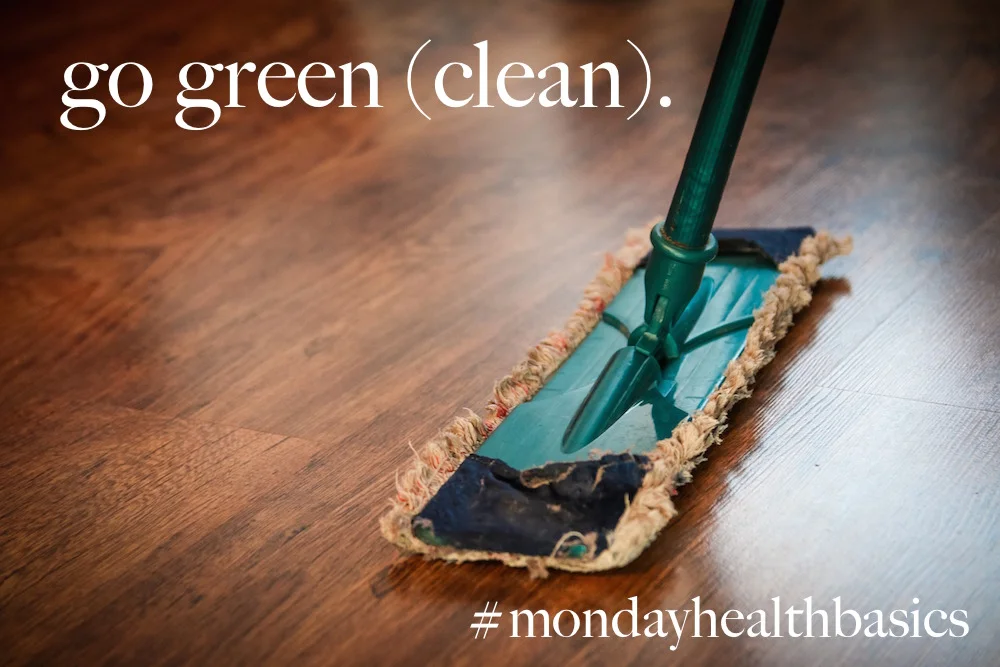
THURSDAY BASICS: go green (clean).
Welcome to another week! Today's blog post is about lessening that toxin load on our bodies, bringing down the number of nefarious substances our bodies have to filter or move out. Let's go green (clean), kittens.
As we are deep in to how to support your Heart this month, the information in this wee blog jog is of particular interest, especially if you get that inflammation is at the root of most, if not all chronic diseases.
Whether you struggle with heart issues, inflammatory things or are working hard to keep chronic disease at bay - this week's idea is one that applies to ALL THE HUMANS.
GO GREEN (CLEAN)
COLES’ NOTES:
1. THE TOXIN LOAD
Your primary work when keeping chronic disease at bay is in moving toxins OUT. When you go green, you work at immediately reducing the amount of toxins your body has to move out. If you don't add them in, your body doesn't have to move them out!
2. THE HORMONAL PIECE
Many toxins and chemicals used in our cleaning agents mimic our hormones - that will throw them out of balance. And hormonal imbalances? Why they're a further contributor to low grade inflammation. Blarg.
3. TAKE A LOAD OFF LIVER
See, these toxins take up essential time + energy from your liver. When this energy is used to clear the toxins out, other jobs tended to by the liver tend to fall to the wayside, further compounding those hormonal imbalances + again contributing to low grade inflammation.
Read on for an explanation in to why we find ourselves in 'toxin-loaded times', and why going green might be the easiest and simplest way to start improving things.
This week’s blog post is about lessening that toxin load on our bodies, bringing down the number of nefarious substances our bodies have to filter or move out. Let's go green (clean), kittens.
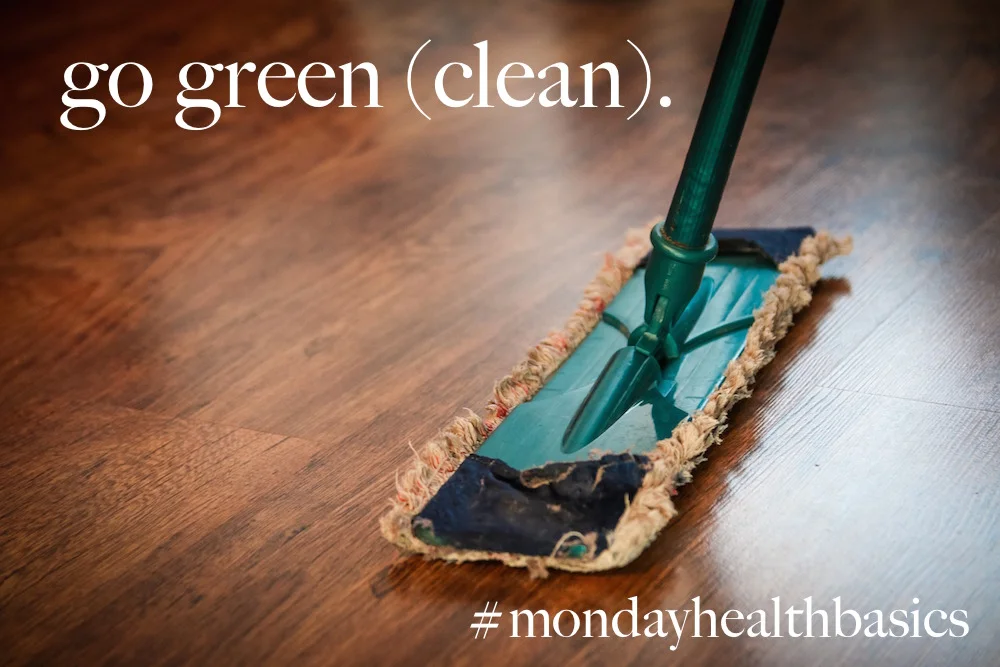
If you don't know by now, I am all about loving the liver and working at de-inflaming, helping your body run as best it can and wants to. My work as a Holistic Nutrition gal is focused primarily on figuring out how foods can best support you, as we look to improving digestion whilst also taming that chronic low-grade inflammation dragon. I tend to talk loads about foods and beverages, or ideas that can best support your body's desire to be well. Today though, we veer off to include an all-important step in supporting your best self: lessening the toxin load via green cleaners.
As a Holistic Nutritional Consultant, I love delving in to dietary protocols that best support gut health and a reduction in inflammation. I am primarily inspired by Dr. Natasha Campbell-McBride's GAPS Protocol, the Gut and Psychology Syndrome, linking the health of your gut to the health of the nervous system, and Dr. Terry Wahls' Protocol (The Wahls Protocol), a Paleo-inspired protocol highlighting how best to support autoimmune conditions.
You know a protocol is the real deal when a component of said protocol includes proper detoxification recommendations.
Both protocols offer a fantastic and in-depth overview in to the reasons why.
If I could, I would quote entire chapters' worth of important information here for you from these tomes. I invite you instead to pick up their books, or put them on hold at your local library so that you can delve in to the explanations and reasonings behind their recommendations.
To summarize, our world is becoming more and more polluted, as are our foods, The chemicals found in the materials around us, the air we breathe, the off-gassing of new upholstery, the radiation from so many directions, the chemicals used to treat the foods and soils in which we grow foods, the list of toxins that contribute to our wellbeing are growing day by day. Two generations ago, they weren't dealing with nearly half as much as we are today. Thankfully, we have these amazing detoxification systems in place in our bodies to usher toxins out, to move spent metabolic waste towards the exit routes. But it is imperative we care for these detox systems and support them so they can best support our health and wellbeing. We're talking about quantity of life, but also quality of life here.
A few weeks back, I mentioned the idea of giving your body that 12 hour break. This was meant to help support your body's in-house clean-up crew to work at their very best. We are detoxifying every day, friends.
Your liver, along with your lymph, spleen, blood, kidneys, sweat, skin, intestinal lining, and a few other parts work in tandem to keep your engine running as clean as possible. They work as a team to keep that detoxification system working as hard as it can, clearing away unwanted toxins, incompletely digested foods, spent metabolic waste out of your system. GOOD WORK BODY.
One of the ways you can best support this kind of work is by lowering the amount of toxins your body has to deal with. Today's post is all about going green.

I am focusing on cleaning supplies in the home today, but I intend to include a post soon on the importance of greening our body care products as well. Look for a good round-up of easy DIY recipes below, and other online spots to look for ideas when it comes to greening your home cleaners.
It's imperative to reduce the number of chemicals you come across in your every day. Sure, we may have little to no sway on the cleaners and chemicals used in our workplaces; some places like hospitals or factories have a pretty heavy load of toxins found in the environment as a regular part of the every day. We do however have the ability to influence those found in our own homes.
GUIDE TO HEALTHY CLEANING
When I talk about green alternatives, think anything used in the kitchen, in the bathroom, for dusting and cleaning floors. Think vacuum, carpets, or anything related to laundry. Go farther, and really investigate when renovations are in the near future for you. Go the extra mile to find lower chemical-load upholstery or paint, low-VOC products (volatile organic compounds – find a concise list and explanation here). Or better yet, figure out a way to make what you have, last! Recycle! Reuse! Seek out good quality second hand goods perhaps.
Some of the chemicals found in your average grocery store cleaners may have some dangerous compounds in them. Refer to this fantastic online resource courtesy of the Environmental Working Group, they regularly update their Guide to Healthy Cleaning to help you make the best decisions for your family. They are based in the United States, and I appreciate their work as they are clear about their methodology, and use science to back up facts. They offer safety ratings on more than 2,500 cleaning products.
You will also find informative articles that go in depth as to which chemicals carry the worst reputation. They explain the science of how these nefarious chemicals work and how they offend in order that you may best arm yourself with the knowledge you need in order to make the best decision.
By going green, you are reducing the irritants and mystery chemicals and fragrances that can wreak havoc on your endocrine system, or cleaners who pack known carcinogens in their recipes. By going green, you are decreasing that toxin load. This frees your body up to concentrate on that internal detox work that needs to happen in order to help keep chronic degenerative diseases at bay.

EASY DIY CLEANER IDEAS
My favourite thing about this: it's frugal!
Click on points if you'd like a more complete recipe or how-to
use salt to help scrub pots clean
use a less chemical-laden dish soap and make sure to rinse thoroughly when hand washing (removes residue)
clean wood floors with strong tea
polish your furniture with a mix of 1c of olive oil and 1/4c of white vinegar
use white wine to take the stain of red wine out of the carpet
ditch the dryer sheets and felt your own dryer balls (one of the best things you can do RIGHT NOW!)
hang your laundry outside to dry, or on a rack indoors (it adds humidity to our dry winter air here in the prairies!)
open a window – it's amazing how it refreshes everything and cleans the air in your house
add a house plant (or seven!), they clean the air for you
I have a plethora of ideas on this pinterest board, updated regularly
think of making your own cleaners as part of your batch prep work for the week
In addition to these easy recipes at home, you can also rely on manufactured cleaners, albeit greener versions. If you're in Calgary, there are some fabulous local home cleaning product suppliers who have their wares for sale at your favourite local health food store. Reach for the simplest and most unscented version of product as you can. And breathe easier!

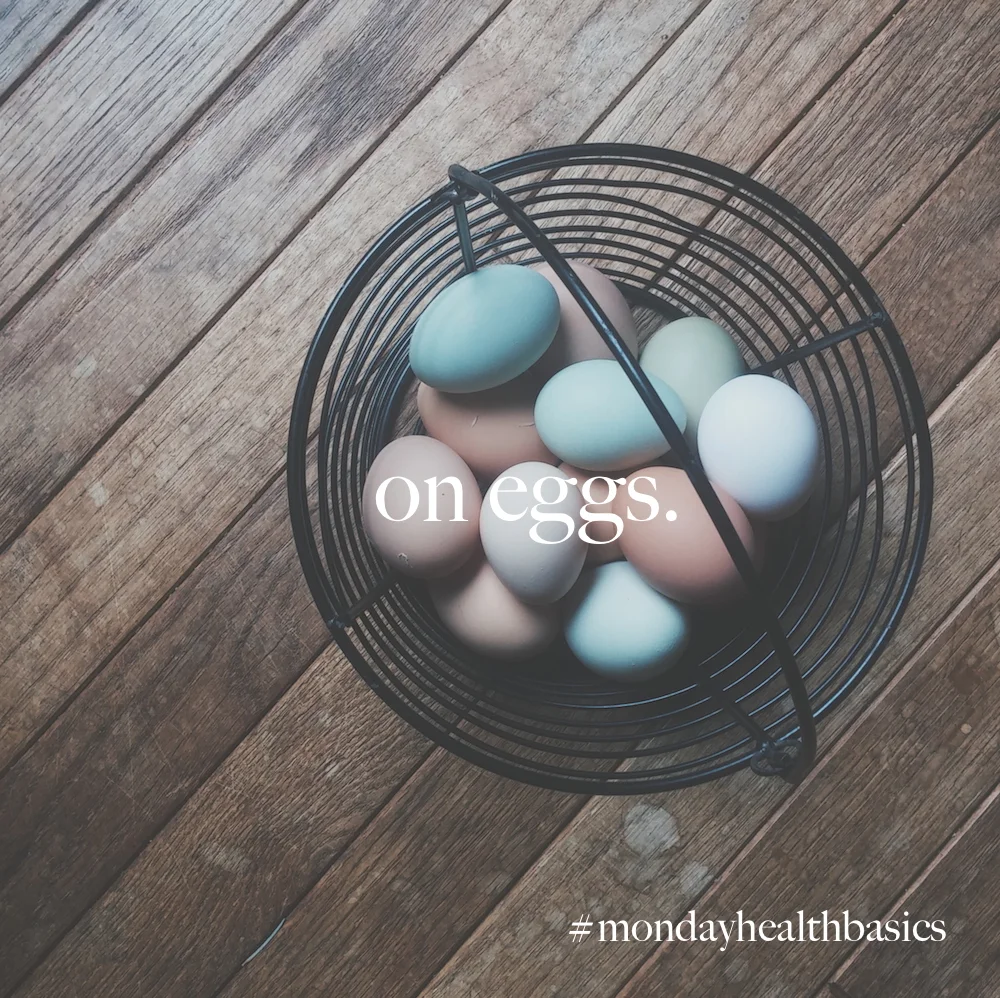
THURSDAY BASICS: on eggs.
This Thursday Health Basics post centres on one of my favourite foods: EGGS. These nourishing morsels of goodness have been unjustly disparaged in recent years. Today's blog post aims to get you on board the egg train. Eggs: nutrient density at its finest.
Let’s keep going with the ideas on how to work on EATING THE GOOD FATS one step further. (Are you tired of my fave macronutrient yet?)
Number 8 of 8. But really, there are 9. We'll come back to #9 in a few weeks. In the meantime...
ON EGGS
COLES’ NOTES:
1. They are Mother Nature’s original fast food - a brilliant hit of protein, loads of healthy fats and serve as a food version of your Multivitamin. Truth.
2. The yolks are the best part - DO NOT TOSS THESE OUT! (The fat soluble vitamins to help keep chronic disease + inflammation at bay are found here!)
3. Eat with yolks as runny as you can muster. Read up for the why.
One of the top things you want to stock up in your kitchen. Get the best ones you can afford - a good guiding principle.
This (now) Thursday Health Basics post centres around one of my favourite foods: EGGS. These nourishing morsels of goodness have been unjustly disparaged in recent years. Today's blog post aims to get you on board the egg train.
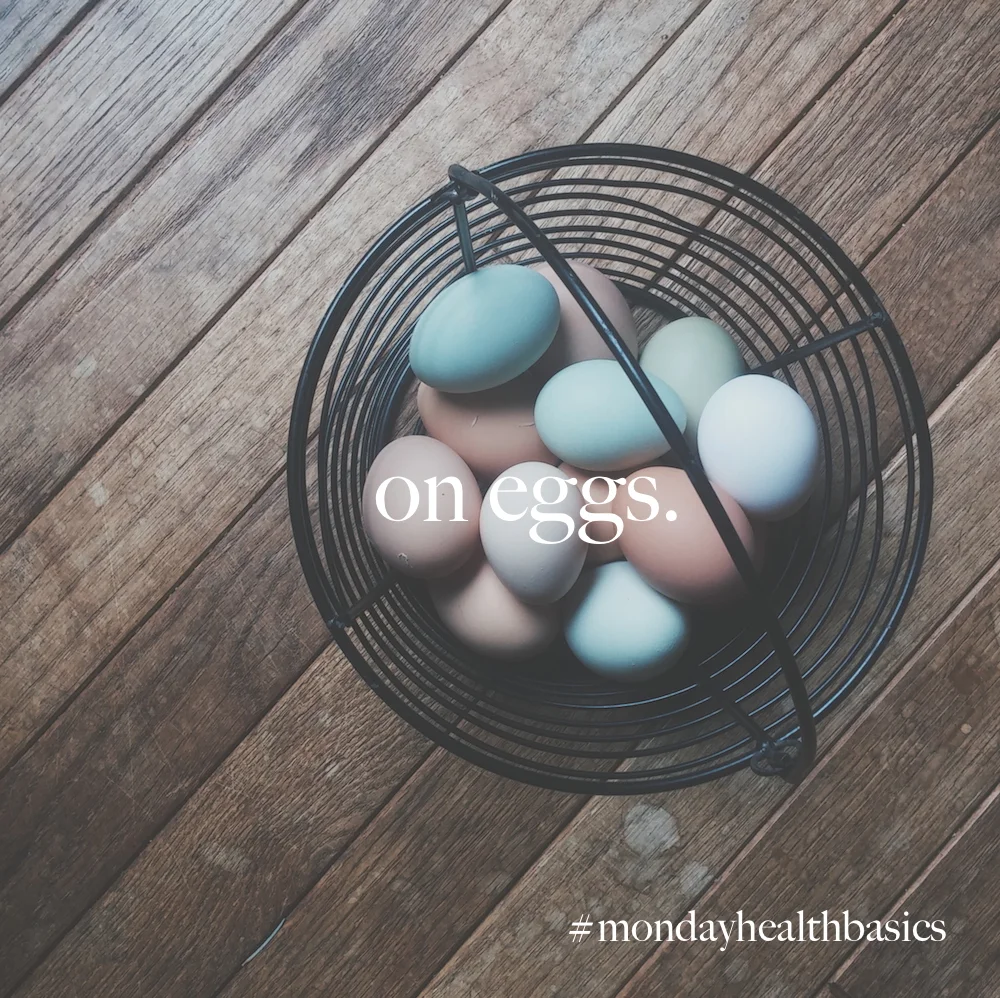
Eggs are one of my favourite foods, for so many reasons.
My favourite: they're pretty affordable! It must be said that not all eggs are created equal, however. Lisa Leake, the author behind the brilliant cutting-out-processed-foods book 100 Days of Real Food (and the blog of the same name) gives a complete rundown in both her book and her blog on what to look for in terms of words on the label. Go on over to get the rundown on what means what.
Eggs are my faves because they're usually quite easy to prepare, in good time. Eggs are a perfect busy-night kind of anchor to your meal. Toss veg in your hot pan with a good fat, add some flavours, and toss an egg on top and pop under the broiler for 10 minutes or so. Voila! Dinner is served.
Not sure which kind of eggs to buy for your family? I like to advise my clients to purchase the eggs they can best afford. With eggs, it really is a question of you get what you pay for. It's one of those foods that you really should budget to include the better kind on your grocery run.
I myself tend to ask questions of the staff at my grocery store, wondering which kind they best recommend in terms of nutrition and bang-for-your-buck. You can also ask questions of folks working the stalls at the Farmer's Market too, they will be able to provide you with those important factors that will help you make your best informed decision on which eggs to purchase.
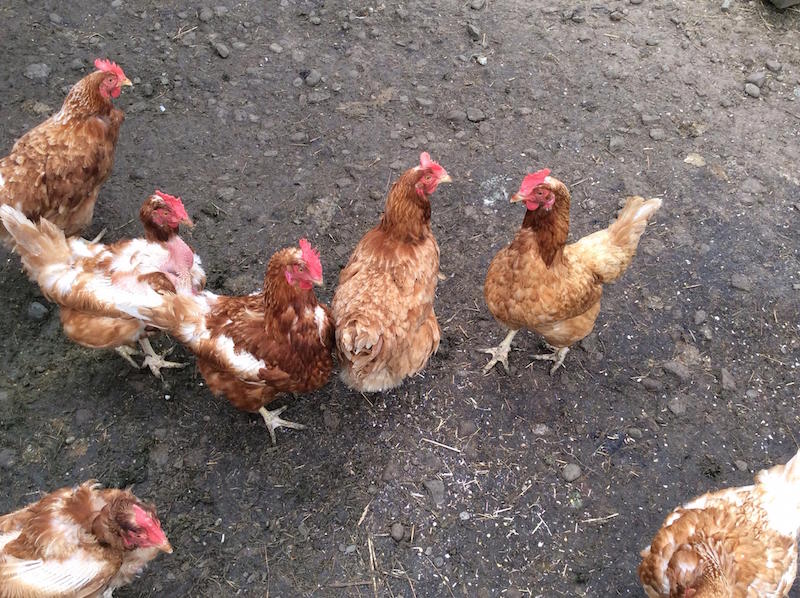
As for me, I have lucked in to two egg co-ops in town where we purchase the eggs from the farmers directly. I feel confident in supporting these smaller producers, knowing the product I am getting is from chickens that have safe access to the outdoors (free-range, pastured), with a nutrient-dense feed that best supports their lives as well. After all, you are what you eat eats. As Joel Salatin says, we must allow the chicken “to express its chickenness”. In so doing, we allow the animal to live as it should, which means it will produce nutrient-dense eggs as it should.
An animal that lives under stressful or unnatural conditions will produce far inferior eggs, lacking in those nutrients our bodies require to do the work of being and staying well.
(That’s code for keeping chronic disease at bay and reducing inflammation!)
I include eggs in our every day here at the house for nutrient density reasons. They are a wonderful source of complete protein, readily offering up those building blocks necessary for our body's building and repair work. The entire egg, both the whites and yolks contain protein, but it is interesting to note that the whites are mostly strictly protein. Protein is one of those important macronutrients you want to aim to include in every meal in order to help balance blood sugars, a key component to keeping inflammation at bay and supporting your adrenals.
The yolks are my favourite part of the egg, however. Do not toss those out! They contain those all-important fat soluble vitamins A, D, E and K. These vitamins play important roles in the maintaining the integrity of your intestinal lining which goes miles in keeping systemic and chronic inflammation at bay; they are key players in mental health and brain health. They are also key to healthy bone and teeth building, density and maintenance. These vitamins keep your skin healthy, and your heart and cardiovascular system pumping like a champ.
Lots of water-soluble vitamins are also found in the egg yolks. Look for B12, the vitamin linked to energy. Choline is also plentiful in pastured eggs – a crucial vitamin in the B family that we need to build cell membranes, keeping our cells as safe as Fort Knox. Choline is a key player in mental and nervous system health, as it is the precursor to important neurotransmitters, playing important roles in muscle control and memory.
Your eyesight benefits from regular consumption of eggs: they contain the antioxidants lutein and zeaxanthin. These beta-carotene powerhouses have been studied and show that they have protective effects for the eyes, reducing your risk of developing things like macular degeneration and cataracts.
Eggs are a fabulous source of cholesterol. This word is one that can ignite people, either for or against. I have two feet firmly planted in the pro-cholesterol-in-foods camp. The negative rap given to cholesterol (and saturated fats, of which there are loads in eggs!) was based on a research paper published by Ancel Keys in the 1950s that has since been disproven. It is a hot button topic, and one that may be a bit too big for a Thursday Health Basics post. For a concise article outlining the health benefits of cholesterol, I invite you to read this article by Dr. Mercola, in order to get the goods. Suffice it to say, in conclusion, the cholesterol we eat does not have a big impact on the cholesterol levels in our blood.
Cholesterol is an integral component to all cell walls, keeping them rigid and strong. Cholesterol is an integral component to all hormones, as well as a part of every bile acid your body produces. Without adequate cholesterol, your ability to digest may suffer. And if that isn't enough, 60% of your brain is made of cholesterol. You need this cholesterol to form and retain memories, and to learn new tricks. Ergo, eggs are a BRAIN SUPERFOOD!
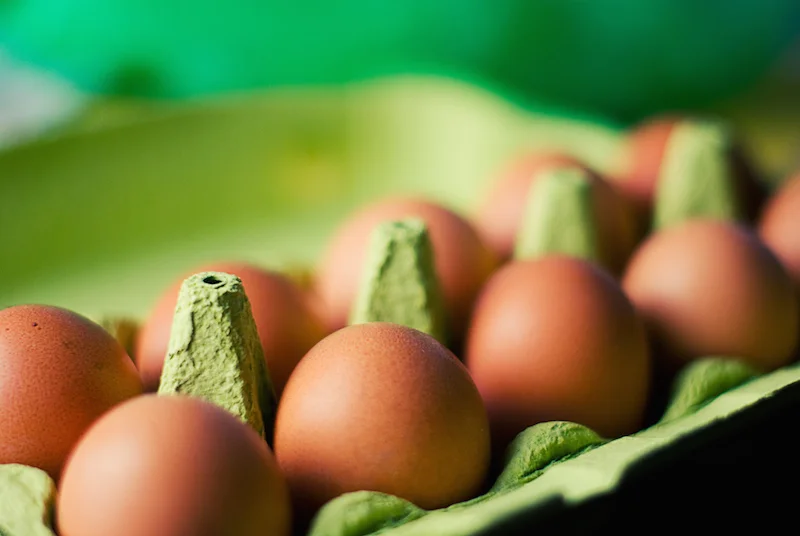
Speaking of brain food, if you are buying your eggs from a good pastured source, you can also count on those nuggets to contain the all-important Essential Fatty Acids! (EFAs). These are the fats we need to keep inflammation at bay, and our brain running like the well oiled machine it is. EFAs also contribute to healthy skin, improved digestion + elimination, heart health and eyeball health too. And liver health. Oh geez, those EFAs.
In case this needs mentioning again, healthy sources of fat like those found in eggs help mitigate the negative effects of blood sugar spikes, keeping all things level. This means then that including good fats in one's diet will go miles in supporting adrenals, and in keeping low-grade chronic inflammation at bay. Yay fat!
Lest we forget, eggs offer us a gamut of essential minerals in our diet, especially those that may be a bit tricky to find. They offer us a good source of selenium, an essential antioxidant that also plays a key role in our thyroid health. Iodine is also provided here, supporting the thyroid and helping protect against certain cancers, especially breast cancer. Iron is another important mineral readily available in eggs, helping replenish the iron stores for women during their monthly cycle, and a mineral essential to energy. As if that wasn't enough, you'll also get a good hit of zinc in your meal if you are having eggs, an important antioxidant integral to immune health and digestive wellbeing.
How to know if your eggs are top shelf?
You want to make sure your egg yolk is closer to orange in colour as opposed to yellow. Hens that have access to the bugs and grass outside will have a richer complement of nutrients, which will translate to a more orange-hued yolk.
Have a question about white egg vs. brown egg? The colour of the shell has nothing to do with the nutrients found within. Rather, it has to do with different breeds of chickens; some produce brown eggs, others white, and yet another kind will give you a greener hued egg. Or pinky. Really, it's all the same. As long as you are sourcing eggs from hens that have been able to have safe access to the outside world, and given a protein-rich feed, you are good to go.
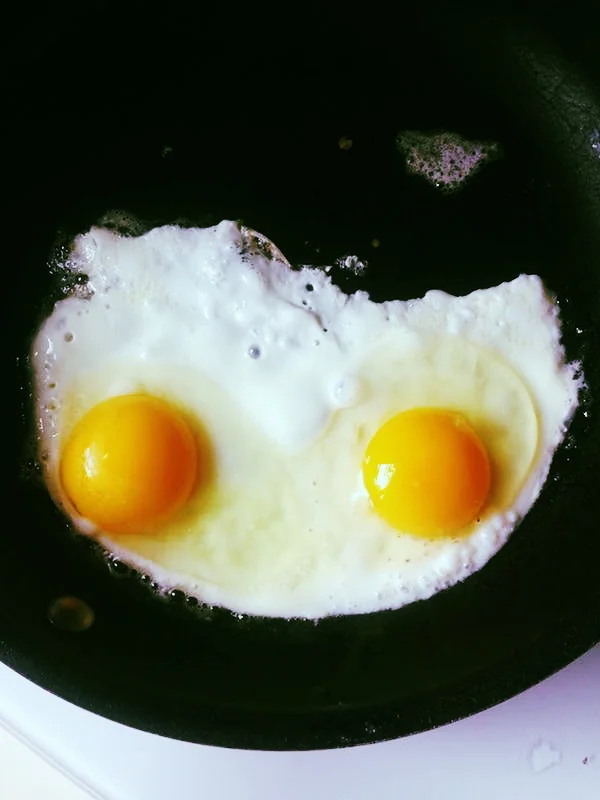
How best to prepare your eggs:
You want your yolk to be as runny as you can take it. Allowing it to stay runny means it will be closer in nutrient content to the raw yolk, which is the most nutrient-dense way to consume eggs. Cooking the yolk alters the content of the yolk, but it is still good! Just aim to be on the runnier side when making your eggs tomorrow morning, and you will be well served. (We call them eggs with yellow sauce at our house. Yum.)
I have had the chance to lead a group of Junior High students in a weekly cooking class for the last five years. Our first class is always about the humble egg; I must tell you we always start with Russian Custard, a raw yolk and honey delight. So far, only one student has refused to try it! And they have all enjoyed the rich and satisfying taste of this easy peasy snack, save for that one student. My caveat here, if you are consuming raw egg yolks, is to make sure it is from eggs that have been allowed out on pasture; conventionally-raised eggs carry a higher risk of salmonella poisoning.
I used to work with a fellow who was well versed in food and nutrition things. He said he thinks of his eggs as his source of multi vitamins; he aims to have at least two a day, in order to best supply his body with those nutrients necessary to optimal health. On the GAPS protocol, a gut-supportive protocol that profoundly affects my practice as a Holistic Nutrition Practitioner, the author Dr. Natasha Campbell-McBride recommends daily consumption of eggs once the initial Intro stages are done. She recommends one can consume up to 8 eggs a day, once you are able to safely digest them.
Eggs. Nutrient density at its finest.
How do you prepare your eggs?
THURSDAY BASICS: make your own dressing.
Today's blog post, albeit a short one, is one that is an easy thing to swap in. We'll talk about how to manage this at home, and how to manoeuvre this idea whilst on the road. Today's post is about how to DIY your own salad dressing, and why you might want to.
Let’s keep going with the ideas on how to work on EATING THE GOOD FATS one step further, this number 7 of 8. Phat Fats, as I like to call them!
This is a basic rule I share with my Junior High students. Making your own is infinitely better than store bought.
MAKE YR OWN SALAD DRESSING
COLES’ NOTES:
1. For the love of the good fats. Store bought typically has a lesser quality of fat. When you make your own, you can so very much upgrade the most important nutrient for reducing inflammation - THEM FATS. (Omega 3s!)
2. Poor quality ingredients + sugars + food-like things added to the dressings so that they taste delicious + the mouth feel is on point. (Oh wait. Can your gut even handle these?)
3. This is also about CHASING FLAVOUR. When you add good flavours, you help improve digestion + assimilation of the good foods on hand. Don't we eat salad for the health benefits?
Phat Fats. Homemade is where it's at - and it's a super duper easy thing to make. Let this be the place you start, if you're not sure how this scratch thing works! Recipe + tips on how to handle this while on the road included.
Today's blog post, albeit a short one, is one that is an easy thing to swap in. We'll talk about how to manage this at home, and how to manoeuvre this idea whilst on the road. Today's post is about how to DIY your own salad dressing, and why you might want to.
Let's take this down to brass tacks. Salad dressing is usually made of a liquid oil of one sort, and mixed in with a tangy or tart ingredient. Sometimes there's a creamy bit added, some recipes call for fresh herbs and other flavourings, but really it's all about the ratio between oil and tang, would you agree?
When you're making your own, it takes all of maybe 2 minutes to make, from taking your ingredients out and mixing until it tastes just to your liking. While I understand the convenience factor in reaching for the already-prepared jar in the fridge, today's post is meant to sway you over to the DIY camp, all in the name of better health.
Why I'm not a fan of bottled dressings
The oil used in manufactured dressings are usually lesser in quality than ones you use when making your own. Read your labels, and get to know which oils are good, and which ones you should refrain from consuming! I generally shy away from oils that are high in omega-6 fatty acids like canola, soy, sunflower, safflower, grapeseed oil. A typical diet in North America is quite high in omega 6s.
For our bodies to be efficient at keeping inflammation down, we need to look at a healthy ratio of omega 3s to omega 6s. We should be aiming to balance it out at 1 omega 3 for every 2 omega 6s, or in a ratio of 1:2 for omega3:omega6.
The way we eat in our part of the world, our ratio is closer to 1:20 in terms of omega3:omega6. The oils listed above contribute to tipping the scales in the opposite direction of what we would like, increasing our intake of omega 6s and thus contributing to increased inflammation in our bodies. I have a post on this topic that goes into further detail if you're interested; head here for the full write up on EFAs.
In my case, I'd rather make my own salad dressings using fats that are excellent sources of omega 3s, in order to help close the gap and tip the scales in favour of decreasing the inflammation in my body.
My favourite oil to use is a good quality olive oil, always an excellent source of those all-important omega 3 fats. In reaching for this health-supportive fat, I am looking at reducing my ratio from 1:20, bringing it closer to my goal of 1:2 omega3 to omega6.
Avocado oil would be another healthy fat rich in omega 3s. Hemp oil has a good amount of omega 3s, but still contains a higher amount of omega 6s. It isn't my first choice.
IT’S NOT JUST THE FATS, MA’AM
Another good reason to ditch the bottled is because of the processing that happens in the processing plant with these oils. Mark's Daily Apple goes in to a thorough exploration of rancid oils and their health effects on our bodies; find that article here. When the dressings are processed and bottled, they go through a heating process in order to make them shelf-stable. A rancid oil is one that has been oxidized, in other words exposed to light, heat or oxygen. This has a negative impact on the vitality of each and every cell in the body, wreaking free radical damage and inviting inflammation in every organ at every level. It's just not worth it.
These liquid vegetable oils like canola oil are highly susceptible to becoming rancid, and so the food producers have figured out a way around the oils developing that tell-tale taste that tells you the oil has gone bad, giving it that rancid taste. They use chemical deodorizers in order to take that taste out, so that you are no longer able to detect whether or not the oil you have in your hands has gone rancid or not yet. This processing step typically relies on high heat and different chemicals to strip the taste out; as you can imagine, these processing steps contribute to further oxidation, thereby making these oils even more susceptible to being rancid.
And in case you're still reading and looking for another reason to ditch the bottled stuff, most of the oils used in these prepared dressings are ones that come from crops that were genetically modified. Genetically engineered foods are being studied to see what their impact is on our gut flora we are cultivating, a key player in our wish for optimal health. This isn't something you want to mess with.
I like you too much to see you consume bottled dressings. Reach for the jam jar friend, and mix your own.
Read on for some good ideas and templates later on down the post.

Why I love salad dressings
There are plenty of reasons to douse your salad in some good homemade salad dressing. There's the taste factor, of course; goes without saying. There's the assistance of an acidic addition (lemons, apple cider vinegar, balsamic) that will help rev up your stomach to be ready to digest the meal at hand. (This helps set a good pH for your stomach to turn your digestive enzymes 'on' in order to break down the protein in the meal at hand.)
My favourite though is that with the addition of a good fat, not only are you consuming more omega 3s (and thereby helping your body curb inflammation), you are also ensuring your body is better able to absorb the vitamins and minerals found in the salad you're eating. Some of the nutrients found within the veggies in your salad are fat-soluble ones, meaning you can't absorb them and get them in to your body working for you unless they are ferried in to your body with a good fat. (I did a wee post on what is a good fat when we first started this whole #phatfats conversation. Find that article here.)
A good way to think about it: you need the fats and enzymes contained in the dressing ingredients to maximize the nutritional content of your salad!
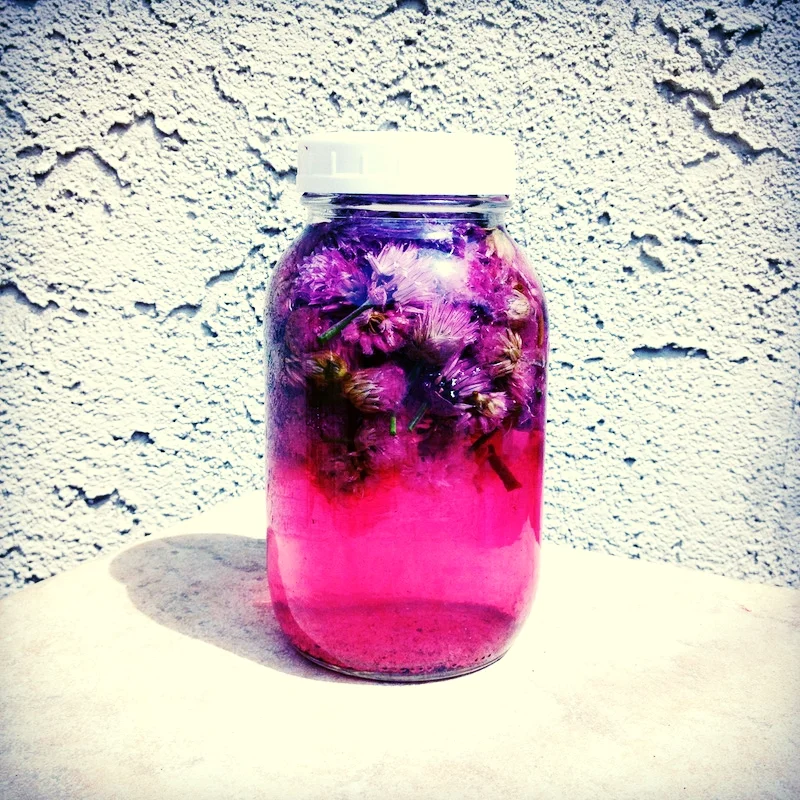
DIY chive blossom vinegar: in a jar, drop your chive blossoms. Cover with white vinegar, allow to steep on shelf for 1-3 months.
So hopefully by now, I have convinced you to try your hand at making your own dressing. It's really a pretty easy thing to make, and you can make just a little or a big batch of your favourite dressing, keeping it on hand for easy meals in the coming days and perhaps weeks.
General Salad Dressing Rules + Ideas
always dress your salad at the last minute if it is a greens-based salad, just before serving
if your salad is more robust with root veggies or grains as the main players, dress your salad early and allow the flavours to mellow and develop at least one hour before the meal
aim for a ratio of 3 parts oil to 1 part acid (vinegar or lemon)
always taste your dressing and adjust to your liking (more salt for deeper flavours, more lemon or vinegar for extra tang)
you want your dressing to jump out at you, as it will mellow once on your salad
if you are mixing in fresh garlic to your dressing and are using oil, use it up within 5 days of making it
consider adding fresh herbs, for added flavour, greens and health benefits
try different types of vinegars for different flavours, or flavoured balsamic vinegars for fun twists (I love the maple balsamic for summer salads, and the coffee flavoured vinegars for winter-y root salads)
on the same topic, reach for a flavoured olive oil from local small shops; my favourite is the fine folks at Blue Door Oil + Vinegar
aiming for a creamy dressing? toss in half an avocado in the blender, or use yogurt or creme fraiche as your base
instead of using vinegar or lemon juice, consider using the juice of one of your ferments (kimchi juice! Kombucha that was left out for too long! A fruity water kefir you can't get enough of!)
make your own infused vinegars for salads year long. My current favourite is my chive blossom vinegar, pictured above.
toss in a bit of a nut or seed butter if you want a creamier non-dairy dressing
if you are looking for salad and dressing ideas, head to my month-of-salads wrap-up from 2015
I love salads so much, and sometimes post my meals on Instagram, along with recipes. Connect!
I have a whole section on Pinterest focusing on salads and dressings. Check it out here!
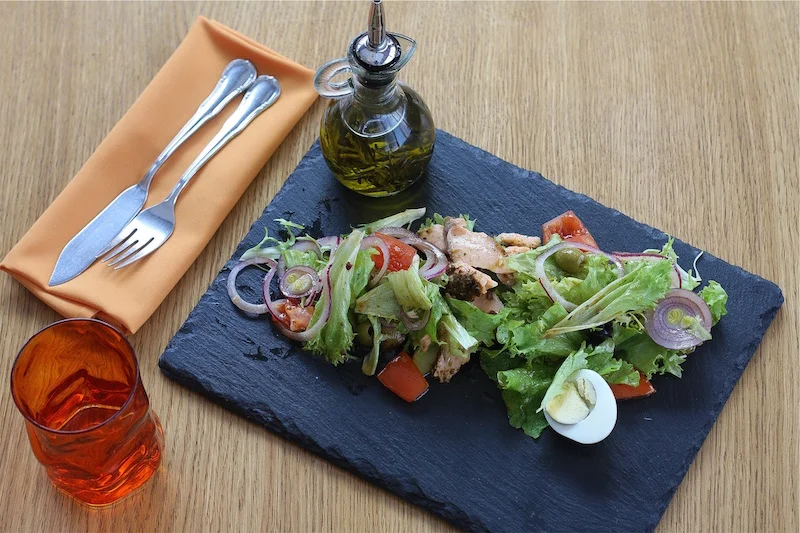
What to do if you're on the road or eating out
It can be tough to navigate a menu while out and about or on the road for a few weeks, with the idea of keeping things healthy. Sure, salads usually mean loads of veggies, but what about the dressing?
There's an easy way around this: simply ask your server what kind of ingredients are in that dressing you're wishing for. If it comes from a bottle, you may want to request a simple olive oil and balsamic dressing instead. I did this at a restaurant recently in fact; they brought me only olive oil. I just used a splash of the vinegar that was on our table, and a dash of S+P and let the veggies sing their flavours, instead of sickly-sweet-syrupy-fake dressing. (Can you tell how I feel about these things?)
You can also ask for the dressing to come on the side, in order to use less.
Bon appetit, mon ami(e). Now go play with your food.
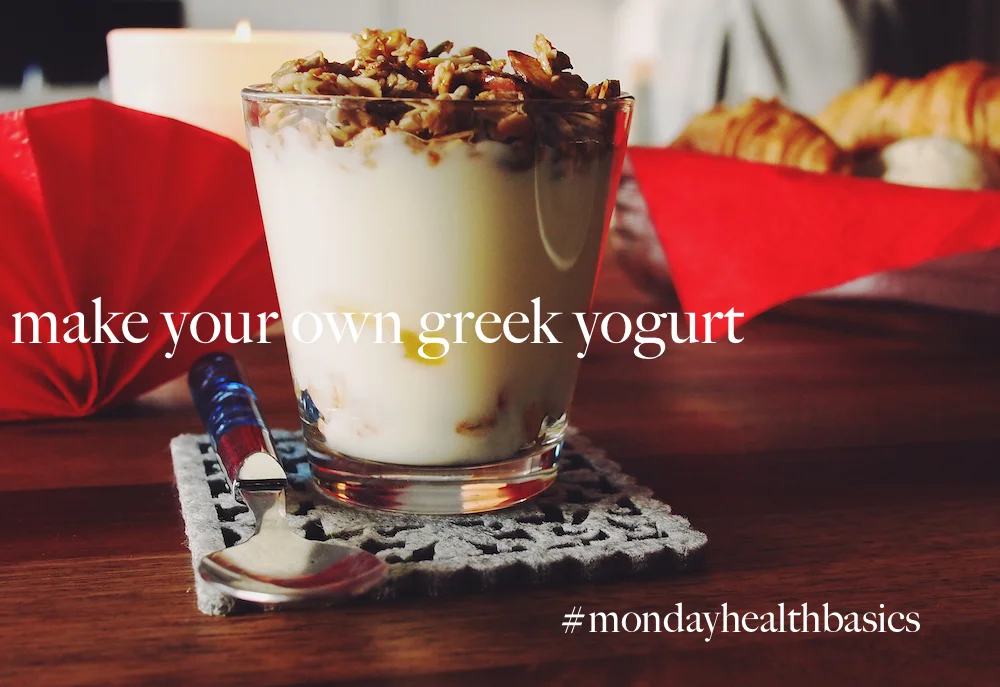
THURSDAY BASICS: make your own greek yogurt
Good Thursday morning! This week's post is a quick and dirty one – and one close to my heart. It talks about two of my favourite things: dairy and fermentation. This blog post is for you if you like dairy. This blog post may also be for you if you are saying to yourself right now “Well Luka, I can't do dairy because I'm lactose intolerant”. It may also be something you want to check out if you find yourself reaching for that greek yogurt at the grocery store.
Read on for a full how-to on making lactose free yogurt + why you may want to make yr own greek yogurt.
Let’s keep going with the ideas on how to work on EATING THE GOOD FATS one step further. Phat Fats, as I like to call them! This is one of those things that can sometimes get overlooked; why not make your own? Read on to understand why.
MAKE YR OWN GREEK YOGURT
COLES’ NOTES:
1. Learn how to make your own LACTOSE FREE greek yogurt from the store bought stuff. (No need to pay premium! No need for special equipment!)
2. Learn why the store bought greek yogurt might be a source of nefarious substances that wreak free radical damage. (Hint: the thickeners they use to make the texture just right)
3. Bonus: when you make your own homemade Greek Yogurt, you end up with extra whey, which is high in protein. A brilliant addition to morning smoothies + oatmeals!
Phat Fats. All the time. My favourite macronutrient. And for those who can tolerate dairy (and lactose free dairy) - this post is for you!
Good Thursday morning! This week's Monday Health Basics post is a quick and dirty one – and one close to my heart. It talks about two of my favourite things: dairy and fermentation.
This blog post is for you if you like dairy.
This blog post may also be for you if you are saying to yourself right now “Well Luka, I can't do dairy because I'm lactose intolerant”. It may also be something you want to check out if you find yourself reaching for that greek yogurt at the grocery store.
Yep, I'm a DIY kinda gal. Yep, I'm a good food kinda kid. Today's post is about how to maximize that probiotic hit, lowering the lactose and making sure that greek yogurt in your breakfast bowl is best able to support you through the day ahead.
First things first.
For people who have a hard time with dairy, it is usually due to one of two things. Either you have an issue with the protein found in yogurt (casein), or the lactose (sugars) is causing you ills. And discomforts. And just not usually worth it. If your issue is with casein, this is not a blog post for you. Sorry friend. Return next Monday for something entirely different.
But you say lactose may be the culprit of your turning away from dairy? I may just have a wee trick up my sleeve for you.
Store-bought yogurt is fermented anywhere from a short stint of thirty minutes to six hours. The timeline depends on the company's manufacturing process, and also on the strains of probiotics they are using to do the fermentation. Depending on the manufacturer and their methods, at this point they add their extras (sugar, agave, fruit, honey, artificial or real flavours, sometimes colouring, in some cases a thickener, sugar disguised as something else) and then package it up and off to the stores they go. (If you want a more well-rounded version of this process, you may want to check this article out.)
If you are not yet aware of the magic of fermentation, might I send you here for a primer. The beauty of fermentation when it comes to dairy products is that the process itself takes care of the lactose, conjugating it out of the mix. What this means: the probiotics that are introduced to the milk get in there and cleave apart the double sugars or disaccharides called lactose, leaving behind two simple sugars or two monosaccharides, namely glucose and galactose. Poof, like magic, no more lactose! Well, sort of. It all depends on the amount of time the milk and probiotics have together in a warmed environment in order to do that work. And in that short time of a half hour or even six hours, that is just not enough time to get all the lactose converted into the simpler sugars glucose and galactose. So what can we do to make that yogurt we purchased a lactose free delicacy? Read on, yogurt loving friend.
First off, get yourself some delicious yogurt. Make sure it is plain, with no additives thrown in to alter the chemical make up of your yogurt. Vanilla yogurt does not count here. Vanilla is a flavour. PLAIN JANE. You want to choose a yogurt that has no fruit, no sugar, no colours, and a yogurt that still has the bacteria alive in there; in other words, you want your yogurt to be probiotic.
How to make sure it's a probiotic yogurt: somewhere on the label, you will read the word 'live' or 'probiotic' or 'with probiotic cultures'. It may also list the strains of bacteria that were used in the fermentation process. Even better. (The discussion on whether or not to purchase yogurt made from milk that has been homogenized or not is a question for another day. But I would caution you to reach for organic yogurt whenever possible. Curious as to good brands to find in Alberta? Head to your favourite health food store to get on the local action. Vital Greens is a particular fave of mine, as is Saugeen from Ontario.)
Now that you've taken home your plain jane probiotic yogurt, you are going to leave it on the counter.
Yes, on the counter in the kitchen. Pop your lid a smidge, just to let it breathe should the container expand during the extra fermentation process. You are going to allow this container of yogurt to remain on the counter for a full 24 hour period. If you purchased a still-live yogurt product, this is a perfectly fine thing to do. As the product is fermented and still contains those live cultures, your yogurt is a very stable product, and will not be prone to developing funky things or harbour bad bacterial cultures. After that full 24 hour period, you are going to seal up the yogurt container and put it in the refrigerator.
What you have allowed in that 24 hour period is an opportunity for the probiotics found within the product to further ferment, thereby increasing the numbers of probiotics. (That means more bugs. More probiotics.) And not only that; those good bugs went through and cleaved even more of the lactose molecules, freeing them up into those simple sugars that are easily recognizable and good fuel sources for the body and your brain. GOOD WORK. And thank you probiotics.
Incidentally, if you are a DIY yogurt maker at home, after that initial incubation period, allow your yogurt to remain on the counter to finish up a twenty four hour cycle in order to allow those lactose molecules to be broken in two.
Voila, just-about-lactose-free yogurt!
IF YOU ARE A GREEK YOGURT LOVER, READ ON.
So now that you have the lactose free bit, you're ready to add another tool to your arsenal of tricks.
Greek yogurt seems to be just about everywhere these days. The main reason people reach for this thicker yogurt is for the higher protein content. Folks also like the thicker consistency; it makes for a pretty yummy and substantial smoothie first thing in the morning.
I challenge you to read your labels though: take a gander to see what is included in the list of ingredients on that greek yogurt container. I bet you the list will include things like skim milk powder, or corn starch, or carrageenan, or some other kind of stabilizer, emulsifier or thickener thrown in to keep it just-so. I am not a big fan of additives, as they aren't things that have been traditionally found in our diets. I just don't think we're able to evolve fast enough in order to assimilate and utilize the additives we ingest. And I don't want to leave it to chance, in the hopes that I can evolve fast enough. (Not to mention they wreak havoc at the gut lining!)
Here are my issues: skim milk powder is a by-product of food manufacturing. It is a processed food. And not lightly so: the whole process of making skim milk powder involves quite the protocol, and the end result is that the cholesterol naturally found in milk ends up becoming oxidized cholesterol. Oxidized cholesterol has been shown to contribute to the production of plaques in the arteries, or atherosclerosis. Carrageenan is derived from seaweed (which I love) but it is in such quantities that it has been shown to contribute to increased inflammation in the body, creating havoc in the digestive system.
I like my food as it was meant to be: food. And so my dear thick-yogurt-loving-friend, I have an easy DIY way for you to make it at home.

MAKING YOUR OWN GREEK YOGURT
Line a sieve with a clean doubled-over tea towel. (*make sure the tea towel hasn't been thrown in the dryer with any dryer sheets – the chemical residue is not something you want to ingest!)
Dump the container of yogurt into the strainer, allowing it to separate at room temperature. (This can be a part of your 24 hours on the counter timing if you are aiming for a lactose-free final product.)
What will drip through to the bottom of the bowl will be a yellowish-clear liquid: this is your WHEY. Don't throw this goodness out! I will speak to this in a moment.
The milk solids remain in the strainer; when the yogurt/milk solids are a consistency to your liking, this is when your DIY greek yogurt is ready. Scoop it out with a spatula, and tuck it into a container of sorts in to your fridge, it is ready to consume. And nary an additive to be found!
As for the remaining whey that dripped through the tea towel, this is liquid gold. It is protein-rich, and a fabulous addition to your morning smoothies; you can use it to help sprout, soak or 'activate' nuts / seeds / grains / beans / legumes. You can add it to soup stock in order to increase the protein and add probiotic benefits (but only do so after you have taken the soup off the heat). Whey is full of probiotics that help improve and support optimal digestion, and provide your body with the precursors to glutathione, helping your liver to do the detoxification work in the body.
Put that greek yogurt on everything.
It's yummy mixed in with berries and maple syrup. Try a big dollop on top of protein pancakes. Mix it in to your butter chicken instead of using cream, and now your lactose-intolerant friend can partake in dinner! Blitz it with a bit of honey and some lemon juice, and you have yourself the perfect salad dressing. Slap it together with some chopped strawberries and some granola, and breakfast will now render you a champion. I mean you can't go wrong, amiright?