
THURSDAY BASICS: Ditch the Dryer Sheets
This week's #mondayhealthbasics post is a practical in-house thing you can easily swap out or eradicate from your home. We're talking dryer sheets my friends. What they are, why you want to get rid of them, and some simple swaps you can add to your cupboard this weekend and know you've reduced the toxin load in your home already.
Click on the image for full info.
#tbt day here at #goodfoodHQ, taking a gander at the #mondaybasics series of 2016.
This week’s re-visit is a super easy practical thing you can do if you are looking to keep well:
DITCH THE DRYER SHEETS.
COLES NOTES:
1. Dryer sheets are one of the worst offenders when it comes to household cleaners that harbour nefarious chemicals.
2. Chemicals found in dryer sheets can mess with your hormones, your central nervous system, your reproduction, and they add to the liver’s workload. Is it worth it?
3. You absorb everything you put on your skin. Did you want to absorb these things?
For the love of your entire hormone system - adrenals, thyroid, pineal, pituitary, hypothalamus, spleen, liver - ditch these chemically laden bandits. For the love of keeping your brain well, don’t even finish the box you’ve got in the laundry room.
This week's #mondayhealthbasics post is a practical in-house thing you can easily swap out or eradicate from your home. Do it once, figure out your new alternative, and you’re DONE.
WHY THIS TOPIC: See, when it comes to household cleaners and cleaning products, there is no need to list the ingredients that go into the making of your product. It isn't something that will be ingested! Well, not in a 'let's put it in the soup and salad' kind of way. Not intentionally. So keep this in mind as you read through. And just because they’re ubiquitous (and apologies, but you will now forever smell them on every evening walk you go) doesn’t mean they’re safe.
We're talking dryer sheets my friends. What they are, why you want to get rid of them, and some simple swaps you can add to your cupboard this weekend and know you've reduced the toxin load in your home already.

It's astounding how many chemicals are in dryer sheets. I did a little digging around to see if I could come up with an exact or round-about number, and found a few different tales out there. One study published by Air Quality, Atmosphere and Health in 2011 stated there were some 600+ volatile organic compounds (VOCs) released from dryer vents from homes using 25 of the most common brands of scented laundry products. Dr. Mercola wrote a concise article that goes in to good detail about the hazards of the chemicals found in dryer sheets; if you're looking to be gob-smacked, point your browser here.
Some of the ones that jumped out at me: Chloroform (a documented neurotoxin and carcinogen), 1,4-dioxane (a known carcinogen), Ethyl Acetate (a narcotic). That is just scratching at the surface. This article outlines the top seven most common chemicals that are found in dryer; it's astounding how much they have an effect on the central nervous system. Your brain, my friend! THINK OF YOUR BRAIN!
There was a new study published last year that went in to exploring the impact of chemicals found in laundry products like dryer sheets had on the reproductive system of both men and women. Yep, you guessed it: diminished reproductive capacity in both genders. I don't know about you, but with a (not-so-) little one in my house, I want to work on limiting her exposure to things which may impede me from becoming a grandmother one day.
Oh yes. Those chemicals that go into the making of those dryer sheets end up in our bodies. We ingest them! The slimy (or soft) coating on all of our clothing is what the dryer sheets or fabric softener have left behind, ensuring we have that pillowy soft look to our clothing. That stuff rubs off on our skin, and it gets absorbed in to our bodies that way. We also ingest the perfumes that come off these clothes, both while it's venting out into the backyard whilst it tumbles in the dryer, and when smelling in that 'fresh smell scent'. Think volatile organic compound. Nasty.
Now while I'm specifically going after dryer sheets, I want to be clear that I am also including fabric softener in this lot. They tend to have very similar chemical make-up, full of perfumes and surfactants to make your clothes feel soft and fresh.
While I'm no slouch and would prefer to have soft-feeling clothes for the feel of it and what social bonus points it would award me, I am just not prepared to risk my health and that of my family's for me to look good.
I'm also not keen on venting those chemicals out to my lovely neighbours either, nor the gang who regularly walk through my hood for their evening stroll. Oh yes, when you smell that fresh-scent while out for a walk, you'll be thinking VOCs. I'm a little sorry about that. But you needed to know. I love you that much.
These chemicals are just things to add to the toxin pile. When you think toxin, think liver. Your liver is the hard working organ that has to filter that stuff out, and when your liver is full up and just can't handle the load coming its way, it will start relieving itself of some of its regular duties like keeping inflammation down, or filtering out your blood as completely as it would like to, or getting rid of spent metabolic waste and hormones, or converting some plant-versions of vitamins to the animal-version you need (because you're an animal).
Your liver does 400+ jobs in the body.
Take a load off of her, will you? Ditch the dryer sheets.
There are a few easy things you can do if you're looking to replace those toxin-loaded laundry helpers. For one thing, you can add 1/2 cup of white vinegar to your washer's load during the rinse cycle in order to get that soft feeling in your clothing, towels and bedding. Vinegar is a fabulous natural fabric (and water!) softener.
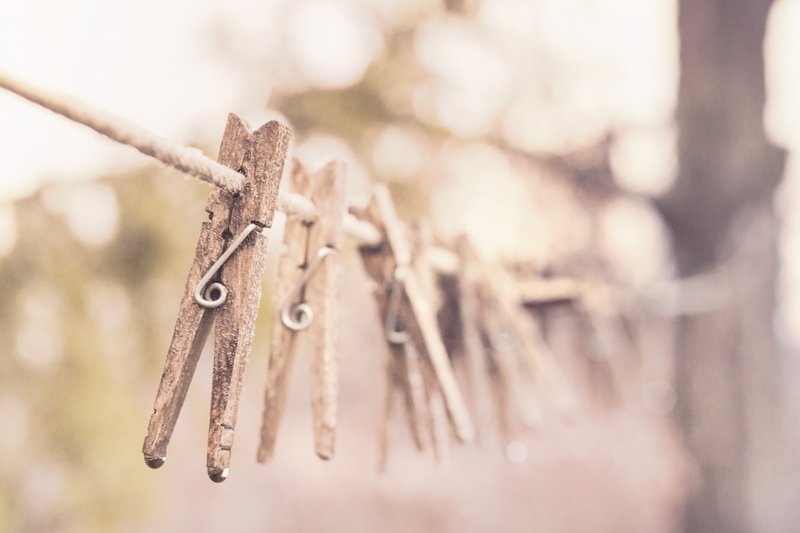
Of course, if you like the fresh scent, you can also opt to hang your clothes on a line in your backyard, or on a dryer rack in your basement. Double bonus for those living in Alberta, hanging clothes indoors in wintertime will help humidify our otherwise super-dry air. To me, there's nothing better than climbing into bed at the end of the day with the waft of outside fresh air coming off the sheets as my head hits the pillow. (And the towels! Outside-line-dried towels are amazing exfoliators! (Sorry. Was that too much?))
My absolute favourite thing is a DIY dryer ball. This is a fabulous alternative to those nasty chemicals, and they last a long time. You can purchase some pre-made natural wool dryer balls at quite a few natural health stores and cool shops in town, but you can easily make your own at home with the copious amounts of wool you still have on hand for that rainy day project. I have made quite a few of these balls and gifted them to friends. They're quite straightforward, require just a little bit of time to wind them up. You need to wash them in fairly hot water to get them to 'felt', and then toss them in the dryer and they're already working for you. As a bonus, they're also easy vehicles for natural (and safe!) scents: you can easily put a few drops of your favourite essential oil on them for a natural scent that will not add any volatile organic compounds. Double like! Find one method here, and another one over here.
I also found this recipe online on how to make your own fabric softener. Might be worth giving it a shot!
There's a recipe here as well for how to make your own homemade dryer sheets. Looks easy enough!
Curious to know more and delve further into 'greening' your cleaning routine? I have compiled some ideas and information under a handy dandy category of my Pinterest page. Great place to visit for DIY recipes, links to fascinating articles and studies that may make you scratch your head.
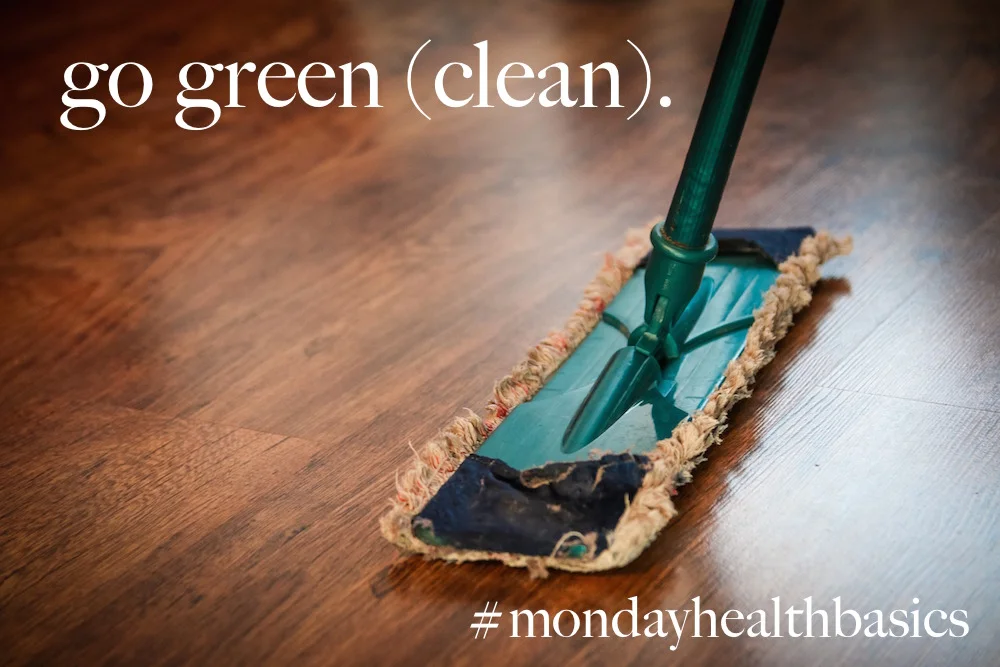
THURSDAY BASICS: go green (clean).
Welcome to another week! Today's blog post is about lessening that toxin load on our bodies, bringing down the number of nefarious substances our bodies have to filter or move out. Let's go green (clean), kittens.
As we are deep in to how to support your Heart this month, the information in this wee blog jog is of particular interest, especially if you get that inflammation is at the root of most, if not all chronic diseases.
Whether you struggle with heart issues, inflammatory things or are working hard to keep chronic disease at bay - this week's idea is one that applies to ALL THE HUMANS.
GO GREEN (CLEAN)
COLES’ NOTES:
1. THE TOXIN LOAD
Your primary work when keeping chronic disease at bay is in moving toxins OUT. When you go green, you work at immediately reducing the amount of toxins your body has to move out. If you don't add them in, your body doesn't have to move them out!
2. THE HORMONAL PIECE
Many toxins and chemicals used in our cleaning agents mimic our hormones - that will throw them out of balance. And hormonal imbalances? Why they're a further contributor to low grade inflammation. Blarg.
3. TAKE A LOAD OFF LIVER
See, these toxins take up essential time + energy from your liver. When this energy is used to clear the toxins out, other jobs tended to by the liver tend to fall to the wayside, further compounding those hormonal imbalances + again contributing to low grade inflammation.
Read on for an explanation in to why we find ourselves in 'toxin-loaded times', and why going green might be the easiest and simplest way to start improving things.
This week’s blog post is about lessening that toxin load on our bodies, bringing down the number of nefarious substances our bodies have to filter or move out. Let's go green (clean), kittens.
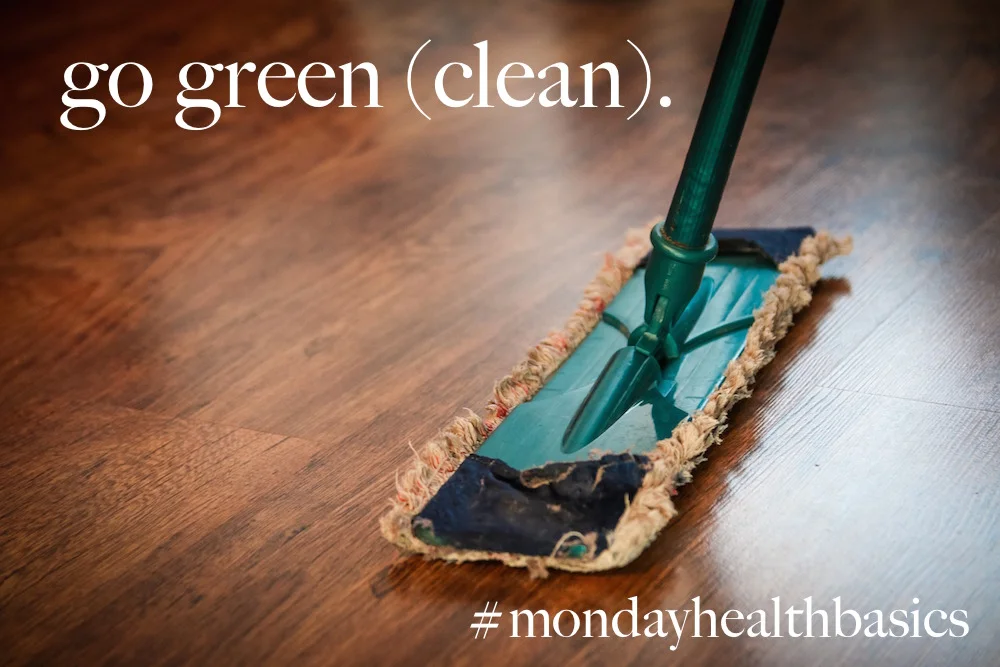
If you don't know by now, I am all about loving the liver and working at de-inflaming, helping your body run as best it can and wants to. My work as a Holistic Nutrition gal is focused primarily on figuring out how foods can best support you, as we look to improving digestion whilst also taming that chronic low-grade inflammation dragon. I tend to talk loads about foods and beverages, or ideas that can best support your body's desire to be well. Today though, we veer off to include an all-important step in supporting your best self: lessening the toxin load via green cleaners.
As a Holistic Nutritional Consultant, I love delving in to dietary protocols that best support gut health and a reduction in inflammation. I am primarily inspired by Dr. Natasha Campbell-McBride's GAPS Protocol, the Gut and Psychology Syndrome, linking the health of your gut to the health of the nervous system, and Dr. Terry Wahls' Protocol (The Wahls Protocol), a Paleo-inspired protocol highlighting how best to support autoimmune conditions.
You know a protocol is the real deal when a component of said protocol includes proper detoxification recommendations.
Both protocols offer a fantastic and in-depth overview in to the reasons why.
If I could, I would quote entire chapters' worth of important information here for you from these tomes. I invite you instead to pick up their books, or put them on hold at your local library so that you can delve in to the explanations and reasonings behind their recommendations.
To summarize, our world is becoming more and more polluted, as are our foods, The chemicals found in the materials around us, the air we breathe, the off-gassing of new upholstery, the radiation from so many directions, the chemicals used to treat the foods and soils in which we grow foods, the list of toxins that contribute to our wellbeing are growing day by day. Two generations ago, they weren't dealing with nearly half as much as we are today. Thankfully, we have these amazing detoxification systems in place in our bodies to usher toxins out, to move spent metabolic waste towards the exit routes. But it is imperative we care for these detox systems and support them so they can best support our health and wellbeing. We're talking about quantity of life, but also quality of life here.
A few weeks back, I mentioned the idea of giving your body that 12 hour break. This was meant to help support your body's in-house clean-up crew to work at their very best. We are detoxifying every day, friends.
Your liver, along with your lymph, spleen, blood, kidneys, sweat, skin, intestinal lining, and a few other parts work in tandem to keep your engine running as clean as possible. They work as a team to keep that detoxification system working as hard as it can, clearing away unwanted toxins, incompletely digested foods, spent metabolic waste out of your system. GOOD WORK BODY.
One of the ways you can best support this kind of work is by lowering the amount of toxins your body has to deal with. Today's post is all about going green.
I am focusing on cleaning supplies in the home today, but I intend to include a post soon on the importance of greening our body care products as well. Look for a good round-up of easy DIY recipes below, and other online spots to look for ideas when it comes to greening your home cleaners.
It's imperative to reduce the number of chemicals you come across in your every day. Sure, we may have little to no sway on the cleaners and chemicals used in our workplaces; some places like hospitals or factories have a pretty heavy load of toxins found in the environment as a regular part of the every day. We do however have the ability to influence those found in our own homes.
GUIDE TO HEALTHY CLEANING
When I talk about green alternatives, think anything used in the kitchen, in the bathroom, for dusting and cleaning floors. Think vacuum, carpets, or anything related to laundry. Go farther, and really investigate when renovations are in the near future for you. Go the extra mile to find lower chemical-load upholstery or paint, low-VOC products (volatile organic compounds – find a concise list and explanation here). Or better yet, figure out a way to make what you have, last! Recycle! Reuse! Seek out good quality second hand goods perhaps.
Some of the chemicals found in your average grocery store cleaners may have some dangerous compounds in them. Refer to this fantastic online resource courtesy of the Environmental Working Group, they regularly update their Guide to Healthy Cleaning to help you make the best decisions for your family. They are based in the United States, and I appreciate their work as they are clear about their methodology, and use science to back up facts. They offer safety ratings on more than 2,500 cleaning products.
You will also find informative articles that go in depth as to which chemicals carry the worst reputation. They explain the science of how these nefarious chemicals work and how they offend in order that you may best arm yourself with the knowledge you need in order to make the best decision.
By going green, you are reducing the irritants and mystery chemicals and fragrances that can wreak havoc on your endocrine system, or cleaners who pack known carcinogens in their recipes. By going green, you are decreasing that toxin load. This frees your body up to concentrate on that internal detox work that needs to happen in order to help keep chronic degenerative diseases at bay.
EASY DIY CLEANER IDEAS
My favourite thing about this: it's frugal!
Click on points if you'd like a more complete recipe or how-to
use salt to help scrub pots clean
use a less chemical-laden dish soap and make sure to rinse thoroughly when hand washing (removes residue)
clean wood floors with strong tea
polish your furniture with a mix of 1c of olive oil and 1/4c of white vinegar
use white wine to take the stain of red wine out of the carpet
ditch the dryer sheets and felt your own dryer balls (one of the best things you can do RIGHT NOW!)
hang your laundry outside to dry, or on a rack indoors (it adds humidity to our dry winter air here in the prairies!)
open a window – it's amazing how it refreshes everything and cleans the air in your house
add a house plant (or seven!), they clean the air for you
I have a plethora of ideas on this pinterest board, updated regularly
think of making your own cleaners as part of your batch prep work for the week
In addition to these easy recipes at home, you can also rely on manufactured cleaners, albeit greener versions. If you're in Calgary, there are some fabulous local home cleaning product suppliers who have their wares for sale at your favourite local health food store. Reach for the simplest and most unscented version of product as you can. And breathe easier!

MONDAY BASICS: go green (clean).
Welcome to another week! Today's blog post is about lessening that toxin load on our bodies, bringing down the number of nefarious substances our bodies have to filter or move out. Let's go green (clean), kittens.
Welcome to another week! Today's blog post is about lessening that toxin load on our bodies, bringing down the number of nefarious substances our bodies have to filter or move out. Let's go green (clean), kittens.
If you don't know by now, I am all about loving the liver and working at de-inflaming, helping your body run as best it can and wants to. My work as a Holistic Nutrition gal is focused primarily on figuring out how foods can best support you, as we look to improving digestion whilst also taming that chronic low-grade inflammation dragon. I tend to talk loads about foods and beverages, or ideas that can best support your body's desire to be well. Today though, we veer off to include an all-important step in supporting your best self: lessening the toxin load via green cleaners.
As a Holistic Nutritional Consultant, I love delving in to dietary protocols that best support gut health and a reduction in inflammation. I am primarily inspired by Dr. Natasha Campbell-McBride's GAPS Protocol, the Gut and Psychology Syndrome, linking the health of your gut to the health of the nervous system, and Dr. Terry Wahls' Protocol (The Wahls Protocol), a Paleo-inspired protocol highlighting how best to support autoimmune conditions.
You know a protocol is the real deal when a component of said protocol includes proper detoxification recommendations.
Both protocols offer a fantastic and in-depth overview in to the reasons why.
If I could, I would quote entire chapters' worth of important information here for you from these tomes. I invite you instead to pick up their books, or put them on hold at your local library so that you can delve in to the explanations and reasonings behind their recommendations. To summarize, our world is becoming more and more polluted, as are our foods, The chemicals found in the materials around us, the air we breathe, the off-gassing of new upholstery, the radiation from so many directions, the chemicals used to treat the foods and soils in which we grow foods, the list of toxins that contribute to our wellbeing are growing day by day. Two generations ago, they weren't dealing with nearly half as much as we are today. Thankfully, we have these amazing detoxification systems in place in our bodies to usher toxins out, to move spent metabolic waste towards the exit routes. But it is imperative we care for these detox systems and support them so they can best support our health and wellbeing. We're talking about quantity of life, but also quality of life here.
A few weeks back, I mentioned the idea of giving your body that 12 hour break. This was meant to help support your body's in-house clean-up crew to work at their very best. We are detoxifying every day, friends.
Your liver, along with your lymph, spleen, blood, kidneys, sweat, skin, intestinal lining, and a few other parts work in tandem to keep your engine running as clean as possible. They work as a team to keep that detoxification system working as hard as it can, clearing away unwanted toxins, incompletely digested foods, spent metabolic waste out of your system. GOOD WORK BODY.
One of the ways you can best support this kind of work is by lowering the amount of toxins your body has to deal with. Today's post is all about going green.
I am focusing on cleaning supplies in the home today, but I intend to include a post soon on the importance of greening our body care products as well. Look for a good round-up of easy DIY recipes below, and other online spots to look for ideas when it comes to greening your home cleaners.
It's imperative to reduce the number of chemicals you come across in your every day. Sure, we may have little to no sway on the cleaners and chemicals used in our workplaces; some places like hospitals or factories have a pretty heavy load of toxins found in the environment as a regular part of the every day. We do however have the ability to influence those found in our own homes.
GUIDE TO HEALTHY CLEANING
When I talk about green alternatives, think anything used in the kitchen, in the bathroom, for dusting and cleaning floors. Think vacuum, carpets, or anything related to laundry. Go farther, and really investigate when renovations are in the near future for you. Go the extra mile to find lower chemical-load upholstery or paint, low-VOC products (volatile organic compounds – find a concise list and explanation here). Or better yet, figure out a way to make what you have, last! Recycle! Reuse! Seek out good quality second hand goods perhaps.
Some of the chemicals found in your average grocery store cleaners may have some dangerous compounds in them. Refer to this fantastic online resource courtesy of the Environmental Working Group, they regularly update their Guide to Healthy Cleaning to help you make the best decisions for your family. They are based in the United States, and I appreciate their work as they are clear about their methodology, and use science to back up facts. They offer safety ratings on more than 2,500 cleaning products.
You will also find informative articles that go in depth as to which chemicals carry the worst reputation. They explain the science of how these nefarious chemicals work and how they offend in order that you may best arm yourself with the knowledge you need in order to make the best decision.
By going green, you are reducing the irritants and mystery chemicals and fragrances that can wreak havoc on your endocrine system, or cleaners who pack known carcinogens in their recipes. By going green, you are decreasing that toxin load. This frees your body up to concentrate on that internal detox work that needs to happen in order to help keep chronic degenerative diseases at bay.
EASY DIY CLEANER IDEAS
My favourite thing about this: it's frugal!
Click on points if you'd like a more complete recipe or how-to
use salt to help scrub pots clean
use a less chemical-laden dish soap and make sure to rinse thoroughly when hand washing (removes residue)
clean wood floors with strong tea
polish your furniture with a mix of 1c of olive oil and 1/4c of white vinegar
use white wine to take the stain of red wine out of the carpet
ditch the dryer sheets and felt your own dryer balls (one of the best things you can do RIGHT NOW!)
hang your laundry outside to dry, or on a rack indoors (it adds humidity to our dry winter air here in the prairies!)
open a window – it's amazing how it refreshes everything and cleans the air in your house
add a house plant (or seven!), they clean the air for you
I have a plethora of ideas on this pinterest board, updated regularly
think of making your own cleaners as part of your batch prep work for the week
In addition to these easy recipes at home, you can also rely on manufactured cleaners, albeit greener versions. If you're in Calgary, there are some fabulous local home cleaning product suppliers who have their wares for sale at your favourite local health food store. Reach for the simplest and most unscented version of product as you can. And breathe easier!
MONDAY BASICS: Ditch the Dryer Sheets
This week's #mondayhealthbasics post is a practical in-house thing you can easily swap out or eradicate from your home. It's something we don't usually think too much about, as it isn't something we eat. See, when it comes to household cleaners and cleaning products, there is no need to list the ingredients that go into the making of your product. It isn't something that will be ingested! Well, not in a 'let's put it in the soup and salad' kind of way. Not intentionally. We're talking dryer sheets my friends. What they are, why you want to get rid of them, and some simple swaps you can add to your cupboard this weekend and know you've reduced the toxin load in your home already.
(And yes, you will ingest some of the stuff from your dryer sheets or fabric softeners. Read on for more info.)
This week's #mondayhealthbasics post is a practical in-house thing you can easily swap out or eradicate from your home. It's something I don't usually think too much about, as it isn't something we eat. See, when it comes to household cleaners and cleaning products, there is no need to list the ingredients that go into the making of your product. It isn't something that will be ingested! Well, not in a 'let's put it in the soup and salad' kind of way. Not intentionally. We're talking dryer sheets my friends. What they are, why you want to get rid of them, and some simple swaps you can add to your cupboard this weekend and know you've reduced the toxin load in your home already.
It's astounding how many chemicals are in dryer sheets. I did a little digging around to see if I could come up with an exact or round-about number, and found a few different tales out there. One study published by Air Quality, Atmosphere and Health in 2011 stated there were some 600+ volatile organic compounds (VOCs) released from dryer vents from homes using 25 of the most common brands of scented laundry products. Dr. Mercola wrote a concise article that goes in to good detail about the hazards of the chemicals found in dryer sheets; if you're looking to be gob-smacked, point your browser here.
Some of the ones that jumped out at me: Chloroform (a documented neurotoxin and carcinogen), 1,4-dioxane (a known carcinogen), Ethyl Acetate (a narcotic). That is just scratching at the surface. This article outlines the top seven most common chemicals that are found in dryer; it's astounding how much they have an effect on the central nervous system. Your brain, my friend! THINK OF YOUR BRAIN!
There was a new study published last year that went in to exploring the impact of chemicals found in laundry products like dryer sheets had on the reproductive system of both men and women. Yep, you guessed it: diminished reproductive capacity in both genders. I don't know about you, but with a (not-so-) little one in my house, I want to work on limiting her exposure to things which may impede me from becoming a grandmother one day.
Oh yes. Those chemicals that go into the making of those dryer sheets end up in our bodies. We ingest them! The slimy (or soft) coating on all of our clothing is what the dryer sheets or fabric softener have left behind, ensuring we have that pillowy soft look to our clothing. That stuff rubs off on our skin, and yes it gets absorbed in to our bodies that way. We also ingest the perfumes that come off these clothes, both while it's venting out into the backyard whilst it tumbles in the dryer, and when smelling in that 'fresh smell scent'. Think volatile organic compound. Nasty.
Now while I'm specifically going after dryer sheets, I want to be clear that I am also including fabric softener in this lot. They tend to have very similar chemical make-up, full of perfumes and surfactants to make your clothes feel soft and fresh. While I'm no slouch and would prefer to have soft-feeling clothes for the feel of it and what social bonus points it would award me, I am just not prepared to risk my health and that of my family's for me to look good. I'm also not keen on venting those chemicals out to my lovely neighbours either, nor the gang who regularly walk through my hood for their evening stroll. Oh yes, when you smell that fresh-scent while out for a walk, you'll be thinking VOCs. I'm a little sorry about that. But you needed to know.
These chemicals are just things to add to the toxin pile. When you think toxin, think liver. Your liver is the hard working organ that has to filter that stuff out, and when your liver is full up and just can't handle the load coming its way, it will start relieving itself of some of its regular duties like keeping inflammation down, or filtering out your blood as completely as it would like to, or getting rid of spent metabolic waste and hormones, or converting some plant-versions of vitamins to the animal-version you need (because you're an animal).
Your liver does 400+ jobs in the body.
Give it a little love, will you? Ditch the dryer sheets.
There are a few easy things you can do if you're looking to replace those toxin-loaded laundry helpers. For one thing, you can add 1/2 cup of white vinegar to your washer's load during the rinse cycle in order to get that soft feeling in your clothing, towels and bedding. Vinegar is a fabulous natural fabric (and water!) softener.
Of course, if you like the fresh scent, you can also opt to hang your clothes on a line in your backyard, or on a dryer rack in your basement. Double bonus for those living in Alberta, hanging clothes indoors in wintertime will help humidify our otherwise super-dry air. To me, there's nothing better than climbing into bed at the end of the day with the waft of outside fresh air coming off the sheets as my head hits the pillow. (And the towels! Outside-line-dried towels are amazing exfoliators! (Sorry. Was that too much?))
My absolute favourite thing is a DIY dryer ball. This is a fabulous alternative to those nasty chemicals, and they last a long time. You can purchase some pre-made natural wool dryer balls at quite a few natural health stores and cool shops in town, but you can easily make your own at home with the copious amounts of wool you still have on hand for that rainy day project. I have made quite a few of these balls and gifted them to friends. They're quite straightforward, require just a little bit of time to wind them up. You need to wash them in fairly hot water to get them to 'felt', and then toss them in the dryer and they're already working for you. As a bonus, they're also easy vehicles for natural (and safe!) scents: you can easily put a few drops of your favourite essential oil on them for a natural scent that will not add any volatile organic compounds. Double like! Find one method here, and another one over here.
I also found this recipe online on how to make your own fabric softener. Might be worth giving it a shot!
There's a recipe here as well for how to make your own homemade dryer sheets. Looks easy enough!
Curious to know more and delve further into 'greening' your cleaning routine? I have compiled some ideas and information under a handy dandy category of my Pinterest page. Great place to visit for DIY recipes, links to fascinating articles and studies that may make you scratch your head.