MONDAY BASICS: the wrap up.
Welcome to the last post of 2016. I don't know about you, but it's been a banner of a year here at goodfood headquarters. Back in that first week of January, with a year of possibilities ahead, I set out for myself the task of coming up with 52 simple and effective changes you could make in order to help you achieve optimal health. The idea was to post one new concept every Monday, in order to build content on my website and explain my approach, but also to connect with food- and health-loving people out there. What I got in the end was this gift of developing ideas, jumping off points for classes and class material, and extra support I could offer to my one-on-one clients. This blog series is the gift that keeps giving.
There were simple ideas, and there were more complicated ones. Most ideas revolved around food (I am a Holistic Nutrition Practitioner, after all...), but there were some concepts that were aimed at lifestyle kind of things too. All in all, these were meant to be suggestions to up the ante for you to improve not only your quantity of life, but also your quality of life.
Today's post is the wrap up. I am posting here the lay of the land, in order that you can use these concepts or steps one at a time for yourself. Whether you are looking for improved health, or support with an existing condition, or just aiming for a better quality of life, these ideas are for you.
Thank you for coming on this #mondayhealthbasics journey with me this year. I am forever grateful for your stories, your struggles and your involvement. May 2017 be a year of discoveries for you, a year of joy with plenty of health and loads of goodfood.
Welcome to the last post of 2016.
I don't know about you, but it's been a banner of a year here at goodfood headquarters. Back in that first week of January, with a year of possibilities ahead, I set out for myself the task of coming up with 52 simple and effective changes you could make in order to help you achieve optimal health. The idea was to post one new concept every Monday, in order to build content on my website and explain my approach, but also to connect with food- and health-loving people out there. What I got in the end was this gift of developing ideas, jumping off points for classes and class material, and extra support I could offer to my one-on-one clients. This blog series is the gift that keeps giving.
There were simple ideas, and there were more complicated ones. Most ideas revolved around food (I am a Holistic Nutrition Practitioner, after all...), but there were some concepts that were aimed at lifestyle kind of things too. All in all, these were meant to be suggestions to up the ante for you to improve not only your quantity of life, but also your quality of life.
Today's post is the wrap up. Consider this me, setting the lay of the land, in order for you to implement these concepts or steps one at a time for yourself. Whether you are looking for improved health, or support with an existing condition, or just aiming for a better quality of life, these ideas are for you.
Thank you for coming on this #mondayhealthbasics journey with me this year. I am forever grateful for your stories, your struggles and your involvement. May 2017 be a year of discoveries for you, a year of joy with plenty of health.

I have broken down the 51 ideas into six categories in this compendium, if you will. Peruse at your liking, click on the ideas that interest you. Hit the 'share' button at the bottom of this article to share with someone you really dig! Bookmark this page, and make a plan to implement one idea a week for the year ahead, in order to help support you through any current health concerns be they chronic degenerative diseases, raising a young family and fuelling your days or the desire to ensure health and vitality as we age!
FIRST THINGS FIRST
These go over the rules of the game, as it were. Or the rules of engagement.
ON EATING: Ways to think about eating, and why we do it. This is about being human. It's called On Eating. (originally week 13)
ADD ONE GOOD THING AT A TIME: Start with where you are. And add only one good thing. Only one good thing at a time. Building the positive. And here's the secret: it feels better. (originally week 51)
PANTRY STAPLES: An essential primer on how to stock your pantry with the essentials, what to keep, what to toss. (originally week 50)
WHOLE FOODS PRINCIPLES a la Weston A. Price
This section focuses on the major tenets of what it means to eat whole foods, the reasons you want to reach for whole foods. This means a traditional way of food preparation which encompasses the words live, natural and good quality: full of nutrients, low in pesticides, additives and other toxins, minimally processed, nourishing foods and from good sources. Read on to grasp some of these major ideas.
*2017 for me is a year of developing a six-class course on the importance of these good foods. Class number one will be January 14th at the Light Cellar. There will be one class a month. I'd love to see you there! More information here.
J.E.R.F.: One of the biggest changes you can make in how you approach foods. I realize I'm probably preaching to the converted here, but bears repeating. Just Eat Real Food. JERF. (originally week 17)
EAT GOOD FATS: I have a good write up with some good tips on how to incorporate some good fats in to your every day, speaking to the importance of this macro-nutrient in our diet. This is a controversial topic at times: read this article to understand which fats to eat, which fats to ditch and why you would want to. Plan to attend the class in February at the Light Cellar to get the full story on the importance of this macro-nutrient. (originally week 6)
GOODFOOD BASICS + EASY TRICKS
These are practical ideas and recipes or tricks I have come up with in order to help you play with your food more confidently. They are usually easy one-offs to work on, where I walk you through how to prepare these foods or incorporate them in to your everyday. There are recipes in this section: this is fun and delicious work, my friend.
A BAKER'S DOZEN OF BIG CHANGES
This section encompasses thirteen pretty big ideas and changes. This section is the heavy lifting, if you will. It's the section where you will find more complicated recommendations, or multi-faceted ways of supporting your body. You'll also find recipe round-ups in this section. Read on to find a topic that really resonates with you!
EAT PREBIOTICS: This write up is on the importance of eating your fruit and veggies every day. There is a method to the madness! Feed the good bugs, my friend. (originally week 43)
SMOOTHIES: I built a template explaining how to think about building smoothies. These nutrient dense offerings are a great way to boost certain nutrients, and are perfect vehicles to get some of those all important nutrients that will support your current health concerns. *look for a smoothie prep kit for sale sometime in early 2016! (originally week 41)
THE PRACTICAL IDEAS
This section zeroes in on the practical tools to help you make these changes do-able tasks, and ones that will carry you forward. Tools to your toolkit, you could say.

CRITICAL LIFESTYLE SUPPORT
These ideas are integral and critical to supporting good health, and keeping inflammation at bay. Remember, this is all about manageable things to make this a good life. And implementing these components? Perhaps the funnest and easiest ways to ensure vitality and health. And feeling good, top to bottom.

THE COLES NOTES VERSION
For those who'd rather just get the basics of what to aim for:
Eat real food. From good sources.
Reduce toxins everywhere, from your foods, your cleaners, your clothes, your household purchases. This could also speak to reducing the negativity in your life.
Sleep like a champ.
Play. Cultivate the joy in your life. Seek it out in the every day.
Connect with people.
Repeat.
Sorry to say it, but no one is getting out of here alive. So let's make it a good day, shall we?
All the best to you and yours at this magical time, dear one. May 2017 be good to you, and may you discover some good things.
Now go play with your food.
MONDAY BASICS: add one good thing at a time.
Today's post is a short and sweet one, on account of to do lists and things to tend to, places to be and people to visit. It will be a good one though, I promise.
Today's post is a short and sweet one, on account of to do lists and things to tend to, places to be and people to visit. (You and me both.) It will be a good one though, I promise.
In the final stretch of this challenge I set out for myself back in that first week of 2016, I am coming to the realization that these posts encompass A LOT. A lot of ideas, a lot of material, a lot of science, a lot of work, a lot of reading and a lot of rethinking one's approach or relationship to food.
If you were to look at the entirety of the content (from practicing mindfulness to the idea of batch cooking), you would undoubtedly feel completely overwhelmed.
This is warranted.
But I give you my trick on how to go about this and stop the overwhelm:
Start with where you are.
And add only one good thing.
Only one good thing at a time.
The idea is that over time, you will be building those good things at a manageable pace, and eventually the lesser things will fall to the wayside. If you add one good thing in, it will eventually crowd out the bad. So instead of concentrating on knocking out those less desirable habits or choices (and beating yourself up for it!), you focus instead on adding one good thing at a time. Building the positive.
And here's the secret: it feels better.

I have developed this idea with my one-on-one clients in supporting them on their health journey. I often remark on how they'll feel like I have given them a pile of recommendations a mile high, and they have no idea how they will get to the work.
I tell them to put the pile of papers (err, recommendations) on their desk, I tell them to close the door to their office and then instruct them to go make a cup of tea. With their worksheet in hand, (download one of these handy dandy sheets here if you feel so inclined) they are to open the door to their office, take one recommendation off the top of said pile, and close the door to the office again. I invite them to figure out where this new idea will fit on their worksheet, either something they want to do in the morning, something they want to ensure they tend to once a day, or if it's something they're aiming for at least once a week. They are then instructed to write this idea or recommendation in the right spot. And then they walk away.
I invite my clients now to work on implementing this new idea in to their life, and to take their time doing so. Get comfy with it. Once they feel they have this recommendation down pat and feel it has now become a part of their life, I invite them to go back to their office desk and pull yet another thing off the pile. But only one more thing. And again, off they go to work it in to their worksheet, and into their life.
This way, you only move on to the next good thing once you have a handle on this first good thing you picked off the pile. Doing so cuts down on the overwhelm, and invites a person to really get to know the concept behind their new recommendation, and to really work it into their day to day life. Giving yourself two to three weeks to grasp the concept of, say, cooking with good fats will help set you up for success. You get to play with a few different fats, get to know flavours, ditch the rancid fats that have been taking up too much space in your pantry, and you get to start putting in those small changes that will lead to a manageable turning around of the ship as it were.
The concept of doing one good thing at a time is a way to approach this in order to change the course of direction in a manageable way, so as to not induce a massive detox or swing your ship in a completely different direction, equally off course. Adding one good thing at a time is a sustainable way to support your body and your mind (and your adrenals!) to go at a manageable pace so as to not upset the equilibrium. (Oh and how much love this showers on to your adrenals, it really is at the root of it all my friend. Insta-de-inflaming, it's my middle name.)
Another reason I love this idea: it really gets you to pay attention to the changes going on in your body, and gives you the knowledge of what changes have really resonated, or what kinds of things have altered with this one good thing. In your first two weeks, have you been drinking more water perhaps? Have you noticed your headaches have reduced? Yes? Well hooray, detox is revved up and dehydration is abated. No changes in your headaches? Well now we may be looking at a histamine issue, or something structural. Could possibly be a vitamin or mineral deficiency, or a hampered ability to digest. But this is all good information to have! And we only get to know this piece of information if the only change you implement is that increase in water consumption.
And it is information for you. My favourite thing about this whole one good thing at a time idea means you are now armed with the knowledge of how your body works; it really empowers you to know the impact of your choices, and invites you to really own the work.
So friend, add one good thing at a time. Go easy on yourself. Self-care at its best.

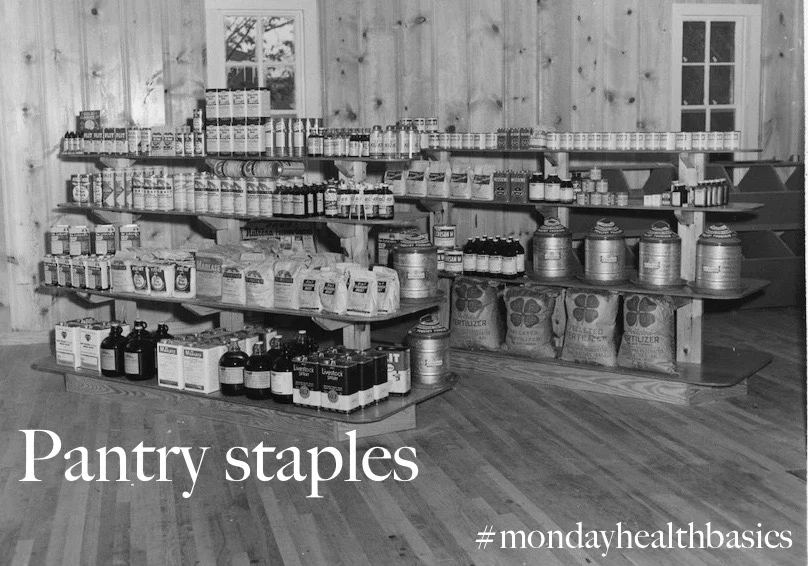
MONDAY BASICS: pantry staples.
As this year of #mondayhealthbasics post is drawing to a close, I have come to realize one big thing: my work focuses on the power of good food and talking #foodismedicine. My area of interest lies in reducing overall inflammation, and keeping chronic diseases at bay in order to help you fuel your good life. It's about quantity of life, with an emphasis on quality.
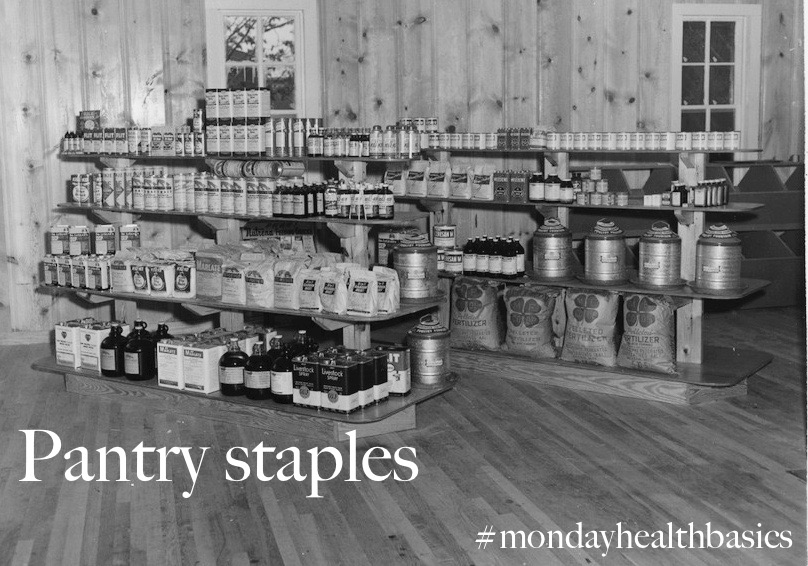
Today's post is meant to start at the very beginning. As I am deep in the throes of planning my work for 2017, it has occurred to me that this essential primer on how to eat the good foods has never been addressed. Today, we're talking stocking your pantry with the essentials.
As this year of #mondayhealthbasics post is drawing to a close, I have come to realize one big thing: my work focuses on the power of good food and talking #foodismedicine. My area of interest lies in reducing overall inflammation, and keeping chronic diseases at bay in order to help you fuel your good life. It's about quantity of life, with an emphasis on quality.
Today's post is meant to start at the very beginning. It has occurred to me that this essential primer on how to eat the good foods has never been addressed. Today, we're talking stocking your pantry with the essentials.
I often get a quizzical look when I share my business name with folks. I realize Good Food sounds very generic, and it's meant to: as a food loving human, I tend to pull ideas and ways of thinking about food from many different camps, never adhering to one strict camp or another. This has always been about the good food + you, and how good food is good enough, and that good enough is really enough. There's nothing flashy, nothing onerous or unattainable in this content: it's really simplifying things and making good food an easy, practical and attainable skill.

As a student of the Canadian School of Natural Nutrition, my work is steeped in science. As a food loving human and mom, my approach to nourishment is through the lens of Traditional Foods, deeply influenced by the Weston A. Price Foundation. I'm a big believer in Just. Eating. Real. Food. and will say many times over, let's keep it simple. And play with our food.
We all have similar scenarios in kitchens across this country, when on weeknights we have errands to run, children who need to tend to homework, activities to drive to and from, bills to pay, teams to coach, laundry to put away and work to catch up on. How is it that we're supposed to also have dinner on the table? And a good one at that? (Remember this one, Why do they want dinner every single night?)
Having a well stocked pantry is the key to simplifying, the key to having good ingredients at the ready in order to pull something together in a scant 20-25 minute window on those nights. (OK in our house, I'm happy if I can dedicate 30-40 minutes. 20 minutes seems a bit too unrealistic for me and frankly, adds to my stress levels.)
Having a well stocked fridge and freezer
can also be that make or break thing,
helping you get a good meal together in good time.
We'll go over some of those ideas here in the post.
Whether you're new to the idea of J.E.R.F. or traditional food prep, here are my recommendations on good things to keep at hand, as your staples. I'm not the first person to say this, but a well stocked pantry is the key to easy meals. This is about reconnecting with food, having good ingredients to make meal planning and prep a breeze, and a practical way to make food a priority in your life. How can what we put in our bodies three times a day not have a tremendous impact on our overall health?

THE GOOD FOODS PANTRY
top quality cold pressed olive oil (Blue Door Oil & Vinegar is my favourite place in town)
cold pressed coconut oil
coconut milk and coconut cream (BPA free lining)
apple cider vinegar (raw or 'with mother')
balsamic vinegar
good quality nut butters (1 or 2 ingredients on label)
canned fish (BPA free lining – canned sardines are my favourites; lowest on food chain, less toxins)
dried lentils
dried beans (navy beans the only beans that are ok on the GAPS protocol)
dried grains you like (bonus points if you purchase sprouted grains!)
sundried tomatoes
teas (lots of different kinds – try some of these liver loving brews)
coffee (if you drink it – I love it! make sure it's organic)
dry spices (my tops are a good chili powder, paprika, oregano, fennel, nigella seeds, bay leaves, thyme, rosemary, dill, parsley, turmeric, cinnamon, hot peppers, cumin, cardamom, coriander seed)
fresh fruit, in season (I refer to this list when deciding on organic or not)
dried fruit (choose organic – it's guaranteed to be unsulphured)
THE EXTRA PANTRY GOODIES (you know you've arrived if these are in your pantry!)
medicinal mushrooms (reishi, chaga, maitake, lions mane, etc)
dried shiitake mushrooms
cacao butter (in coffee! Best! Butter! Coffee!)
cacao powder
popcorn (great emergency munchie – make sure it's organic)
nutritional yeast
other herbs like astragalus root, dandelion root, shizandra, maca powder, lucuma powder, mangosteen powder (depends on your current health concerns – I can help figure this piece out)
FRIDGE FIXINGS
butter (it's a question of good/better/best with conventional/organic/pastured)
nuts
seeds
good quality cheese (raw dairy is my favourite, but I always have some goat cheese on hand too)
creme fraiche (I have a super easy cheat's way to make this good stuff – it will change your life)
sprouted flour or sprouted nut flours
every week, I pick three vegetables to keep on hand for meals (organic when I can; consult this list to help you make the decision!)

When it comes to stocking your freezer, I have a few caveats to add here. I am working on the concept of a capsule freezer, kind of like a capsule wardrobe: tossing in small portions of some easy, simple ingredients and flavours that will effortlessly dress up a meal, or add nourishing depth to a quick supper.
How I do it: I make a batch of something and freeze it in an ice cube tray, or portion in 1-2 cup amounts in to freezer bags. That way, they're easy to dig out of the freezer whether or not I just need a little bit, or a whole 2 cups' worth for a quick nutrient dense recipe. Curious to get the idea behind batch cooking? Look no further. Click on some of these ideas below to get to a recipe, or a how-to.
THE FREEZER
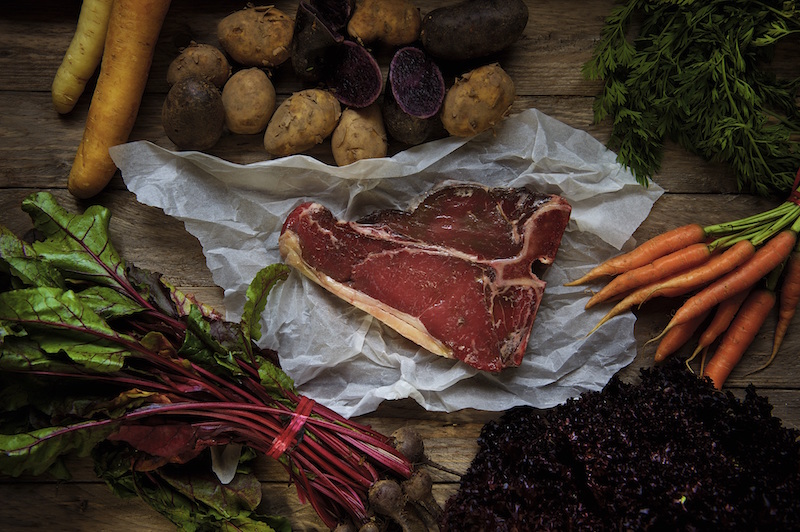
beef (locally pasture raised is best – read here why if you are wanting nutrient density) – we order a quarter beef every year to make it more affordable
pork (locally pasture raised again is best – we order a half every year to make it more affordable in the long run)
chicken (sustainably raised is best – I have whole chickens, chicken thighs with bones and skin, and for quick easy meals, I keep some boneless chicken thighs on hand)
My weekly grocery trips now are usually just stocking up on those items from this list that have been used up, along with fresh fruit and vegetables for the meals I have planned for the week.
Interested in getting a handle on meal planning? Read this article.
That my friend, is what you'd find on any given day were you to peek in to my pantry or refrigerator. It has taken me a number of years to get here; if you're new to this, consider starting with a few items and getting into the notion of playing with that food. Click on any of these ideas I have listed today in order to get to a recipe or an article that could make this make more sense for you. This is really a kind of compendium if you will of some of this past year's articles for this series.
You know what I'm going to say, don't you.
Go play with your food.
MONDAY BASICS: cultivate joy.
I feel like we are living in this really incredible time in history right now. I promise not to get into political things here. Hear me out.
There seems to be a lot of big changes going on in the world, either politically, or personally in peoples' lives. I was thinking the other day how this obvious increase in dis-ease and dis-comfort for people is on the rise. I see this discomfort and disordered health as signs of inflammation; certainly at the root of most chronic diseases out there, is inflammation.
The way some things seem to be exploding right now on the world stage, or in medical circles? In faith, in communities, across the board? In the way the commerce world is going? How we receive our information, how it is packaged for us? It seems the inflammation is reflected there as well.
Do not be disheartened.
I really deeply feel this inflammation is a harbinger of change. And a call to action. A call for us to pro-actively choose for ourselves what fits, what we want, and what we wish our outcome to be and that of those around us. No longer are we to sit idly by while things happen to us. This inflammation (be it in our bodies, or in our social circles) is a call to take charge of our own destiny, to be pro-active in our own pursuit of health, and to be active participants in choosing quantity and quality of life.
At the core of this whole not-so-quiet revolution currently taking place, in this our work to reduce inflammation on every level, is the ability and occasion to cultivate joy.
I feel like we are living in this really incredible time in history right now. I promise not to get into political things here. Hear me out.
There seems to be a lot of big changes going on in the world, either politically, or personally in peoples' lives. I was thinking the other day how this obvious increase in dis-ease and dis-comfort for people is on the rise. I see this discomfort and disordered health as signs of inflammation; certainly at the root of most chronic diseases out there, is inflammation.
The way some things seem to be exploding right now on the world stage, or in medical circles? In faith, in communities, across the board? In the way the commerce world is going? How we receive our information, how it is packaged for us? It seems the inflammation is reflected there as well.
Do not be disheartened.
I really deeply feel this inflammation is a harbinger of change. And a call to action. A call for us to pro-actively choose for ourselves what fits, what we want, and what we wish our outcome to be and that of those around us. No longer are we to sit idly by while things happen to us. This inflammation (be it in our bodies, or in our social circles) is a call to take charge of our own destiny, to be pro-active in our own pursuit of health, and to be active participants in choosing quantity and quality of life.
At the core of this whole not-so-quiet revolution currently taking place, in this our work to reduce inflammation on every level, is the ability and occasion to cultivate joy.
From the get-go in January of this year, I decided to write an article a week, focusing on an easy-to-implement idea for prospective clients. My motives were simple: committing to writing an article a week would force me to develop online content, which would help me really explain what I'm all about as a Holistic Nutritional Consultant.
It would be an exercise in discipline; as it turns out, it was an exercise in really figuring out what my bent is, my approach to food and how it can best support a person. It became clear halfway through the year that my interest in supporting people lies in reducing inflammation and improving digestion, as key players in overall health. It's all about the gut, love. (Look for the full list and links to each weekly article from 2016 here.)
In the interest of reducing inflammation in the body in order to best support optimal health, let's talk about how your mindset and intention to cultivate joy can be a key player in reducing said inflammation.
Reducing stress is one of the key components in reducing inflammation. Earlier this year I spoke about the idea of Practicing Mindfulness around meal times: remember the idea on how stress shuts down the digestive process? In order to digest like a pro and get at those nutrients found in our meals, we need to be calm, cool, collected when it comes time to sit down to a meal. In a stressful event, should you be eating or digesting, this function goes on the back burner and those foods you have just put in your belly will not be completely digested. These incompletely digested morsels now contribute to inflammation in the gut.
Another reason stress may hinder things: the stressful response calls on your adrenals to release cortisol, which in turn now frees sugar in your blood stream. The idea here is that you get a quick hit of energy to your muscles. When this reaction came about so many millions of years ago, that stressful reaction meant you were face to face with a saber toothed tiger. Insta-sugar hit to the muscles meant you could run like the dickens, away from the tiger. You would live to see another day.
Unfortunately, this stressful reaction we experience in our day to day lives nowadays is more like 75 saber toothed tigers every day, as opposed to one every two years as it was when that evolutionary piece came along. It's that teeter totter effect of blood sugar levels up and down many times during the day that tax our bodies, our adrenals and contribute to low grade inflammation.
So I'm tying together here stress, blood sugar imbalances and inflammation. Which now contributes to impaired digestion. Which begets more inflammation. Oy.
So sure, today's post is about reducing stress and inflammation. But let's not call it that. Let's turn it into a positive thing to add to your to do list: let's talk the power of cultivating joy.

Having fun and prioritizing good times can play a pretty big part in reducing inflammation. It helps bring down stress, which is a contributor to ongoing inflammation; it helps improve circulation to get nutrients to where they need to go to work on the problem and keep inflammation down. Having fun releases chemicals in the brain that help reduce inflammation there and in fact, end up protecting your noggin against inflammation.
The heart is central to feeling and expressing joy; when joy is missing in our lives, it is the heart and the circulatory system that feels it keenly according to Chinese Medicine. Making a point to ensure joy in every day will go far in supporting a healthy cardiovascular system, and a happy heart.
Your immune system is also quite sensitive to stress and negativity. By choosing joy and actively seeking out a more positive spin on things, you will be doing your immune system a service and proactively protecting it.

Here is your prescription then for cultivating joy on the daily:
Prioritize fun! Every day!
Go to the park (whether or not there is a little in your life)
Call a kid in your life, dress fancy, and take them out for tea and cake
Play games, find a games cafe in town
Have a night out with your honey or bestie or favourite kid: go to movies, comedy shows, go dancing, buy season's theatre tickets
get involved in something that is important to you, in order to connect. Volunteer somewhere!
Take a walk – this helps my kiddo immensely on days where she is in a funk
get a pet – they are a good reason to go out for a walk every day, plus the love is so unconditional
soak in an epsom salts bath with your favourite magazine
start a book club
movie night with the gang – in summery times, find some outdoor films in town!
Check out a nearby town for antiques or farmers markets
Reconnect with a hobby you had when you were wee
Joint a community theatre troupe (like my honey just did)
Dust off your skis, your bike or skateboard and get out there. Move your body!
Join a choir like you always wanted
Find those who bring out the best in you, and make time for them. Call them more often.
Add a gratitude practice to the start of your day, actively focus on your blessings
start a jam night with friends

check out some new local music, head out to a local club, get tickets for a big show and call a friend
host a games night with friends and neighbours
downsize your commitments (Simplicity Parenting by Kim John Payne was a huge book for me that helped me figure this one out)
start a garden
join a yoga class or a local tai-chi group in your area
take up pottery like you always meant to
share a meal with a honey in your life (eat together!)
take a cooking class
get season's tickets to one of our fabulous theatre companies or orchestras in town
schedule in regular date nights. In pen. Don't back out.
GO OUTSIDE! OFTEN! GO WALKING! DANCING! SING TO THE TREES! Whatever it takes to get you out there. And do it daily.
Take heart. Please play. Aim for everyday. That is your recommendation this week.

MONDAY BASICS: buy frozen fruit + veg
Concerned about nutrient density? Want more bang for your food bucks? Frugal with your time? Buy frozen fruit and veg. Allow me to explain.
Concerned about nutrient density? Want more bang for your food bucks? Frugal with your time? Buy frozen fruit and veg. Allow me to explain.
I love the good foods. I also love any sanity I can etch into my days. Reaching for frozen fruit and veg, especially as winter is now upon us, is something I do on a regular basis. I have lots of reasons why, but chief among them? It's about making supper an easier and more attainable task on those weeknights I'd rather be doing something else. I rely on frozen produce in the spirit of KEEPING IT REAL.
Ah, but see? It works in my favour here. As we are deep into the throes of King Winter now in Alberta, the fresh stuff I ogle at grocery stores at this time of year are coming from so many kilometres away from my home. The green beans at the store? They're from Argentina. (It's perfect green-bean growing weather in Argentina right now. Alberta? Not so much. Western Canada? Those warm summer days left us months ago.) My daughter adores fresh raspberries – as much as I'd love to, I just can't buy them fresh at the stores right now. First of all, the price for fresh organic raspberries is through the roof. Second of all, they were picked long before they got to me, meaning they were allowed to ripen in the truck on the way to my neighbourhood grocery store. In order to still look good by the time those berries reach my store, they have to be picked long before they're even ripe. These berries have to ripen in transit!
Not to mention, have you tasted berries when they aren't in season? They're not even remotely close to the real thing. It really takes away from the experience and just isn't worth it, in my humble opinion.
Enter: the frozen berries and veggies.
REASONS I LOVE FROZEN PRODUCE
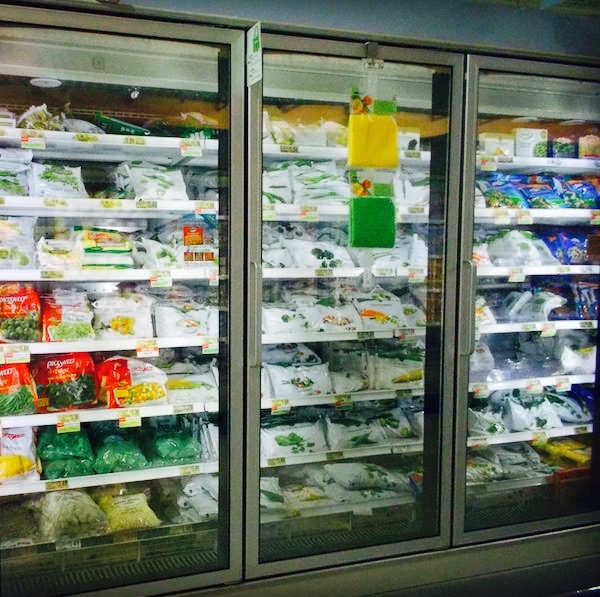
They're an easy alternative on busy nights – time is saved with pre-chopped and already-prepped veggies. Some of the hard-to-peel veggies have that work already done for you. Think of it as having your own sous-chef. (Good work.)
I also love them as they tend to be budget friendly. Next time you're at the grocery store, compare the cost of a full head of fresh broccoli with the cost of a bag of frozen broccoli. As we are on a budget here at our house, I have found I am able to afford a bag of the frozen organic veggie for the same cost as the conventional broccoli found in the fresh veggie aisle. (I refer to this list when trying to make my choices as to whether I should be purchasing organic or not. Check it out if you're curious as to why you may want to choose organic. (Psst... it has to do with reducing inflammation via liver support.))
Using frozen vegetables in my meal prep also means I only need to pull out what I need for the meal in question, leaving the rest of the package for another day. I don't leave half a head of broccoli to wilt in my crisper drawer for the next two weeks.
Eating foods in this way allows me to retain more nutrients as well: the wilting broccoli in the crisper drawer is losing important nutrients the longer is sits in the drawer. A vegetable's nutrient density degrades over time fairly quickly when stored in the fridge; the rate of nutrient loss in the freezer is infinitely slower, allowing you to retain the rest of the frozen broccoli until your next recipe, when the content of antioxidants will be just about the same as when you first used it. Double bonus: you tend to waste less. I have thrown out my fair share of wilted forgotten half-vegetables that hung out for too long in my veggie drawer.
I recommend you choose packaged frozen veg, fruit and berries that list one ingredient on the label (or just the veggies or berries or fruit in the mix). Freezing a vegetable or fruit is the preservation method: you don't need any added salt or sugar or other chemical in order to preserve it! Single-ingredient lists are a must here. Skip those packages that come with prepared sauces alongside. No sauces, no syrup, no cheese, no added sugars nor salt are needed here. Just the naked veg. Or berry. Or fruit.
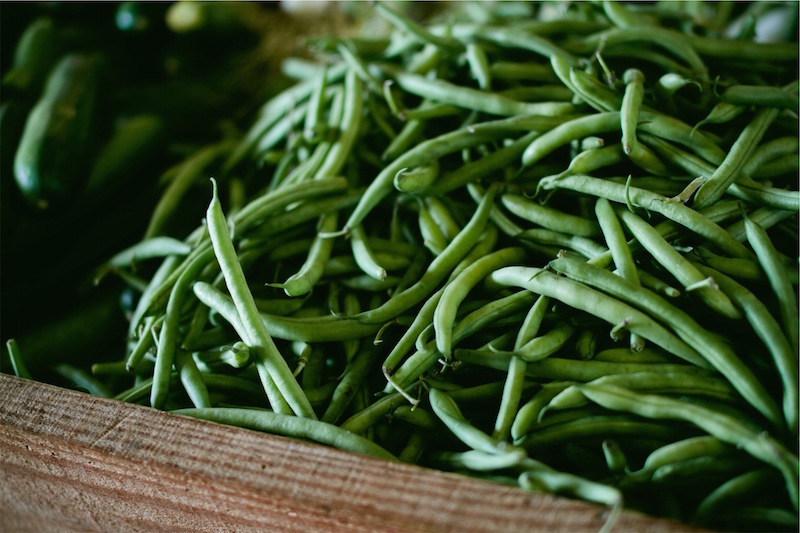
My favourite point about all of this is that when it comes to frozen produce, in general it is packaged close to where it is grown. This then means that the produce is allowed to ripen fully on the vine before it is harvested for freezing. When a fruit or veg is allowed to come to peak freshness on the vine, not only does it taste better, but it also retains a fuller complement of vitamins and minerals. Did you know that Vitamin C is one of the last vitamins to develop in a fruit on the vine?
Those veggies coming my way from another hemisphere have been picked long before they were ripe, with the intention to have them artificially ripen in the transport vehicle on their way to my local grocery store. Vitamin C does not magically show up on its own. The fruit or veg needs to still be alive and connected to the plant and the soil in order to develop this nutrient. Ergo, my frozen supermarket finds are higher in nutrient content than the fresh-from-afar foods in the produce aisle when it comes to the winter months.
The processing for these frozen foods involving a quick blanching on site in order to kill any potentially harmful bacteria that may cause the foods to spoil when in their frozen state; this minimal method of processing (a quick dip in boiling water) locks in nutrition and freshness. There is an amount of water soluble vitamins like the Bs and Cs that can be lost in this processing, but the amount left in the end in frozen produce is higher than that found in the produce that was sent from the other side of the world, never mind the extra time those veggies will wallow in your fridge drawer.
IDEAS ON USING FROZEN PRODUCE – MADE EASY
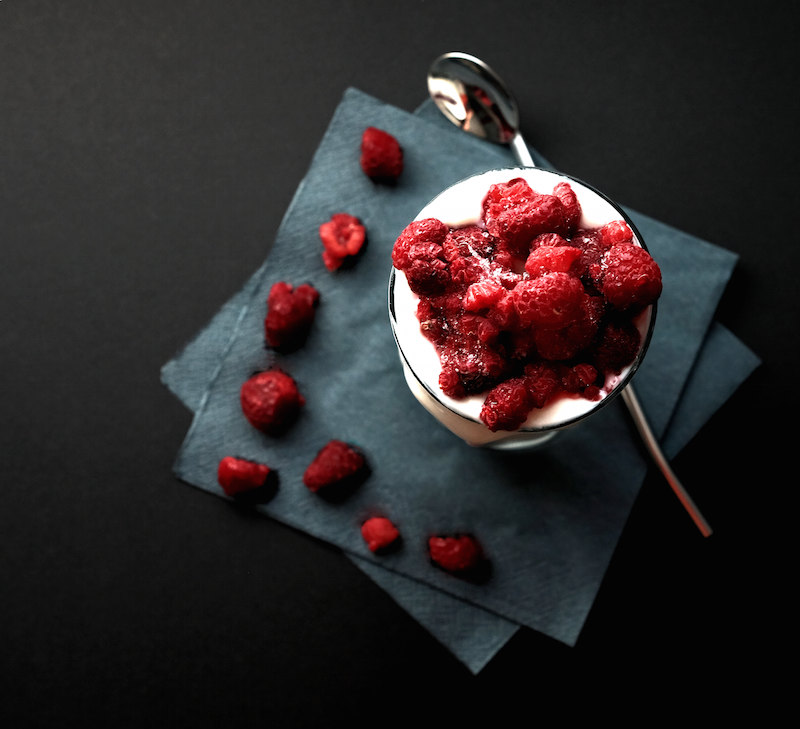
allow to meld berries with a bit of honey and butter in a pan, and add creme fraiche
berries in to yogurt for a quick snack in lunch boxes (bonus - keeps the lunch cool!)
toss frozen veggie mix with pesto, roast in a 375F oven for 25-30 minutes
make palak paneer out of greens
start with bacon in the pan, add some greens or other veggies til cooked through
make miso creamed greens by wilting frozen greens in butter, adding cream or creme fraiche and a tbsp or two of miso paste
simple steamed or boiled veg (peas, green beans, etc) and butter
peas and pancetta (cook pancetta first, toss in peas towards end of cooking)
asparagus roasted with lemon + butter at 375F for 25-30 minutes
lima beans + bacon (geez, really, any vegetable and bacon!)
package of pre-cut veggie mix as base for a quick side saute with dinner (with garlic, sesame oil, sesame seeds)
got leftover grains from last night? Stir-fry in with some garlic and new frozen veggies, perfect side dish
add frozen spinach to soups and stews for more Bs and important antioxidants
toss cubed frozen butternut squash with butter and cinnamon and a touch of maple syrup at 375F for 30-40 minutes
roast broccoli from frozen with chili peppers, solid (melted) cooking fat and a squeeze of lemon at 375F for 25-30 minutes
roast broccoli with parmesan cheese and lemon juice at 375F for 25-30 minutes
roast cauliflower from frozen, tossed in melted coconut oil and nigella seeds (aka kalonji seeds) at 375F for 20-30 minutes
roast brussels sprouts with diced bacon, add cranberries to the mix for sweetness (375F for 45 minutes)
toss frozen carrots with melted butter, honey and fresh or dry dill, roast at 375F for 25-30 minutes
Easy supper: defrost some meat stock, toss in a few tablespoons of pesto, enough frozen mixed veg for those who are eating, heat to simmer. Put a bamboo steamer on top, line with parchment paper, steam some fillets of sole (topped with squeeze of lemon juice and pepper) until cooked through. Throw all together.