
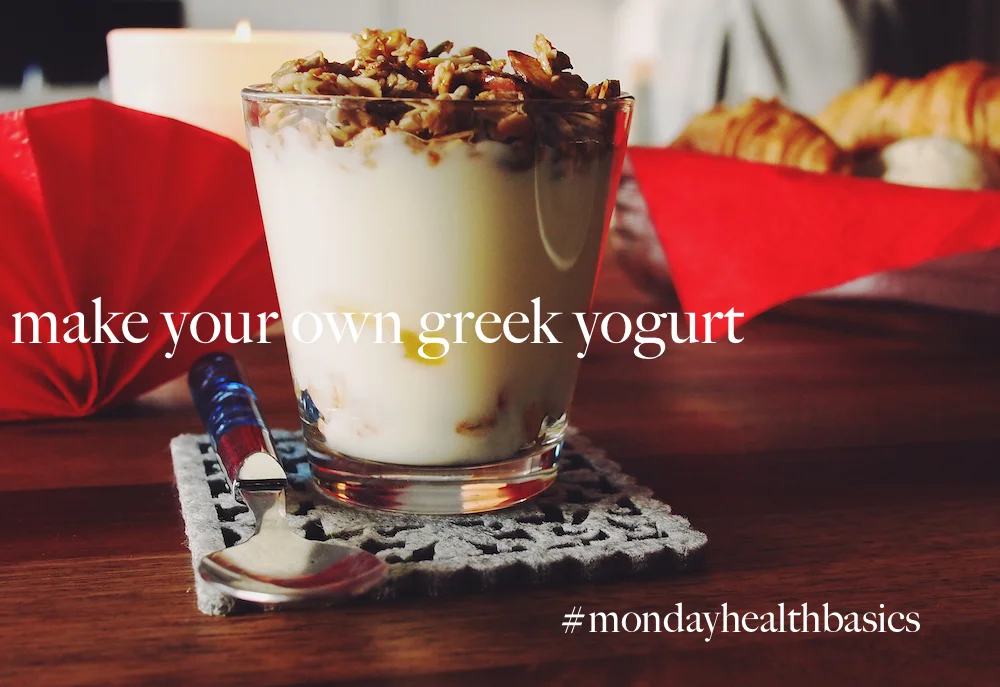
THURSDAY BASICS: make your own greek yogurt
Good Thursday morning! This week's post is a quick and dirty one – and one close to my heart. It talks about two of my favourite things: dairy and fermentation. This blog post is for you if you like dairy. This blog post may also be for you if you are saying to yourself right now “Well Luka, I can't do dairy because I'm lactose intolerant”. It may also be something you want to check out if you find yourself reaching for that greek yogurt at the grocery store.
Read on for a full how-to on making lactose free yogurt + why you may want to make yr own greek yogurt.
Let’s keep going with the ideas on how to work on EATING THE GOOD FATS one step further. Phat Fats, as I like to call them! This is one of those things that can sometimes get overlooked; why not make your own? Read on to understand why.
MAKE YR OWN GREEK YOGURT
COLES’ NOTES:
1. Learn how to make your own LACTOSE FREE greek yogurt from the store bought stuff. (No need to pay premium! No need for special equipment!)
2. Learn why the store bought greek yogurt might be a source of nefarious substances that wreak free radical damage. (Hint: the thickeners they use to make the texture just right)
3. Bonus: when you make your own homemade Greek Yogurt, you end up with extra whey, which is high in protein. A brilliant addition to morning smoothies + oatmeals!
Phat Fats. All the time. My favourite macronutrient. And for those who can tolerate dairy (and lactose free dairy) - this post is for you!
Good Thursday morning! This week's Monday Health Basics post is a quick and dirty one – and one close to my heart. It talks about two of my favourite things: dairy and fermentation.
This blog post is for you if you like dairy.
This blog post may also be for you if you are saying to yourself right now “Well Luka, I can't do dairy because I'm lactose intolerant”. It may also be something you want to check out if you find yourself reaching for that greek yogurt at the grocery store.
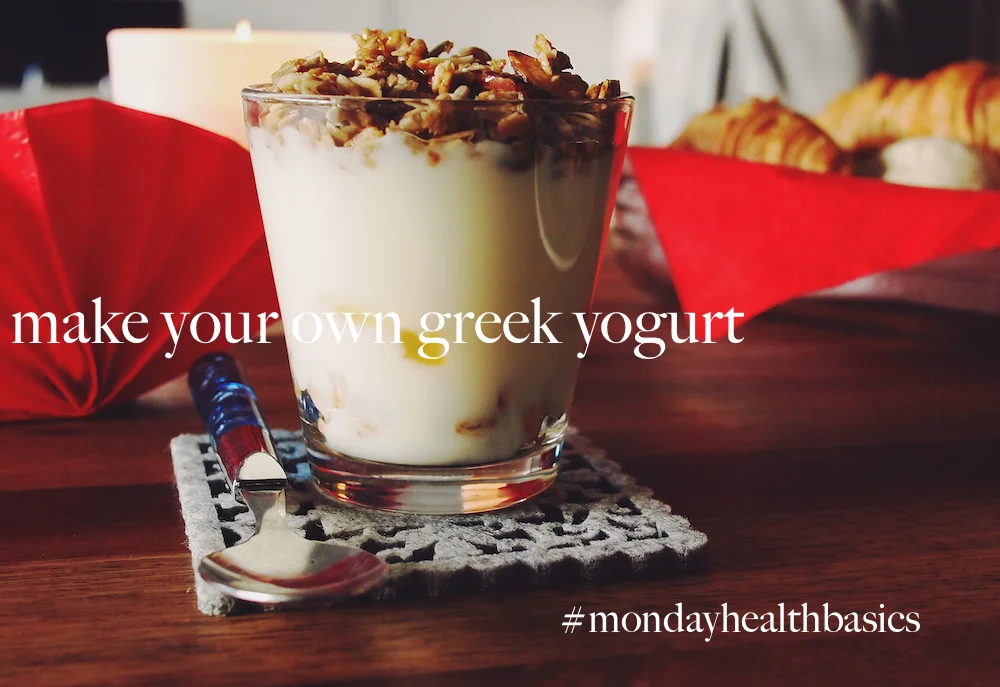
Yep, I'm a DIY kinda gal. Yep, I'm a good food kinda kid. Today's post is about how to maximize that probiotic hit, lowering the lactose and making sure that greek yogurt in your breakfast bowl is best able to support you through the day ahead.
First things first.
For people who have a hard time with dairy, it is usually due to one of two things. Either you have an issue with the protein found in yogurt (casein), or the lactose (sugars) is causing you ills. And discomforts. And just not usually worth it. If your issue is with casein, this is not a blog post for you. Sorry friend. Return next Monday for something entirely different.
But you say lactose may be the culprit of your turning away from dairy? I may just have a wee trick up my sleeve for you.
Store-bought yogurt is fermented anywhere from a short stint of thirty minutes to six hours. The timeline depends on the company's manufacturing process, and also on the strains of probiotics they are using to do the fermentation. Depending on the manufacturer and their methods, at this point they add their extras (sugar, agave, fruit, honey, artificial or real flavours, sometimes colouring, in some cases a thickener, sugar disguised as something else) and then package it up and off to the stores they go. (If you want a more well-rounded version of this process, you may want to check this article out.)
If you are not yet aware of the magic of fermentation, might I send you here for a primer. The beauty of fermentation when it comes to dairy products is that the process itself takes care of the lactose, conjugating it out of the mix. What this means: the probiotics that are introduced to the milk get in there and cleave apart the double sugars or disaccharides called lactose, leaving behind two simple sugars or two monosaccharides, namely glucose and galactose. Poof, like magic, no more lactose! Well, sort of. It all depends on the amount of time the milk and probiotics have together in a warmed environment in order to do that work. And in that short time of a half hour or even six hours, that is just not enough time to get all the lactose converted into the simpler sugars glucose and galactose. So what can we do to make that yogurt we purchased a lactose free delicacy? Read on, yogurt loving friend.
First off, get yourself some delicious yogurt. Make sure it is plain, with no additives thrown in to alter the chemical make up of your yogurt. Vanilla yogurt does not count here. Vanilla is a flavour. PLAIN JANE. You want to choose a yogurt that has no fruit, no sugar, no colours, and a yogurt that still has the bacteria alive in there; in other words, you want your yogurt to be probiotic.
How to make sure it's a probiotic yogurt: somewhere on the label, you will read the word 'live' or 'probiotic' or 'with probiotic cultures'. It may also list the strains of bacteria that were used in the fermentation process. Even better. (The discussion on whether or not to purchase yogurt made from milk that has been homogenized or not is a question for another day. But I would caution you to reach for organic yogurt whenever possible. Curious as to good brands to find in Alberta? Head to your favourite health food store to get on the local action. Vital Greens is a particular fave of mine, as is Saugeen from Ontario.)
Now that you've taken home your plain jane probiotic yogurt, you are going to leave it on the counter.
Yes, on the counter in the kitchen. Pop your lid a smidge, just to let it breathe should the container expand during the extra fermentation process. You are going to allow this container of yogurt to remain on the counter for a full 24 hour period. If you purchased a still-live yogurt product, this is a perfectly fine thing to do. As the product is fermented and still contains those live cultures, your yogurt is a very stable product, and will not be prone to developing funky things or harbour bad bacterial cultures. After that full 24 hour period, you are going to seal up the yogurt container and put it in the refrigerator.
What you have allowed in that 24 hour period is an opportunity for the probiotics found within the product to further ferment, thereby increasing the numbers of probiotics. (That means more bugs. More probiotics.) And not only that; those good bugs went through and cleaved even more of the lactose molecules, freeing them up into those simple sugars that are easily recognizable and good fuel sources for the body and your brain. GOOD WORK. And thank you probiotics.
Incidentally, if you are a DIY yogurt maker at home, after that initial incubation period, allow your yogurt to remain on the counter to finish up a twenty four hour cycle in order to allow those lactose molecules to be broken in two.
Voila, just-about-lactose-free yogurt!
IF YOU ARE A GREEK YOGURT LOVER, READ ON.
So now that you have the lactose free bit, you're ready to add another tool to your arsenal of tricks.
Greek yogurt seems to be just about everywhere these days. The main reason people reach for this thicker yogurt is for the higher protein content. Folks also like the thicker consistency; it makes for a pretty yummy and substantial smoothie first thing in the morning.
I challenge you to read your labels though: take a gander to see what is included in the list of ingredients on that greek yogurt container. I bet you the list will include things like skim milk powder, or corn starch, or carrageenan, or some other kind of stabilizer, emulsifier or thickener thrown in to keep it just-so. I am not a big fan of additives, as they aren't things that have been traditionally found in our diets. I just don't think we're able to evolve fast enough in order to assimilate and utilize the additives we ingest. And I don't want to leave it to chance, in the hopes that I can evolve fast enough. (Not to mention they wreak havoc at the gut lining!)
Here are my issues: skim milk powder is a by-product of food manufacturing. It is a processed food. And not lightly so: the whole process of making skim milk powder involves quite the protocol, and the end result is that the cholesterol naturally found in milk ends up becoming oxidized cholesterol. Oxidized cholesterol has been shown to contribute to the production of plaques in the arteries, or atherosclerosis. Carrageenan is derived from seaweed (which I love) but it is in such quantities that it has been shown to contribute to increased inflammation in the body, creating havoc in the digestive system.
I like my food as it was meant to be: food. And so my dear thick-yogurt-loving-friend, I have an easy DIY way for you to make it at home.

MAKING YOUR OWN GREEK YOGURT
Line a sieve with a clean doubled-over tea towel. (*make sure the tea towel hasn't been thrown in the dryer with any dryer sheets – the chemical residue is not something you want to ingest!)
Dump the container of yogurt into the strainer, allowing it to separate at room temperature. (This can be a part of your 24 hours on the counter timing if you are aiming for a lactose-free final product.)
What will drip through to the bottom of the bowl will be a yellowish-clear liquid: this is your WHEY. Don't throw this goodness out! I will speak to this in a moment.
The milk solids remain in the strainer; when the yogurt/milk solids are a consistency to your liking, this is when your DIY greek yogurt is ready. Scoop it out with a spatula, and tuck it into a container of sorts in to your fridge, it is ready to consume. And nary an additive to be found!
As for the remaining whey that dripped through the tea towel, this is liquid gold. It is protein-rich, and a fabulous addition to your morning smoothies; you can use it to help sprout, soak or 'activate' nuts / seeds / grains / beans / legumes. You can add it to soup stock in order to increase the protein and add probiotic benefits (but only do so after you have taken the soup off the heat). Whey is full of probiotics that help improve and support optimal digestion, and provide your body with the precursors to glutathione, helping your liver to do the detoxification work in the body.
Put that greek yogurt on everything.
It's yummy mixed in with berries and maple syrup. Try a big dollop on top of protein pancakes. Mix it in to your butter chicken instead of using cream, and now your lactose-intolerant friend can partake in dinner! Blitz it with a bit of honey and some lemon juice, and you have yourself the perfect salad dressing. Slap it together with some chopped strawberries and some granola, and breakfast will now render you a champion. I mean you can't go wrong, amiright?
THURSDAY BASICS: go full fat.
This week's post is meant to help make sense of the info swirling about in regards to fat. Don't be wary, my friend. Ditch the skim. Go full fat.
We continue on the topic of the good fats - it really is my most favourite macronutrient. And for so many reasons! So many in fact, that I’ve had to break it up into eight different posts.
See, we’ve talked butter. We’ve explored what is a good fat. We’ve also talked about the benefits of reaching for pastured sources when it comes to animal fats. Last week, we touched on the importance of Omega 3 Fats. We have a few to go yet - so stay tuned. This week, let’s talk…
DITCH THE SKIM. GO FULL FAT.
COLES’ NOTES:
1. We’ll explore who was behind the original ‘no fat!’ craze, and why the studies conducted were not truthful in their telling of their findings.
2. Ditch the zero percent. Fat is where the flavour is; take out the fat, and they have to add something in to make it flavourful. (That stuff ain’t right, kittens.)
3. What to look for, and how to know what you have in your pantry/fridge is up to snuff.
Is it any wonder it’s my favourite macronutrient? Read on for some great tips and ideas on how to incorporate full fats in to your every day and why you might just want to.
This week's post is meant to help make sense of the info swirling about in regards to fat. Don't be wary, my friend. Go full fat.

I have talked about fat quite a bit in this here blog series, the Monday Health Basics. So today will act part fat-roundup, part explanation on why you need to ditch the zero percent and go full fat.
Why They Went Low Fat
Many a year ago, the food industry took a bit of a left turn, based on evidence from a study led by Ancel Keys. This study, “the lipid hypothesis” (erroneously) found that saturated fat was at the root of heart disease. The trouble is, this study was never able to be replicated in laboratories, not even remotely. In fact, many studies since have refuted Keys' original claims, outlining that in fact saturated fats are protective to not only the heart, but also the liver.
There is an interesting article that recently came out about the role the Sugar Industry played in this whole scenario. NPR did a comprehensive round up of the information; I urge you to read this article. See, in helping to influence the national debate and persuade their nation's population to eat low fat in order to (again, erroneously) ensure health, the fat that was taken out of foods would have to be replaced by something else. Can you guess what this would be?
SUGAR.
Yes yes, sugar. Consumption of sugar after the 'low fat' craze first exploded went up a third per person than what was consumed prior to these claims surrounding low fat. (It's one of the main reasons I argue we should Just. Eat. Real. Food., in order to reduce additives and hidden sugars.) And too much sugar? It contributes to inflammation in the body.
As you can imagine, in the days following the 'low fat! 0%!' craze, sugar intake went up, fat intake went down. Funny though, average weight per person did not go down; in fact, quite the opposite. The rate of chronic diseases went up, occurrences of diseases with an inflammatory component went up and are still on the rise. (For a more comprehensive and lengthy look at the importance of including fat in your diet, please visit this article I posted previously, “eat good fats”. Further reading: it is no surprise that I am a big believer in butter. Yes please, eat butter. Put that s**t on everything. Need more convincing on the importance of including good fats in your diet? Let's talk anti-inflammation with EFAs.)
The main idea of why fat is important
Why then, do we need fats? The Coles Notes: for the fat-soluble vitamins found within, vitamins A, D, E and K. These vitamins are fat-soluble, which means we need them to be attached to fat in order to get them in to our bodies. (If you are interested in reading up on the importance of including these all important vitamins, head to this article for a comprehensive look.) And it is these important vitamins that we need in order to reduce inflammation in the body, and maintain cell wall integrity in the gut. These nutrients go miles in helping balance hormones, better supplying fuel to our brain and adrenals and ensure an even keel for your body. They are essential.
The fat component of these foods is also critical in again helping balance our blood sugars, which goes miles in keeping inflammation at bay. These fats supply the ingredients we need to make all of our hormones, support brain health, protect our hearts and livers, balance hormones and the list goes on.
The goods
Let's get down to the nitty gritty. Most of the foods we are talking about in today's post are dairy products from the grocery store: think milk, yogurt, ice cream, sour cream, cottage cheese, cheese, cream, kefir, cream cheese, etc.
This rule though also applies to other commonly purchased ingredients: salad dressing, mayonnaise for starters. There are quite a few packaged items that are now coming out with 'low fat!' claims or '0 fat!' claims.
My recommendation to you is to ditch the low fat version and reach for the one on the shelf indicating a higher fat percentage.
Instead of the 1% cottage cheese, find the 5%! If skim or 1% milk is what your family drinks, aim to move up the fat percentage over time. Can you start with 2%, and go up to 3.25% over time?
Get rid of the 0% ice cream; they just rounded out the taste of the ice cream with more sugar. Yes, that's right: flavour, as we experience it, is locked in fat and sugar. Take one of those away, and you have to up the other!

Using 5% cream in your coffee in the mornings? Consider going a higher percentage. Whipping cream! Why not? You'll only need a little bit. I put whipping cream in my morning cuppa. In fact, I have a whole write up on how fat can be of service if you're a regular coffee drinker; find that article here.
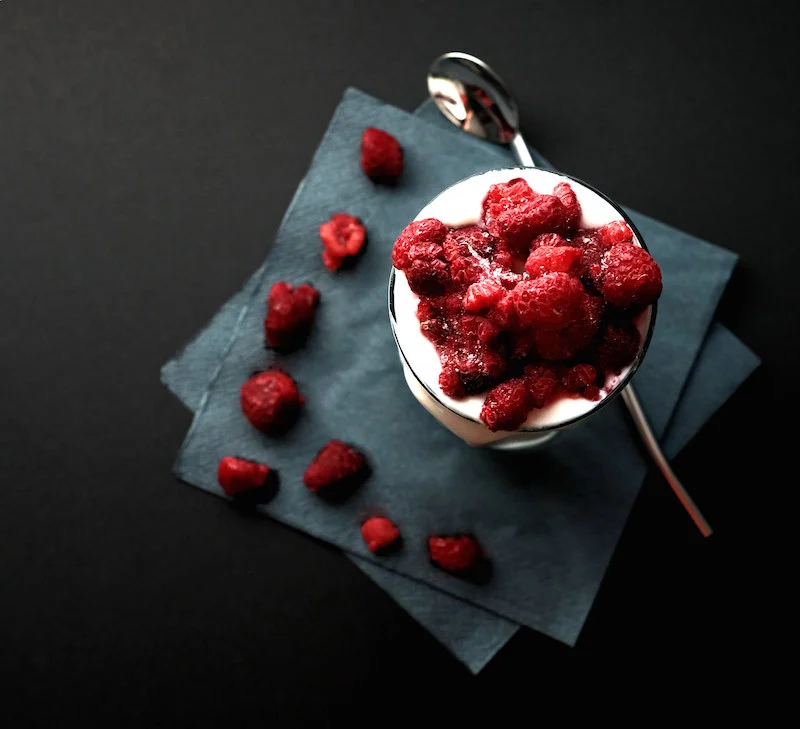
Love that store bought greek yogurt, but now realizing it's 0%? Learn to make your own, using full fat yogurt. Head to this article for the how-to.
I know a few readers will think they're scott free seeing as their houses do not have any dairy in the fridge. I urge you to reconsider any packaged food items with 'low fat' claims; think mayonnaise jars with 'low fat' promises, 'fat free' salad dressings. The reason we add real fats to our salads? The reason we use real olive oil and delicious vinegars to our salads? Those fats ensure we are better able to absorb the minerals found in the vegetables of said salad. Head over to this article to get the lowdown on how to make your own salad dressing – a surefire way to up that nutritional ante and support optimal health.
Want to learn to make your own mayo at home, without the rancid oils found in the jars at the store? I will point you to this easy recipe.
If you are someone who regularly consumes more egg whites and less yolks because of the fat content, I urge you to reconsider. Eat the whole egg, yolk and all. In addition to the good fats found in the yolks, you may be interested to know of the vitamin content of the yolks. Read up on eggs at this article I wrote a few months back.

And so my kitten, repeat after me.
Ditch the skim. Go Full Fat.
Now go play with your food.
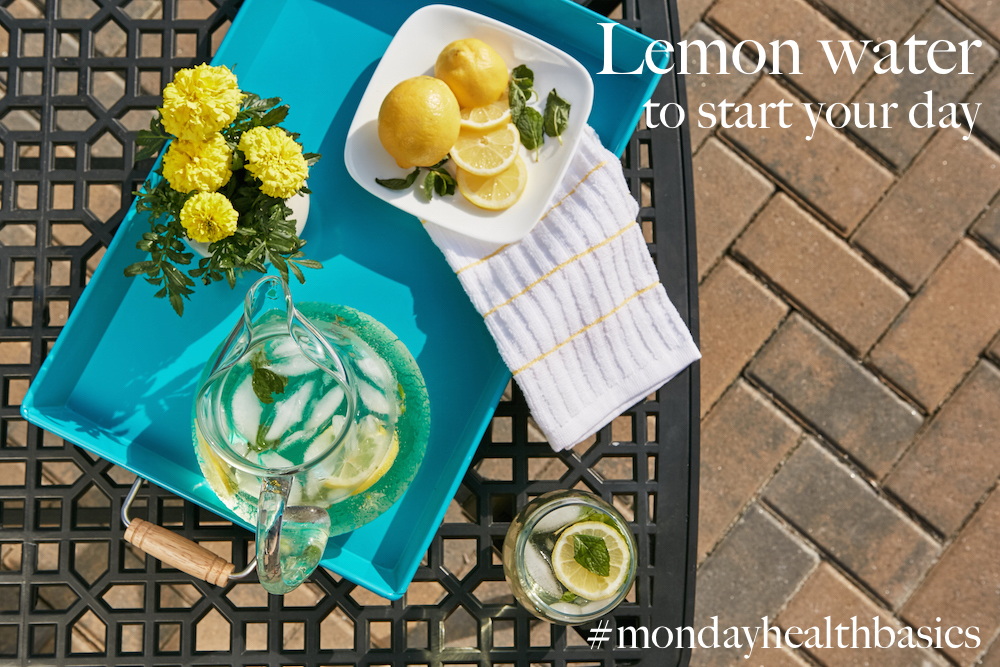
THURSDAY BASICS: Lemon water to start your day
This latest weekly easy upgrade for better health is a pretty simple one. It takes all of 3 minutes of prep once every two or three weeks, and a little forethought every night before hitting the hay. We're talking the pros of starting your day with a glass of lemon water.
Good Thursday to you! We continue on this revamping of the 2016 series I called Monday Health Basics. 52 new ideas to implement in to your daily life, one good thing at a time.
This one’s a gooder, especially if you have lost your morning appetite, or need some liver lovin. It’s also great to help wake up a sluggish digestive system. Plus, it tastes pretty darn DELICIOUS.
This week’s topic: Lemon Water to Start Your Day
THE COLES NOTES:
1. Get a bag of lemons, and blitz together in to a paste.
2. Freeze in ice cubes.
3. Take one out at night, drop in a glass, leave on your nighttable for first thing tomorrow morning.
Now go forth and support vitality, will you?
This weekly-easy-upgrade-for-better-health is a pretty simple one. It takes all of 3 minutes of prep once every two or three weeks, and a little forethought every night before hitting the hay.
We're talking the pros of starting your day with a glass of lemon water.
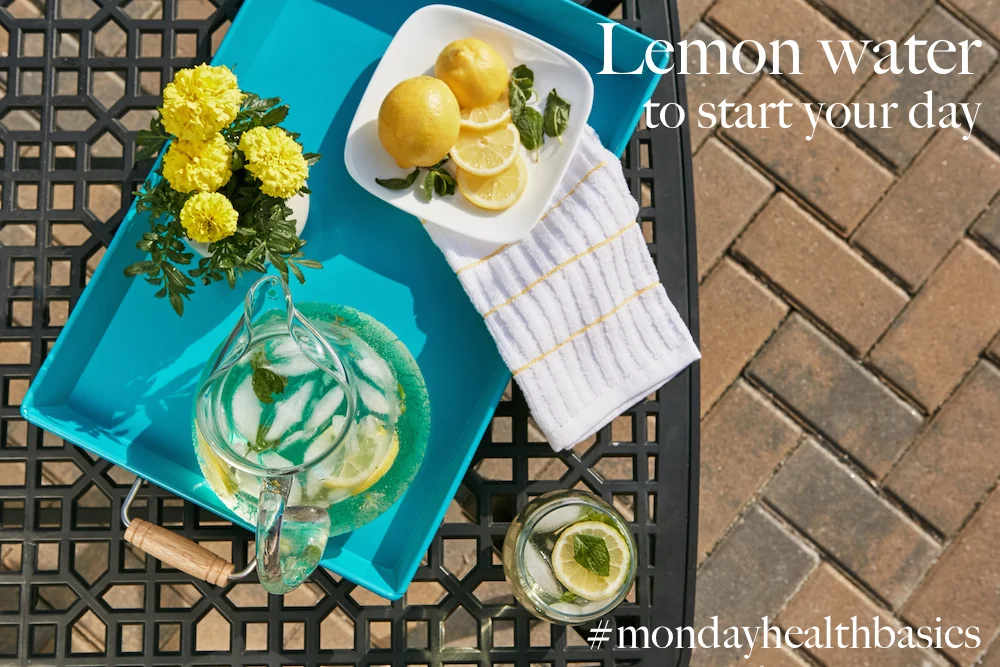
Omit the ice cubes for improved benefits. I just liked the colour here.
There are so many benefits to kicking your day off on the right foot with this lemon water business. This recommendation is one that just about every client I see on an individual basis will get early on in our work together. The benefits are many, as you will see by the list below.
But first, the how-to:
There are a few ways to do this. It's a good-better-best kind of deal if you simply add a tablespoon of bottled lemon juice to a glass of room temperature water first thing upon waking in the morning. Upgrade that to a freshly squeezed half lemon for even more benefits in the same glass of water.
Want to really knock this one out of the park? Purchase a bag of organic lemons and run the lot through your stand mixer or food processor in order to reduce them to a mushy paste. Yes, skin, rind, seeds, pith and all.
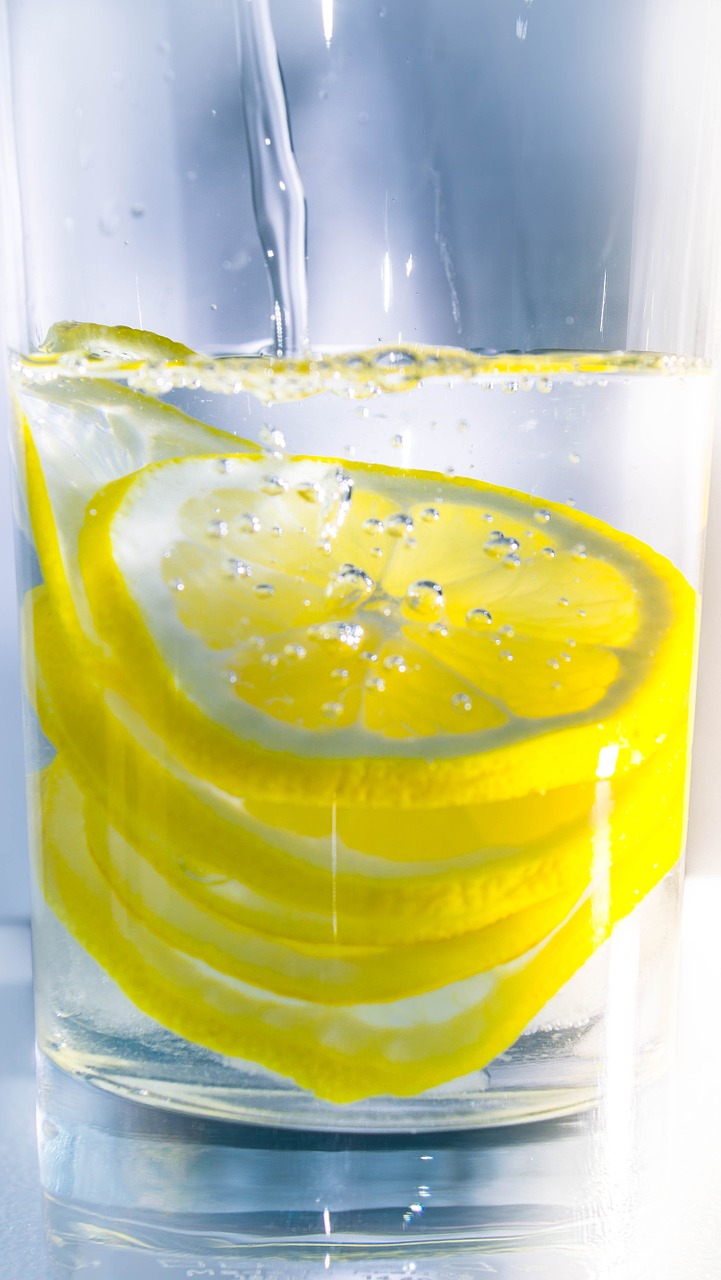
Pour this paste into ice cube trays and tuck in the freezer for easy retrieval. Before heading to bed at night, pop one of those lemon ice cubes out of the tray and toss in a glass of filtered water, and set on your night table so that come morning, that lemon will be melted into the water. Down the zesty drink first thing before even getting up, and you've done your body a good deed already. And your feet haven't even touched the floor yet! GOOD WORK.
Now go about your morning routine, washing up, getting dressed, packing lunches, feeding others, and preparing your breakfast. Getting the water down the hatch first thing will allow your body to absorb that water and give a good 30 minute buffer before your breakfast is ready to eat. This buffer means that the water will not dilute your hydrochloric acid, and thus will not hinder your digestive prowess first thing in the morning. Again, GOOD WORK.
But why?
The reasons for implementing this daily ritual are many. First things first: after a good night's sleep, your body can be leaning towards dehydration as it hasn't consumed any water for a long period of time. Starting the morning with room temperature water will help rehydrate, and the added lemon will get your digestive system started. As our body does its restorative work during our sleep, starting the day with this bitter beverage will induce the liver to do a very gentle cleanse first thing, flushing out toxins and getting bile flowing. (Truly, the only ‘cleanse’ you will ever hear from me.)
Water is the main component of our lymph system, and so by consuming this glass of water in the morning we are further supporting our body's natural detoxification job in moving toxins and antigens out.
As is well documented, citrus fruits are also good source of Vitamin C: this crucial antioxidant plays an important role in supporting the liver, a main player in immune and a necessary nutrient for supple skin and health for connective tissue (we need it to make collagen in our bodies).
And let's not forget the adrenals, they too rely on Vitamin C and so think of this as a good support for you to better be able to handle stress. Vitamin C is also a big player in keeping free radical damage at bay, and so of good support to skin.
As an added bonus, citrus fruit have been well documented to contribute to reducing overall inflammation be it systemic, chronic or acute in nature. What's not to love?
Extra tips
Make sure your glass of water is either at room temperature or a bit warm, as cold water will shock your system and reduce the benefits you may be seeking here. This is part of the reason why I recommend you prepare this morning wake up the night before, to ensure the temperature won't slow down the benefits we're seeking here.
If you're worried about any negative effects on the health of your teeth when consuming lemon water on a daily basis, you may want to consume your water through a straw, bypassing your teeth entirely.
Just adding this one easy task to your morning routine can bring support to your liver, lymph system, skin, digestive system, connective tissue, reduce inflammation, neutralize those free radicals and help rehydrate your body. It's really an easy add-on with myriad benefits, including supporting a balancing of hormones too. Try this one out, and let me know how you feel one week in!
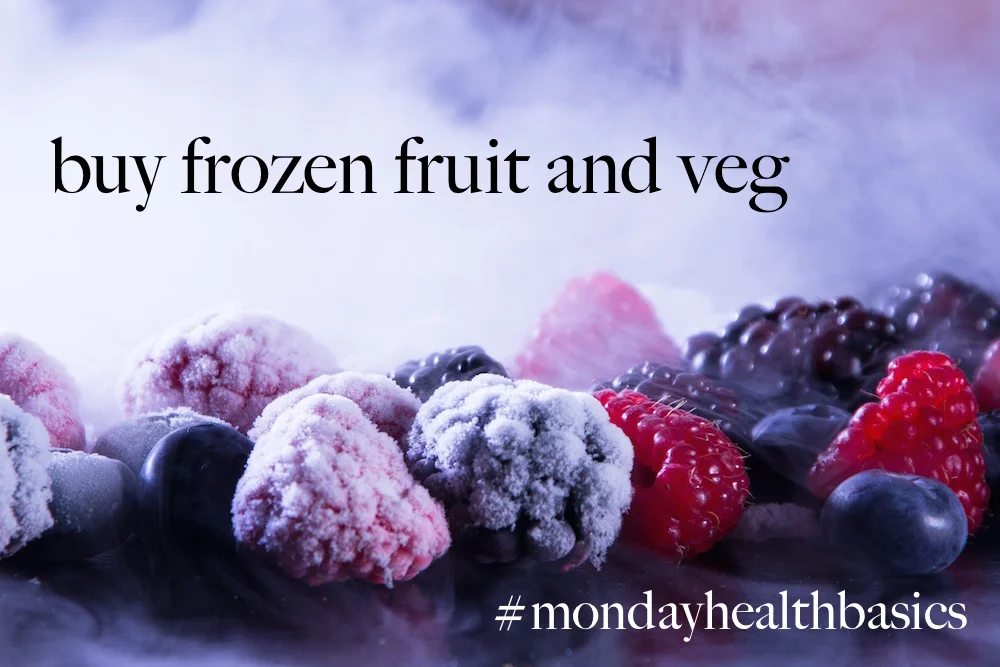
THURSDAY BASICS: buy frozen fruit + veg
Concerned about nutrient density? Want more bang for your food bucks? Frugal with your time? Buy frozen fruit and veg. Allow me to explain.
2019 is the year to implement ONE GOOD THING AT A TIME. And only one thing.
Every Thursday here, we dive in to a new concept (rather, a revisit of a series first published in 2016). This one is a perfect one for these wintry times - it makes lots of sense seeing that we are months away from anything fresh and local. (Plenty of local goodies - the root crops, pastured meats, animal fats, pastured organ meats).
When opting to purchase fruit or veg at the store, might I recommend this week you consider getting frozen ones. Read on for a full exploration on the why here.
COLES NOTES
1. Produce was frozen close to where it was grown, and thus was allowed to develop until ripened on the vine. Nutrient density is higher in these items.
2. They’re easier on the pocketbook right now compared to their fresh alternatives, not to mention WAAAAAAY tastier.
3. Much less waste! And no guilt at having to use up wilting produce in your crisper.
That seems like it might have been five points and not three, but you get my drift. Get on it, and go play with your (frozen) food, wouldya?
Concerned about nutrient density? Want more bang for your food bucks? Frugal with your time? Buy frozen fruit and veg. Allow me to explain.
I love the good foods. I also love any sanity I can etch into my days. Reaching for frozen fruit and veg, especially as winter is now upon us, is something I do on a regular basis. I have lots of reasons why, but chief among them? It's about making supper an easier and more attainable task on those weeknights I'd rather be doing something else. I rely on frozen produce in the spirit of KEEPING IT REAL.
Ah, but see? It works in my favour here. As we are deep into the throes of King Winter now in Alberta, the fresh stuff I ogle at grocery stores at this time of year are coming from so many kilometres away from my home. The green beans at the store? They're from Argentina. (It's perfect green-bean growing weather in Argentina right now. Alberta? Not so much. Western Canada? Those warm summer days left us months ago.) My daughter adores fresh raspberries – as much as I'd love to, I just can't buy them fresh at the stores right now. First of all, the price for fresh organic raspberries is through the roof. Second of all, they were picked long before they got to me, meaning they were allowed to ripen in the truck on the way to my neighbourhood grocery store. In order to still look good by the time those berries reach my store, they have to be picked long before they're even ripe. These berries have to ripen in transit!
Not to mention, have you tasted berries when they aren't in season? They're not even remotely close to the real thing. It really takes away from the experience and just isn't worth it, in my humble opinion.
Enter: the frozen berries and veggies.
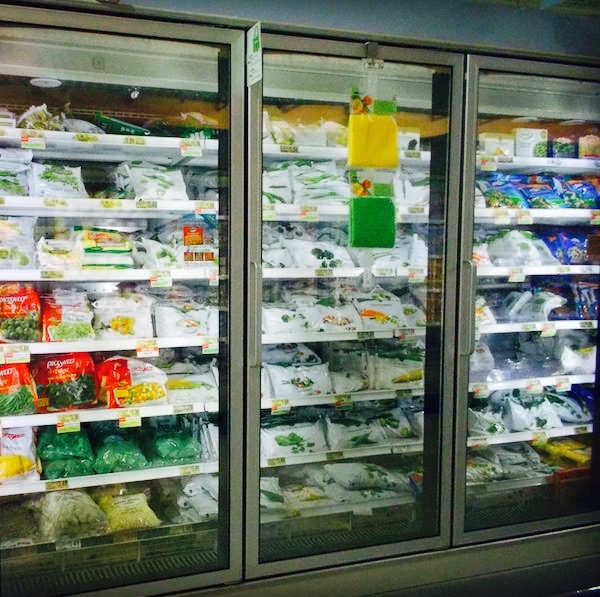
REASONS I LOVE FROZEN PRODUCE
They're an easy alternative on busy nights – time is saved with pre-chopped and already-prepped veggies. Some of the hard-to-peel veggies have that work already done for you. Think of it as having your own sous-chef. (Good work.)
I also love them as they tend to be budget friendly. Next time you're at the grocery store, compare the cost of a full head of fresh broccoli with the cost of a bag of frozen broccoli. As we are on a budget here at our house, I have found I am able to afford a bag of the frozen organic veggie for the same cost as the conventional broccoli found in the fresh veggie aisle. (I refer to this list when trying to make my choices as to whether I should be purchasing organic or not. Check it out if you're curious as to why you may want to choose organic. (Psst... it has to do with reducing inflammation via liver support.))
Using frozen vegetables in my meal prep also means I only need to pull out what I need for the meal in question, leaving the rest of the package for another day. I don't leave half a head of broccoli to wilt in my crisper drawer for the next two weeks.
Eating foods in this way allows me to retain more nutrients as well: the wilting broccoli in the crisper drawer is losing important nutrients the longer is sits in the drawer. A vegetable's nutrient density degrades over time fairly quickly when stored in the fridge; the rate of nutrient loss in the freezer is infinitely slower, allowing you to retain the rest of the frozen broccoli until your next recipe, when the content of antioxidants will be just about the same as when you first used it. Double bonus: you tend to waste less. I have thrown out my fair share of wilted forgotten half-vegetables that hung out for too long in my veggie drawer.
I recommend you choose packaged frozen veg, fruit and berries that list one ingredient on the label (or just the veggies or berries or fruit in the mix). Freezing a vegetable or fruit is the preservation method: you don't need any added salt or sugar or other chemical in order to preserve it! Single-ingredient lists are a must here. Skip those packages that come with prepared sauces alongside. No sauces, no syrup, no cheese, no added sugars nor salt are needed here. Just the naked veg. Or berry. Or fruit.
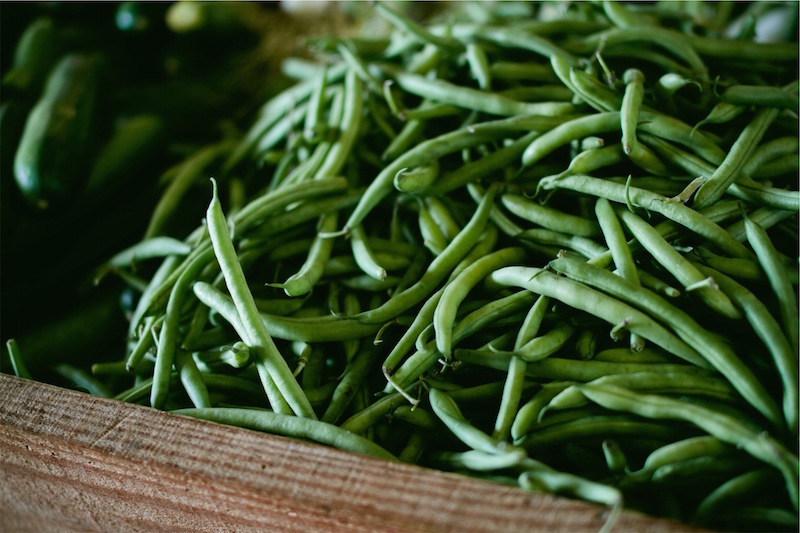
My favourite point about all of this is that when it comes to frozen produce, in general it is packaged close to where it is grown. This then means that the produce is allowed to ripen fully on the vine before it is harvested for freezing. When a fruit or veg is allowed to come to peak freshness on the vine, not only does it taste better, but it also retains a fuller complement of vitamins and minerals. Did you know that Vitamin C is one of the last vitamins to develop in a fruit on the vine?
Those veggies coming my way from another hemisphere have been picked long before they were ripe, with the intention to have them artificially ripen in the transport vehicle on their way to my local grocery store. Vitamin C does not magically show up on its own. The fruit or veg needs to still be alive and connected to the plant and the soil in order to develop this nutrient. Ergo, my frozen supermarket finds are higher in nutrient content than the fresh-from-afar foods in the produce aisle when it comes to the winter months.
The processing for these frozen foods involving a quick blanching on site in order to kill any potentially harmful bacteria that may cause the foods to spoil when in their frozen state; this minimal method of processing (a quick dip in boiling water) locks in nutrition and freshness. There is an amount of water soluble vitamins like the Bs and Cs that can be lost in this processing, but the amount left in the end in frozen produce is higher than that found in the produce that was sent from the other side of the world, never mind the extra time those veggies will wallow in your fridge drawer.
IDEAS ON USING FROZEN PRODUCE – MADE EASY
allow to meld berries with a bit of honey and butter in a pan, and add creme fraiche
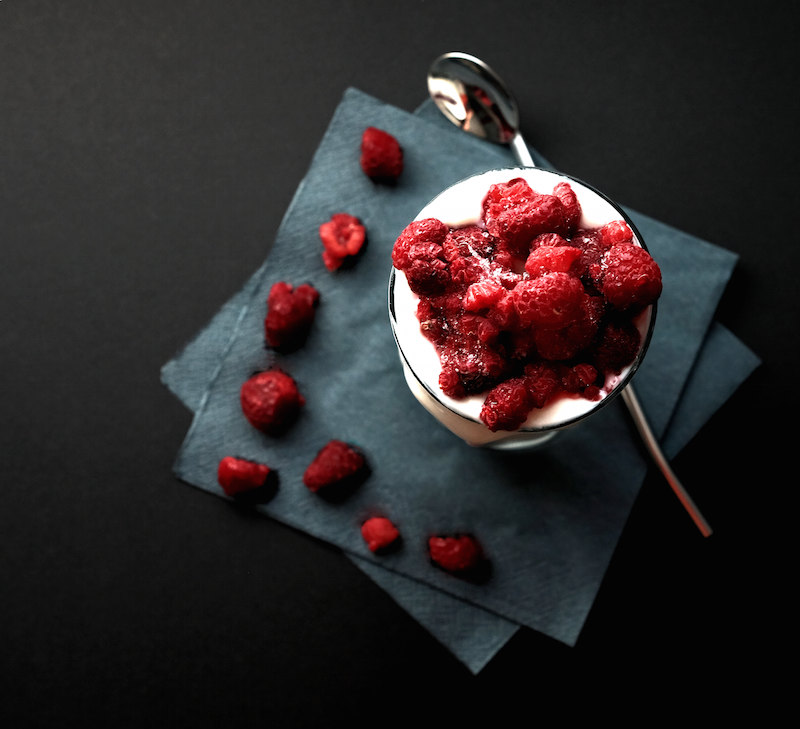
berries in to yogurt for a quick snack in lunch boxes (bonus - keeps the lunch cool!)
toss frozen veggie mix with pesto, roast in a 375F oven for 25-30 minutes
make palak paneer out of greens
start with bacon in the pan, add some greens or other veggies til cooked through
make miso creamed greens by wilting frozen greens in butter, adding cream or creme fraiche and a tbsp or two of miso paste
simple steamed or boiled veg (peas, green beans, etc) and butter
peas and pancetta (cook pancetta first, toss in peas towards end of cooking)
asparagus roasted with lemon + butter at 375F for 25-30 minutes
lima beans + bacon (geez, really, any vegetable and bacon!)
package of pre-cut veggie mix as base for a quick side saute with dinner (with garlic, sesame oil, sesame seeds)
got leftover grains from last night? Stir-fry in with some garlic and new frozen veggies, perfect side dish
add frozen spinach to soups and stews for more Bs and important antioxidants
toss cubed frozen butternut squash with butter and cinnamon and a touch of maple syrup at 375F for 30-40 minutes
roast broccoli from frozen with chili peppers, solid (melted) cooking fat and a squeeze of lemon at 375F for 25-30 minutes
roast broccoli with parmesan cheese and lemon juice at 375F for 25-30 minutes
roast cauliflower from frozen, tossed in melted coconut oil and nigella seeds (aka kalonji seeds) at 375F for 20-30 minutes
roast brussels sprouts with diced bacon, add cranberries to the mix for sweetness (375F for 45 minutes)
toss frozen carrots with melted butter, honey and fresh or dry dill, roast at 375F for 25-30 minutes
Easy supper: defrost some meat stock, toss in a few tablespoons of pesto, enough frozen mixed veg for those who are eating, heat to simmer. Put a bamboo steamer on top, line with parchment paper, steam some fillets of sole (topped with squeeze of lemon juice and pepper) until cooked through. Throw all together.
Now go play with your (frozen) food!
MONDAY BASICS: buy frozen fruit + veg
Concerned about nutrient density? Want more bang for your food bucks? Frugal with your time? Buy frozen fruit and veg. Allow me to explain.
Concerned about nutrient density? Want more bang for your food bucks? Frugal with your time? Buy frozen fruit and veg. Allow me to explain.
I love the good foods. I also love any sanity I can etch into my days. Reaching for frozen fruit and veg, especially as winter is now upon us, is something I do on a regular basis. I have lots of reasons why, but chief among them? It's about making supper an easier and more attainable task on those weeknights I'd rather be doing something else. I rely on frozen produce in the spirit of KEEPING IT REAL.
Ah, but see? It works in my favour here. As we are deep into the throes of King Winter now in Alberta, the fresh stuff I ogle at grocery stores at this time of year are coming from so many kilometres away from my home. The green beans at the store? They're from Argentina. (It's perfect green-bean growing weather in Argentina right now. Alberta? Not so much. Western Canada? Those warm summer days left us months ago.) My daughter adores fresh raspberries – as much as I'd love to, I just can't buy them fresh at the stores right now. First of all, the price for fresh organic raspberries is through the roof. Second of all, they were picked long before they got to me, meaning they were allowed to ripen in the truck on the way to my neighbourhood grocery store. In order to still look good by the time those berries reach my store, they have to be picked long before they're even ripe. These berries have to ripen in transit!
Not to mention, have you tasted berries when they aren't in season? They're not even remotely close to the real thing. It really takes away from the experience and just isn't worth it, in my humble opinion.
Enter: the frozen berries and veggies.
REASONS I LOVE FROZEN PRODUCE
They're an easy alternative on busy nights – time is saved with pre-chopped and already-prepped veggies. Some of the hard-to-peel veggies have that work already done for you. Think of it as having your own sous-chef. (Good work.)
I also love them as they tend to be budget friendly. Next time you're at the grocery store, compare the cost of a full head of fresh broccoli with the cost of a bag of frozen broccoli. As we are on a budget here at our house, I have found I am able to afford a bag of the frozen organic veggie for the same cost as the conventional broccoli found in the fresh veggie aisle. (I refer to this list when trying to make my choices as to whether I should be purchasing organic or not. Check it out if you're curious as to why you may want to choose organic. (Psst... it has to do with reducing inflammation via liver support.))
Using frozen vegetables in my meal prep also means I only need to pull out what I need for the meal in question, leaving the rest of the package for another day. I don't leave half a head of broccoli to wilt in my crisper drawer for the next two weeks.
Eating foods in this way allows me to retain more nutrients as well: the wilting broccoli in the crisper drawer is losing important nutrients the longer is sits in the drawer. A vegetable's nutrient density degrades over time fairly quickly when stored in the fridge; the rate of nutrient loss in the freezer is infinitely slower, allowing you to retain the rest of the frozen broccoli until your next recipe, when the content of antioxidants will be just about the same as when you first used it. Double bonus: you tend to waste less. I have thrown out my fair share of wilted forgotten half-vegetables that hung out for too long in my veggie drawer.
I recommend you choose packaged frozen veg, fruit and berries that list one ingredient on the label (or just the veggies or berries or fruit in the mix). Freezing a vegetable or fruit is the preservation method: you don't need any added salt or sugar or other chemical in order to preserve it! Single-ingredient lists are a must here. Skip those packages that come with prepared sauces alongside. No sauces, no syrup, no cheese, no added sugars nor salt are needed here. Just the naked veg. Or berry. Or fruit.
My favourite point about all of this is that when it comes to frozen produce, in general it is packaged close to where it is grown. This then means that the produce is allowed to ripen fully on the vine before it is harvested for freezing. When a fruit or veg is allowed to come to peak freshness on the vine, not only does it taste better, but it also retains a fuller complement of vitamins and minerals. Did you know that Vitamin C is one of the last vitamins to develop in a fruit on the vine?
Those veggies coming my way from another hemisphere have been picked long before they were ripe, with the intention to have them artificially ripen in the transport vehicle on their way to my local grocery store. Vitamin C does not magically show up on its own. The fruit or veg needs to still be alive and connected to the plant and the soil in order to develop this nutrient. Ergo, my frozen supermarket finds are higher in nutrient content than the fresh-from-afar foods in the produce aisle when it comes to the winter months.
The processing for these frozen foods involving a quick blanching on site in order to kill any potentially harmful bacteria that may cause the foods to spoil when in their frozen state; this minimal method of processing (a quick dip in boiling water) locks in nutrition and freshness. There is an amount of water soluble vitamins like the Bs and Cs that can be lost in this processing, but the amount left in the end in frozen produce is higher than that found in the produce that was sent from the other side of the world, never mind the extra time those veggies will wallow in your fridge drawer.
IDEAS ON USING FROZEN PRODUCE – MADE EASY
allow to meld berries with a bit of honey and butter in a pan, and add creme fraiche
berries in to yogurt for a quick snack in lunch boxes (bonus - keeps the lunch cool!)
toss frozen veggie mix with pesto, roast in a 375F oven for 25-30 minutes
make palak paneer out of greens
start with bacon in the pan, add some greens or other veggies til cooked through
make miso creamed greens by wilting frozen greens in butter, adding cream or creme fraiche and a tbsp or two of miso paste
simple steamed or boiled veg (peas, green beans, etc) and butter
peas and pancetta (cook pancetta first, toss in peas towards end of cooking)
asparagus roasted with lemon + butter at 375F for 25-30 minutes
lima beans + bacon (geez, really, any vegetable and bacon!)
package of pre-cut veggie mix as base for a quick side saute with dinner (with garlic, sesame oil, sesame seeds)
got leftover grains from last night? Stir-fry in with some garlic and new frozen veggies, perfect side dish
add frozen spinach to soups and stews for more Bs and important antioxidants
toss cubed frozen butternut squash with butter and cinnamon and a touch of maple syrup at 375F for 30-40 minutes
roast broccoli from frozen with chili peppers, solid (melted) cooking fat and a squeeze of lemon at 375F for 25-30 minutes
roast broccoli with parmesan cheese and lemon juice at 375F for 25-30 minutes
roast cauliflower from frozen, tossed in melted coconut oil and nigella seeds (aka kalonji seeds) at 375F for 20-30 minutes
roast brussels sprouts with diced bacon, add cranberries to the mix for sweetness (375F for 45 minutes)
toss frozen carrots with melted butter, honey and fresh or dry dill, roast at 375F for 25-30 minutes
Easy supper: defrost some meat stock, toss in a few tablespoons of pesto, enough frozen mixed veg for those who are eating, heat to simmer. Put a bamboo steamer on top, line with parchment paper, steam some fillets of sole (topped with squeeze of lemon juice and pepper) until cooked through. Throw all together.