
MY FAVOURITE FERMENT
I've had fermenting on the brain for the better part of the last three years, discovering the health benefits, enjoying the variety of flavours and appreciating the complexity of time married with salt and vegetables, or playing with those flavours and dreaming up new taste combinations for my adventuresome palate. Through my travels and explorations, it has become clear to me that there is one ferment that really stands out above most for me, for many different reasons. Let me explain.
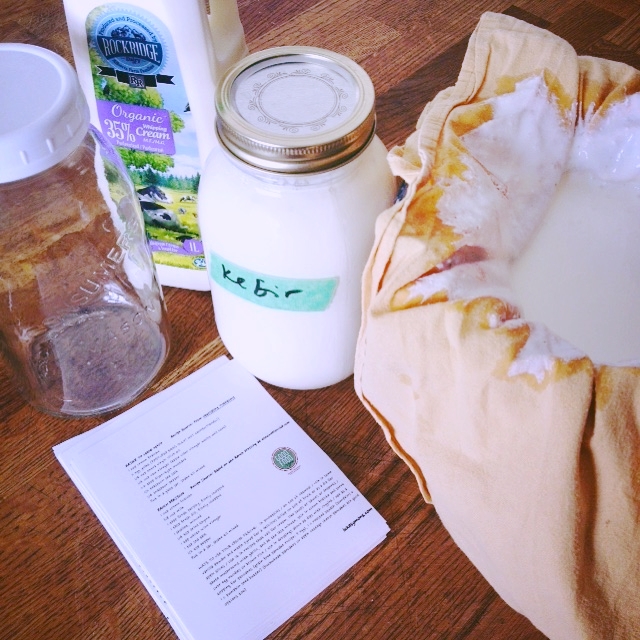
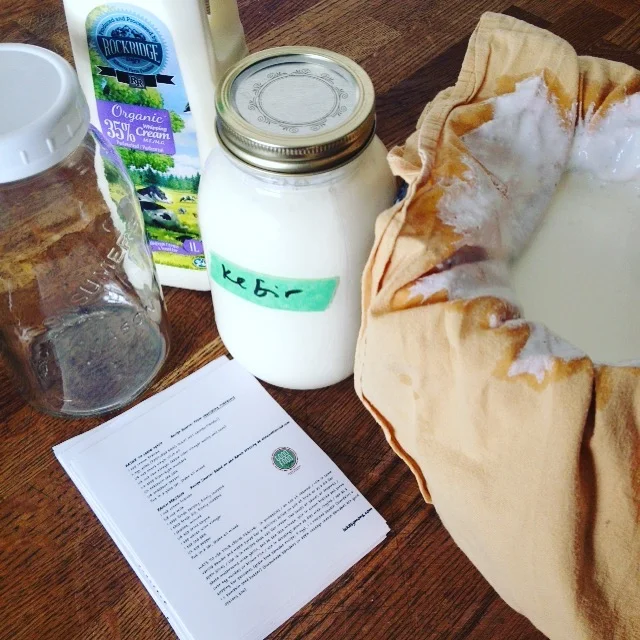
Making Crème Fraîche. And straining milk kefir made with 3.5% non homogenized milk, soon to become kefir cheese.
I've had fermenting on the brain for the better part of the last three years, discovering the health benefits, enjoying the variety of flavours and appreciating the complexity of time married with salt and vegetables, or playing with those flavours and dreaming up new taste combinations for my adventuresome palate. Through my travels and explorations, it has become clear to me that there is one ferment that really stands out above most for me, for many different reasons. Let me explain.
Let's talk delicious and nutritionally dense Crème Fraîche. You take whipping cream and inoculate it with the good kefir bugs for a minimum of 24 hours, and it becomes one of those 'better than the sum of its parts' kinda deal. The end result of this ferment (because that is precisely what is going on here, the fermentation of this good full fat cream) not only breaks down all lactose found in the cream with that 24+ hour window, your probiotic count goes through the roof in this time. Depending on how you prepare your crème fraîche, your probiotic count can certainly be comparable if not supersede the number of colony forming units (CFUs) OR NUMBER OF GOOD BUGS found in a supplement. It's ridiculously easy, requires no heating, no special equipment save from a glass jar and maybe some tape and a pen. It's economical, to boot. By fermenting the whipping cream, you are increasing the nutritive value of the food as well, as during the fermentation process, those good bugs are freeing up more vitamins and minerals and making them easier to absorb and digest for you. They're also creating beneficial acids that can play a role in balancing out the pH in your gut to bring it back closer to what Ma Nature intended it to be, all the while equipping you to better handle and battle unsuspecting E. coli outbreaks, thereby playing a role in protecting you against possible food poisoning.. And those probiotics? Well heck, some can take heavy metals out of circulation so you don't absorb them. And get this, milk kefir is a more potent probiotic food than yogurt is, by a long shot. It is also a very valuable place to get your vitamin K2 in order to ensure good bone health and mental health too, a heart healthy vitamin and a good cancer fighter to boot.
Did I mention it's ridiculously easy? And versatile? And delicious? And economical? Because that's what counts at the end of the day for me. (Bonus if it's good for me too.)
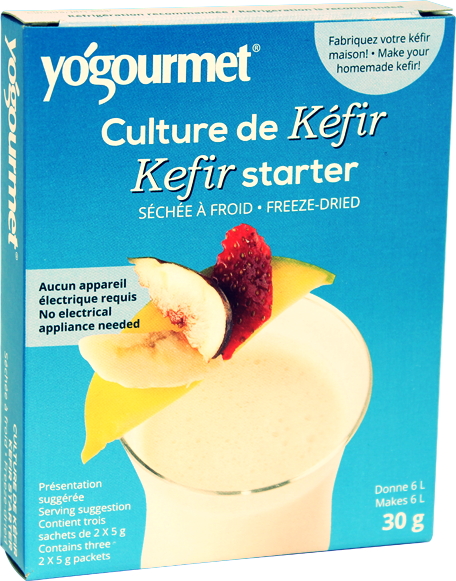
Where to find the particulars: I buy the package of kefir starter at my local favourite health food store, in the refrigerator exactly where the yogurt and kefir is usually kept. You will be looking for a box resembling the picture just above. Make sure it says KEFIR on it, not yogourt.
THE HOW-TO:
1 litre of 35% whipping cream (preferably organic)
1 packet of Kefir Starter (info here) (there are 6 envelopes per package of culture starter, use only one)
a one litre sized glass jar
Put all contents in a jar. Shake vigorously. Leave on the counter for at least 24 hours, at which time that cream will eventually turn into a more sour-cream-like consistency. Make sure to shake it up a few times during that 24 hour period to ensure good distribution of the bugs. Tuck it in the fridge. You're done.
Did you get that it was easy?
Why I like it: it's a fabulous source of good saturated fats if you're able to tolerate dairy that can play a big role in helping in support strong bones, cardiovascular health, liver protecting, good brain and nervous support and excellent immune support; when paired with something sweet like raspberries or pears or peaches, it slows down the hit of sugar to your system to make it a more even release into your blood stream, contributing to keeping your hormones in balance and going easy on your adrenals and supporting a more balanced mood. It's so easy to whip up for a lunch or an on-the-go-snack to tide you over until dinnertime. When you make it with this kefir starter, in your 100 g serving you will be ingesting 100 billion live and active bacteria.
If your mind isn't sufficiently blown yet, know this: the taste will send you over the edge. Eat it straight up, or mix it in with salsa or some pesto for a yummy dip. Add a dollop of maple syrup, splash of vanilla and a handful of frozen raspberries for that lunchtime nourishing dessert treat. Make a batch with more maple syrup and raspberries and churn it in your ice cream maker for a most wonderful and delicious treat. Add matcha green tea powder for that extra kick of antioxidants and decadence. Use it as a base for a creamy salad dressing, just add lemon juice and a touch of honey. Use it wherever a recipe indicates using thick cream or sour cream: finish off a butter chicken sauce with the stuff, making sure to add the fermented cream AFTER heating of the sauce in order to retain more of the good bugs.
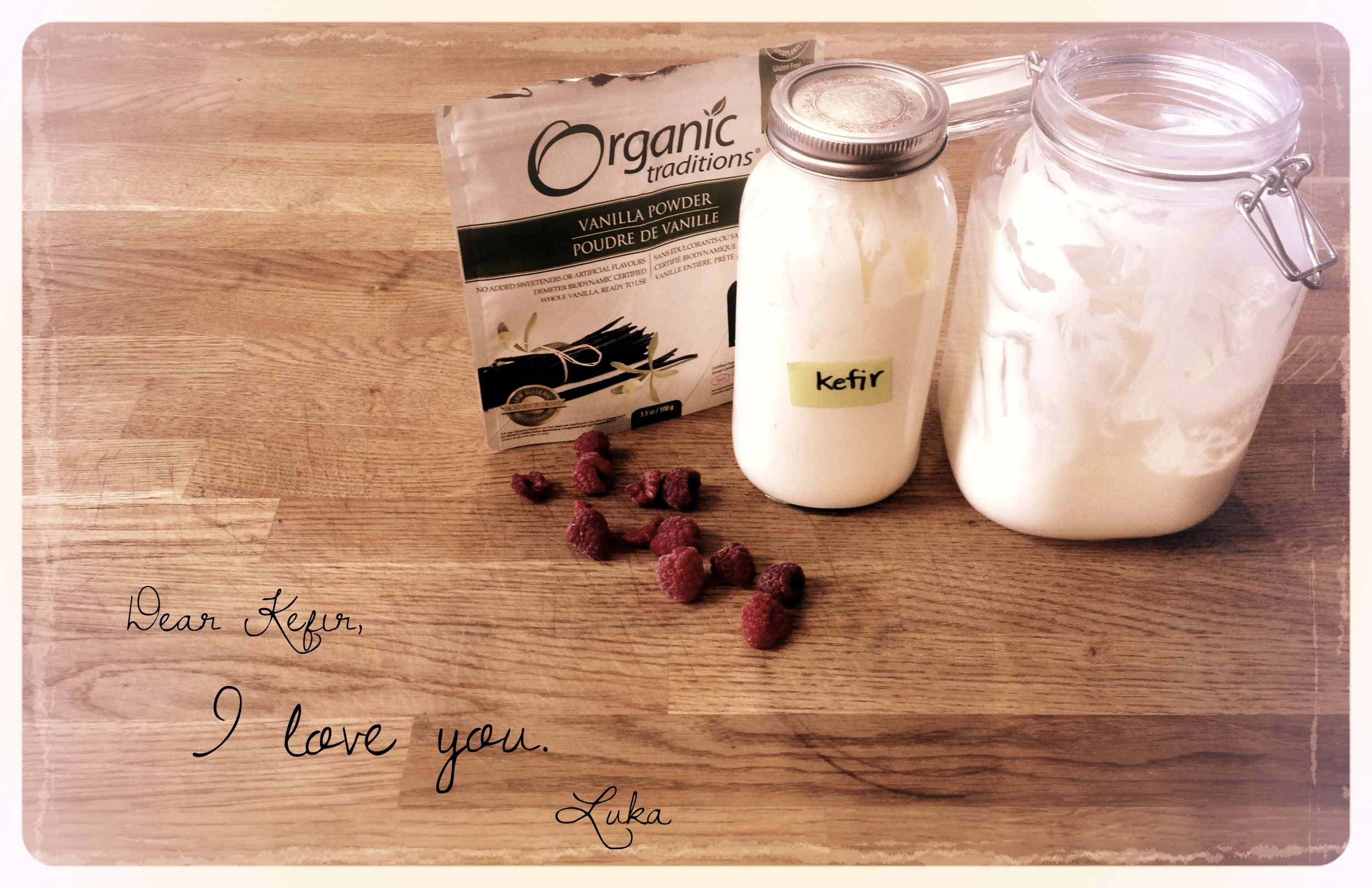
My love letter.
Whatever you do, may I recommend you do it soon. Once you try this stuff, there is no going back.
*To be clear, this is but one way to make Crème Fraîche. At home, I use milk kefir grains that are higher in probiotic count and diversity than those found in these culture starters (and doing it this way means no skim milk powder!), but they require a bit more hand holding and caring. This starter is a good place to get acquainted with the magic of Crème Fraîche. Let me know how you make out, and what kinds of flavour combos get you going. (Imagine this made into ice cream, and combined with a homemade probiotic soda to have homemade superprobiotic floats! The world will never be the same!)
**Curious as to why powdered skim milk or whey powder isn't the best thing for you? Read on. (And yes, this kefir powder has skim milk powder in it. In the interest of information.)
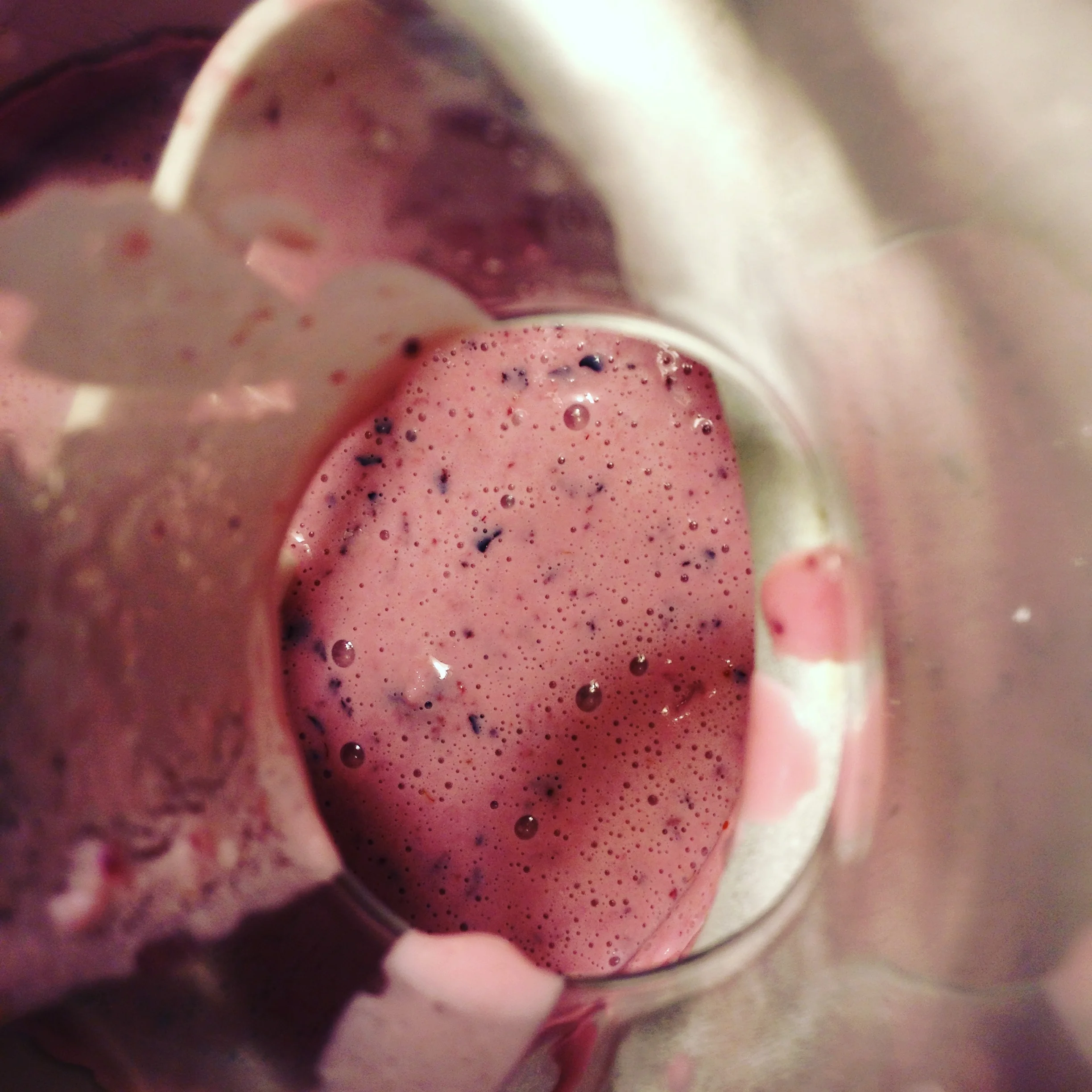
Kefir cultured 35% whipping cream with raspberries, blueberries, maple syrup. Churning into delicious ice cream.
A MONTH OF PUTTING UP THE HARVEST - A Compendium
Here, for you my harvest-loving friend, is a compendium of how I managed to stash the summer treats for winter eats. May you eat like a queen or king all fall and winter long, what with this bounty within arms reach here in Alberta. And continue on with your Putting Up the Harvest Efforts! The season has only just begun. Go deal hunting at your favourite local farmers market; pick up a few bags of locally grown produce while out at the grocery store; by supporting local and stashing for the winter months, you are contributing to the local economy, packing in the local bounty, vitamins and minerals, and supporting a smaller scale producer and inadvertently upping the nutritional ante of your meals, nutrients-wise. Bon appetit! And share this page with ones you think may need some harvesting-kick-in-the-pants. Now, GO PLAY WITH YOUR FOOD!
Here, for you my harvest-loving friend, is a compendium of how I managed to stash the summer treats for winter eats. May you eat like a queen or king all fall and winter long, what with this bounty within arms reach here in Alberta. And continue on with your Putting Up the Harvest Efforts! The season has only just begun. Go deal hunting at your favourite local farmers market; pick up a few bags of locally grown produce while out at the grocery store; by supporting local and stashing for the winter months, you are contributing to the local economy, packing in the local bounty, vitamins and minerals, and supporting a smaller scale producer and inadvertently upping the nutritional ante of your meals, nutrients-wise. Bon appetit! And share this page with ones you think may need some harvesting-kick-in-the-pants. Now, GO PLAY WITH YOUR FOOD!
- Luka
FREEZING:
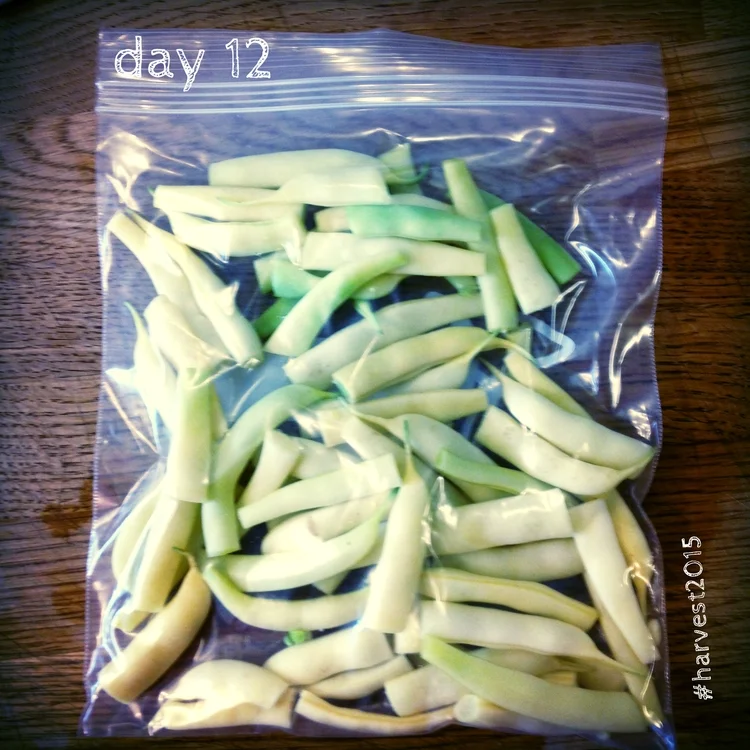


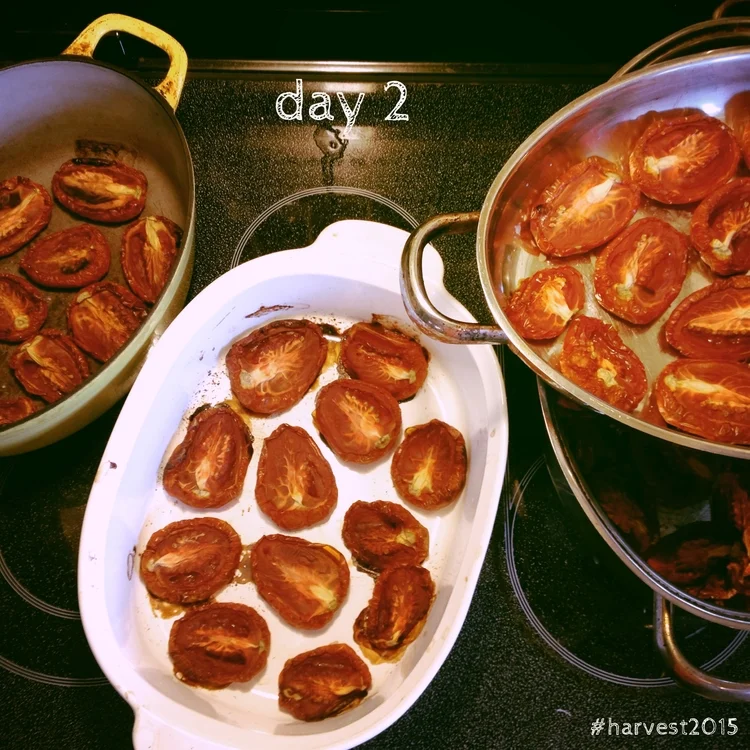
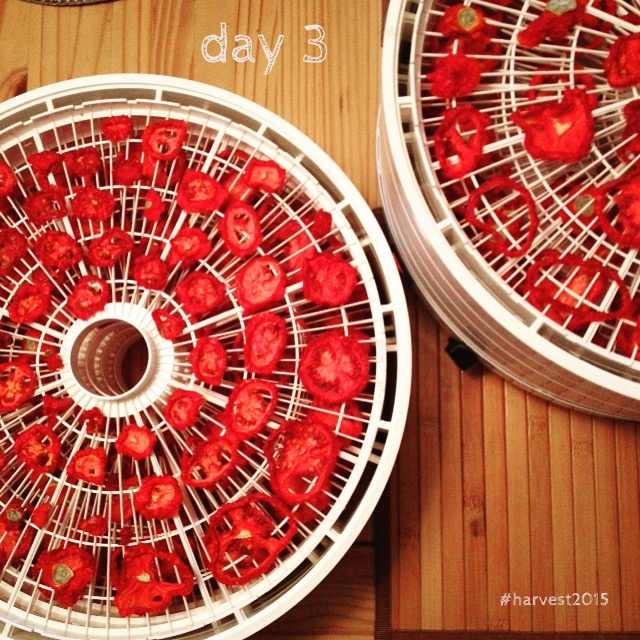
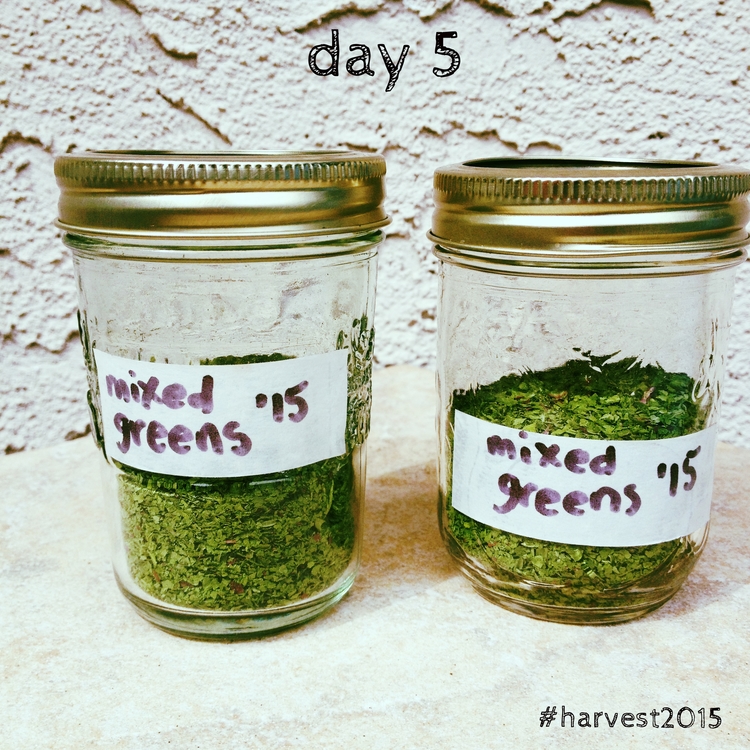
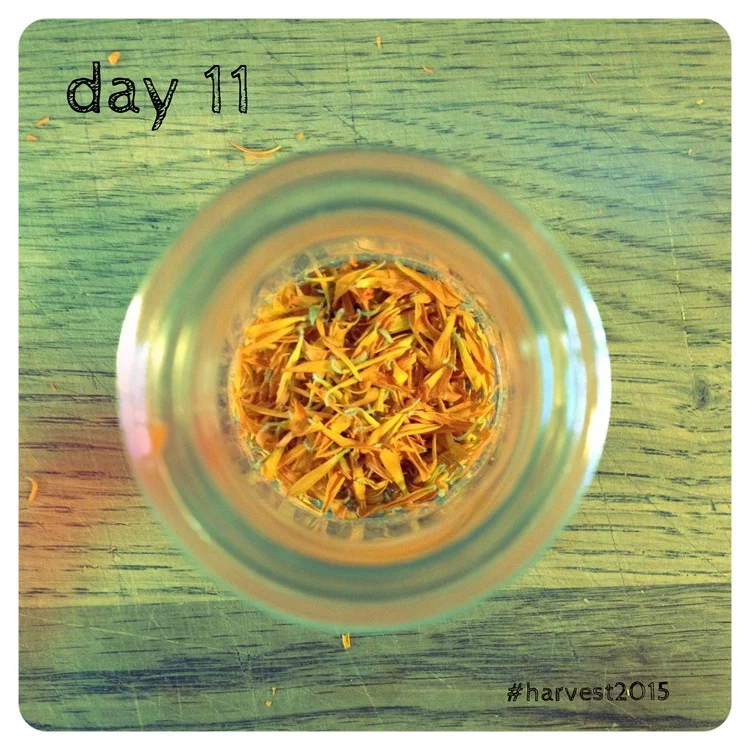
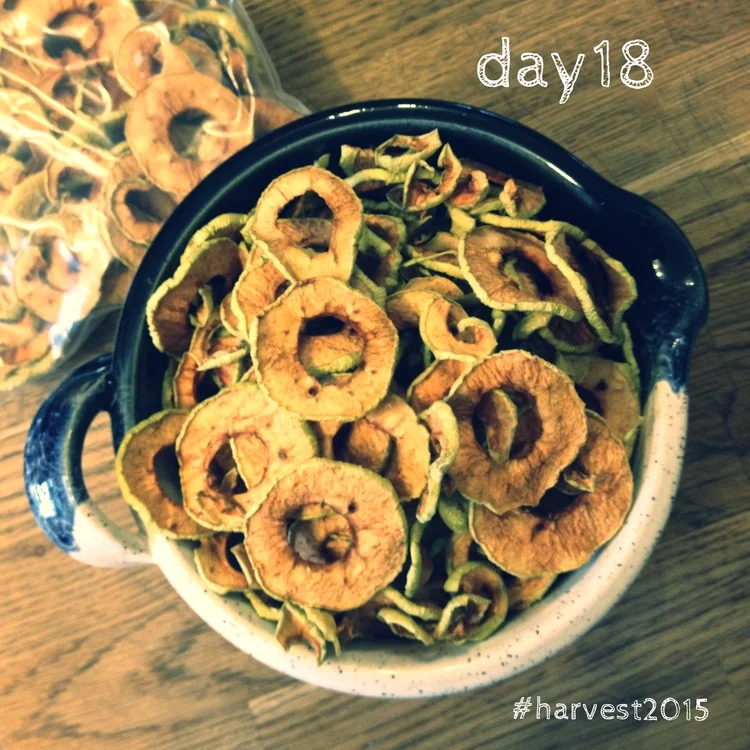
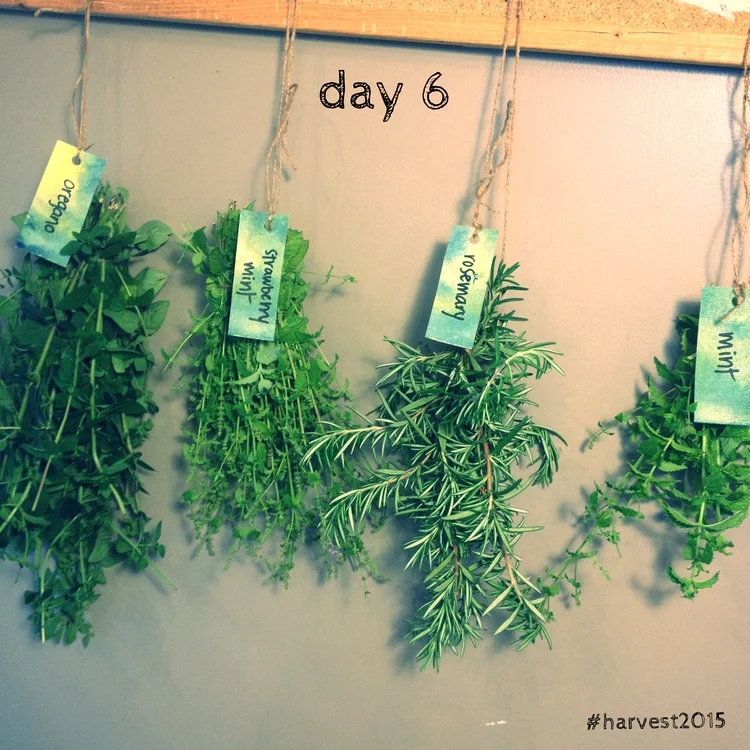

Day 7: Pesto (Arugula Basil Chipotle)
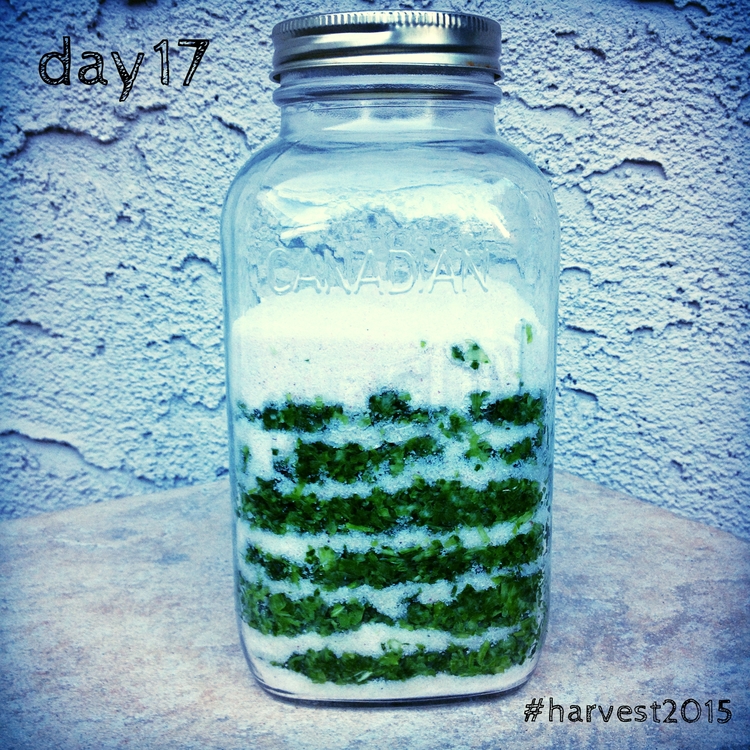
Day 17: Storing Herbs in Salt (Making Bouillon Salt)
EASY ONE-OFFS A BIT OFF THE BEATEN PATH:
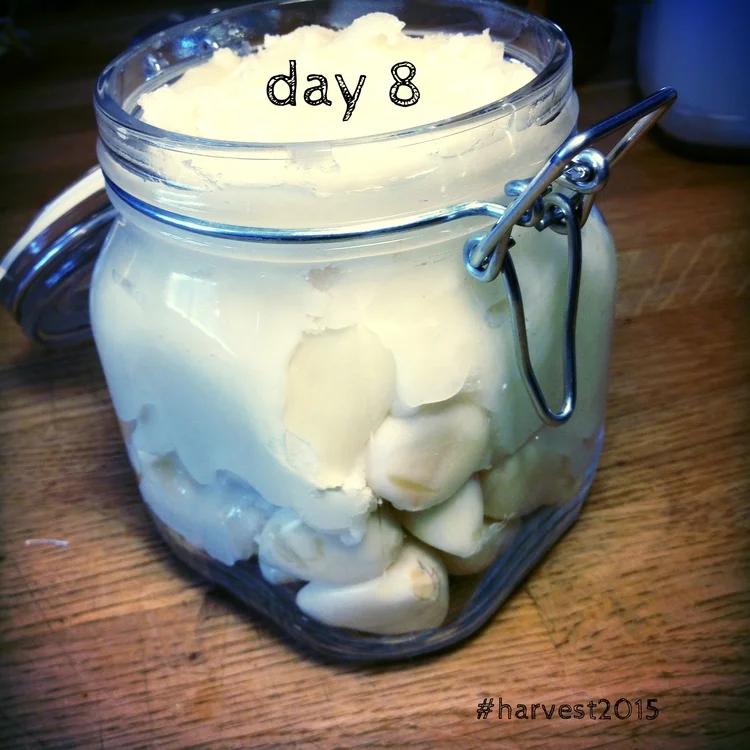
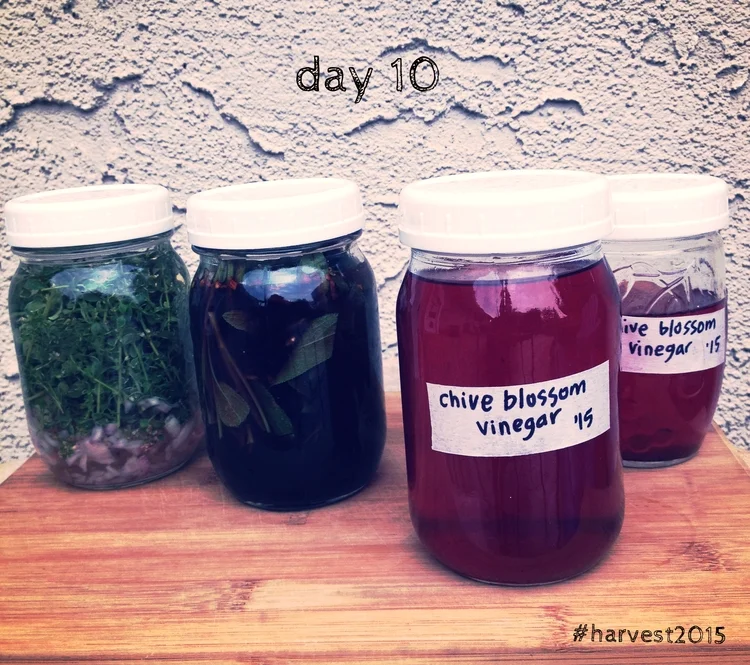
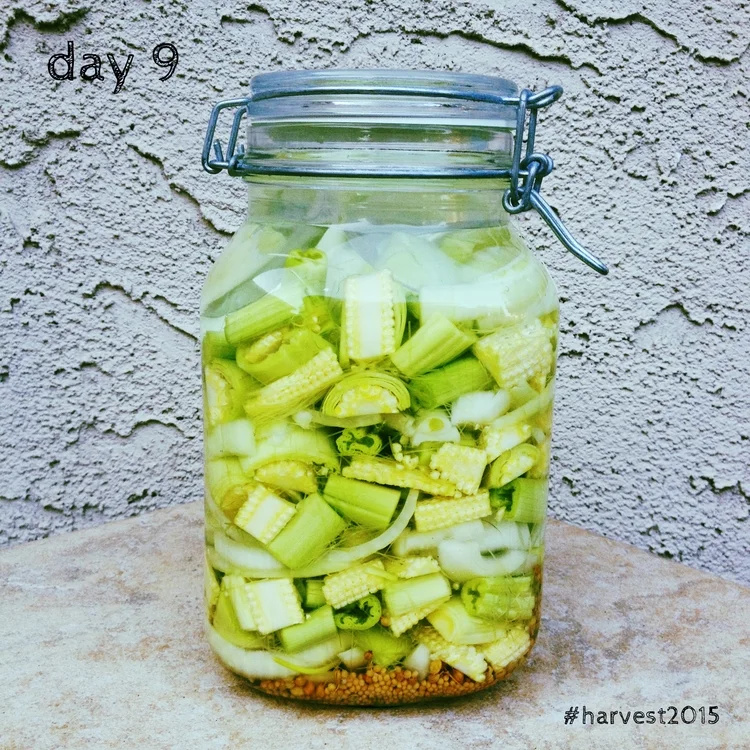
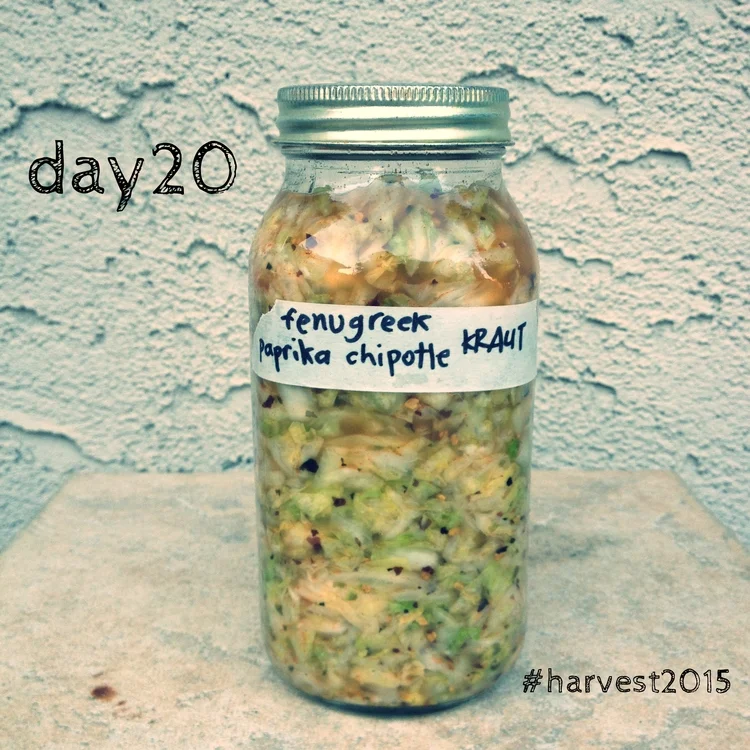
Day 9: Smoky Corn Pickle Ferment
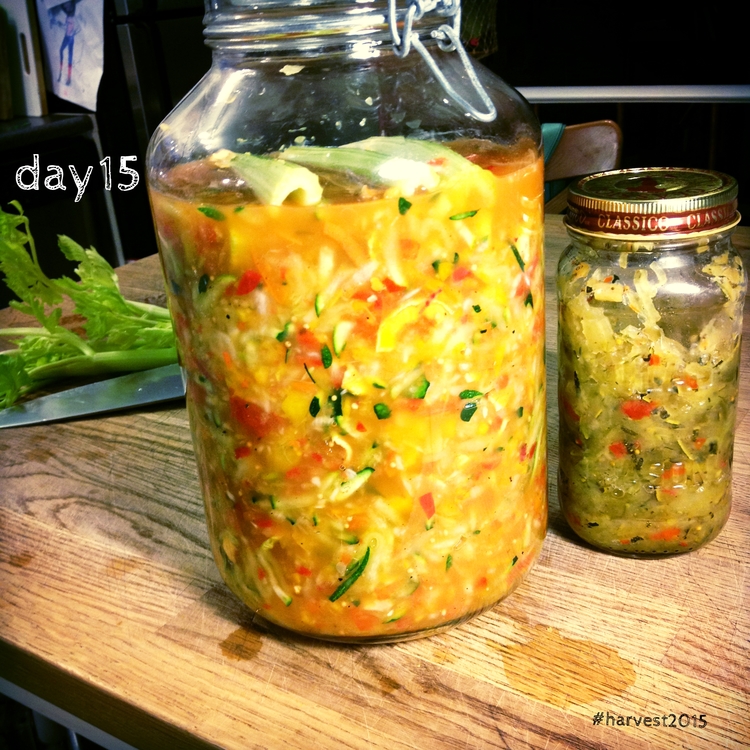
Day 15: Fermented Zucchini Relish
BIT MORE LABOUR INTENSIVE MEANS TO KEEP THE HARVEST:
A MONTH OF PUTTING UP THE HARVEST - Day 21
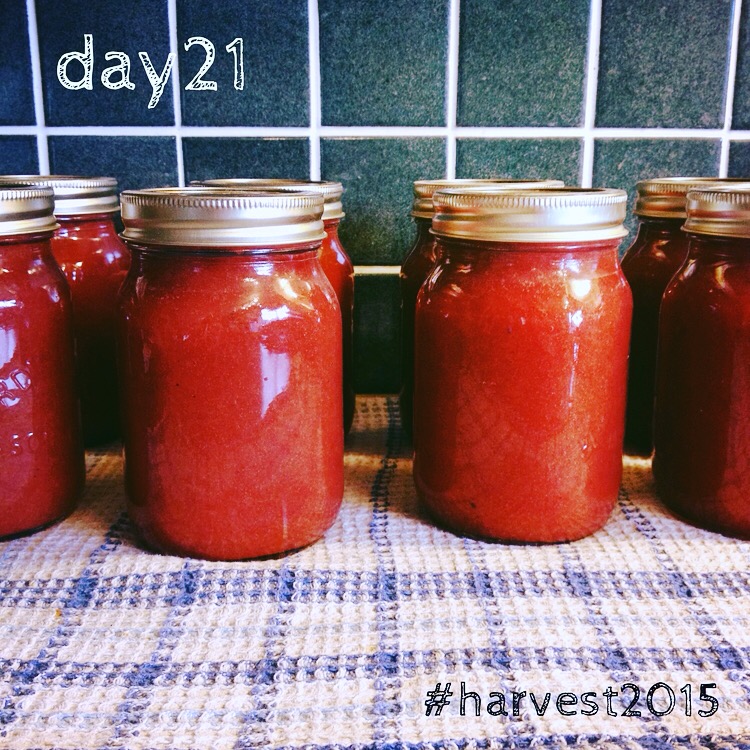
Today is the last instalment of putting up the harvest for 2015. I have enjoyed this challenge of coming up with new ways to keep the freshness going into the winter months, tried new things, revisited old favourites, and so I thought to end this stretch of food-prep that I would go back to one of the first things I ever did as a homesteader-wannabe: canning. I haven't talked about canning this month at all because truth be told, I don't do it much anymore. I find it is quite a bit of extra work, my stove top is not the best one rated for water bath canning; it isn't as forgiving an art as say, fermenting. But it is a practical way to be able to put up a big amount of one thing like zucchini into relish, or peaches into canned jewels, or tomatoes into salsa. And crab apples into crab apple butter.
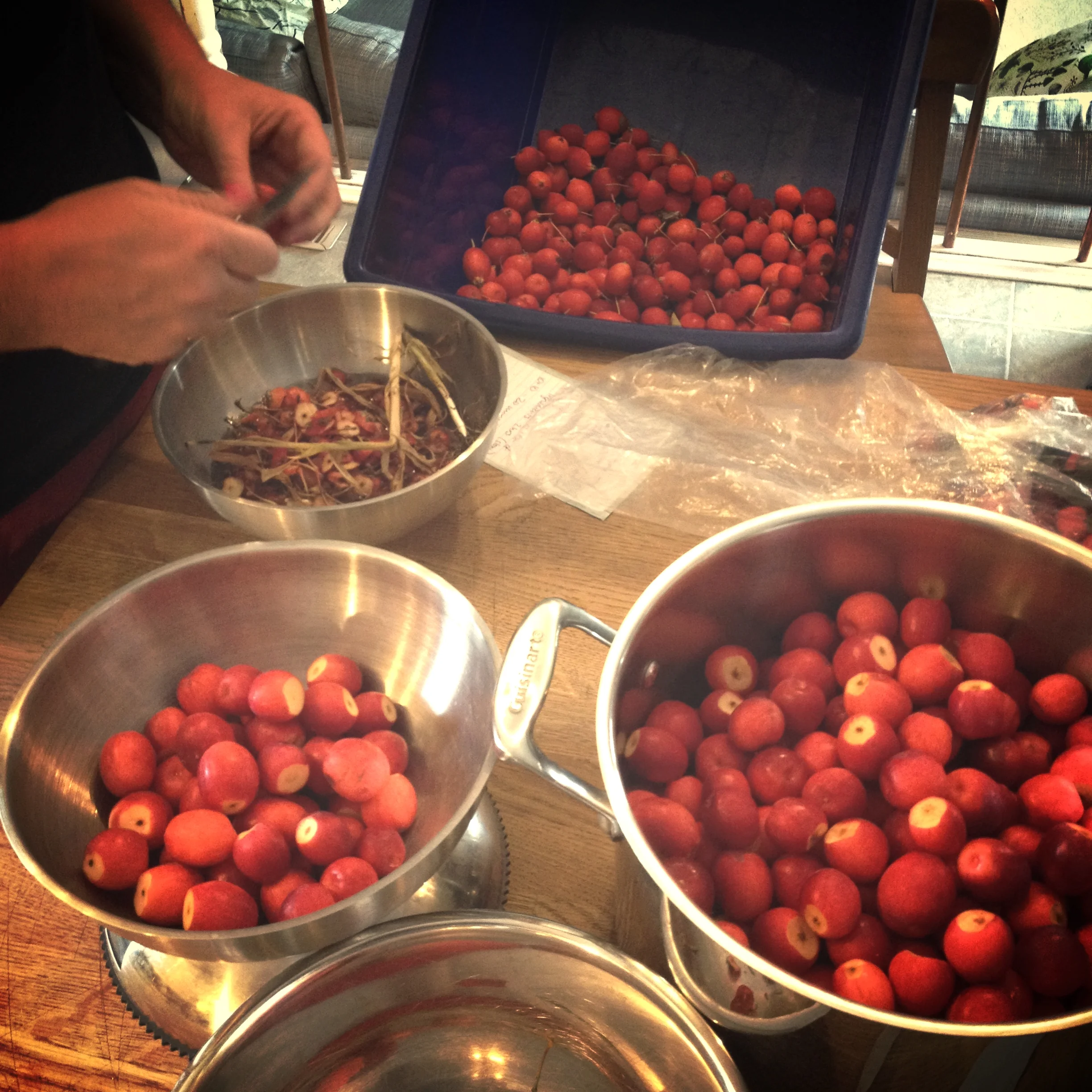
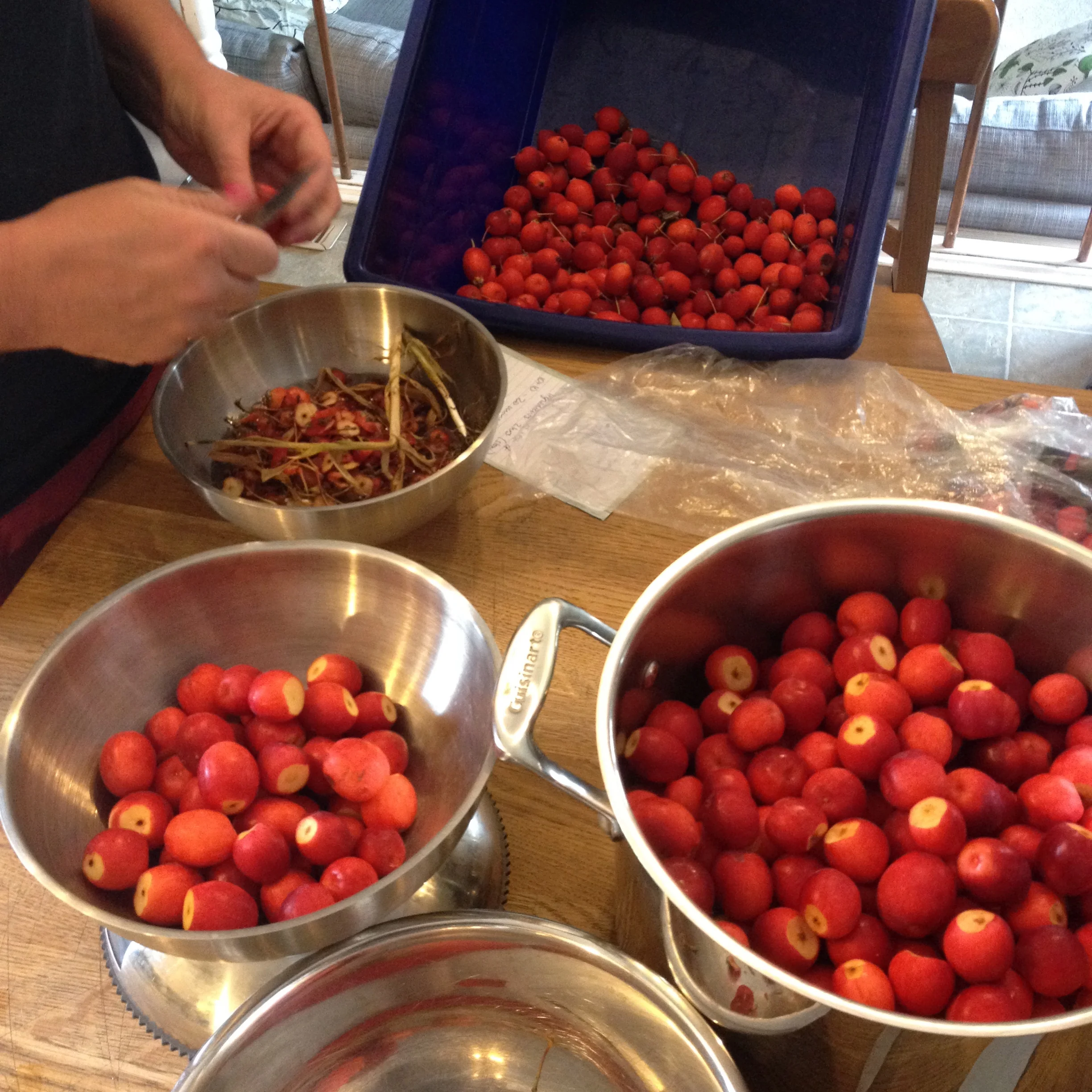
My sister and her crabapple loot. #harvest2015
Today is the last instalment of putting up the harvest for 2015. I have enjoyed this challenge of coming up with new ways to keep the freshness going into the winter months, tried new things, revisited old favourites, and so I thought to end this stretch of food-prep that I would go back to one of the first things I ever did as a homesteader-wannabe: canning. I haven't talked about canning this month at all because truth be told, I don't do it much anymore. I find it is quite a bit of extra work, my stove top is not the best one rated for water bath canning; it isn't as forgiving an art as say, fermenting. But it is a practical way to be able to put up a big amount of one thing like zucchini into relish, or peaches into canned jewels, or tomatoes into salsa. And crab apples into crab apple butter.
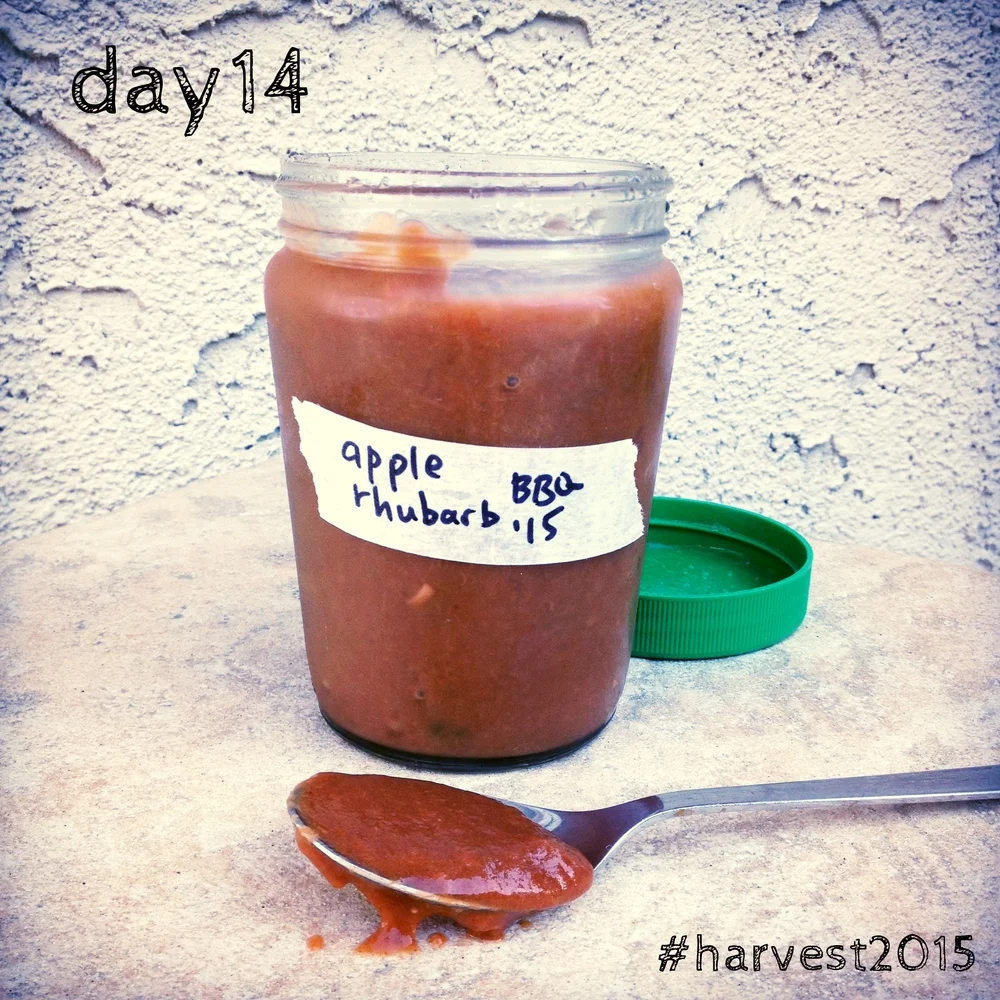
How this story begins: my sister is in town, visiting from her home base in northern BC for a little bit. She brought with her that big blue bin in the background about 1/3 full of crabapples from her tree in her yard, evidently not putting a big dent at all in the load on the tree. A neighbour advised her that she may want to harvest the apples from the tree before the local black bear comes to eat them all, as it happens to be his favourite tree in the 'hood. See, he eats and climbs and in the process, breaks branches. (My sister has been in this house for the last year or so. This was news to her.) So pick, she did. And she brought them, along with a big bundle of rhubarb with the hopes of getting to work on keeping up the goods. So we made a batch of the apple/rhubarb BBQ sauce from earlier this month, and her request was to can some crabapple butter with the remaining amount. So that's what we did!
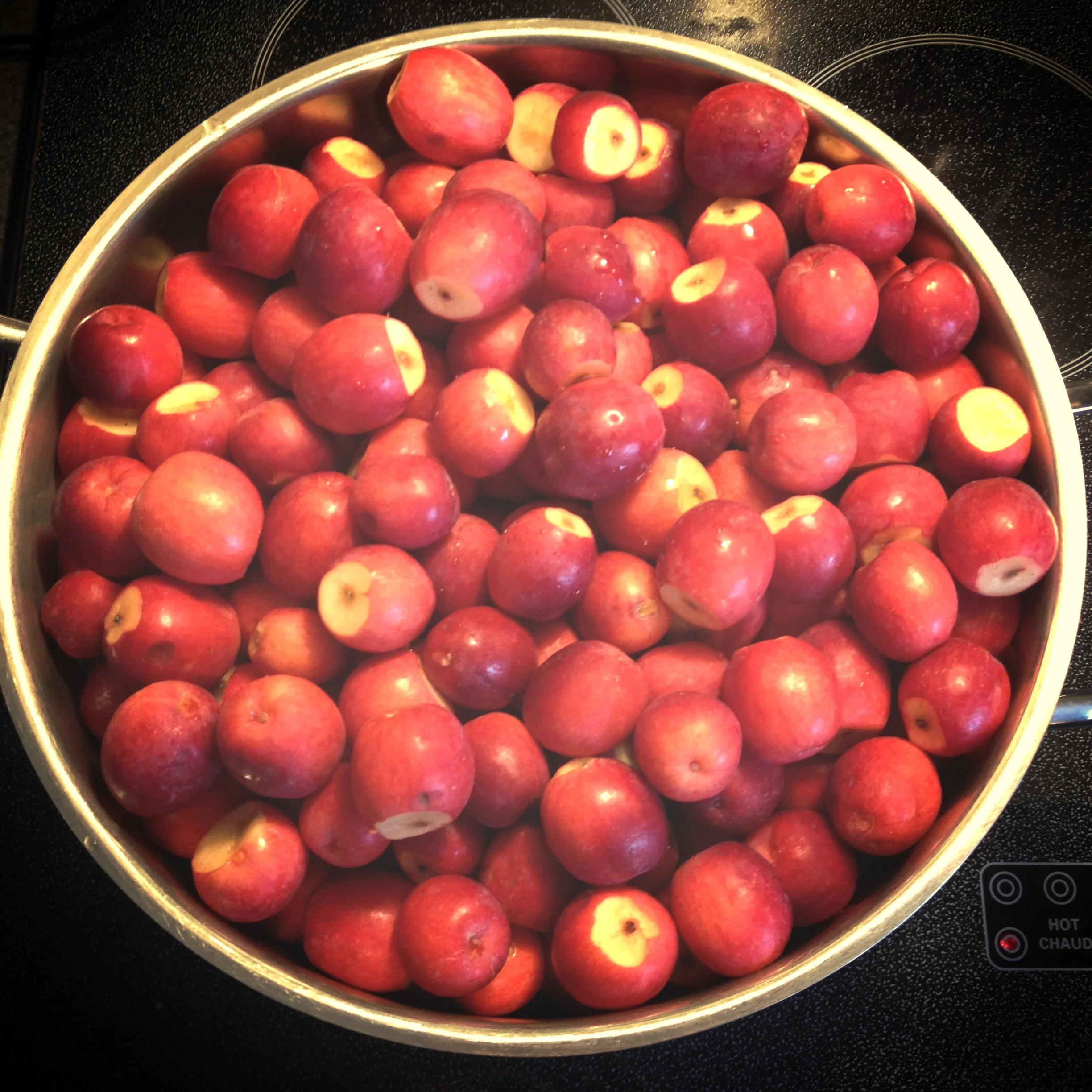
Crabapples ready to become buttery goodness. #harvest2015
We used the recipe up at Mennonite Girls Can Cook. As it isn't an original recipe, I will send you to their site in order to get the ingredients and measurements if you feel so inclined. But we prepped the apples and cooked them down as they indicate in the recipe, and my sister passed the cooked mush through a food mill in order to get rid of all of the skin and seeds. Those little things are MAGIC I tell you when it comes to making this job a little easier.
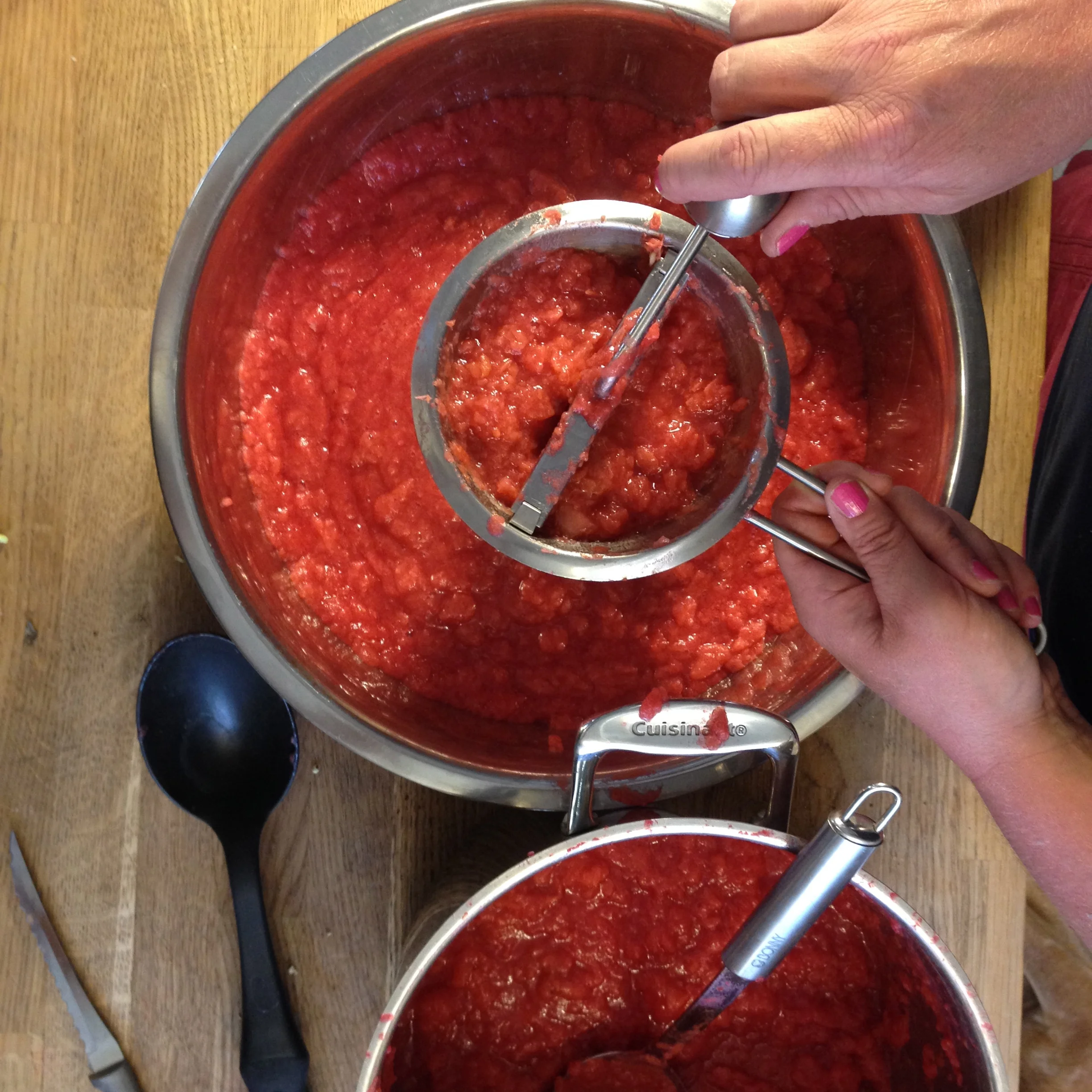
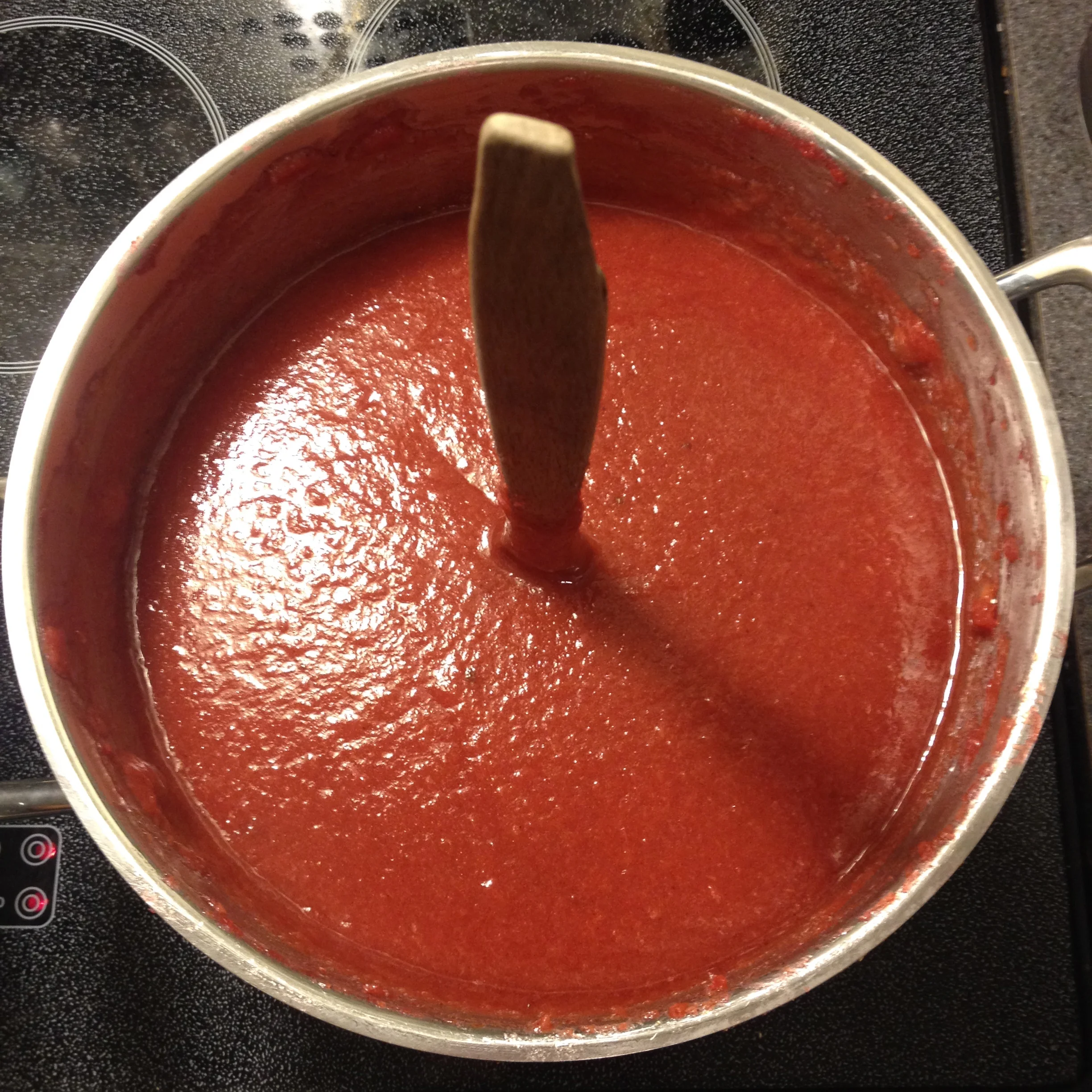
The instructions say to cook the apples initially, then we passed through the food mill, returned the mush to the pot along with the sugar and spices (we swapped out the white sugar for cane sugar and cut a cup out) and let it simmer for 2 hours. Adding the sugar, while I'm not a big fan of sugar, is the method by which you are dehydrating any of the bacteria that could form in the making and canning of this food, essentially rendering it food-safe (not sure about botulism and sugar, but the water bath component would take care of anything like that). Swapping it to a cane sugar means less processing of the sugar, and more minerals and nutrients are left remaining in the sugar. But sugar is sugar, so we consider this kind of thing a treat at our house.
But look how it really cooked down, and how thick it got! The spoon was standing straight up and wouldn't budge! That's how thick you want it to be, that's the consistency of a fruit butter you are looking for.
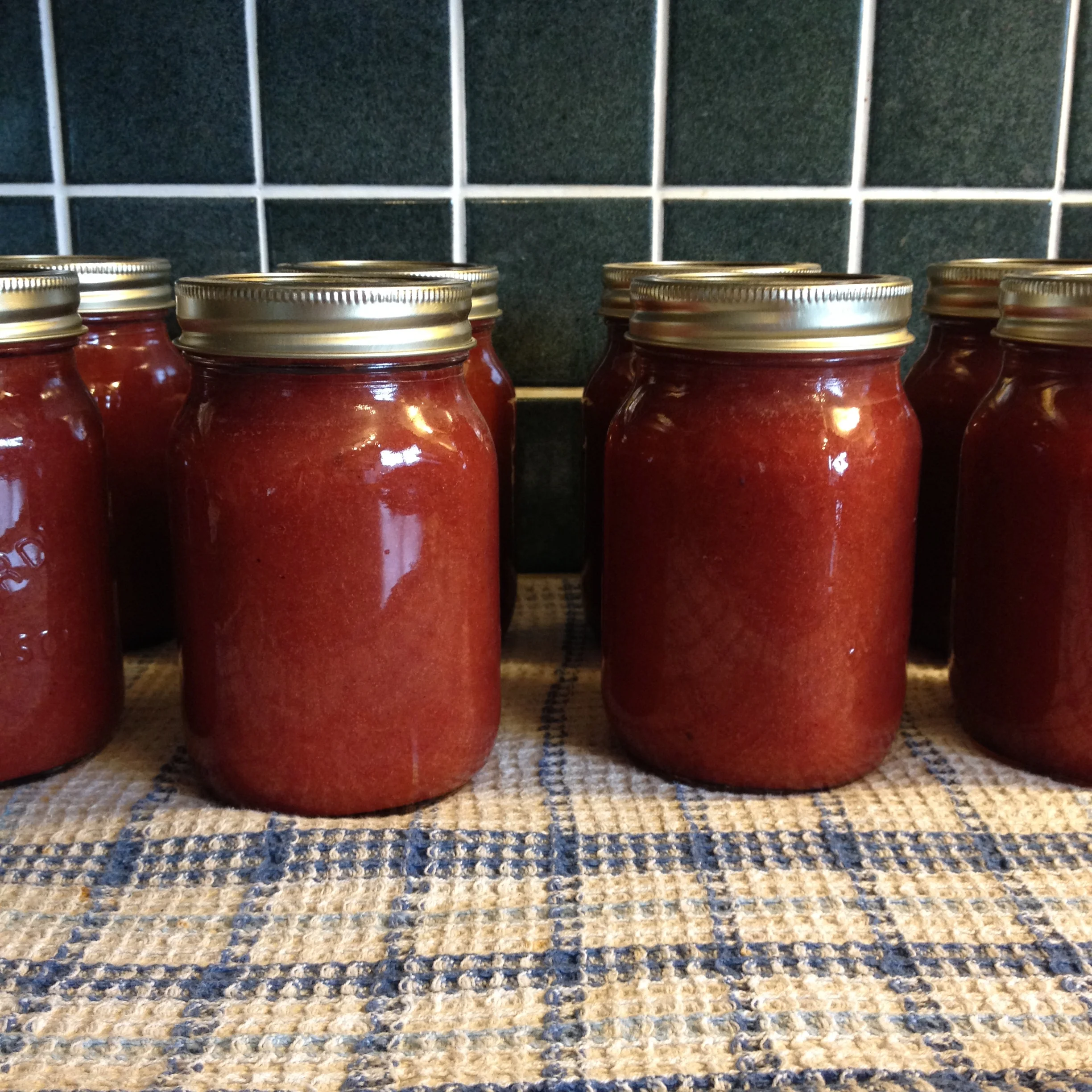
After that two hour simmer, this hot pot of sweet goodness was ready for canning. So canning we did. We prepped our water bath, sterilized the jars, and my sister got busy filling those jars up.

Filling jars with crabapple butter #harvest2015
Truly, this kind of task is quite laborious, and time-consuming. But the effort is well worth it. This is the kind of task that for me, signalled that fall was upon us when I was wee; it also meant my grandmother was coming over to help my mom put up her pickles and relishes, peaches and apples for the winter months. It is a sensory experience that lends itself to meditation, but also to doubling up with someone for the sheer time and effort commitment, making it a joint effort and getting in some good visiting time with a good friend or sister. One of my favourite things about this time of year, to be sure.
Once the jars were filled and lidded, my sister popped them back in the water bath, we cranked the heat again, and counted 20 minutes from the rolling boil. A fruit butter recipe is typically a 10 minute boil in the water bath, but seeing that here in Calgary we are at such high elevations, we had to add an extra 10 minutes to ensure food safety. Once the timer was up, we took the lid off, waited 10 minutes, and lifted the rack to the top of the canner and let the whole lot cool until morning.
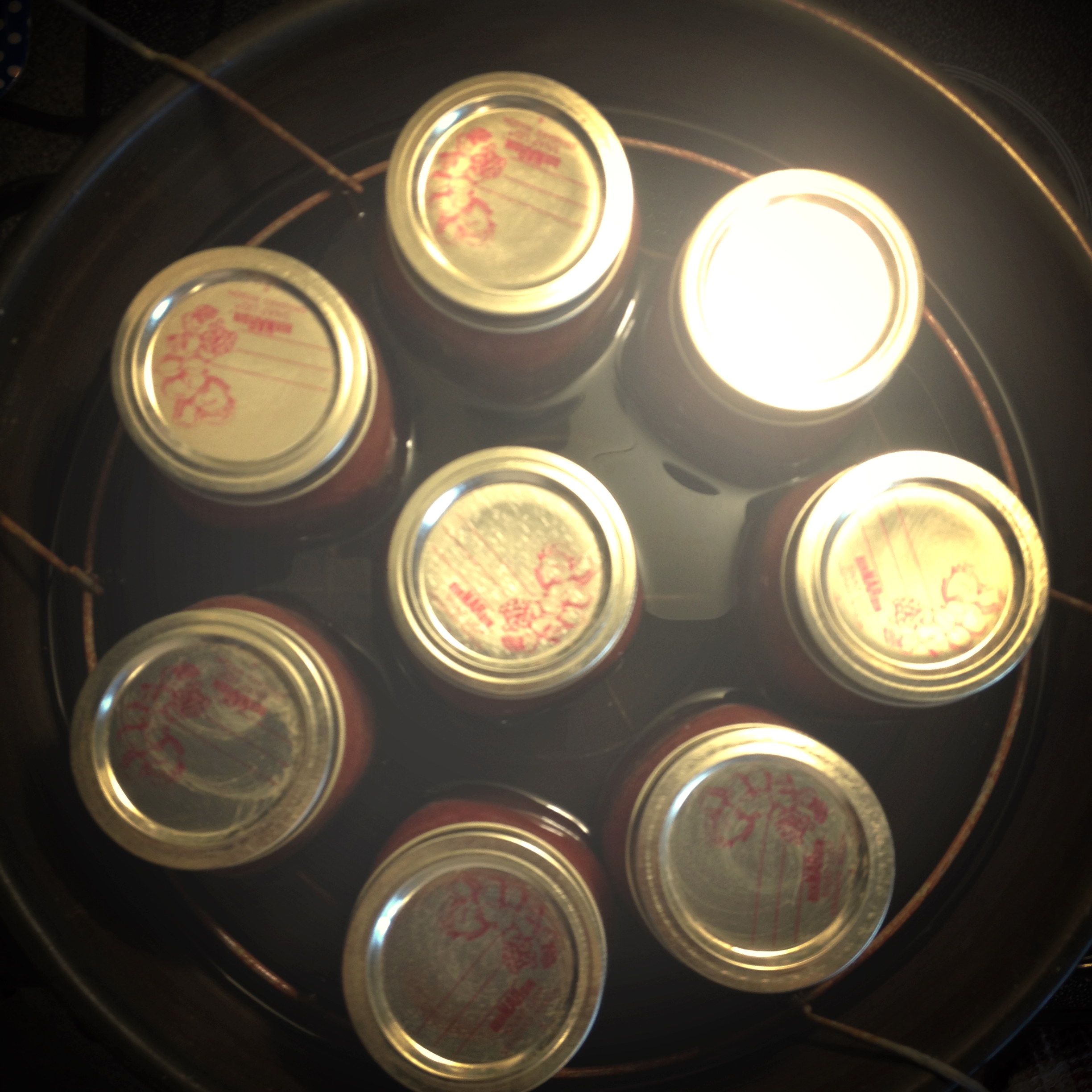
Oh yes, when you are planning to do a canning bee, ensure plenty of time and don't start this recipe at 4pm, because by the time all was said and done, we were finally able to go to bed at 2am. Mind you, there was a big dinner and a big family walk and dishes in the middle of that, but know that it is indeed a time monger of a task. But so so so worth it. Thanks to my little sister for supplying the goods, and the inspiration and for joining me in this canning good times!
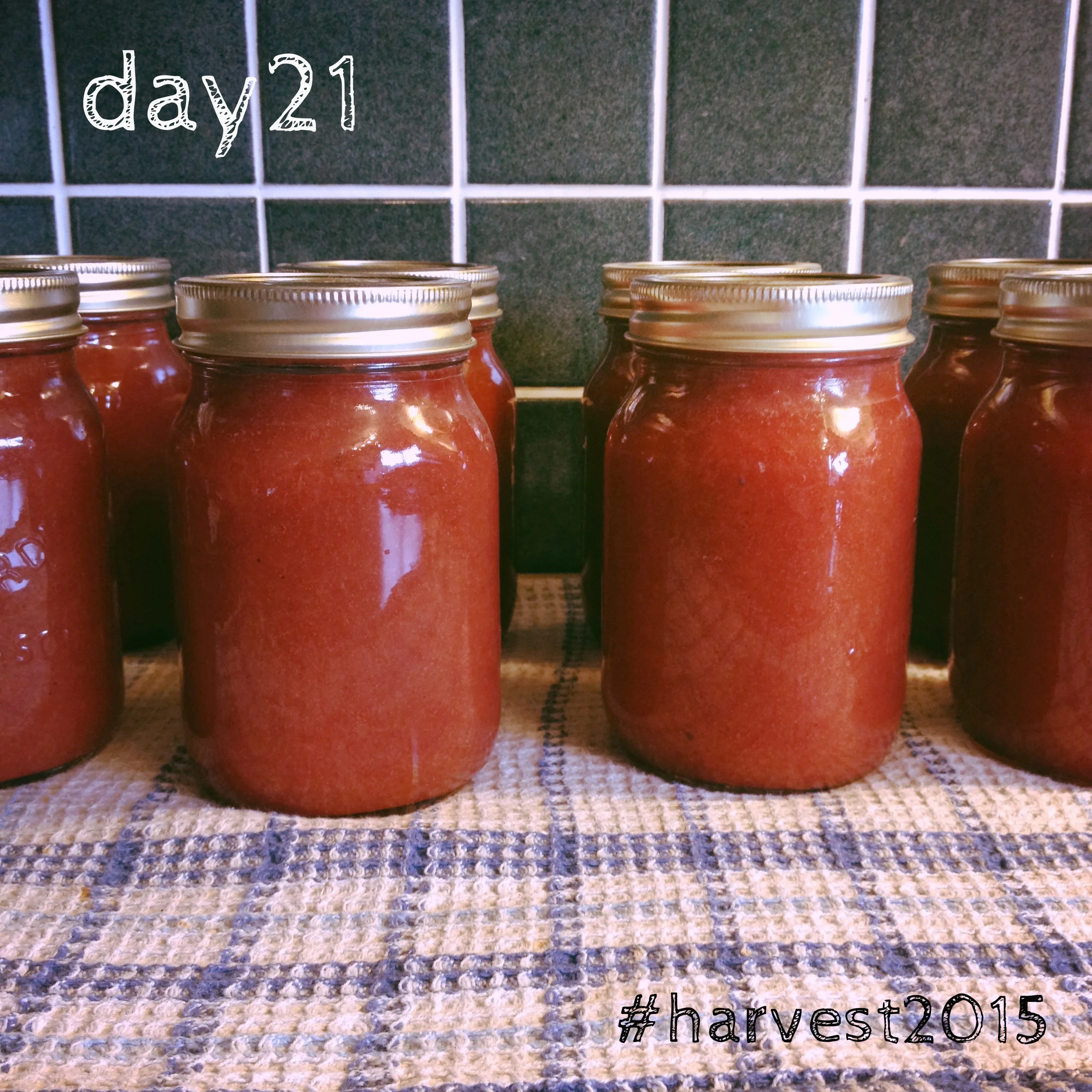
My sister's crabapple butter, summer in a jar. #harvest2015
Thanks to YOU for checking out this month of putting up the harvest, I hope you have tried some new things and been inspired to pick up some local goodies to keep for the winter months. I have been meaning to mention that my most favourite way to put up the harvest is to EAT GOOD FOOD, LOCAL FOOD, RIGHT NOW. Your body and the energy stores you are building are probably the BEST way to keep up the harvest my friend.
Now go play with your food. Please and thank you.
A MONTH OF PUTTING UP THE HARVEST - Day 4
We are taking a regularly scheduled break from tomatoes. Fret not, we will return to tomatoes, but goodness knows there is a lot more out there that could be 'put up' from your favourite road side stand or farmers' market. And this one is a bit more time-sensitive (as will be tomorrow's). These things, they're all contingent on having that extra hour window of time where you can do the work that needs to happen.
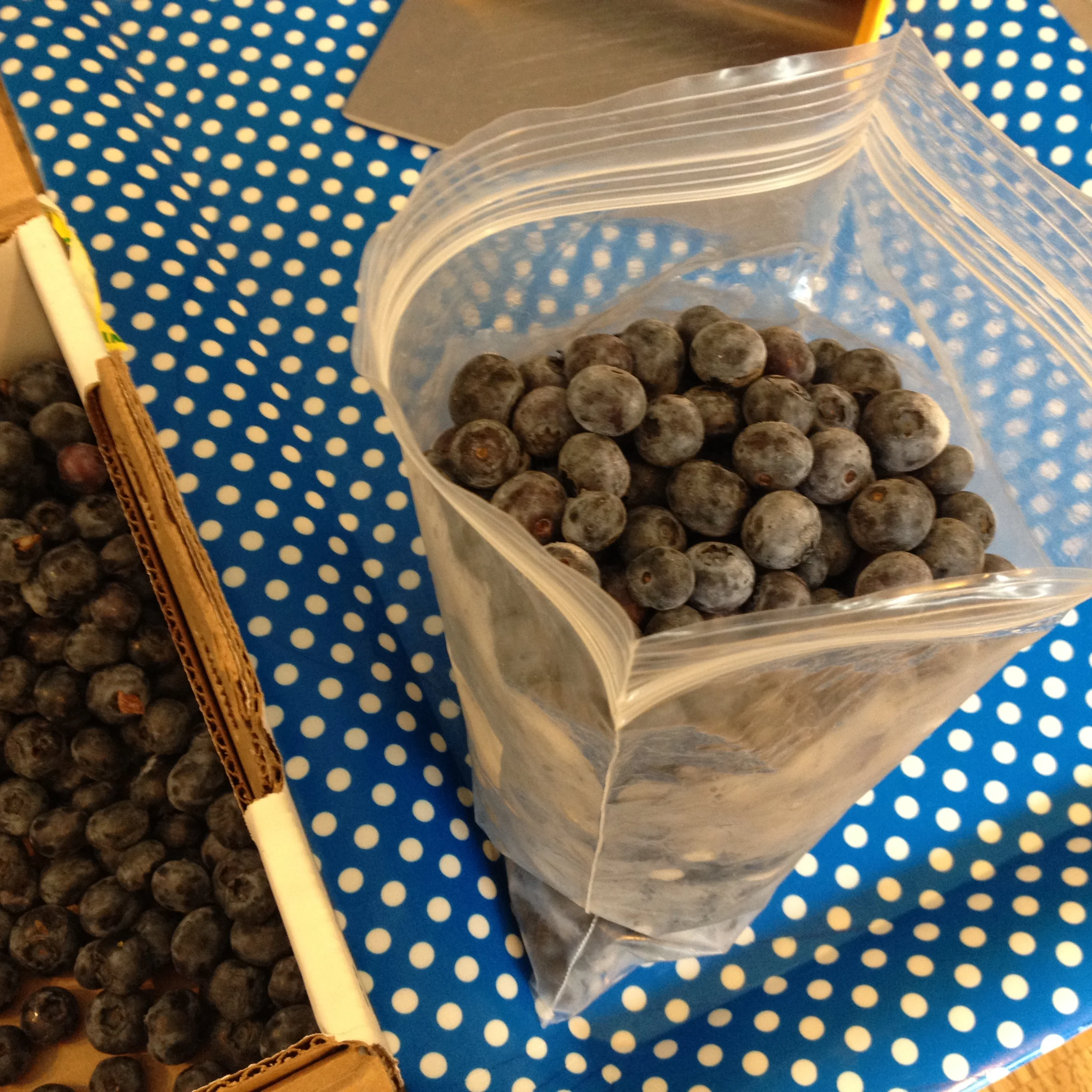
We are taking a regularly scheduled break from tomatoes. Fret not, we will return to tomatoes, but goodness knows there is a lot more out there that could be 'put up' from your favourite road side stand or farmers' market. And this one is a bit more time-sensitive (as will be tomorrow's). These things, they're all contingent on having that extra hour window of time where you can do the work that needs to happen.
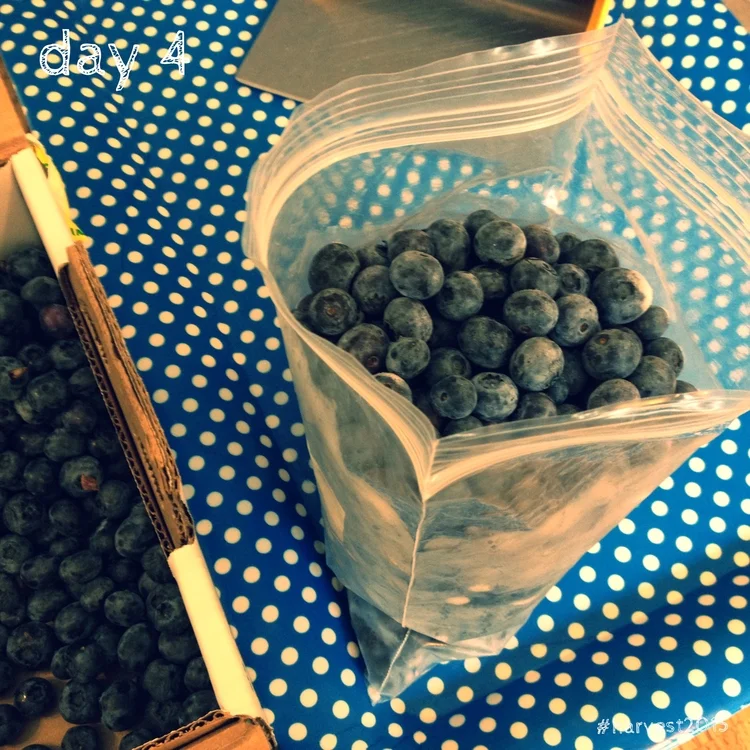
Well today's instalment on how-to-prepare-for-armageddon I MEAN how-to-prepare-for-winter takes all of FIVE MINUTES. Five minutes today, and five minutes, well maybe 10 down the road, when you have time. Would I lie to you? Freezing berries. The one thing you'll do this summer that will give you the biggest pay-back, and the most delicious bang for your time/buck.
THE HOW-TO: Buy copious amounts of berries. You won't be sorry. Berries are one of the most-sprayed produce items out there, so if you can spring for it, go organic. Buy all kinds. Or go foraging for saskatoons in the coulee by your house. (Call 311 to find out if they spray for pesticides in that area first!) Or blueberry and raspberry picking by your cottage if you are so lucky to live somewhere where these jewels grow in abundance. Just make sure to bring your bear spray with you.
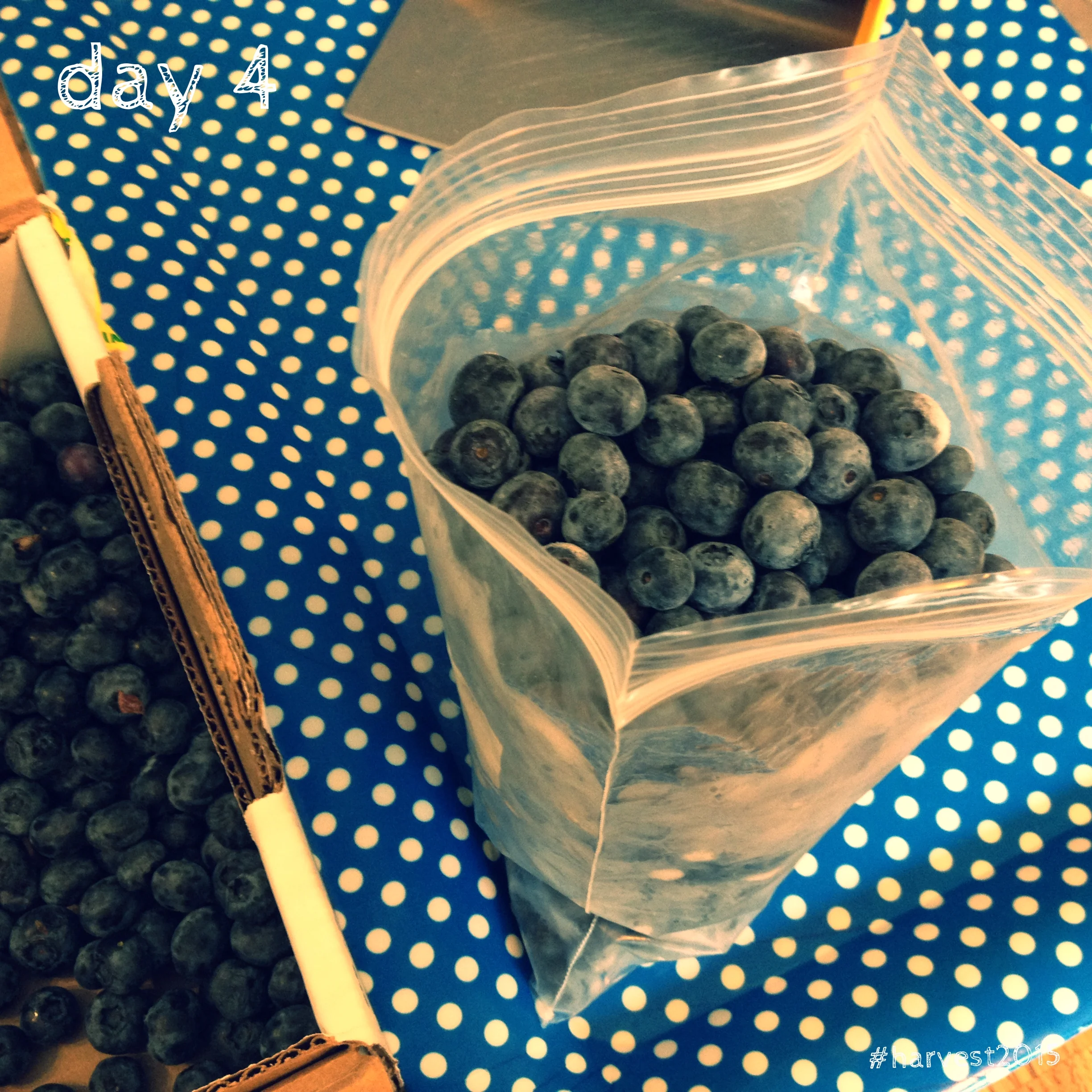
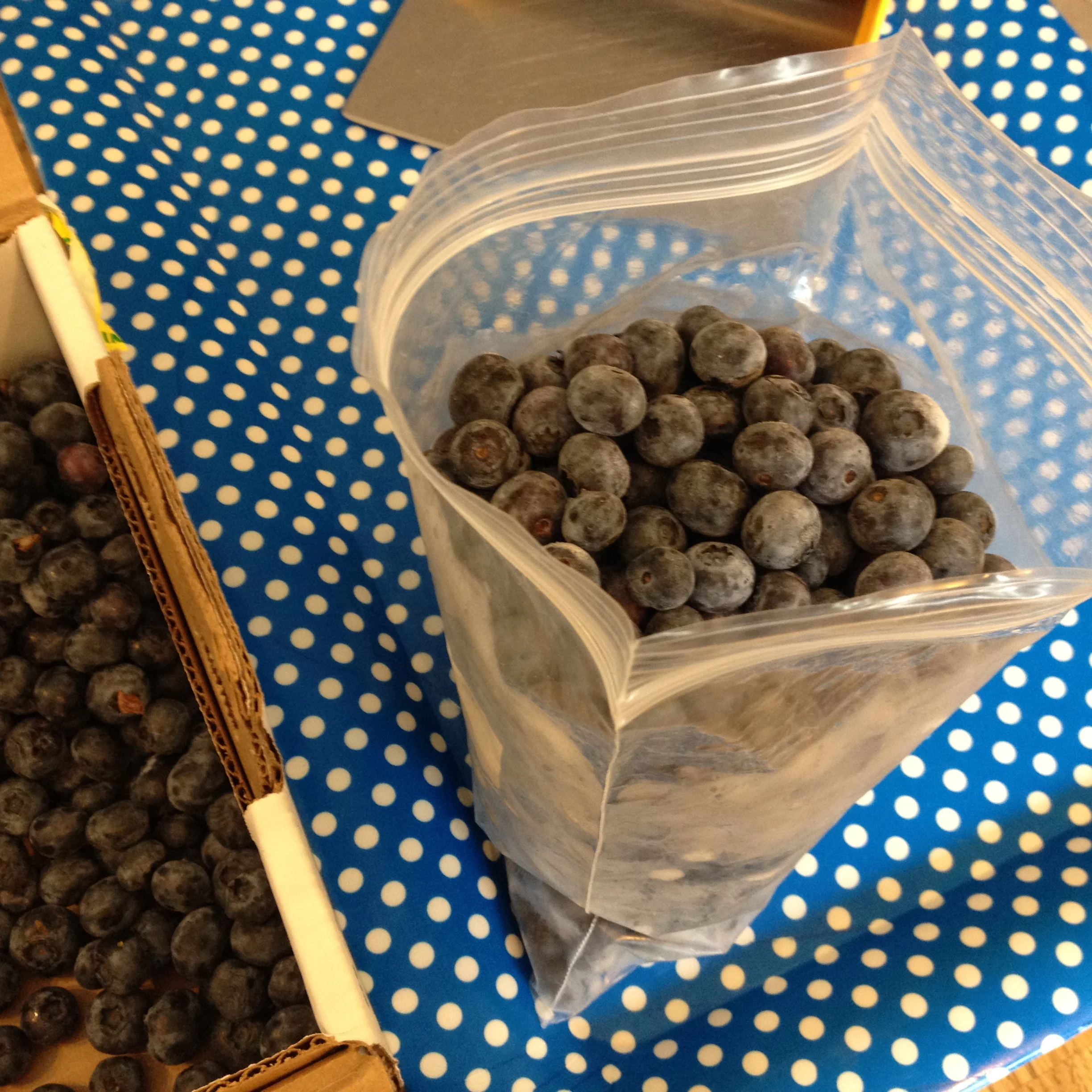
Quick and easy: frozen berries, best way to preserve summer flavours and nutrients. #harvest2015
I learned this from my Mom. I associate all things berries with my Maman. She is a berry-picking fiend and makes I think perhaps the most perfect pies and jams in all of the land. (Pie making is a surefire way to keep the harvest. But it's a bit harder than what we're attempting today.) To this day, the smell of small-batch raspberry jam means JE SUIS AU CHALET ET MAMAN EST APRES FAIRE DE LA COMPOTE. Which means all is right with the world, yes? How Lorraine does it (and consequently, I do it): she fills the bottom of a tray or cookie sheet with one layer of berries, and goes through picking it to remove the bugs, leaves, twigs, stemmy bits and dirt. I think she washes them, but if they're clean enough (and organic or foraged), I won't as I usually pick them or get them when they're ripe and I fear smooshing them if I wash them. So I leave them as-is. The tray is one-layer thick and now picked cleaned; now at this point my mom makes jam. But for me, I pop it in the freezer as-is, of course on a flat surface. I leave it in the freezer for how many days it takes to really freeze them through (at least 2 days), but not more than a week as you'll start to lose some of the moisture content. When I have that extra 10 minutes, I take the tray out and start filling those medium sized freezer bags with the berries, and you can label them if you'd like so you know which summer they were picked in. I tuck the bags in the freezer, and voila! Insta-berries for smoothies, pies, crisps or cobblers, tarts, muffins, sauces, pancakes, ice cream.
Oh yes, I meant to add that if you like, you can pre-measure those berries out and put them in bags labelled with the amount you've put in, if you have a go-to recipe that calls for 2 cups, say.
Do I need to say it? GO PLAY WITH YOUR FOOD.
Foods That Fuel
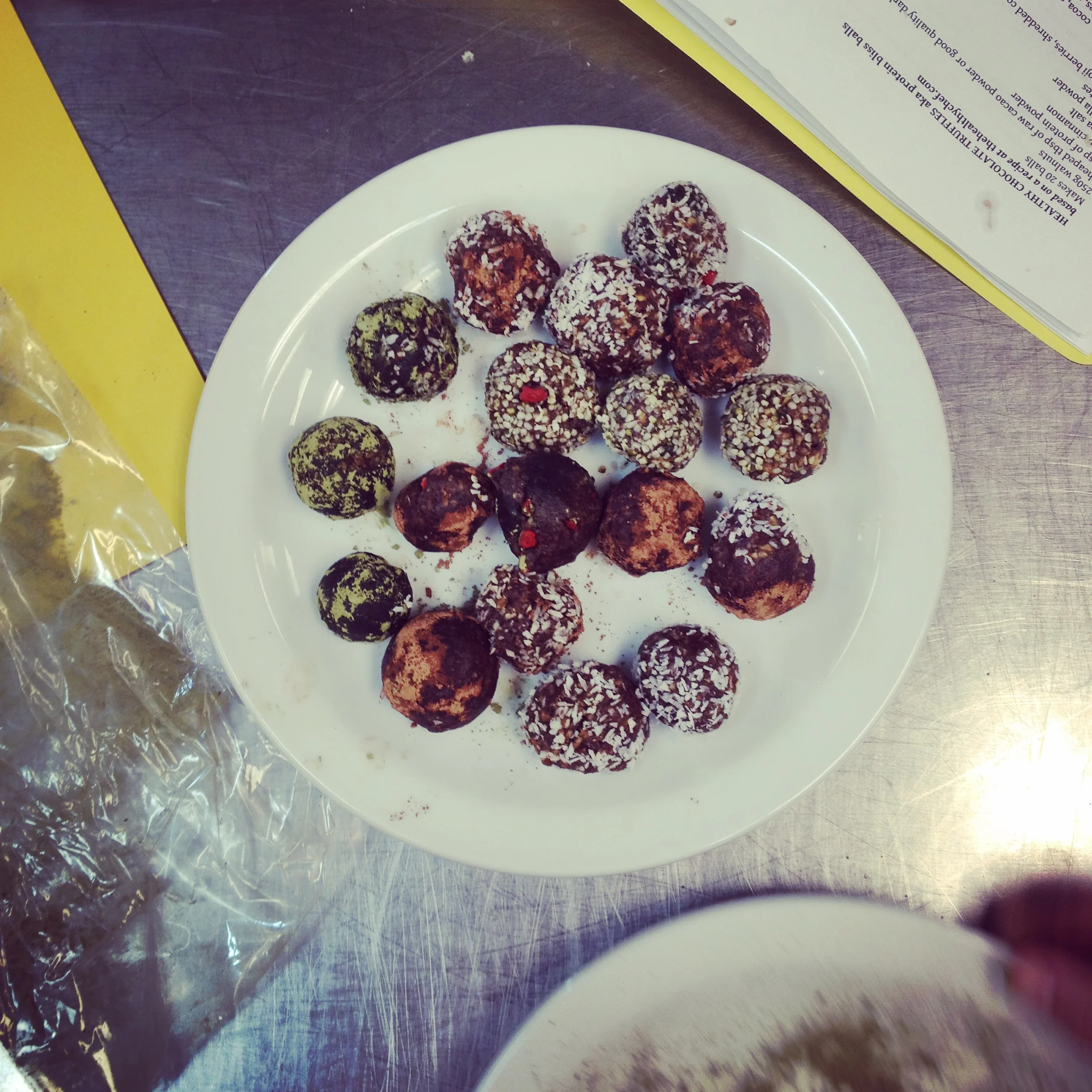
I have been so very fortunate and blessed to be asked to lead the Friday afternoon cooking elective for the Junior High students at the Calgary Waldorf school for this spring semester. We have had such good times in the kitchen, bandying about ideas of foods they want to learn to cook, practicing our flipping skills (MAD! skills) with eggs done a million ways. And whilst whipping up salad dressings and tinkering with seasonings and learning to make vegetables sing, I asked the group if there was something they were interested in learning when it came to cooking. I threw out a few ideas: specific ingredients? particular cuisines? foods for glowing skin? And then the subject of macronutrients came up: carbohydrates, fats and protein. And I gave a brief overview of how these nutrients are integral to our overall health. BRIEF synopsis.
Turns out these sparkly kids are quite involved in sports and games and overall physical health. And they are interested in knowing how to best fuel their bodies through their various activities! And so we decided that in session 3, we would delve right into FOODS THAT FUEL. And that we did, this past Friday afternoon!
I have been posting little leaks on the Facebook page about some of our projects over the last few weeks. This past Friday was my favourite so far. We made electrolyte drinks, smoothies, power balls (or bliss balls we called them) and protein pancakes. These last ones really pack a punch! They come from a recipe inspired by the lovely Monica Corrado at Simply Being Well, from a GAPS cooking class I attended in Colorado last fall. These puppies are great when you make a big batch and store them in the freezer. Simply pop one in the toaster or the oven to warm them up when you need a protein punch, or the perfect breakfast start to the day! Nutrient-dense, this protein-full snack will help rebuild and repair those muscle tissues post-workout, especially after intense exercise. Bonus, they can fit with most dietary restrictions! They are grain-free, GAPS-friendly, Paleo-friendly, protein rich, and full of antioxidants that will help with lowering inflammation and help combat free radical damage.
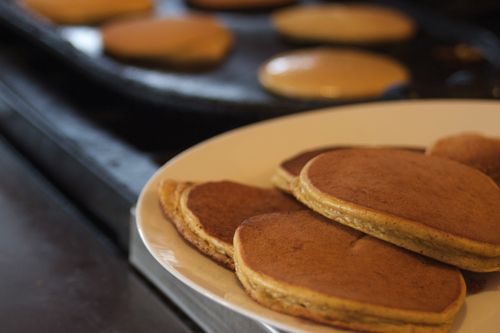
GRAIN FREE SQUASH PANCAKES inspired by Monica Corrado at simplybeingwell.com
1 cup of organic nut butter of your choice (we used peanut butter - this is GAPS friendly)
5 eggs
1 cup of cooked squash (preferably organic; we used sweet potatoes due to an allergy to pumpkin in the class. You could use butternut squash, pumpkin, kabocha squash, mashed carrots, really any delicious mashed root veg will do!)
Ghee
--> Puree your squash with a hand blender if it isn't already. Hand mix in your eggs and nut butter. Fry your pancakes in ghee in a hot pan on the stove. Devour with loads of butter and maple syrup, or a dollop of yogurt or creme fraiche, along with fresh berries. Store any leftovers in the fridge or the freezer, and pop in the toaster to warm them up!
I'll be dropping links to the recipes that inspired those we whipped up in the kitchen over the course of this next week on my Facebook page. All while I figure out what is on the menu for session numero quatre… I invite you to stop on by and 'like' this crazy thing we are building!