
A MONTH OF PUTTING UP THE HARVEST - Day 5
To end this first week's roll call of how I am putting up the harvest 2015, I am going to make plenty from the spoils of Mother Nature. Well, not really spoils, but to some may be seen as spoils. See, here in Calgary this week, we've been hammered by a few big storms as they have swept through our town with deluges and flash floods and huge garden-decimating hail. There was even a tornado spotted just outside of the city this week. I don't know how it is where you live, but our summers here are so very brief that for one to dedicate your time and love to growing a vegetable patch in this so very short season (always turbulent; hey, it's the Prairies!), it's pretty heart-breaking when in one fell swoop of Mother Nature's whim, your hard work and dedication can be wiped out just like that.
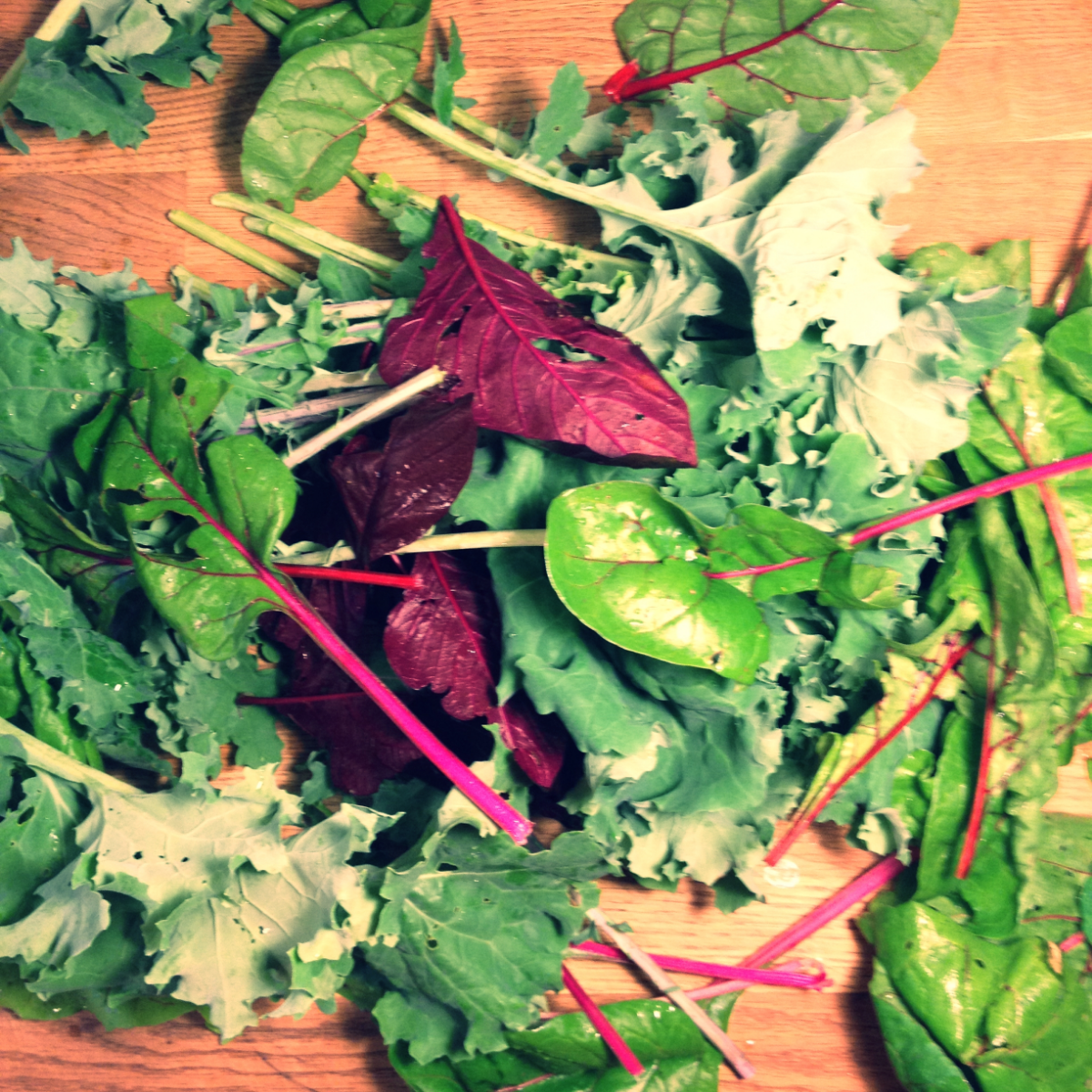
Bug ravaged and hail damaged greens. Not all is lost, my friend!
To end this first week's roll call of how I am putting up the harvest 2015, I am going to make plenty from the spoils of Mother Nature. Well, not really spoils, but to some may be seen as spoils. See, here in Calgary this week, we've been hammered by a few big storms as they have swept through our town with deluges and flash floods and huge garden-decimating hail. There was even a tornado spotted just outside of the city this week. I don't know how it is where you live, but our summers here are so very brief that for one to dedicate your time and love to growing a vegetable patch in this so very short season (always turbulent; hey, it's the Prairies!), it's pretty heart-breaking when in one fell swoop of Mother Nature's whim, your hard work and dedication can be wiped out just like that.
Know that not all is lost. I was visiting a friend when the second hail storm hit, and we sat open-mouthed at the windows watching the downpour, hoping our gardens and cars and roofs would be spared. I remembered a particularly devastating storm from last summer where I had lost most of my greens to big pock marks from hail, and grabbed a plastic grocery bag and ran out the back door. My friend Liz and I went through her garden patch and pulled out all of the dark leafy greens that had been damaged (either by the storm or by little critters) and quickly filled that bag up until it was overflowing. Resolved to add to my downtrodden loot, I headed home to find that my patch had been spared this time around.
Never you mind. This is the pile on my butcher block I saved from Liz' garden. In it, there are two kinds of kale (siberian is THE BEST), nasturtium greens, amaranth leaves, swiss chard and spinach.(Thanks for letting me raid/forage your garden, my friend!)
I took those greens, folded each leaf in two and cut that middle tough stem out of each leaf. When you're dehydrating greens, I find it is always best to discard the tough stem, as they will end up being super chewy bits in your finished product. Never a delectable thing, I assure you.
So I dutifully chopped all stems, and loaded up the 8 trays of my dehydrator. You can do this with all kinds of garden greens, from tatsoi, broccoli and cauliflower leaves, kale, swiss chard, beet greens, collards, amaranth, lettuces, mizuna, arugula, nasturtiums, parsley, whatever the hail and bugs have tried to claim for their own, claim it back.
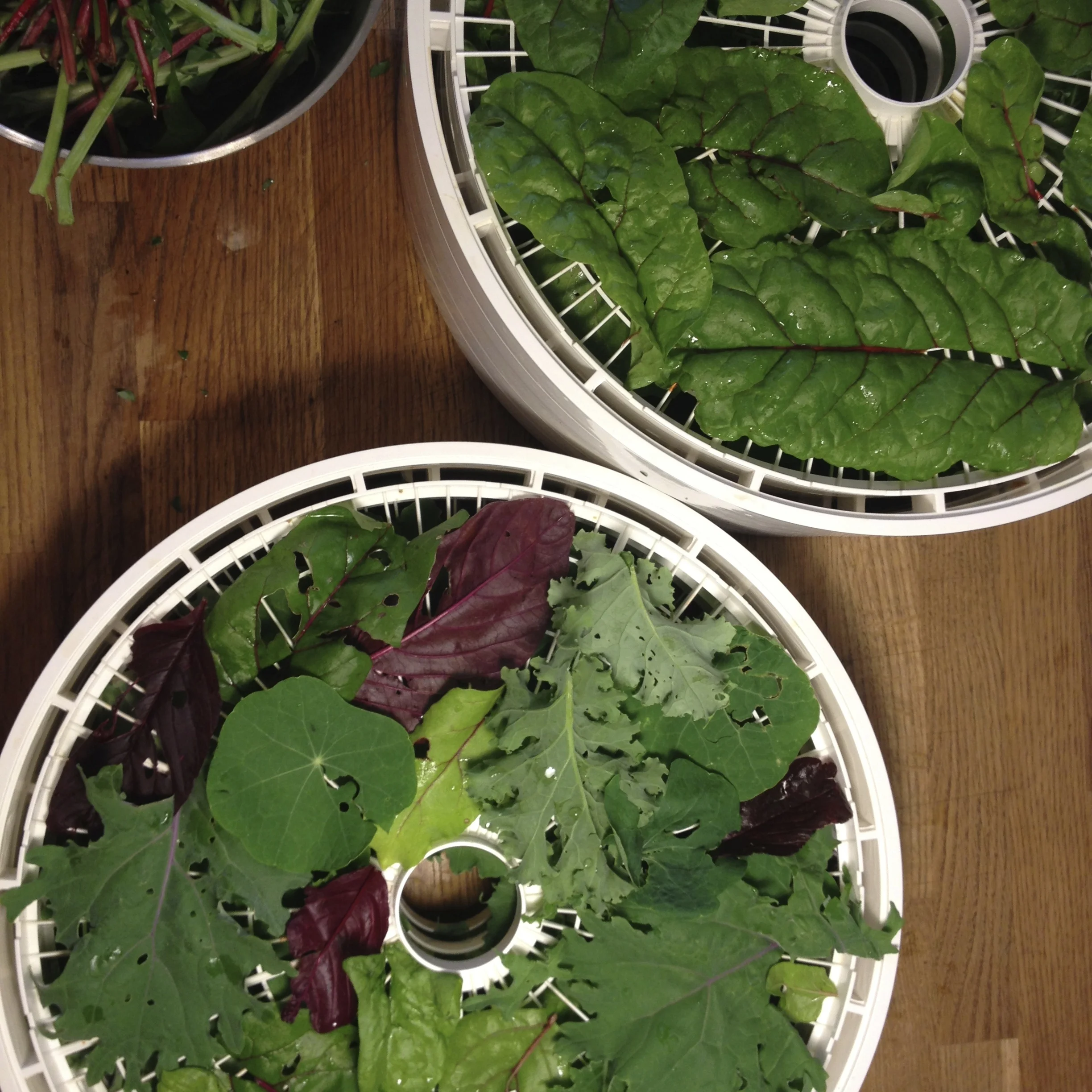
Best birthday gift I ever got. Love my dehydrator.
I loaded the trays up, turned the contraption on to 105F (in order to preserve the nutrients and enzymes, anything under 118F is good). It certainly didn't take very long, about 3 or 4 hours later, the leaves were completely dried out.
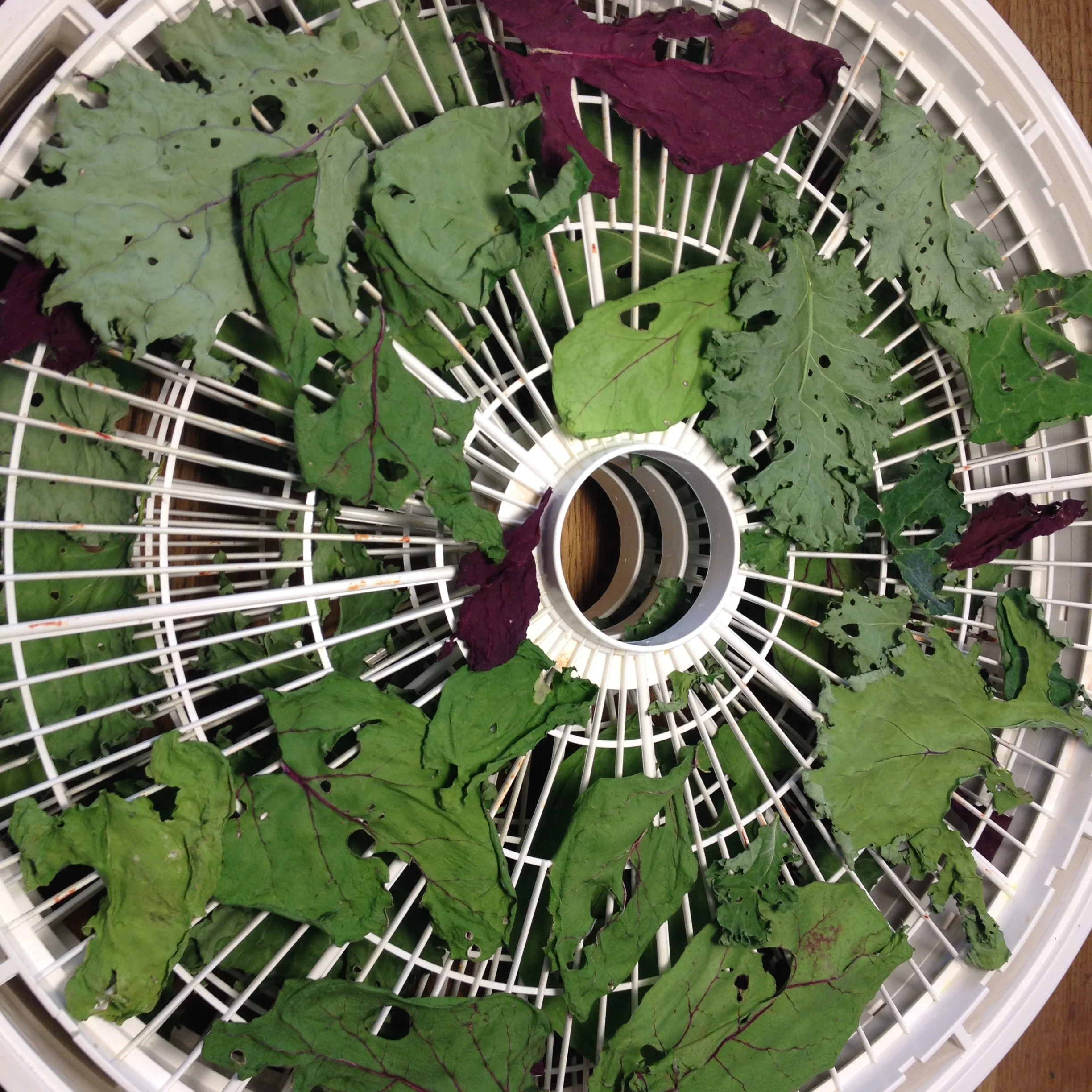
Crispy dried hail- and bug-damaged greens from Liz' garden.
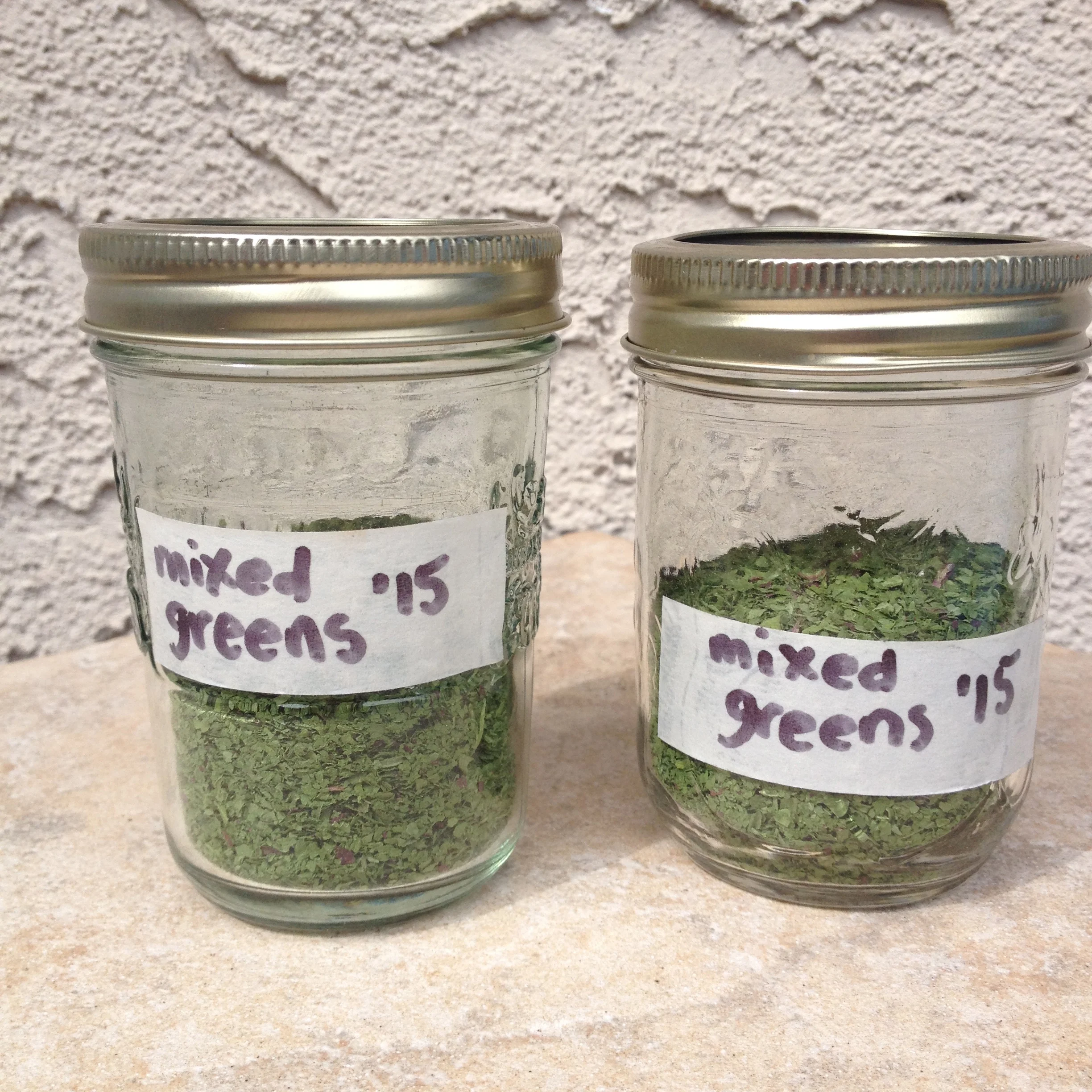
This is the rocket scientist part. I put all of the greens in my big food processor fitted with the blade, and minced those greens until they were down to teeny flakes. And then I bottled them, a jar for me, and a jar for Liz. Total end volume: 1 cup of dried greens flakes for a full plastic grocery bag.
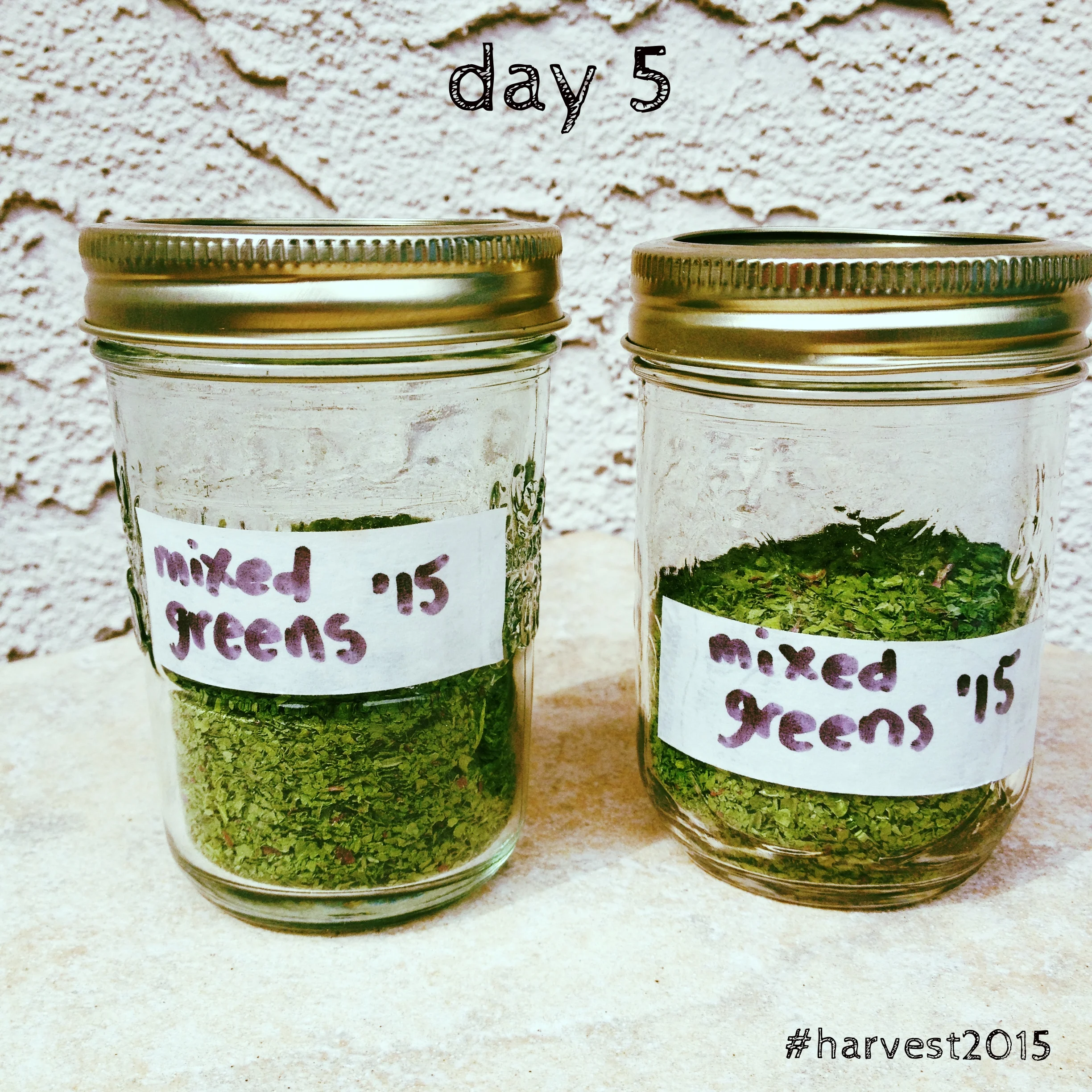
Putting up the hail and bug damaged garden greens harvest. Still good food for you. #harvest2015
Tuck these babies in your pantry, and pull them out when you want to add a nutritional punch to your smoothies, or sprinkle on your pizzas, add these to a soup or sauce or stew. Wouldn't it be good on top of popcorn, along with a dusting of parmesan and lemon juice? Delicious.
Also. Know that once a plant gets damaged by either pests or hail, it starts producing protective compounds in order to ward off predators and as it turns out, these chemical compounds increase the nutritional punch of your produce. So go ahead, eat those damaged greens.
Incidentally, should you not have a dehydrator at your disposal, you can certainly do this in your oven or toaster oven, with the temperature set to the lowest possible, with the door cracked open to let the moisture out. There is always someone looking to get rid of their dehydrator on kijiji, or at a garage sale. Keep your eyes peeled!
A MONTH OF PUTTING UP THE HARVEST - Day 4
We are taking a regularly scheduled break from tomatoes. Fret not, we will return to tomatoes, but goodness knows there is a lot more out there that could be 'put up' from your favourite road side stand or farmers' market. And this one is a bit more time-sensitive (as will be tomorrow's). These things, they're all contingent on having that extra hour window of time where you can do the work that needs to happen.
We are taking a regularly scheduled break from tomatoes. Fret not, we will return to tomatoes, but goodness knows there is a lot more out there that could be 'put up' from your favourite road side stand or farmers' market. And this one is a bit more time-sensitive (as will be tomorrow's). These things, they're all contingent on having that extra hour window of time where you can do the work that needs to happen.
Well today's instalment on how-to-prepare-for-armageddon I MEAN how-to-prepare-for-winter takes all of FIVE MINUTES. Five minutes today, and five minutes, well maybe 10 down the road, when you have time. Would I lie to you? Freezing berries. The one thing you'll do this summer that will give you the biggest pay-back, and the most delicious bang for your time/buck.
THE HOW-TO: Buy copious amounts of berries. You won't be sorry. Berries are one of the most-sprayed produce items out there, so if you can spring for it, go organic. Buy all kinds. Or go foraging for saskatoons in the coulee by your house. (Call 311 to find out if they spray for pesticides in that area first!) Or blueberry and raspberry picking by your cottage if you are so lucky to live somewhere where these jewels grow in abundance. Just make sure to bring your bear spray with you.
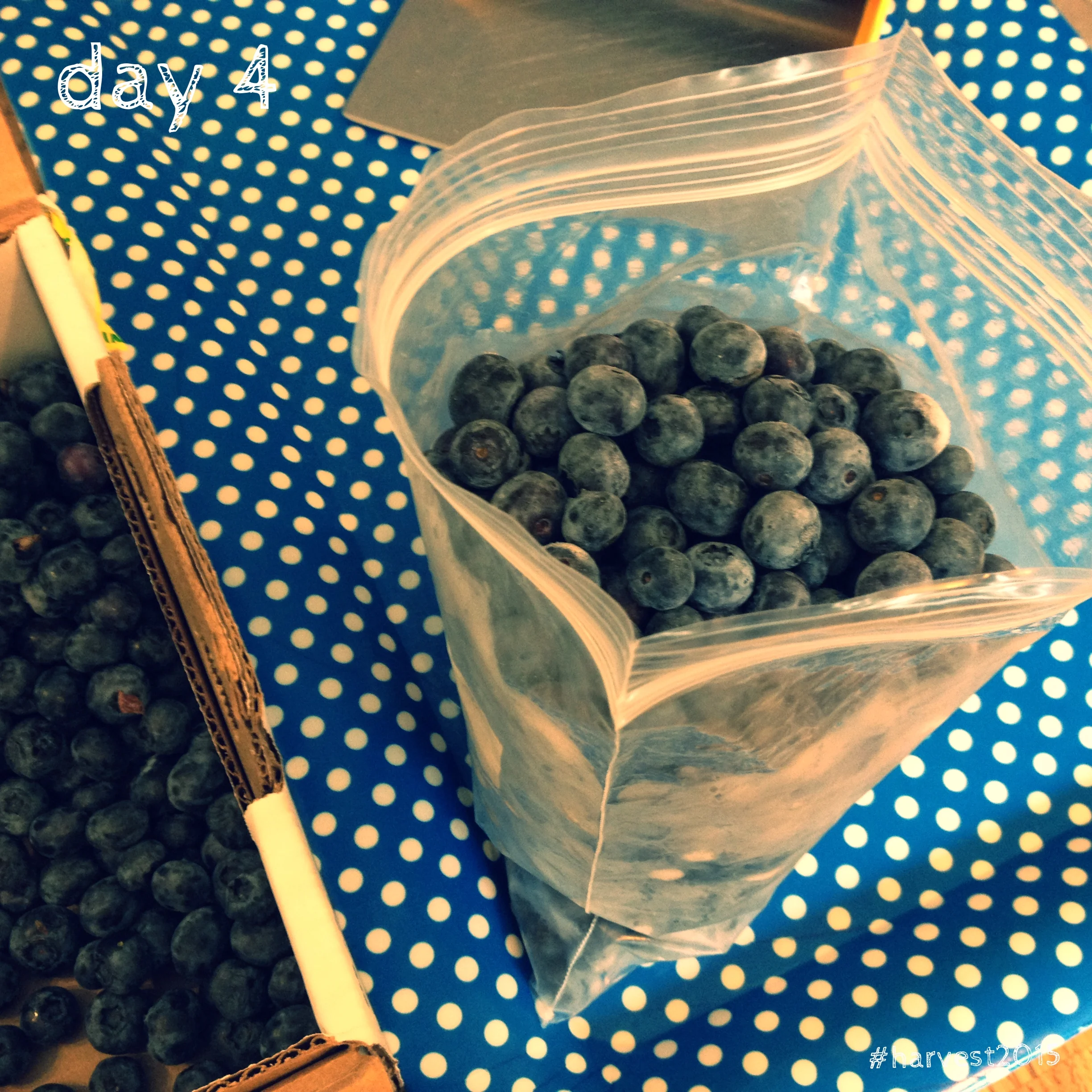
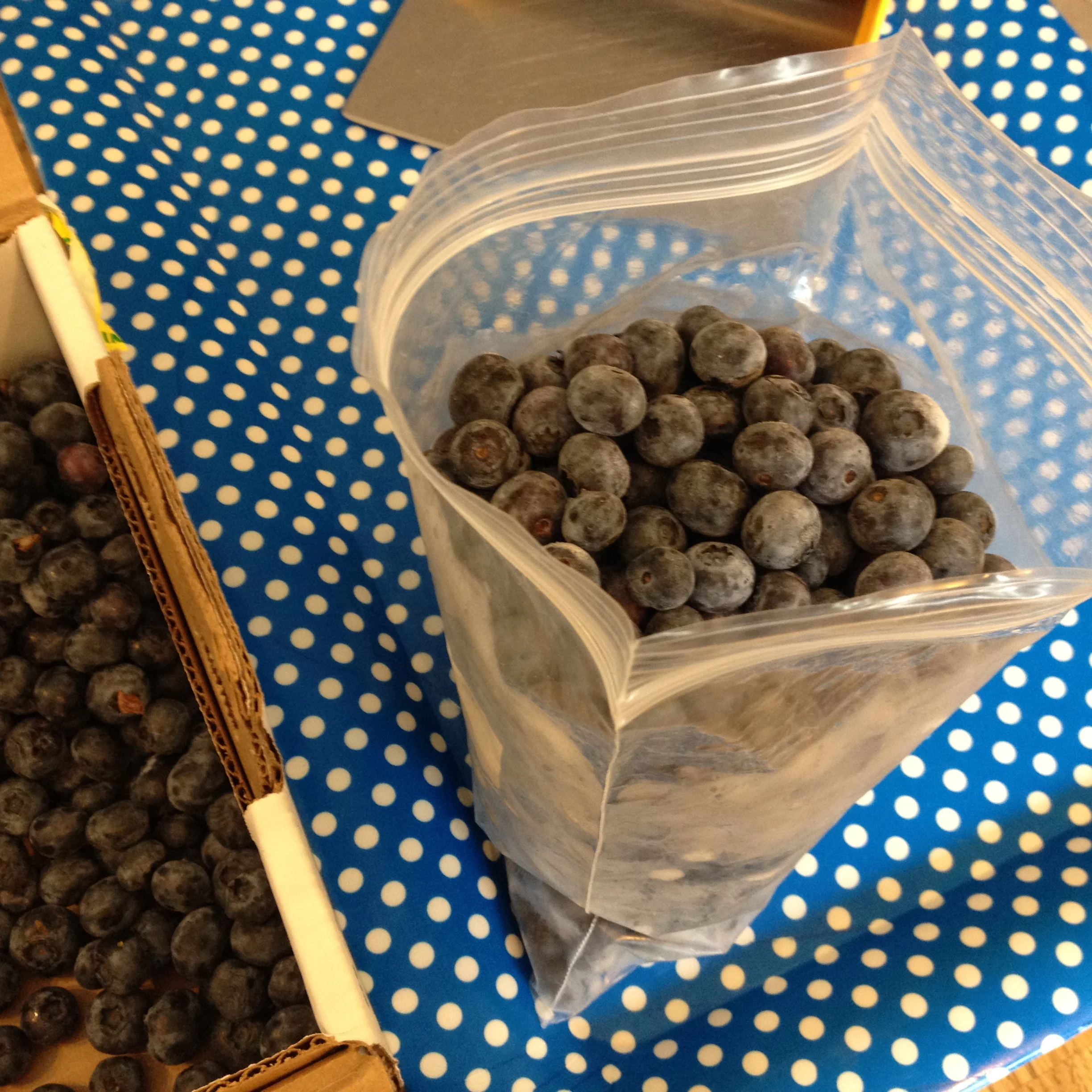
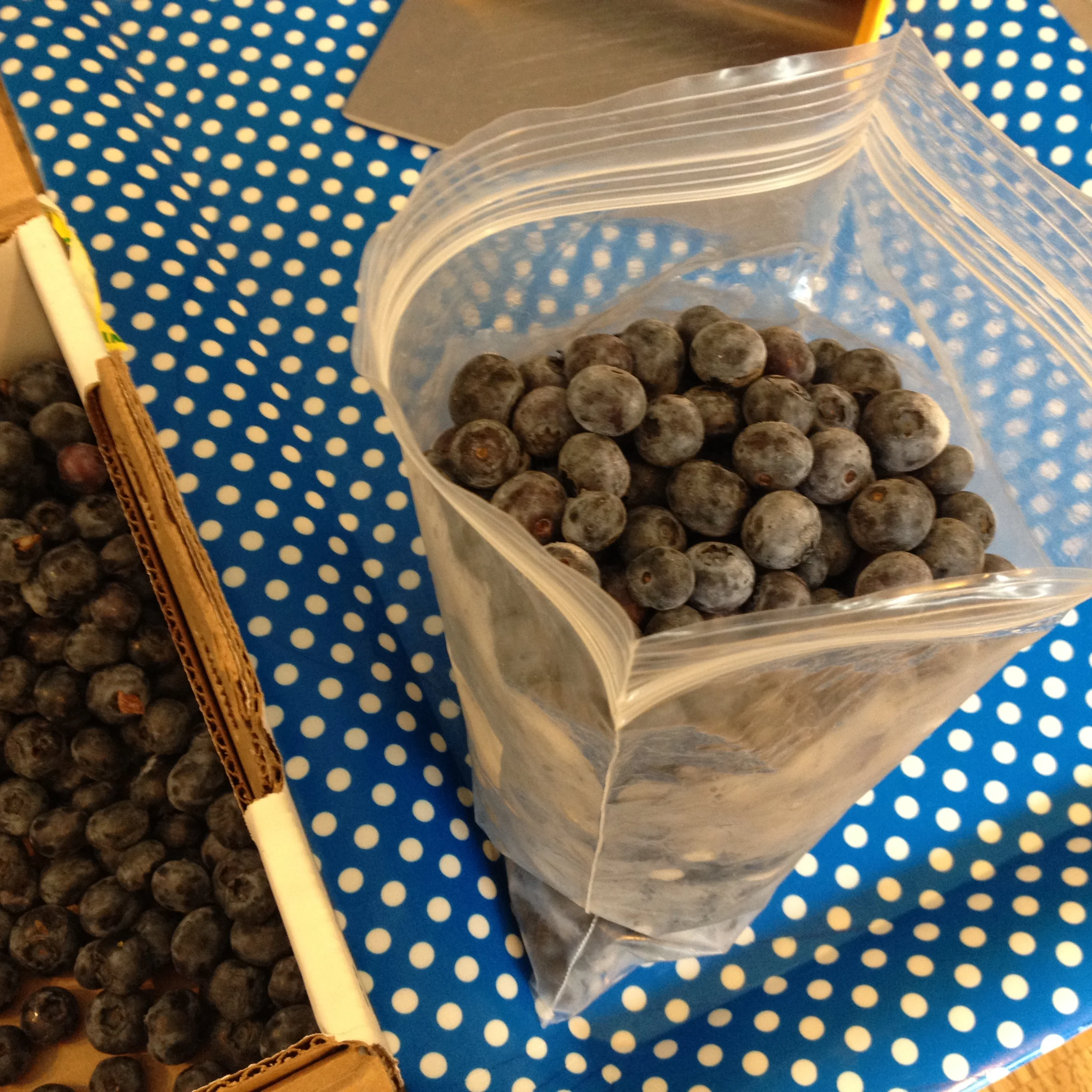
Quick and easy: frozen berries, best way to preserve summer flavours and nutrients. #harvest2015
I learned this from my Mom. I associate all things berries with my Maman. She is a berry-picking fiend and makes I think perhaps the most perfect pies and jams in all of the land. (Pie making is a surefire way to keep the harvest. But it's a bit harder than what we're attempting today.) To this day, the smell of small-batch raspberry jam means JE SUIS AU CHALET ET MAMAN EST APRES FAIRE DE LA COMPOTE. Which means all is right with the world, yes? How Lorraine does it (and consequently, I do it): she fills the bottom of a tray or cookie sheet with one layer of berries, and goes through picking it to remove the bugs, leaves, twigs, stemmy bits and dirt. I think she washes them, but if they're clean enough (and organic or foraged), I won't as I usually pick them or get them when they're ripe and I fear smooshing them if I wash them. So I leave them as-is. The tray is one-layer thick and now picked cleaned; now at this point my mom makes jam. But for me, I pop it in the freezer as-is, of course on a flat surface. I leave it in the freezer for how many days it takes to really freeze them through (at least 2 days), but not more than a week as you'll start to lose some of the moisture content. When I have that extra 10 minutes, I take the tray out and start filling those medium sized freezer bags with the berries, and you can label them if you'd like so you know which summer they were picked in. I tuck the bags in the freezer, and voila! Insta-berries for smoothies, pies, crisps or cobblers, tarts, muffins, sauces, pancakes, ice cream.
Oh yes, I meant to add that if you like, you can pre-measure those berries out and put them in bags labelled with the amount you've put in, if you have a go-to recipe that calls for 2 cups, say.
Do I need to say it? GO PLAY WITH YOUR FOOD.
A MONTH OF PUTTING UP THE HARVEST - Day 3
Tomato tomato tomato tomato tomato tomato tomato. All around me these days there are tomatoes. They are fresh, they are juicy, they are plump, they are delicious, they are plentiful, and I feel this urgent need to somehow retain this brief snapshot of summer sun and heat and flavour that it is all I do, it seems, is figure out ways to keep that tomato lovin going all year round.
Tomato tomato tomato tomato tomato tomato tomato. All around me these days there are tomatoes. They are fresh, they are juicy, they are plump, they are delicious, they are plentiful, and I feel this urgent need to somehow retain this brief snapshot of summer sun and heat and flavour that it is all I do, it seems, is figure out ways to keep that tomato lovin going all year round.
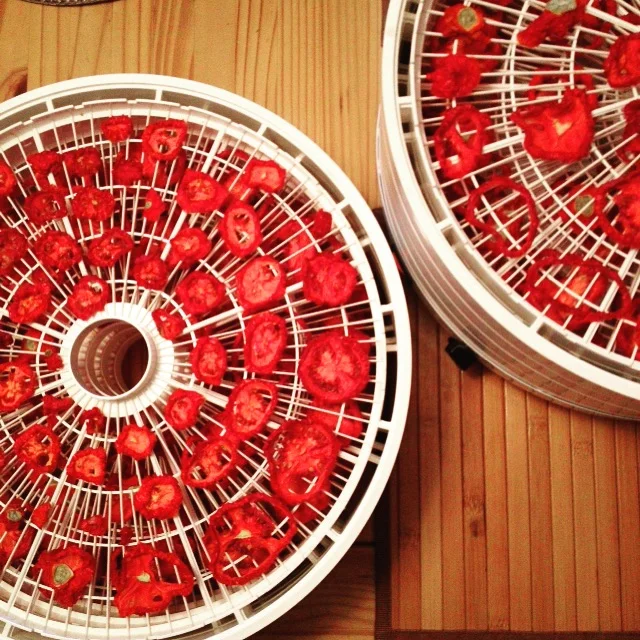
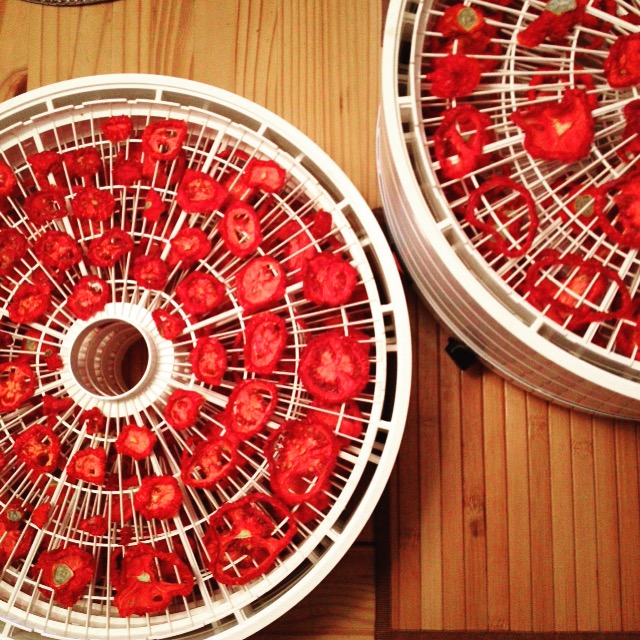
Enter the dehydrated tomato. Mes amies, this couldn't be any easier. Whether you have a dehydrator or not, this takes energy at the onset but keeps in a glass jar in your pantry for months and I'm sure years, although I've never been able to keep them around for that long before gobbling them up. This is rocket science. Pay very close attention.
THE HOW-TO: Wash tomatoes, some say in a vinegar solution, but even that's a bit too much work for me. (Notice a theme? I'm a low maintenance kinda gal.) In the water they go. And drip dried. And then sliced in rings, about an inch thick or so. The trick here is to get them to be about all the same thickness. If you are like me and are tomato-obsessed, you may benefit from having a specific tomato knife, or at the very least sharpen that knife before you get into your tomatoes. Or use a serrated one, that works too. Again, I did these with roma tomatoes as they are more meaty, and smaller in size once dehydrated, they're easier to get in to the glass jars. But you could do this with any kind of tomato, I'm sure cherry tomatoes would be super fun!
Once they are sliced, layer them on your dehydrator screens or on your cookie sheets lined with parchment paper, leaving a bit of space around each round. I don't know why. Because I think they may end up sticking together maybe.
If you're using a dehydrator, go ahead and pop those screens in place and turn your dehydrator on at 105F. Anything dehydrated under 118F retains the live enzymes, so that when you eat them later, they will be closer to the raw tomato you had back in the heat of August. They pack a higher nutritional punch. If you're using an oven, dial in to the lowest temperature you can, and pop that door open to keep it as low as possible. Same as yesterday, low and slow wins the race.
When they are the texture of a sun-dried tomato, you have your prize. That's it. I store them in plastic bags or glass jars, depending on the amount and space I have.
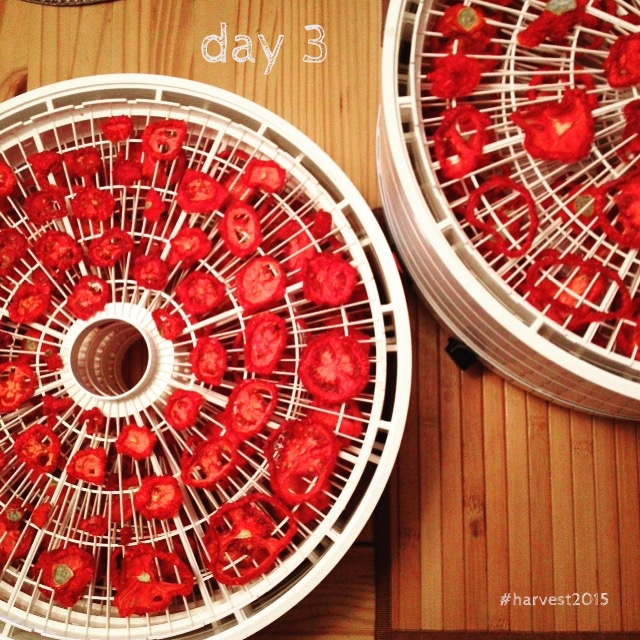
Dehydrated roma tomatoes. This is rocket science, it's quite complicated. #harvest2015
You'll know they're dry when they are dry. (That's the rocket science part.) If you're able to kinda squeeze them (which, to be honest, the ends will be the last ones to dry up) then they're not dry enough yet. I usually check every few hours, and when it's just those meatier ends that are left to dry up, I put the rest away and keep those pieces in the dehydrator/oven to finish up the job. And tuck away in plastic bags or glass jars until you're ready to use them.
Ways to use them up: rehydrate briefly and toss in pasta sauces or curries or salads, use them minced to sop up extra liquid in a sauce or sauté you'd rather have a bit drier; throw them in soups or on top of pizzas. Throw them in omelettes or frittatas! Blitz them in your coffee grinder to make tomato powder which will add a depth and zing to everything! Or rehydrate and make a tomato pesto by adding garlic, some basil or oregano, pumpkin seeds, romano cheese and olive oil, S+P. Or tell us what you're planning to make with these morsels.
And incidentally, keep your eyes peeled at garage sales for dehydrators, or at your favourite local goodwill or VV Boutique, they pop up every now and then. No need to spend many hard earned dollars on a brand new model, I adore mine and it's not the one the cool kids have. And I love it all the same.
AGAIN. GO PLAY WITH YOUR FOOD WILLYA?
A MONTH OF PUTTING UP THE HARVEST - Day 2
I love tomatoes. This is no lie. They are so versatile, wouldn't you agree? I mean they make ketchup, they make tomato sauce, pasta sauce, pizza sauce, marinara sauce, puttanesca sauce, not to mention supplying the base for luscious soups and stews, chilis, and stuffed they are a delicious side dish, and simply sliced with balsamic and olive oil and maybe some basil and maybe fresh burrata cheese and olives if you have em, they're a slice o' heaven. They are the epitome of August and late hot summer weather, one of my most favourite times of the year. And so, it seems to me we should somehow bottle this late summer hazy feeling, no?
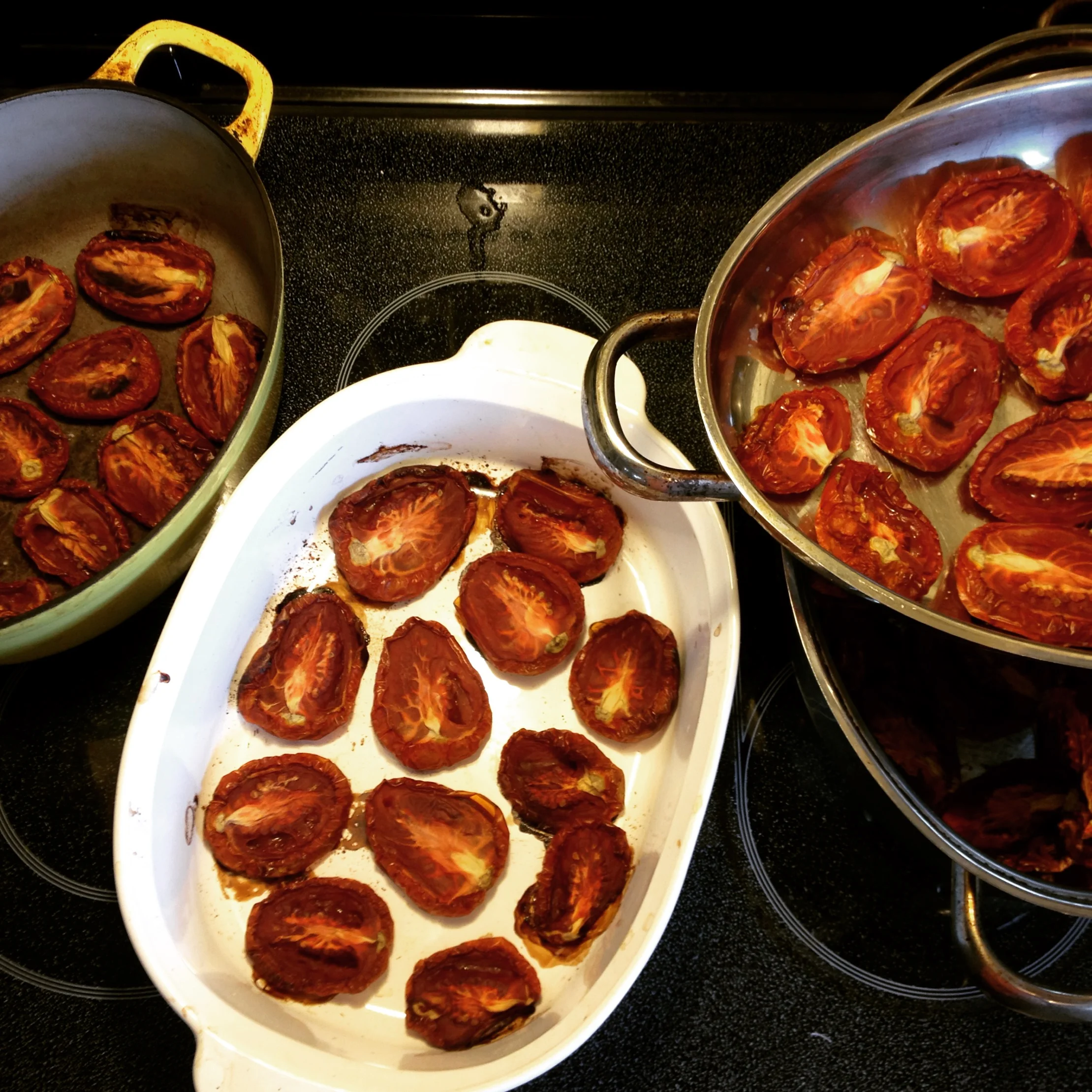
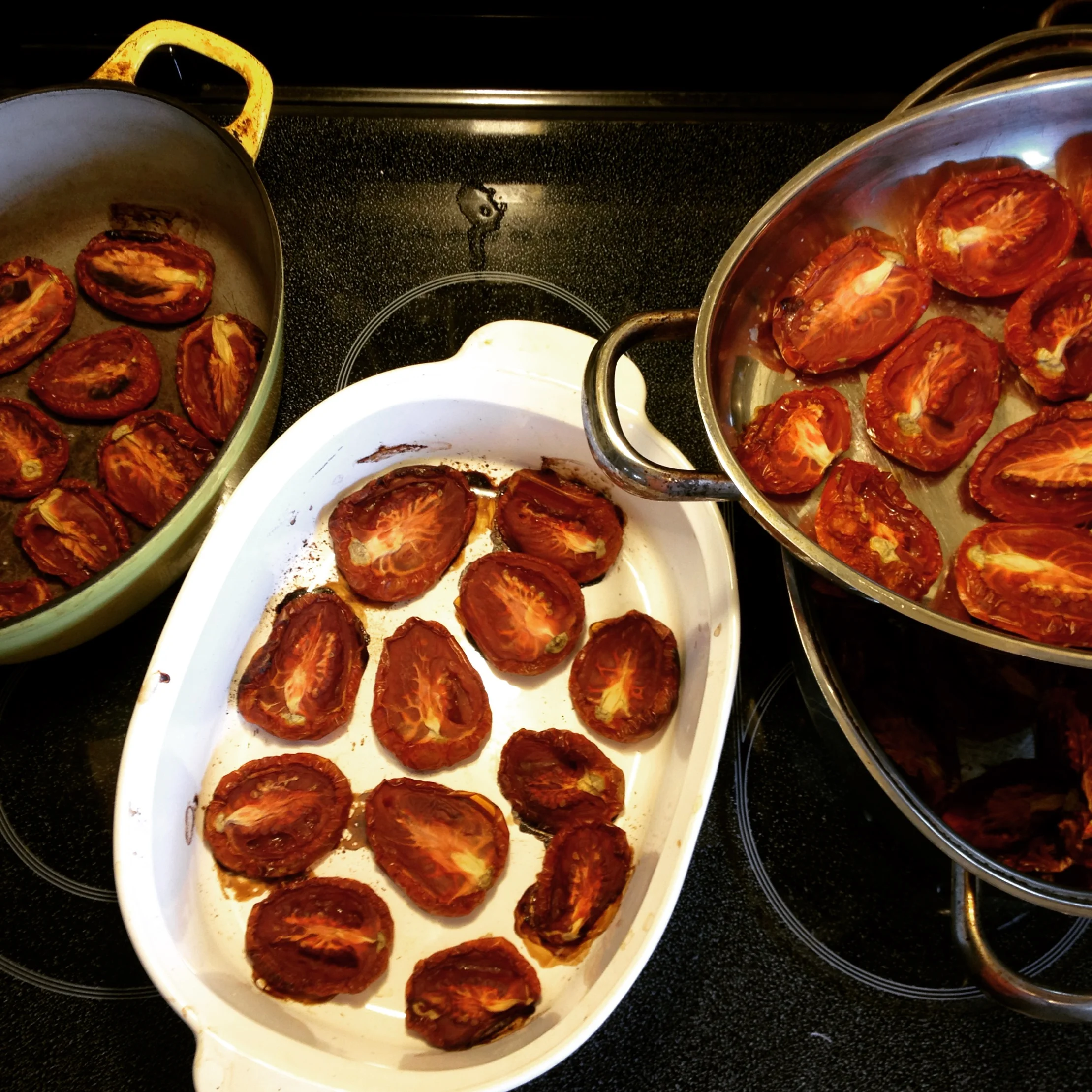
Witness: the slow roasted tomato.
I love tomatoes. This is no lie. They are so versatile, wouldn't you agree? I mean they make ketchup, they make tomato sauce, pasta sauce, pizza sauce, marinara sauce, puttanesca sauce, not to mention supplying the base for luscious soups and stews, chilis, and stuffed they are a delicious side dish, and simply sliced with balsamic and olive oil and maybe some basil and maybe fresh burrata cheese and olives if you have em, they're a slice o' heaven. They are the epitome of August and late hot summer weather, one of my most favourite times of the year. And so, it seems to me we should somehow bottle this late summer hazy feeling, no?
Witness: the slow roasted tomato.
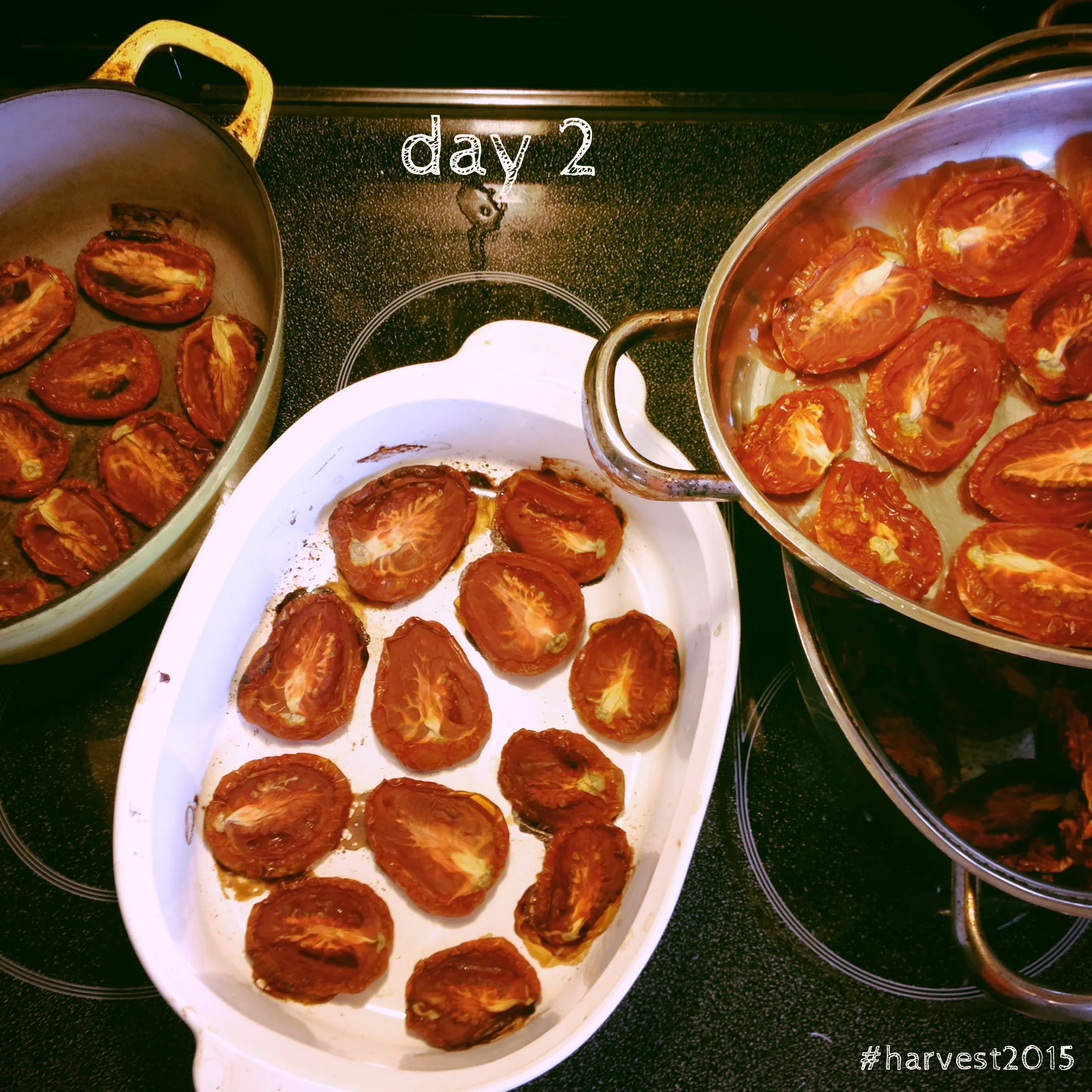
Slow roasted tomatoes, perfect way to bottle up summer for those midwinter climes. #harvest2015
THE HOW-TO: Buy tomatoes in bulk from that farm stand on the way home, or from your Farmers' Market, or your neighbour who planted 52 tomato plants this year. I buy 120 pounds of tomatoes every year. Call me loopy, I love them that much. The cases come in 20 pound increments, so load up on what you think you'll be able to handle before they go bad. I do this with all kinds of tomatoes, but find the romas have more meat and less water in them, so give me what I prefer in the end. Wash a shwack of them (yes, it's this scientific and exact, kids). Slice in half. Plunk them in dishes or cookie sheets cut side up, sprinkle with some sea salt and pepper, and pop in the oven at 295F for about 4 hours, until they look leathered and dried out. I boosted it to 320F for that last hour myself, as I thought it was taking a bit too long. The secret here though is to go fairly low and slow, meaning you're going to roast the water right out of the tomato, and concentrate those tomatoey flavours, caramelizing them a bit as they cook. You could add a good quality olive oil here if you were going slow, or garlic, or herbs too if you wanted to flavour, but I do them plain so that I can add flavour later, depending on what these gems will become. And I don't cook them in fat (gasp! I know! I go on and on about fat!) but I know that when I will be using them up in a dish along the way, I will certainly be adding fat at that point, so fret not friends, fat will come in to the picture along the way.
In the past, I have popped these half tomatoes right into freezer bags and into the freezer (waiting for them to cool before handling them) and that has worked. But this year, I opted to blitz them all in my blender, skin and all, waited until they cooled, and froze them in little one-cup batches. The flavour is so intense in these tomatoes, I am looking forward to adding them to whatever strikes my fancy down the road, and really bottle that hot lazy summer afternoon for us to eat at a point in the winter when we will need reminders that the summer climes will be upon us once again. (Make sure they are cooled right down before you put them in your containers for the freezer.)
IDEAS ON HOW TO USE THESE UP: use them in a tomato soup, in chili, your favourite pasta sauce, in a curry, or a stew, or mixed in with some pesto and slathered on sourdough bread and topped with cheese under the broiler for your next book club meeting; or plain, as-is (don't freeze them in this case, use them up right away) with a smattering of olive oil and balsamic and some parmesan cheese with minced prosciutto on top, under the broiler, topped with basil or oregano.
Bon appétit les ami(e)s!
A MONTH OF PUTTING UP THE HARVEST - Day 1
It's that time of year, when your neighbour comes knocking with baseball-bat-sized zucchini they are desperately giving away to good homes; where your herbs are growing wildly out of control despite your best intentions to use them up during the BBQ season. It's also the perfect time to saunter on down to the Farmers' Market and load up on local foods in big quantities: the price is right (especially when you are buying in bigger quantities), the nutrients are dense, and you have a few lazy days ahead of you which means perfect timing for a preserving frenzy in your near future.
It's that time of year, when your neighbour comes knocking with baseball-bat-sized zucchini they are desperately giving away to good homes; where your herbs are growing wildly out of control despite your best intentions to use them up during the BBQ season. It's also the perfect time to saunter on down to the Farmers' Market and load up on local foods in big quantities: the price is right (especially when you are buying in bigger quantities), the nutrients are dense, and you have a few lazy days ahead of you which means perfect timing for a preserving frenzy in your near future.
For the entire month of August, we (the royal we) here at good food + you will be posting a daily quick tip on how best to make the most of this bountiful time, by preserving the harvest. My self-imposed rules: these posts will occur on weekdays only; they will be things that I am actually doing whilst I'm working; the photos will be all mine and documenting the process; they will be short and sweet. No fancy dancy pretend-photo-ops, these will be the real deal.
Why preserve the harvest, you ask? I know what you're thinking: but Luka, there's always fresh stuff at the grocery store, year-round! I thought it was best to eat fresh in order to get the best nutrients! Well for one, the stuff I'm going to be preserving is goodies grown either in my back yard or close to home. My reason for this is that these veggies and fruit, when grown close to home, means they only have to be picked just as they are ripe; there is no need to pick them two weeks before ripened in order to do that job on the truck on the way to being shipped to me in Calgary. By picking at the ripest point on the vine, this ensures that all nutrients can develop right there on the vine as Mother Nature intended. Did you know that Vitamin C is one of the last nutrients to develop in a tomato on the vine? Why not pick at peak times then! And actually eat from my own back yard. And support a local farmer. I'd rather keep my dollars in my community than send it to someone who runs a big multi-corporation in another country, thanks very much. That way, those community dollars may also stay in my community, making it a better place to be. And really keeping the local local, if you're picking up what I'm putting down. (So many influences my parents have had on my life! So very grateful!)
I'll be talking about dehydrating (with and without a dehydrator), freezing, saucing, preserving, fermenting, drying, maybe even smoking things as a way to keep that summer bounty going strong in the winter months. I'd love to hear how you are going about this yourself, there are so many tricks to learn as we navigate how best to feed our families. I'm all about health, to be sure, but I'm also about making this a do-able task. I invite you to try at least five of the methods I'll be presenting over the course of the month, and let me know how you make out!
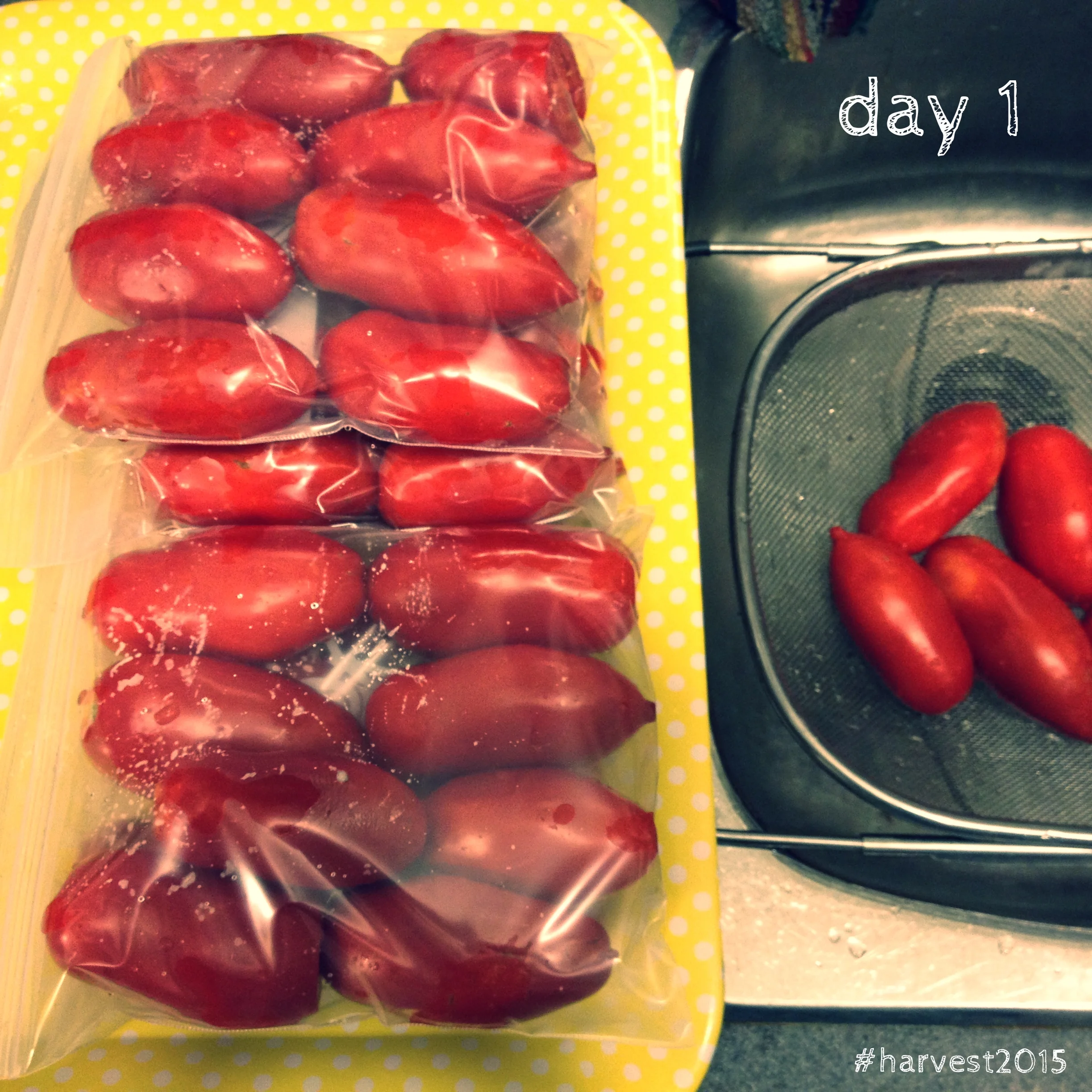
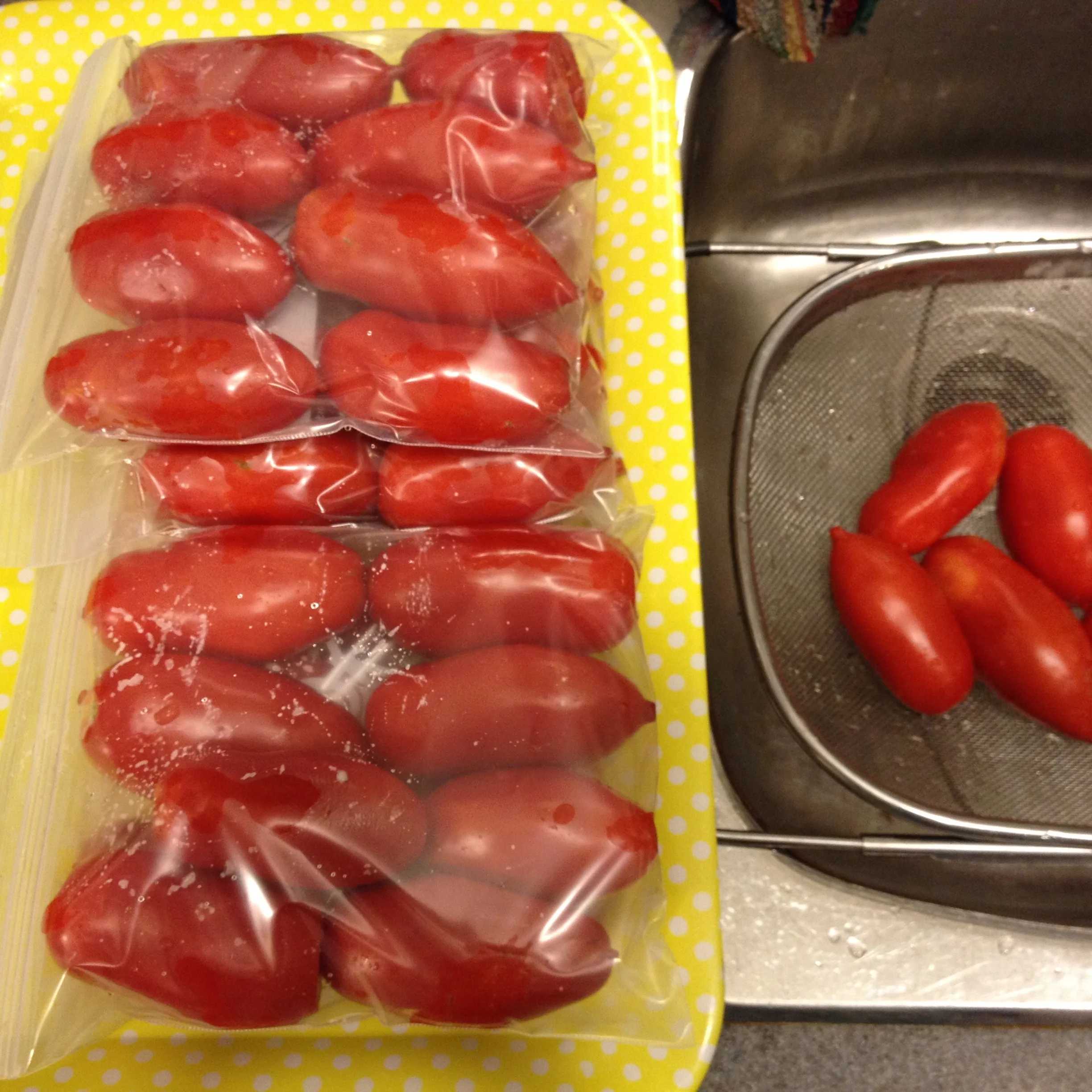
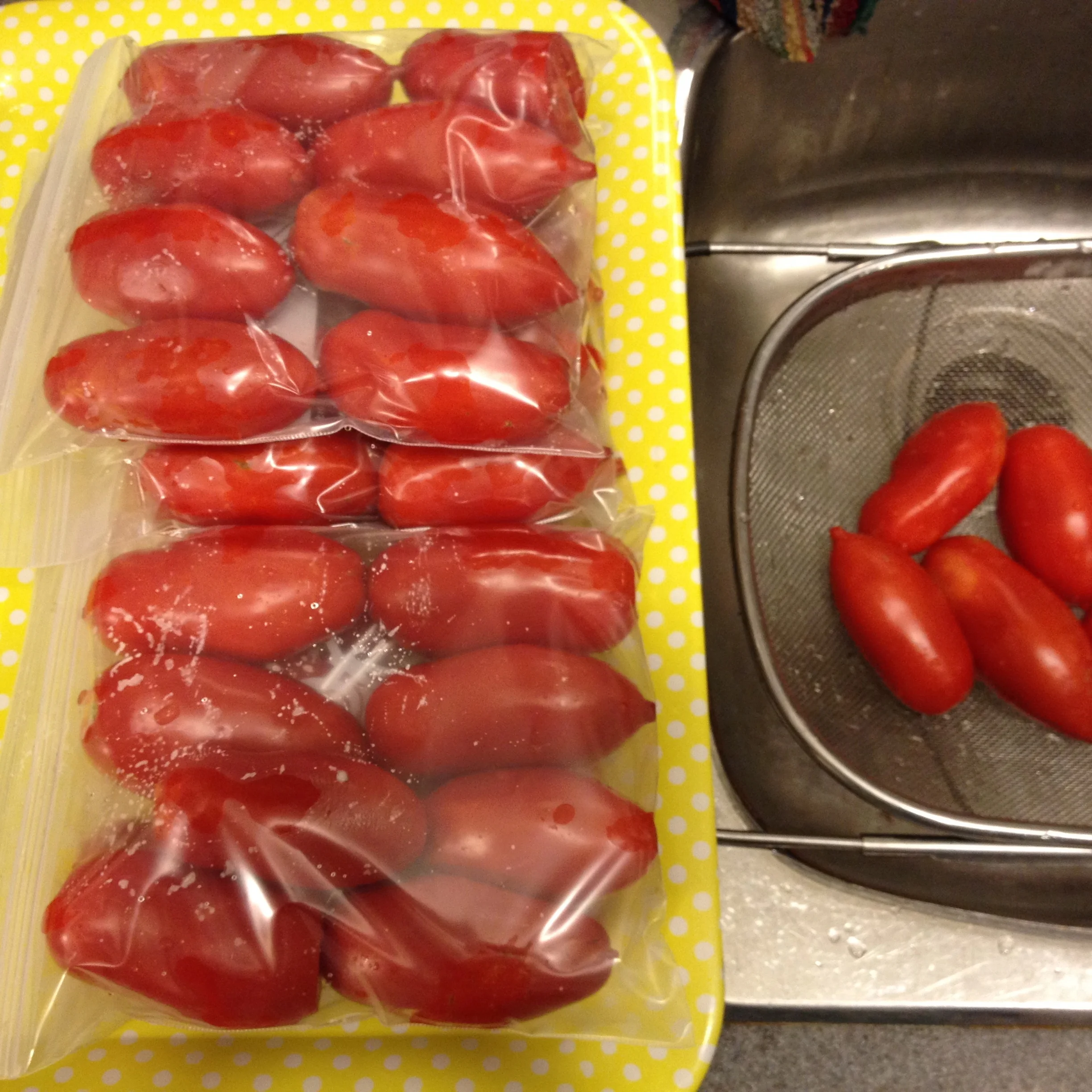
Freezing romas in plastic freezer bags means no BPA!
For the first post of the month, I am doing one of my perennially favourite tasks come August, bagging little roma tomatoes for our winter stash. My dad was the one who told me he was preparing his yearly tomato haul this way, and I thought how brilliant is that! I prefer to freeze my own tomatoes because of the nutrient density, but also because I am so lucky to be able to spend a bit of time at my in-laws' cabin out in the Shuswap every year, where deals and sales on big boxes of food are to be had every summer. When I was there last week driving through, the prices were still a bit high as the harvest of tomatoes was just beginning, but I expect they will drop as the harvest goes on. You can get 20 pounds of tomatoes for 15$ sometimes! Mind you, these are not organic, but they are picked at harvest peak from just down the road, still dusty and wafting of sun-ripened goodness when you crack the box to inspect. I have yet to see big boxes of organic tomatoes along the way, and truth be told, I fear when they do they may be out of my price range. So local is good in this case, and they are grown by small farms too, not a monoculture kinda place.
My rules: shop around for the best price. Inspect your boxes before purchasing; if you're not happy with the ones in the box, don't be shy in asking if they can pack for you a new box, especially if you're new to this. You don't want them to be so ripe that in 2 days' time you will have to throw away half of your treasures because you couldn't quite get to it all in time! I buy about 120 pounds of tomatoes a year (I know, but it's what we like at our house) with the intention of processing them in many ways. By far, this method is the most popular one and the one I do the most. My favourite reason? PLASTIC BAGS ARE FREE OF BPAs! When you purchase canned tomatoes, the lining has BPA in it, and studies indicate the acidity in the tomatoes leaches out the dangerous toxins. What is BPA and why is it bad? Lookee here. Why not store your stash in plastic bags, if you have the freezer space? (Yes, we now have two big chest freezers. Don't judge.)
THE HOW-TO: Make sure to wash your hands first. Always a good idea when you are preserving something, or working around food for that matter. Next, wash your tomatoes in small batches, making sure they can drain off excess water. I buy new freezer plastic bags to do this every year, and I find I can stash about 6-8 little romas in one medium sized bag, and this will give me the same amount of tomatoes when my recipe calls for a can of tomatoes. I make sure they're flat in the bag, and put them on a tray or cookie sheet, and stash them as-is in the freezer so that once frozen, they'll be easy to stack one on top of the other. So stinkin easy I can't even tell you. And so much less expensive than buying cans during the winter months.
When it comes time when I'll be pulling a batch of tomatoes out for a chili or a soup, I'll plan to pull it out the morning of and let it defrost on a tray (in order to contain any juices that may leak out) and will blitz it in a big bowl with my hand blender, in order to obliterate the skins. My dad, now he's a smarty pants: he just slips the skin off of the tomato once it defrosts, meaning if you prefer to leave the skins off, you don't have to do it before you freeze, you just have to do it the day you're using the tomatoes in your recipe! I'm just that lazy, I blitz the skin in with my tomatoes. You can do it either way.
That's it kids. Look for more ideas as the month rolls along, and make your way out to the Farmers' Markets! Stop at those stands along the highway on your way home from a saunter into other parts of the country. Say yes to your neighbour who comes pleading you to help them eat their bounty. And load up on the plastic freezer bags, they'll be coming in handy for a few more posts this month.
GO PLAY WITH YOUR FOOD. Please and thank you.