
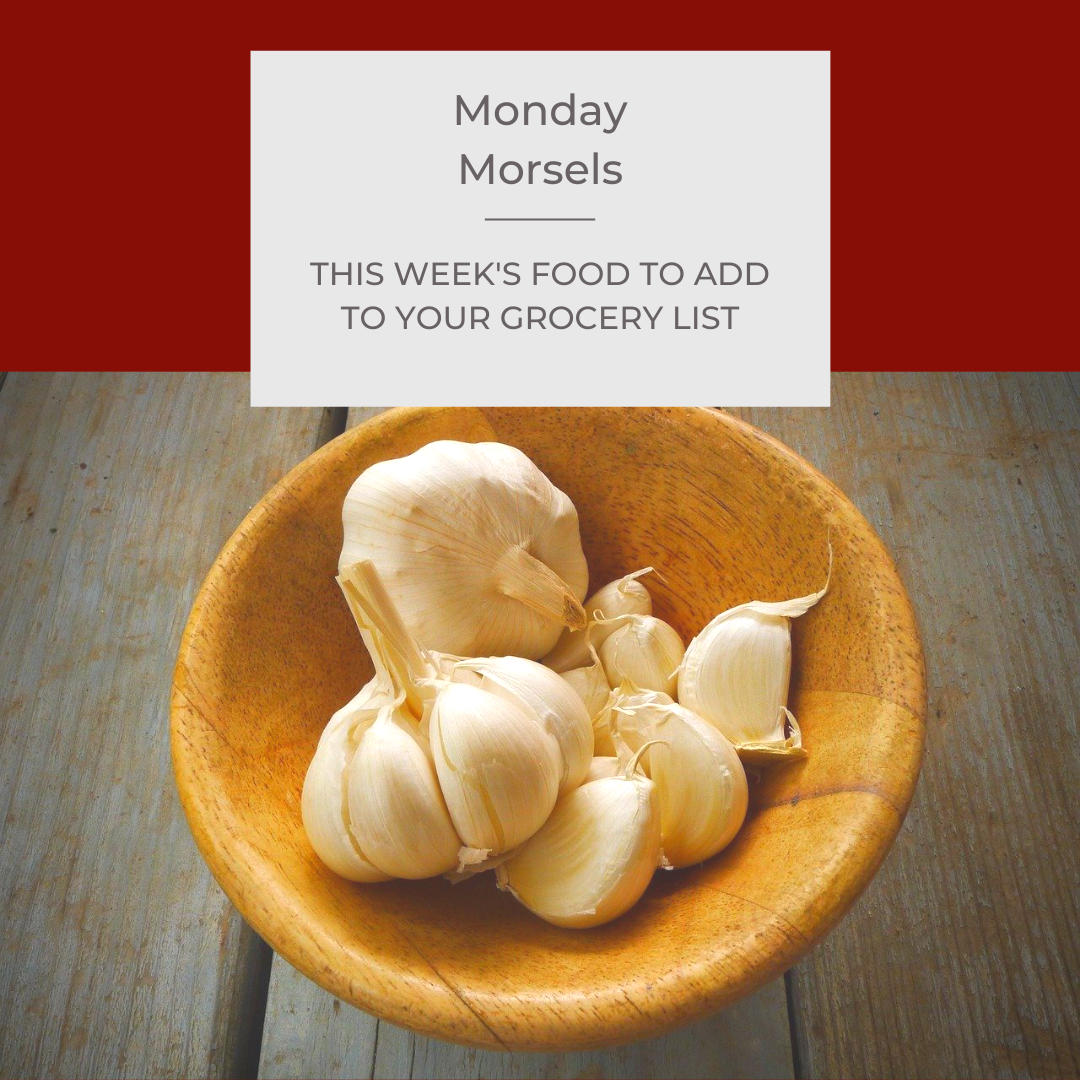
Monday Morsels: Liver Support #2
It’s #mondaymorsels day, a brief post about a food you’ll want to add to your grocery list. This food, as always, will be related to the main topic of the month! This month, we’re talking Liver Lovin.
Click on the image to get the full exploration of today’s find!
Mondays, we build your grocery list with one food, focusing on this month’s main topic.
April is all about the liver lovin. On your next grocery trip, plan to pick up:
GARLIC.
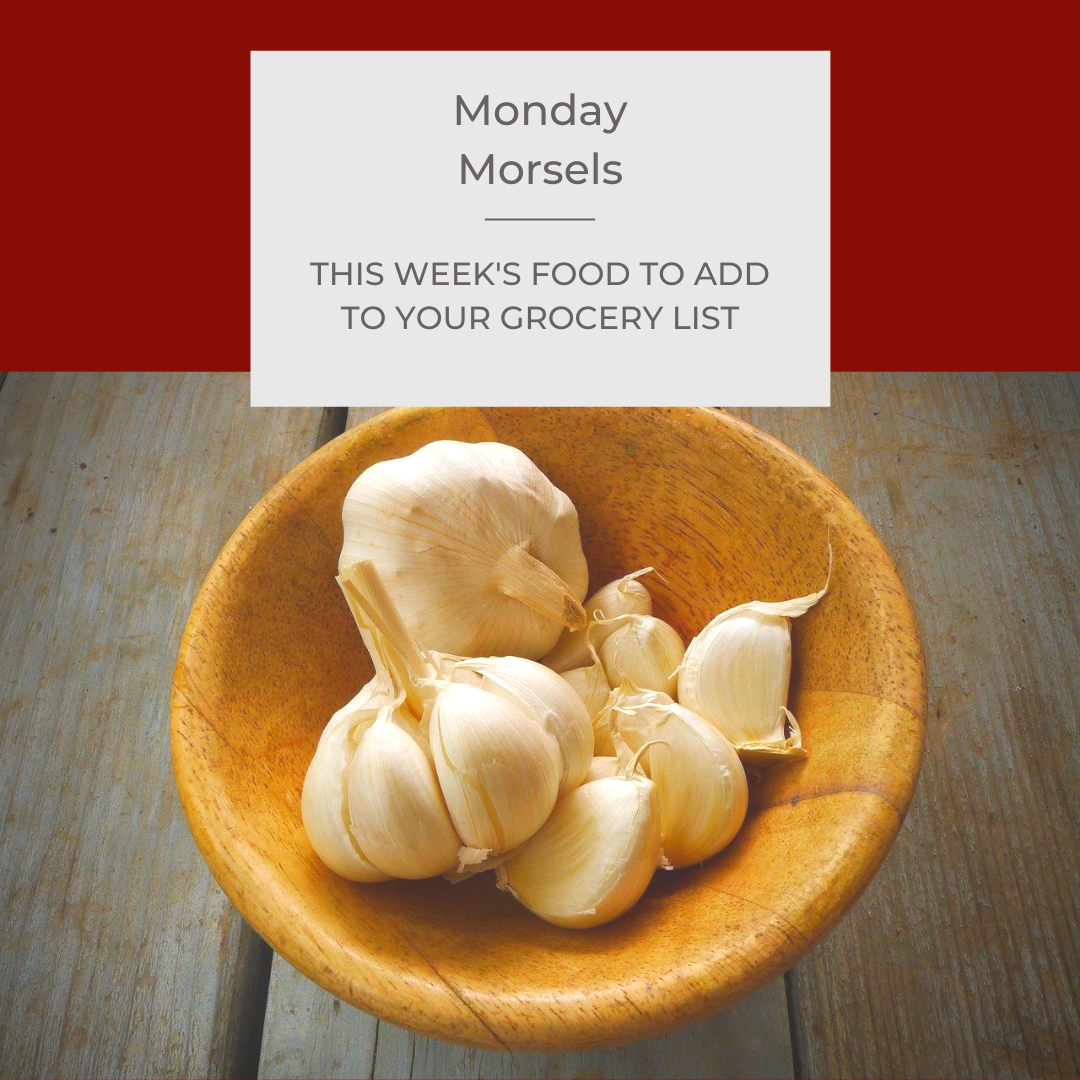
For those who wish to know the ‘why’ behind this idea, I’ll give you three things to think about.
FOR THE GUT LOVIN
Garlic is a wonderful food for the bugs of your gut - that ole thing called Your Microbiome. Your microbiome works in tandem with the liver, in fact, supporting the liver in her digestive work, and helping orchestrate that immune system response, also in tandem with the liver. Why not look after these guys that are your supporting cast when it comes to Liver Lovin? Through garlic! Yeah.
FOR THE ANTIOXIDANTS
Garlic is one of those foods well stocked with important antioxidant compounds like selenium and vitamin C. Their job is to help the liver do the detox work in the body in both bagging the garbage, but also helping to take the garbage out. Essentially, these compounds help reduce the damage of low grade inflammation by protecting cells all over the body (including your liver cells!), but they also nourish the liver in order that she can move those things out. Yeah, garbage pick up crew.
FOR THE SULFUR COMPOUNDS
Sulfur compounds abound in garlic. This means there are a few different compounds found in garlic that have the molecule of sulfur at the core, essentially providing sulfur as an ingredient for your body to use wherever it needs it. Why this is important for the liver: you need sulfur to make glutathione, your master antioxidant that YOU MAKE. (Yeah, it’s not just through foods you get these important compounds! You make ‘em too! Aren’t you a marvel?) You need sulfur to make up the proteins that are found in insulin, your body’s hormone to help balance blood sugars. It’s also found in your body’s manufacturing of blood clotting factors (heparin). Both of these jobs are on your liver’s daily task list. Why not nourish her so she can get the job done?

Garlic bulbils growing in the early summer. If you grow garlic, chop the early spring scapes to force the bulbs underground to grow big!
The stinky rose is here, and she’s here to love up your liver and all the jobs she has on her to do list today.
Whether you’re adding a minced clove to a cup of meat stock, tossing it in with your stir fry, adding it to your pesto or pasta sauce, get your garlic on honey pie. Especially if you’re wanting to nourish the liver deeply.
Aiming for a return to overall vitality? Looking to love up your liver, balance blood sugars or hormones, or reduce that chronic inflammation? Got a high burden of stress? Need some help in feeling real good?
Get in touch by clicking here. Let’s meet up to start drawing up your road map to support you in both quantity and quality of life.
*This is not medical advice.
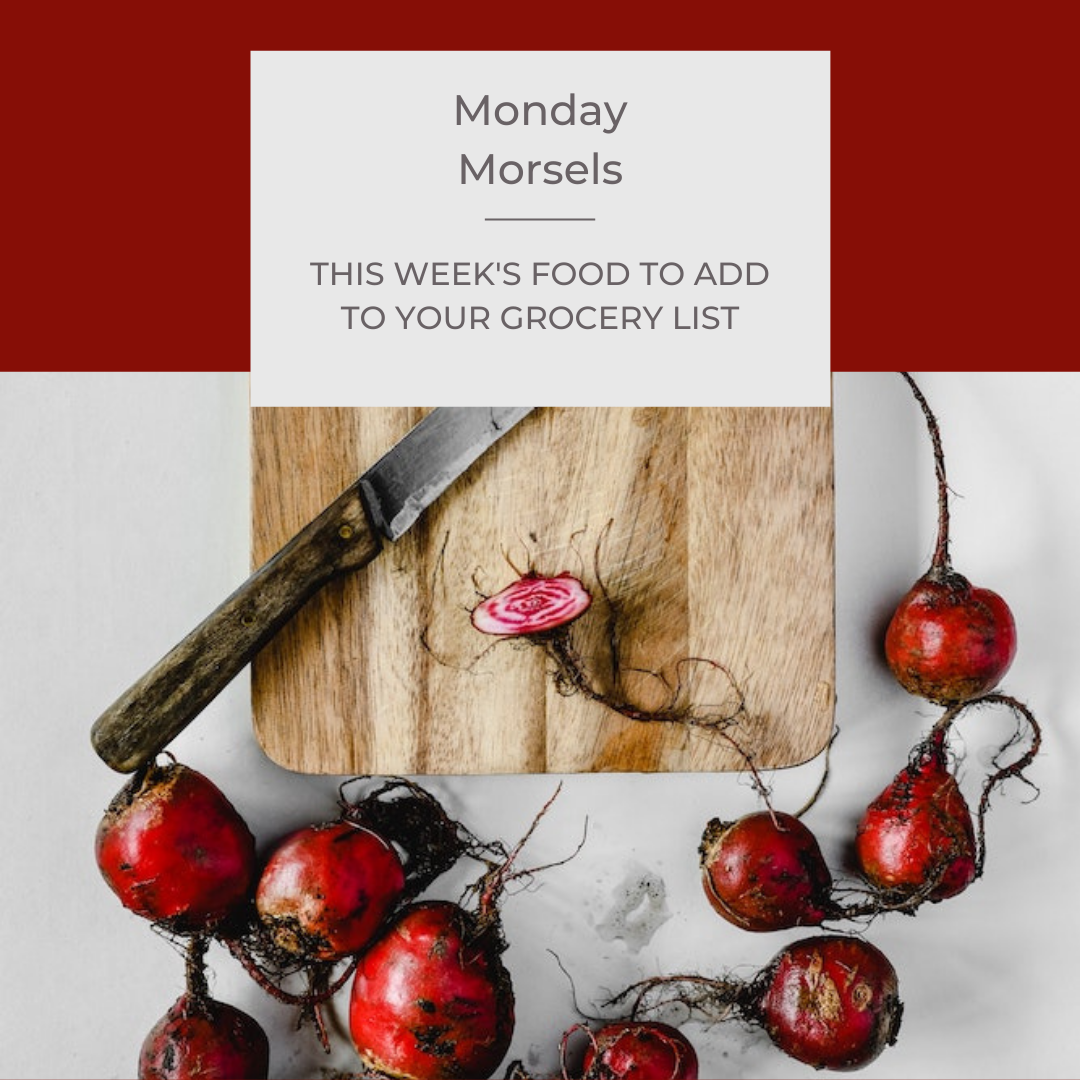
Monday Morsels: Liver Support #1
It’s #mondaymorsels day, a brief post about a food you’ll want to add to your grocery list. This food, as always, will be related to the main topic of the month! This month, we’re talking Liver Lovin.
Click on the image to get the full exploration of today’s find!
Mondays, we build your grocery list with one food, focusing on this month’s main topic.
New month, new topic: lovin up the liver. On your next grocery trip, plan to pick up:
BEETS.
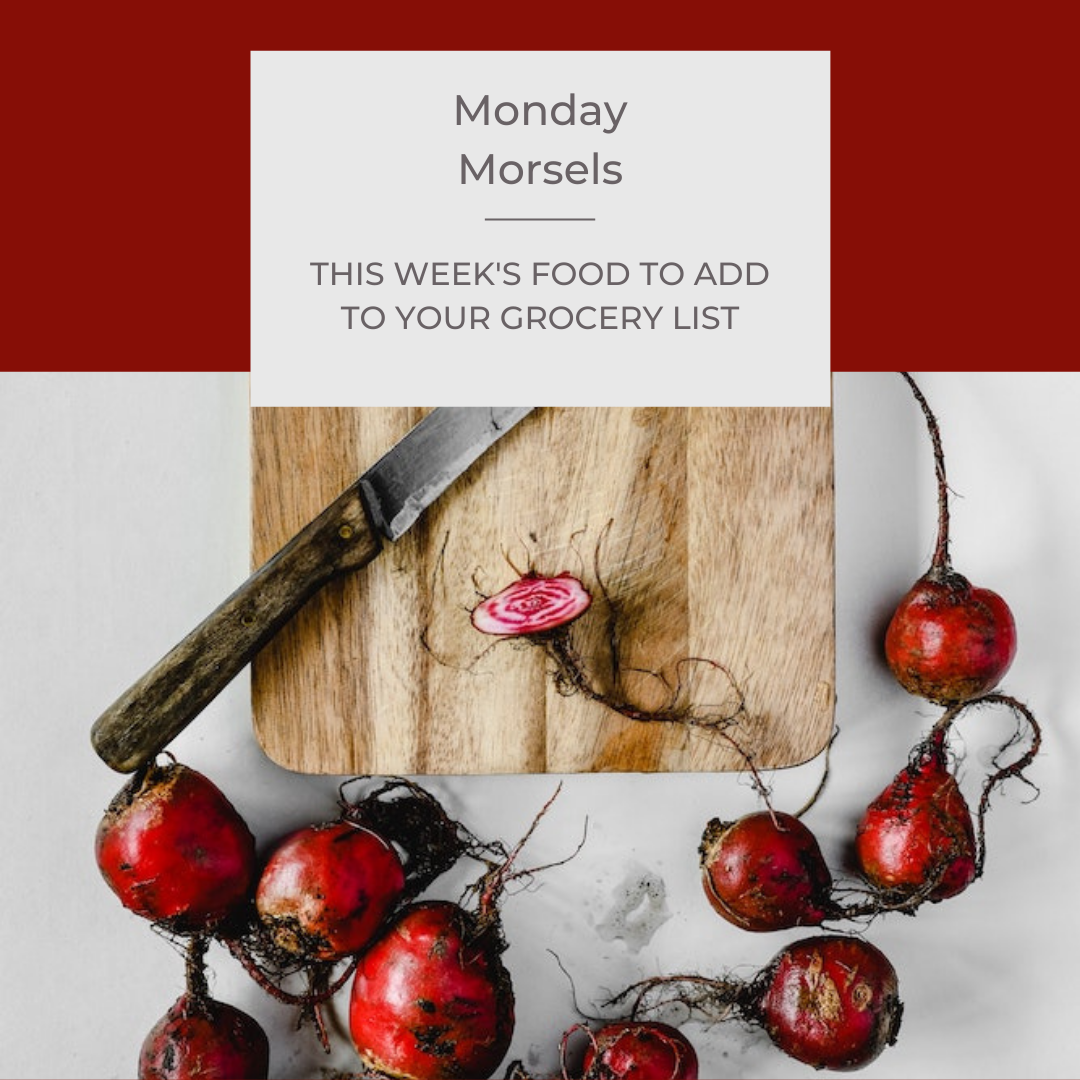
For those who wish to know the ‘why’ behind this idea, I’ll give you three things to think about.
FOR THE BETAINE
Betaine is a compound that helps your liver regenerate - oh yes friend, the liver is your one and only organ that will regenerate itself. And betaine, found in beets, helps support this process!
FOR THE BETALAINS
See how they’re all sounding like compounds that come from beets? These offer a different angle on the liver lovin - they help support the liver to do the detox work. They are the support crew to help your liver bag your garbage, and take that garbage to the curb. These compounds do this by helping reduce inflammation, and protect against the damaging effects of inflammation.
FOR THE SLOW CARBS
Beets provide some brilliant metabolic-supporting slow carbs (as Dr. Hyman calls them). These root veg offer those important components you need for the liver to do her work: yes yes, she is fuelled by glucose. Each and every cell of your body runs on glucose as her source of fuel! (Unless you are in ketosis. But that is another topic for another day.) You need carbohydrates for your liver to do her job of hormone manufacturing. Your liver needs carbohydrates to produce enzymes you’ll need to break down foods. Your liver will love the fibre from these root veg, as it will help cultivate the good bugs in your guts - and these bugs are your liver’s besties!
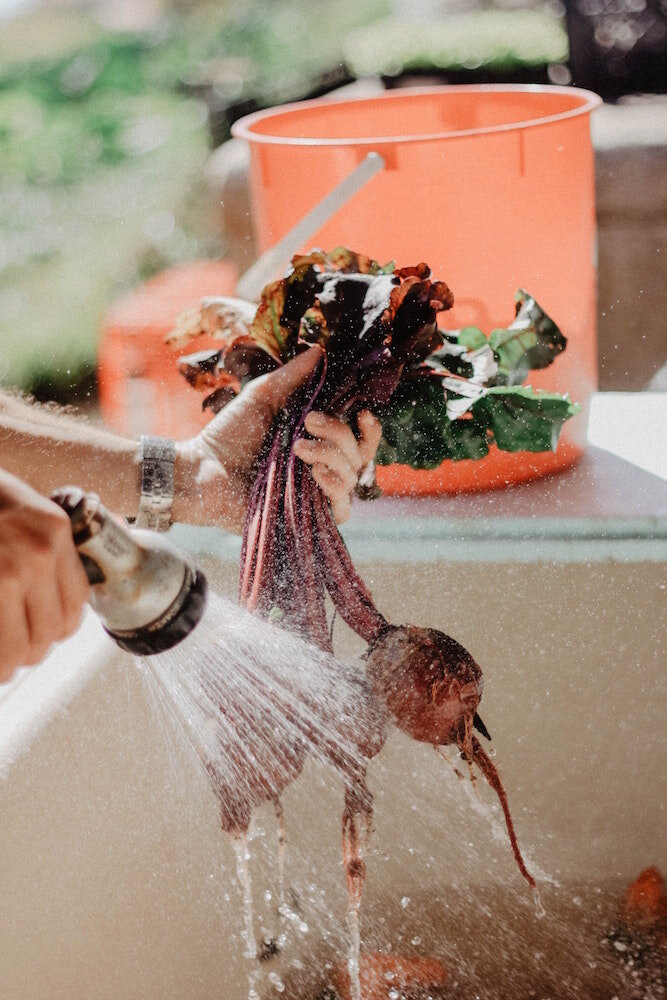
Beets! Beets! Good for your Heart! Good for your Liver!
Add beets to your meals in the coming week, and your liver will thank you. Be it shredded in a salad, roasted and mellowing in a tasty marinade, or turned into Borscht. Heck, try it out in a ferment!
May it be a delicious venture!
Aiming for a return to overall vitality? Looking to love up your liver, balance blood sugars or hormones, or reduce that chronic inflammation? Got a high burden of stress? Need some help in feeling real good?
Get in touch by clicking here. Let’s meet up to start drawing up your road map to support you in both quantity and quality of life.
*This is not medical advice.
Monday Morsels: Energy Support #5
It’s #mondaymorsels day, a brief post about a food you’ll want to add to your grocery list. This food, as always, will be related to the main topic of the month! This month, we’re talking Energy + Fatigue support. Today, a special guest blogger Melanie Isles takes over!
Click on the image to get the full exploration of today’s find!
Mondays, we build your grocery list with one food, focusing on this month’s main topic.
March is for talking Energy support and a reduction in fatigue. Today, we have a special guest blogger, Herbalist and Gardener Melanie Isles. Melanie is here to talk about…
THREE HERBAL ALLIES TO BRING IN WHEN FATIGUE / LOW ENERGY GOT YOU DOWN.

These are milky oat tops - yes, just like the cereal plant!
Melanie is most at home when she has her hands in the soil tending the precious plants. She has been wandering garden paths learning about plant care for over 3 decades. She is an herbalist and herbal educator. She blends permaculture principles to develop beautiful and productive garden spaces. I link through to her new business below.
Melanie believes that everyone can have a beautiful garden space. Growing and making your own herbal medicines is fun and easier than you think. Let’s turn things over to Melanie!
My top three herbs for nervous system support
I am thrilled to share a wee bit about my favourite plant medicines for the nervous system. Just a tiny introduction about me. I am an herbalist, educator, and gardener. I have been working with plant medicines with myself and my family for over 20 years.
I have a strong preference for plant medicines that grow easily and abundantly. I have worked as a clinical herbalist, created and many popular blends from my herbal dispensary, now my focus is on herbal education and garden design. Helping people understand how to make and use their own medicines is my jam!
Nourishing the Nervous System
The nervous system is a pretty simple phrase to name a rather complex part of our functioning. Most of us only think about our nervous systems when we are feeling frazzled, stressed, and tired. In many ways the nervous system is responsible for linking our inside world with the outside world.
I know for sure Luka has been talking lots about ways to support the nervous system with foods. I am here to share about some herbs that we can call on to support us in times of stress and/or recovery. I am sure we can all agree that the last 12 months have not been easy on anyone! There are some great herbs available to help us.
Plant Medicine: Milky Oats
My all-time favourite plant medicine is milky oats. Sometimes called greet oats, this is exactly the plant that also gives us the famous breakfast cereal. As the seed heads ripen, they are full of juicy and nourishing goodness.
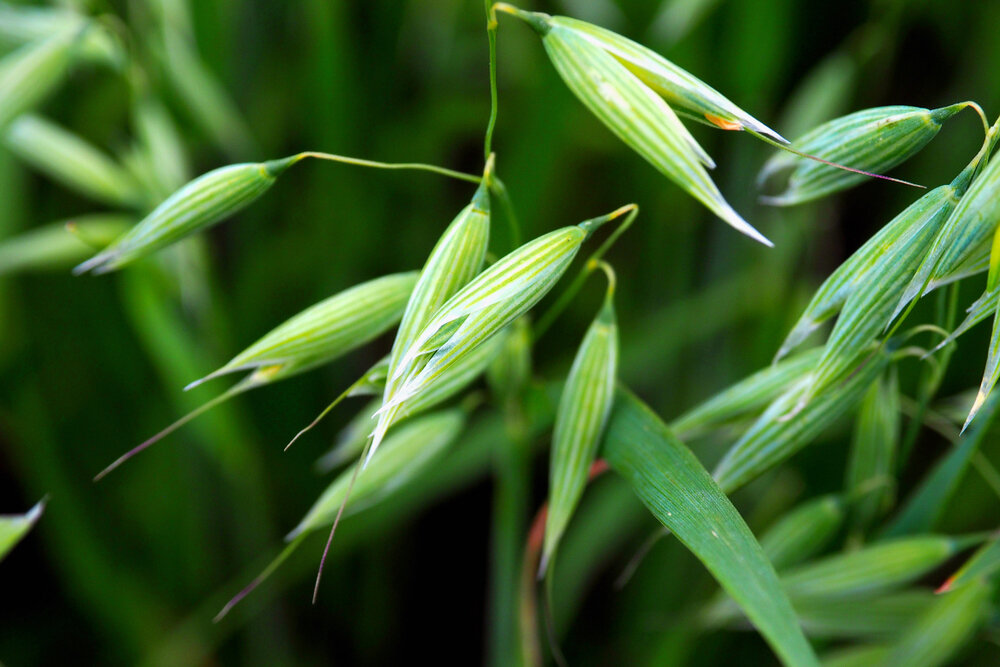
Milky oats are especially for those times when one is ‘wired and tired’. Feeling jittery and on edge? Not sure you can take another ______ (phone call, bickering children, demand from your boss, etc.). Milky oats are here to soothe and calm those frazzled nerves.
This is medicine best taken over the long term, daily for 6-8 weeks at least. It can be taken as a regular nourishing herbal infusion or as a daily tincture. If you are looking for tincture, make sure it is made from fresh plants. This is the traditional way of extracting this medicine and gets the most out of the plant.
I think of this plant for anyone feeling brittle and edgy. It is amazing for recovery from a stressful time. Even better if you know the stressful time is coming, think exam season, a big project at work, December. Start taking a daily dose of milky oats before the s-tress hits the fan!
Plant Medicine: Lemon Balm
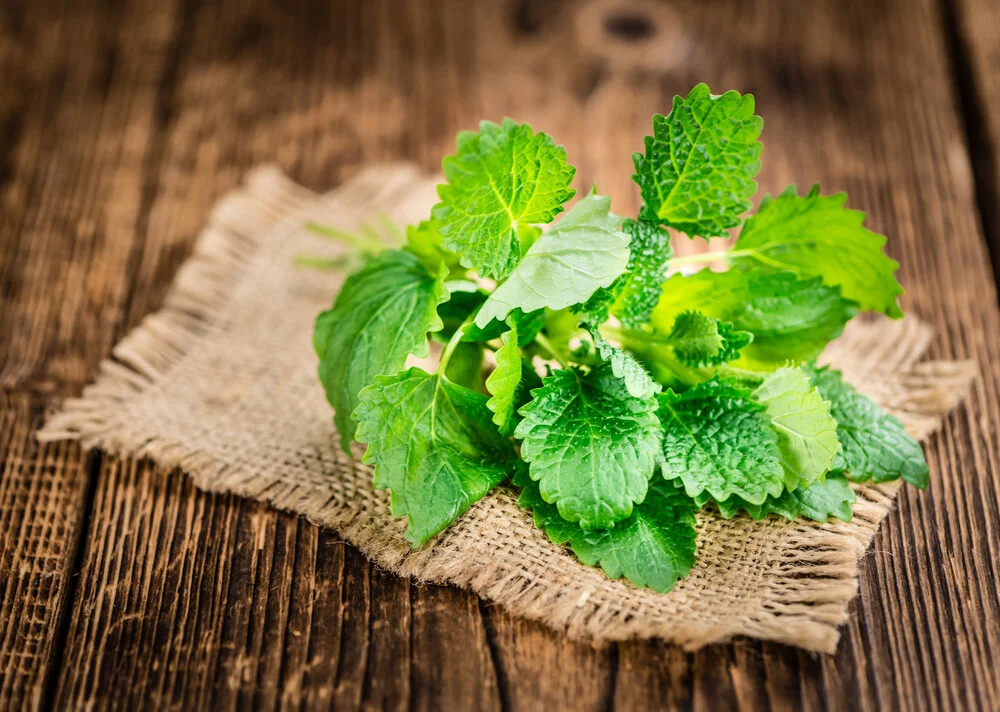
Lemon balm is another I lean on a lot. This is an aromatic member of the mint family. It has a sweet and lemony taste, hence the name.
Lemon balm is great for folks that feel their stress and anxiety in their tummy. It helps to calm a cranky stress belly. If brittleness is the key for oats, then anxiety is the key for lemon balm. This is for the skittish mind that just won’t rest on one subject or thought for very long.
It shines for anxious little ones as well. They love the taste, so it is easy to get them to drink a cup of tea (iced or warm). That case of upset tummy with no known cause? Lemon balm to the rescue!
This can be taken daily as well. But you will also notice the relief when you take it in the short term. A few drops of lemon balm tincture before bed or before a stressful day at work or upon arriving home from a stressful day will settle the anxiety right down. I always keep lemon balm in my medicine chest!
Plant Medicine: Lavender
Finally, I will talk about lavender. I had a hard time settling on which plant to pick for the number three spot, chamomile or California poppy were strong contenders. In the end lavender wins because it is so versatile.
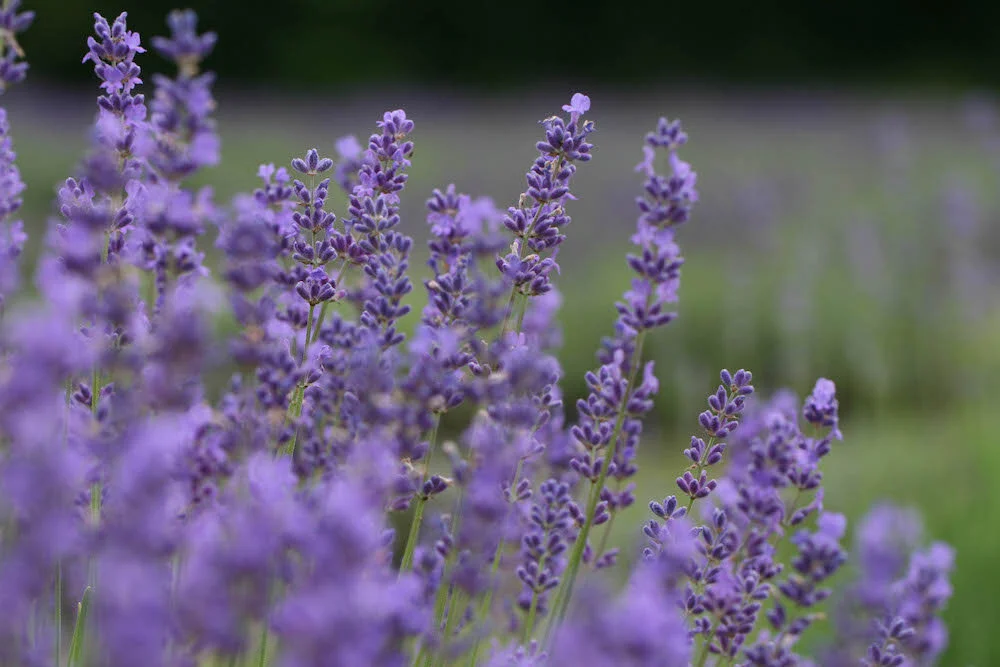
We can add the loose plant to a tea, steam, or bath. It can be taken as a tincture. Most folks are probably familiar with using the essential oil of this plant. I personally prefer whole plant medicine but having a small bottle of lavender oil in my bag has saved me on more than one occasion.
I keep a tincture made from fresh lavender flowers on my bedside table. Any night that I am feeling jittery or my mind can’t seem to stop bouncing from one thing to the next I take a few drops for immediate relief.
Lavender is a relaxing nervine, this simply means it is calming and relaxing. Sleep and rest are so often scarce resources during stressful times. But honestly probably our most important allies. Lavender can help us rest, even when our mind has other plans.

Melanie Isles is our guest blogger today.
All three of these plants can be easily grown, yes, even in Southern Alberta! It is garden planning time so maybe carve out a small patch for these lovelies this year!
Thanks for the dive into your top three herbs (+ 2 bonus!) for this week’s instalment of Monday Morsels, Melanie. I am so grateful to you for sharing your knowledge of plants, their properties, and your insights in to how they can help us support ourselves when fatigue + low energy are around. Who’s going to seek these out in a cuppa this week? Hands up!
If you’d like to connect with Melanie, she is starting a brand new venture, helping people tend the land around them in her new business Sanctuary Garden Designs. Part land care, part education, all in the name of connecting with the land where you are, and tending to her expression. Find Melanie online at sanctuarygardendesigns.net.
Aiming for a return to energy vitality? Looking to let go of that persistent fatigue? Need some help in feeling real good?
Get in touch by clicking here. Let’s meet up to start drawing up your road map to support you in both quantity and quality of life.
*This is not medical advice.
Monday Morsels: Energy Support #4
It’s #mondaymorsels day, a brief post about a food you’ll want to add to your grocery list. This food, as always, will be related to the main topic of the month! This month, we’re talking Energy + Fatigue support.
Click on the image to get the full exploration of today’s find!
Mondays, we build your grocery list with one food, focusing on this month’s main topic.
March is for talking Energy support and a reduction in fatigue. Today, we bring in some plant helpers. Add this one to your grocery list:
MORINGA POWDER.

For those who wish to know the ‘why’ behind this idea, I’ll give you three things to think about.
FOR THE LIVER SUPPORT
Moringa is a potent plant helper that wants to be best friends with your liver, nourishing her in order that she have the ingredients she needs at the ready to detoxify your body, and to help move inflammation out of the body. It’s been shown to help enhance your liver’s production of important enzymes needed in the processes of detoxification (1). Sign me up!
FOR THE MITOCHONDRIAL PIECE
Fatigue and low energy can show up differently for everyone. It is important to do some digging to figure out what’s going on behind your low energy levels - be it a blood sugar balancing piece, a hormonal imbalance piece, low mood, chronic fatigue syndrome, and on and on.
Common to all of these is high oxidative stress - that end result of low grade inflammation. Where does this oxidative stress do its damage? On your mitochondria - those little energy factories you have in each and every cell except your red blood cells. Providing antioxidants to the body will help in reducing the damage from oxidative stress. Moringa provides a rich array of important anti oxidants like quercetin and other polyphenols that have been well documented to help the work at hand. (2, 3)
FOR THE BRAIN + MOOD SUPPORT
In times of low energy and fatigue, our nervous system feels it quite keenly. There are some key players in moringa leaf powder that helps support the manufacture of serotonin - that feel good hormone.
Bonus here too, due to its high antioxidant content, moringa is a plant ally to the thyroid, who is the grand poobah in charge of your brain function + mood balancing work.
So think of moringa as a double-whammy when it comes to support the entire nervous system and your feeling body, including your emotions: she helps what ails it in helping to clean it up, but also supports the organs involved in maintaining good brain and mood function, making sure the system works better, too.
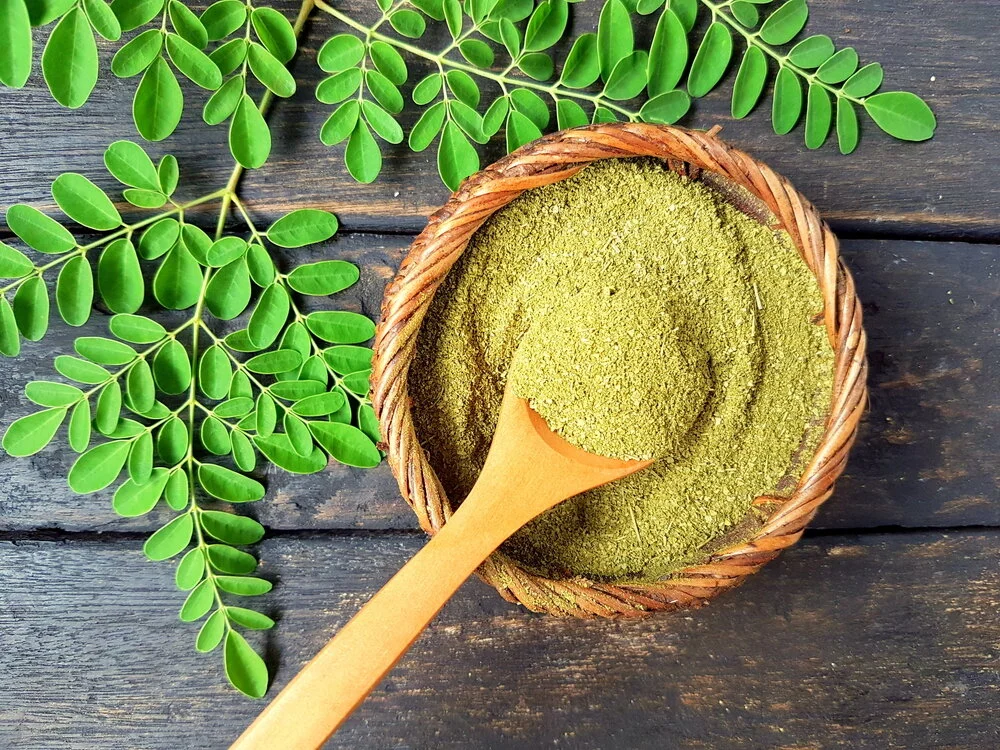
Moringa leaf is dried and ground into a powder.
Moringa powder is a native plant to warm climate zones: think India and Africa. This tree tolerates drought and sandy soils, hence its proliferation in these warm areas of the world.
Here in North America, you would typically find moringa leaf dried, and pulverized down into powder form. The easiest way to use it is to add 1/2 tsp to a smoothie, or your next elixir, your Hot Choc O’clock. If you are adding it to a heated dish, it’s best to add after taking the dish off of the heat and adding in your moringa last in order to preserve the nutrients found within.
This powder has a green taste - it doesn’t take much to garner some of the important properties of it! So start slow, and build up to 1/2 tsp or 1 tsp per day. Click here for a great round up of ideas on how to use it: I particularly like the idea of boosting a homemade pesto or chimichurri with some moringa powder.
Aiming for a return to energy vitality? Looking to let go of that persistent fatigue? Need some help in feeling real good?
Get in touch by clicking here. Let’s meet up to start drawing up your road map to support you in both quantity and quality of life.
*This is not medical advice.
Monday Morsels: Energy Support #3
It’s #mondaymorsels day, a brief post about a food you’ll want to add to your grocery list. This food, as always, will be related to the main topic of the month! This month, we’re talking Energy + Fatigue support.
Click on the image to get the full exploration of today’s find!
Mondays, we build your grocery list with one food, focusing on this month’s main topic.
March is for talking Energy support and a reduction in fatigue. Next on your grocery list:
CACAO.

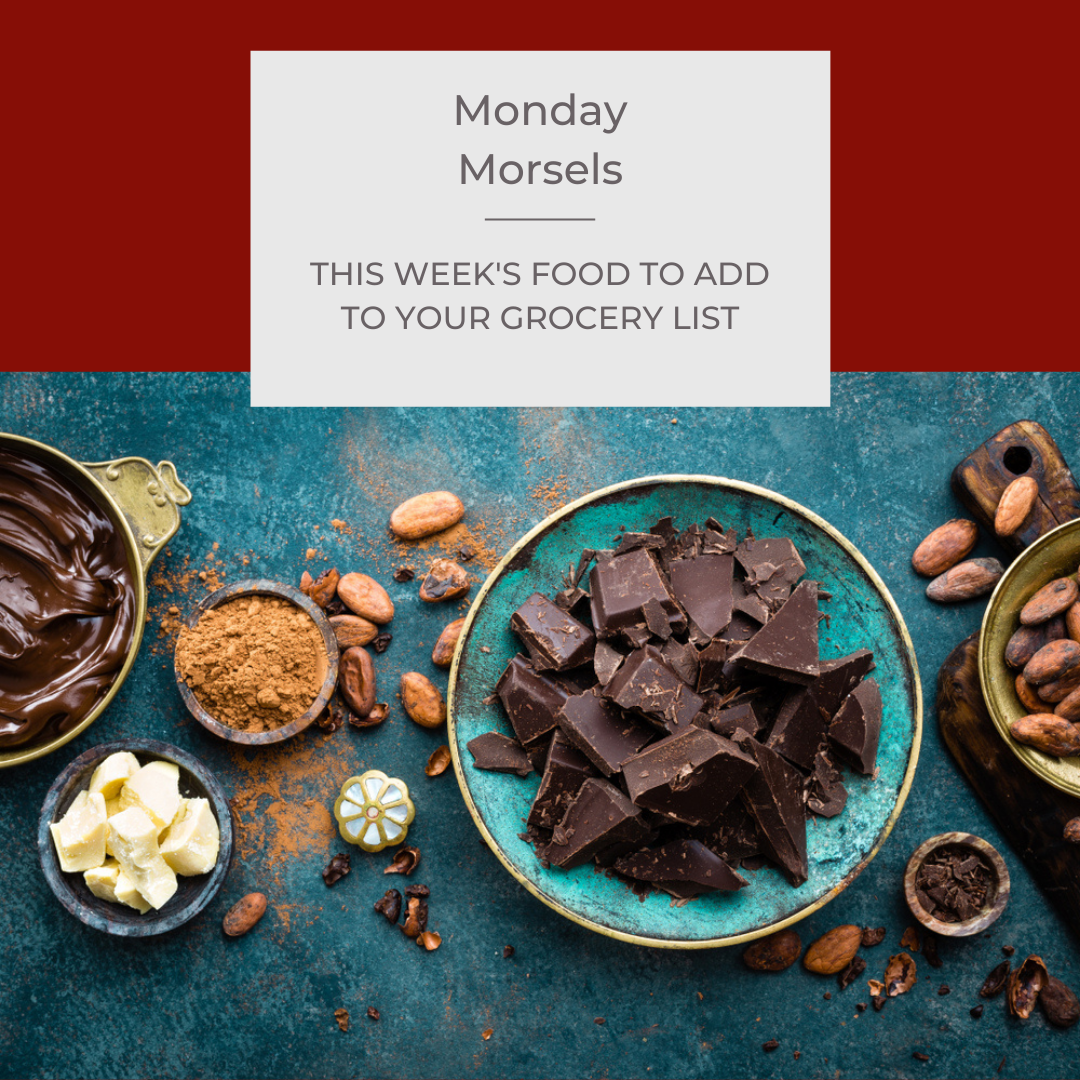
Cacao products - powder, butter, dark chocolate, nibs, paste
For those who wish to know the ‘why’ behind this idea, I’ll give you three things to think about.
FOR THE BRILLIANT ARRAY OF ANTIOXIDANTS (aka mitochondrial protection)
We talked about this in last week’s nettle post. At the root of fatigue + low energy woes, it can be a cellular thing. Meaning somehow your mitochondria are being negatively impacted, and unable to do their full job of producing 90% of your body’s energy through the ATP cycle. What’s impacting these mitochondria? Free radical damage, which brings on oxidative stress. All as a result of some type of chronic inflammation or some type of stress load in the body.
What helps mop up these free radicals, preventing them from contributing to a hampering of your mitochondria? Antioxidants! And they’re in rich supply here, in all cacao products. So bring in the chocolate, the real deal cacao for good energy support and prevention of that free radical damage, kitten. (ps - cacao will have more than cocoa products. So reach for cacao butter + cacao powder when you can, especially when looking to support through fatigue + low energy!)
FOR THE MITOCHONDRIAL (FUNCTION + PROLIFERATION) LOVE
Cacao products are a good source of two important micronutrients that are key players in mitochondrial function: CoQ10 and PQQ, aka pyrroloquinoline quinone. Both compounds help fuel our mitochondria; but more than that, specifically in the case of PQQ, it has been shown to help you make MORE mitochondria. It’s called mitochondria biogenesis. (1) How cool is that?
Coles Notes: eating the real deal cacao will help you make more mitochondria, therefore helping you better make energy in every cell. This in turn helps reduce cellular fatigue. Yea yea yea, with chocolate!
FOR THE MAGNESIUM
Cacao butter is especially rich in magnesium, a key mineral needed for the conversion of food into energy. Often, fatigue can be linked to a magnesium deficiency (2). This can be through hormonal imbalances or blood sugar imbalances - all processes that require lots of magnesium. When our bodies are deficient in magnesium, some of the biochemical activity and processes in the body can start to suffer, and this can lead to fatigue or low energy levels. Cacao butter is one of the richest food sources of magnesium! Not only that, but in the particular form of cacao butter, sometimes a much easier food to get the magnesium from than, say, in the dark leafy greens that may have other plant-defense compounds that prevent us from accessing the magnesium.
Awwwww yeaaaaa. It’s Hot Choc O’Clock, isn’t it?

It can be as simple as adding in a daily hot chocolate or elixir with cacao butter / powder / paste in it
Cacao is my most favourite and delicious plant ally when struggling with energy or fatigue issues.
How do I do it? I reach for the Hot Choc O’Clock every day: a hot chocolate or elixir, typically mid morning or mid afternoon to help keep my blood sugars balanced and offer that food grade hit of magnesium, PQQ, CoQ10 and antioxidants to help my mitochondria work well.
Start with cacao powder, and then start experimenting with cacao butter. Easiest way is to simply add a tbsp to your morning cuppa joe or tea! Seek a simple recipe of mine at this post . I have a Golden Milky Tea with cacao butter here. This one is quite possibly the simplest one I make, almost daily.
Learn to build your own elixirs - seek inspiration in Malcolm Saunders’ brilliant book Elixir Life.
Aiming for a return to energy vitality? Looking to let go of that persistent fatigue? Need some help in feeling real good?
Get in touch by clicking here. Let’s meet up to start drawing up your road map to support you in both quantity and quality of life.