

Monday Morsels: Energy Support #2
It’s #mondaymorsels day, a brief post about a food you’ll want to add to your grocery list. This food, as always, will be related to the main topic of the month! This month, we’re talking Energy + Fatigue support.
Click on the image to get the full exploration of today’s find!
Mondays, we build your grocery list with one food, focusing on this month’s main topic.
March is for talking Energy support and a reduction in fatigue. Next on your grocery list:
NETTLE.

Stinging Nettle tops for energy + fatigue support
For those who wish to know the ‘why’ behind this idea, I’ll give you three things to think about.
FOR THE ANTIOXIDANTS
At the root of fatigue + low energy woes, it can be a cellular thing. Meaning somehow your mitochondria are being negatively impacted, and unable to do their full job of producing 90% of your body’s energy through the ATP cycle. What’s impacting these mitochondria? Free radical damage, which brings on oxidative stress. All as a result of some type of chronic inflammation or some type of stress load in the body.
What helps mop up these free radicals, preventing them from contributing to a hampering of your mitochondria? Antioxidants! And they’re in rich supply here, in nettle. So bring it on in to your way of cooking + eating, will you?
FOR REDUCING INFLAMMATION
Nettle provides a rich array of anti-inflammatory compounds: there are studies that show these plant compounds help stop the production of inflammatory-signalling hormones (1), while other compounds stopped the production of inflammatory compounds themselves in the body (2).
FOR THE BLOOD SUGAR BALANCING PIECE
Nettle has been shown as a brilliant plant ally in balancing your blood sugars, mimicking the way insulin works (3, 4). The studies are relatively new on this, but it is a promising area of exploration: imagine, nettle, the humble little stinging plant, helping allay whatever is ailing us.

It can be as simple as adding in a daily cuppa nettle tea.
Nettle is a brilliant plant ally when you are struggling with energy or fatigue issues.
Including it in your cooking a few times is a week is a good place to start. Read through to this article for more ideas on how to incorporate it into your daily meals!
Find loose leaf nettle at your local health food store. Find a tea blend that features this brilliant plan ally. Start bringing it in on the daily!
Aiming for a return to energy vitality? Looking to let go of that persistent fatigue? Need some help in feeling real good?
Get in touch by clicking here. Let’s meet up to start drawing up your road map to support you in both quantity and quality of life.

Monday Morsels: Energy Support #1
It’s #mondaymorsels day, a brief post about a food you’ll want to add to your grocery list. This food, as always, will be related to the main topic of the month! This month, we’re talking Energy + Fatigue support.
Click on the image to get the full exploration of today’s find!
Mondays, we build your grocery list with one food, focusing on this month’s main topic. As today is the first day of a brand new month, let’s dive in to a whole new topic.
March is for talking Energy support and a reduction in fatigue. First on your grocery list:
SEAWEED.

Seaweed in its natural habitat: super supportive through energy + fatigue woes.
For those who wish to know the ‘why’ behind this idea, I’ll give you three things to think about.
FOR THE MINERALS
Typically, when adding in seaweed, the principle reason is for the minerals. There is a rich array of minerals in all foods that come from the ocean, as the ocean is just that: a rich bath of minerals. When you are struggling through energy or fatigue troubles, you tend to burn through minerals at a faster rate due to the low grade inflammation and free radical damage that could be behind the root piece of why fatigue is there in the first place. Adding in mineral rich foods like seaweed to your regimen can help bolster those organs involved in the body’s stress response, helping then to nourish through and be more resilient through stress. Resiliency is one of the key pieces to reach for in this scenario!
FOR THE BLOOD SUGAR REGULATION HELP
The science tells us that some of the nutrients found in seaweeds - things like fucuoidans and fucoxanthin — have been shown to help improve your body’s sensitivity to insulin (1). This is a key piece to help your body’s natural regulation of blood sugars!
Blood sugar dysregulation can sometimes be at the root of fatigue and energy troubles. Each and every cell in your body runs on glucose, the preferred source of fuel when the body is active. (Unless in ketosis - but that’s another post for another day.) When you run out of stored glucose in your liver and muscle tissues, your body perceives it’s running out of fuel. It mounts the stress response, in order to help free up more sugar into the bloodstream. This works due to the effects of cortisol. But trip this response too often, and you really start to get on a roller coaster of blood sugar and hormone dysregulation all day everyday. Part of the scenario here is that your cells stop hearing insulin knocking at the door, alerting you that she has some blood sugars for you to take up into your cells for fuel. Now you start to lose the ability to take up glucose into your cells, and this means no fuel for the mitochondria in your cells. This means no energy output, which results in fatigue. Seaweed can help keep this system working well, influencing your cells to hear that insulin (carrying blood sugar) knocking at your cell wall’s doors, enhancing that system to work well and restore function and fuel to your mitochondria!
FOR THE OXYGENATION OF RED BLOOD CELLS
Seaweed is a good source of iron to make hemoglobin, the molecule that is embedded in the centre of each of your red blood cells. Reminder from grade eight health sciences: red blood cells carry oxygen around to the cells of your body. This hemoglobin is a part of the energy cycle in your cells, helping you make that energy. Iron supplements are not always indicated - but food versions are a wonderful way to supply the micro amounts your body may need to maintain regular function and energy metabolism.
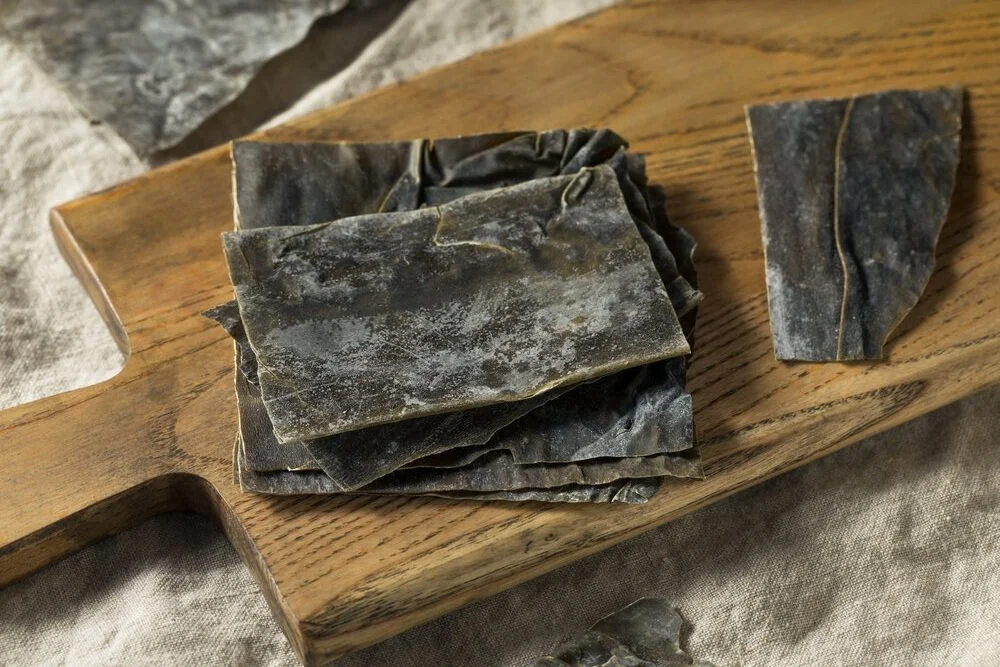
Kombu
Seaweed is a brilliant food ally when you are struggling with energy or fatigue issues.
Including it in your cooking a few times is a week is a good place to start. Read through to this article for more ideas on how to incorporate it into your daily meals!
Find a few at your local health food store, or Asian grocery store. Start experimenting!
Aiming for a return to energy vitality? Looking to let go of that persistent fatigue? Need some help in feeling real good?
Get in touch by clicking here. Let’s meet up to start drawing up your road map to support you in both quantity and quality of life.

Monday Morsels: Thyroid Support #4
It’s #mondaymorsels day, a brief post about a food you’ll want to add to your grocery list. This food, as always, will be related to the main topic of the month! This month, we’re talking Thyroid Lovin.
Click on the image to get the full exploration of today’s find!
Mondays, we build your grocery list with one food, focusing on this month’s main topic. For your thyroid, you may want to consider adding this last food to your grocery list:
SHELLFISH.

Shellfish + seafood: deep nourishment for your thyroid
For those who wish to know the ‘why’ behind this idea, I’ll give you three things to think about.
FOR THE IODINE
Supplementing with iodine when your thyroid is struggling is not recommended, unless you are being followed very closely by a Naturopath, Medical Doctor or Functional Medicine Doctor who can measure how your system is faring + doing with this supplementation. Iodine supplementation is tricky business - I would not recommend doing this on your own, nor with an under-qualified practitioner (*ahem that would be me.)
But the food version? It’s just food! Iodine is one of those key nutrients you need as a backbone for thyroid hormones, namely T3, T4 and calcitonin. Incidentally, the ‘3’ and ‘4’ at the end of those hormone names refers to the number of iodine atoms that are on the hormone. T3 has 3 iodine atoms, whereas T4 and 4! It’s no surprise that one of the reasons one might get a diagnosis of under-active thyroid is due to a lack of iodine, as you can’t make the hormones without it. (1)
FOR THE ZINC + OTHER KEY MINERALS
Seafood, and shellfish in particular, are rich sources of key minerals necessary to your thyroid’s function, and in the ingredients needed to effect the impact your thyroid has on the cellular level. They help regulate the thyroid itself, and all of the processes it governs down the line. Zinc especially is needed to make the active versions of your thyroid hormones. Zinc for the metabolic win!
Not only that, but the minerals provided in shellfish + seafood are in balance with the way it works in your body; when in balance, the work happens much more smoothly. Think about it: this is the way our ancestors accessed the nutrients it took to get through their days; our genetics evolved with nutrients in this way. Let’s mimic what has worked for millenia, in order to support our own body’s best function!
FOR THE PROTEIN
Protein is an essential nutrient for those struggling with a thyroid diagnosis. You need protein to build each and every thyroid hormone for starters; but you also need protein for other important functions in the body that, when they are not working properly, can have a negative impact on the thyroid itself. For example, gut health: when the thyroid is struggling, it is often a call to look at how gut health is. Know what helps keep integrity at the gut lining? Important amino acids, which you’ll find in protein rich foods.
When the thyroid is struggling, it’s a sign the body is in a stressed state. Know what gets negatively impacted in this scenario? Your immune system. Your immune system runs solely on protein: why not feed your body top notch goods to help her get through the day as she needs to?
*caveat here: make sure to also have a root or fruit every time you reach for protein, as the combination of protein + carbohydrates is needed to ensure proper blood sugar regulation.

Scallops. My personal fave.
Shellfish + seafood are brilliant allies when it comes to deep nutrition for the thyroid.
Aim for 1-2 servings a week, and you’ll be well on your way to providing those important nutrients that are essential to your thyroid’s function!
Sourcing good quality seafood + shellfish is a key piece of the puzzle here: consider purchasing from a reputable fish monger in your area, or connecting with a community-supported fishery like Skipper Otto’s. Read through to this article for good tips when looking for good quality fish + shellfish + seafood.
Aiming for a return to thyroid vitality? Looking to support your metabolism + energy levels? Need some help in feeling real good?
Get in touch by clicking here. Let’s meet up to start drawing up your road map to support you in both quantity and quality of life.

Monday Morsels: Thyroid Support #3
It’s #mondaymorsels day, a brief post about a food you’ll want to add to your grocery list. This food, as always, will be related to the main topic of the month! This month, we’re talking Thyroid Lovin.
Click on the image to get the full exploration of today’s find!
Mondays, we build your grocery list with one food, focusing on this month’s main topic. For your thyroid, you may want to consider adding this food to your grocery list:
PASTURED PORK.

Pork Chops - deep nutrition for your thyroid
For those who wish to know the ‘why’ behind this idea, I’ll give you three things to think about.
FOR THE PROTEIN
When the thyroid is struggling, it is typically due to a metabolic issue, meaning your metabolism is off. This looks like blood sugar regulation issues, hormonal balance is off kilter, and/or inflammation or stress is happening. Not awesome.
Protein helps nourish those organs deeply impacted by a metabolic imbalance issue. When consumed with carbohydrates, protein can actually help improve blood sugar regulation! By addressing some of the imbalances, you end up taking the pressure off of the thyroid.
FOR THE VITAMIN D3
When you reach for meat from pastured animals, they will have any extra vitamin D3 stored in their fatty tissues. Pastured pork is a wonderful source of vitamin D3! Studies are showing that low levels of vitamin D3 are correlated with elevated autoimmune issues (1). When we’re talking thyroid, this is Hashimoto’s and Graves. Supplying good quality food-grade vitamin D3 via pastured pork products can be a delicious way to shuttle some of this important vitamin in to your system.
Remember - the animals can’t make D3 themselves (and store in their tissues) unless they have access to the outdoors! It’s important to make the distinction here - we are talking about meats from pigs that are allowed to roam freely outdoors.
FOR THE MINERALS
All meats contain bio-available zinc, a crucial mineral needed for the metabolism of thyroid hormones (2). You need zinc to make thyroid hormones, and to convert T4 to the useable T3 form. It is important to consume foods that are rich in zinc, in order to nourish the thyroid! Pork provides a solid source of zinc.
Selenium is another important trace mineral that you’ll find in pastured pork products. This mineral is a crucial ingredient in the recipe when your body is making thyroid hormone. You also need this mineral to help make T4 into the useable T3 form. Minerals are one of the most important nutritional pieces to nourishing the thyroid + your metabolism!

Pastured pigs
Good protein is an essential component when it comes to nourishing your thyroid + supporting your body’s metabolism.
Sourcing pasture raised animals is one of those recommendations that could serve you well, especially if you’re currently struggling with an under-performing thyroid.
Not sure how to cook it? I have a recipe for Apple Sage Pork Chops in my Thyroid mini recipe book, currently on sale for $5. Check that one out here.
Aiming for a return to thyroid vitality? Looking to support your metabolism + energy levels? Need some help in feeling real good?
Get in touch by clicking here. Let’s meet up to start drawing up your road map to support you in both quantity and quality of life.

Monday Morsels: Thyroid Support #2
It’s #mondaymorsels day, a brief post about a food you’ll want to add to your grocery list. This food, as always, will be related to the main topic of the month! This month, we’re talking Thyroid Lovin.
Click on the image to get the full exploration of today’s find!
Mondays, we build your grocery list with one food, focusing on this month’s main topic. For your thyroid, you may want to consider adding these morsels to your list:
MUSHROOMS.

Bring all the mushrooms to the table - even the button mushroom!
For those who wish to know the ‘why’ behind this idea, I’ll give you three things to think about.
FOR THE MINERALS
All mushrooms are a brilliant source of a bevy of minerals, including selenium, zinc, copper + potassium. These minerals are key players in the making + converting of thyroid hormones. Think of mushrooms as nourishing for the thyroid, providing ingredients she’ll need to get her job done, especially in the case of Selenium!
FOR THE B VITAMINS
Bring in variety in your mushrooms to ensure the complete run of B vitamins. Why would you need these B vitamins? To turn food into energy! This process is all regulated by the thyroid. She needs these B vitamins to get that job done. You also need some of these important water-soluble vitamins to make your thyroid hormones and hormones associated with the thyroid.
These B vitamins in mushrooms, as well as other compounds in the mushrooms help support the liver to work well. See, your thyroid + liver are BFFs. When the thyroid struggles, typically the liver is also struggling. Mushrooms are one of those foods that is so deeply nourishing to both. B vitamins have a big part to play in this scenario!
GO FURTHER WITH OTHER MUSHROOMS
Mushrooms are wonderful helpers in eliminating toxins in the body. They do such a good job of binding to toxins like heavy metals, spent metabolic waste and toxins, and ushering them out of your system. Doing so lightens the load for your liver, which in turn will help nourish all hormonal and metabolic function.
Take shiitake and oyster mushrooms: they are brilliant allies in balancing your cholesterol levels. Did you know that elevated cholesterol levels typically indicate the need for thyroid support?
Cordyceps are a medicinal mushroom particularly supportive of thyroid function in the body. It has traditionally been called upon to rebuild the energy reserves that may be depleted from ongoing burden of long term stress, helping bolster energy levels and combat fatigue.

Cordyceps mushrooms are of particular support to the thyroid
Bring in the mushrooms.
Whether they may be the simple white button mushroom, portobellos or shiitake, bring in mushrooms to your meal rotation. Try adding in a new-to-you edible mushroom on your next grocery run. Ever tried enoki, straw or chanterelles before? Give them a go! All mushrooms are of support to your ever loving thyroid.
I love them best when sauteed in a bit of butter, and adding in some garlic and sometimes onions. They’re a great side dish to any meal. My caveat will be to consume them cooked: mushrooms are known to harbour carcinogenic compounds that get destroyed when you cook them up.
Wanting to figure out how to incorporate medicinal mushrooms to your routine? This may necessitate the support of a qualified practitioner or herbalist. Hit me up. I can help you figure that piece out.
Aiming for a return to thyroid vitality? Looking to support your metabolism + energy levels? Need some help in feeling real good?
Get in touch by clicking here. Let’s meet up to start drawing up your road map to support you in both quantity and quality of life.