Monday Morsels: Intestinal Love #4
It’s #mondaymorsels day, a brief post about a food you’ll want to add to your grocery list. This food, as always, will be related to the main topic of the month! This month, we’re talking ways Nutrition can support intestinal health, + why that may be important.
Click on the image to get the full exploration of today’s find.
Mondays, as always here on the blog, we build your grocery list with one food, focusing on this month’s main topic. This month, we’ve been zeroing in on those foods to nourish the intestinal lining.
What’s last on your grocery list?
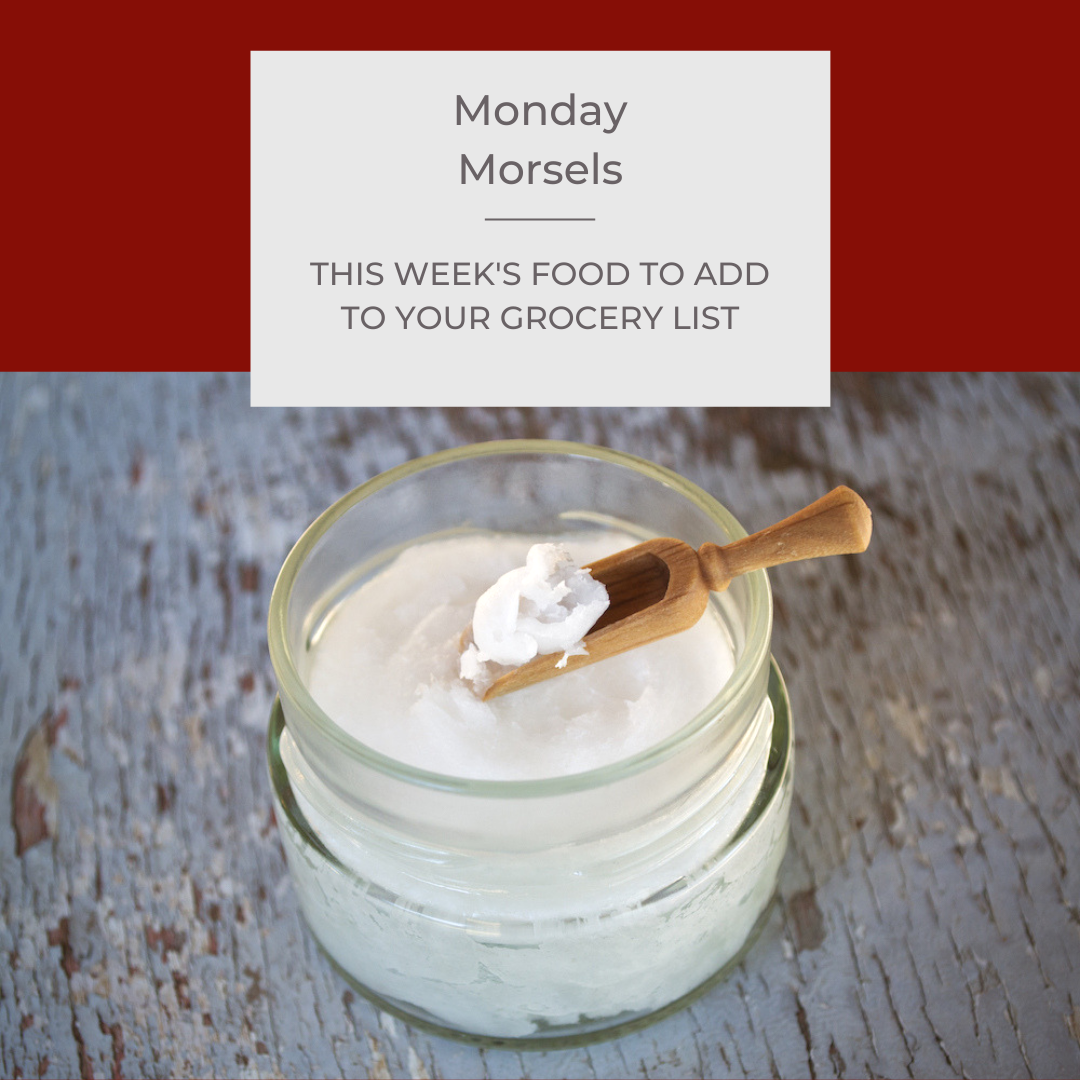
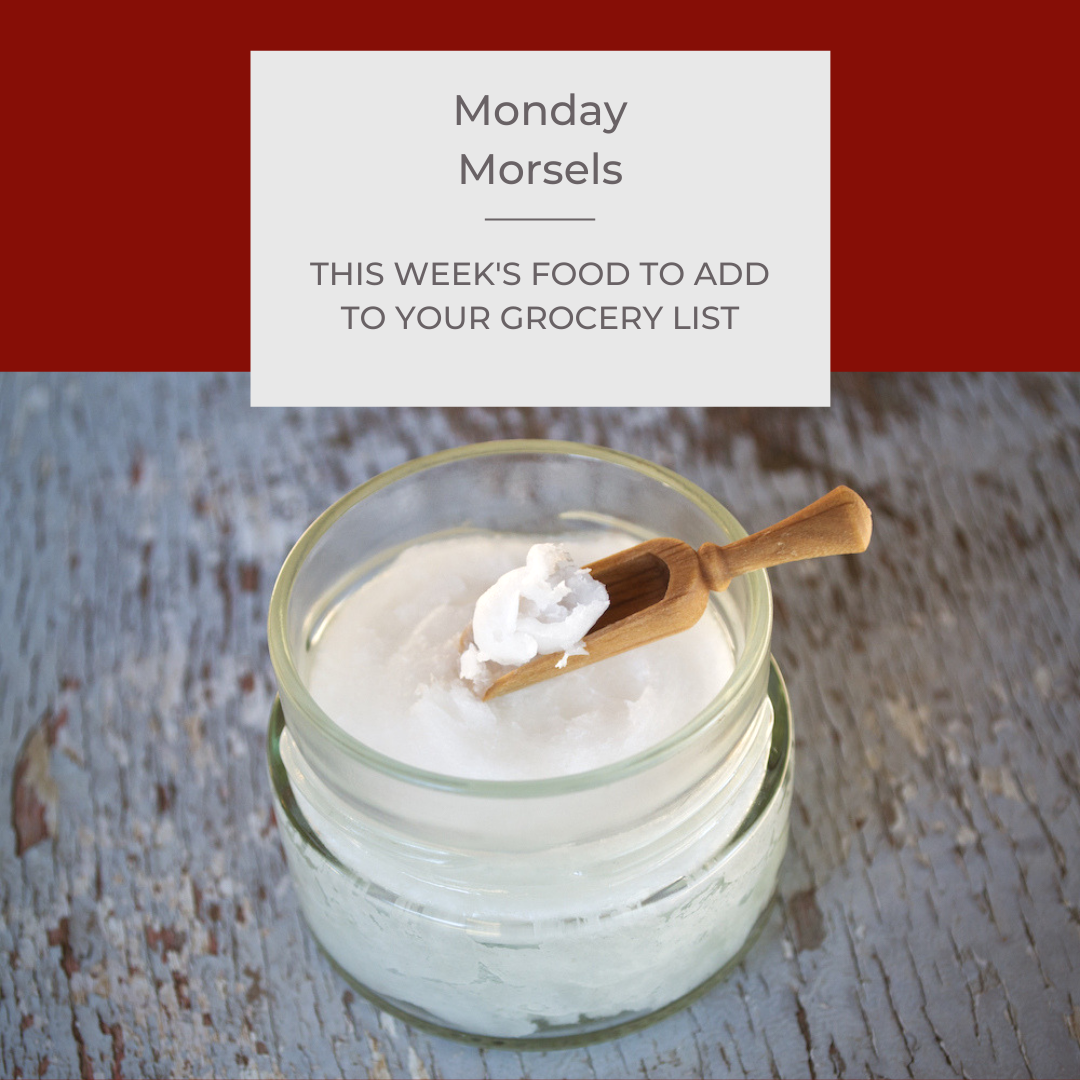
COCONUT OIL.
I’ll give you three reasons why adding coconut oil to your daily eats will be of benefit…
BECAUSE OF EASE OF DIGESTION
Coconut oil is a traditional fat that has been used for a long number of generations in certain countries. It is primarily made up of short and medium chain fatty acids. This means your body can assimilate them in to your system without the use of bile, rendering it a much easier fat to get in to your system for the deep nourishment needed.
For those who are struggling with the production of bile, or those whose gallbladders are asking for a free pass, coconut oil can be one of those nourishing fats that can take some of the workload off of your digestive system, while still nourishing deeply. Troubles in digestion are often one of the biggest contributors to intestinal health - the two are inextricably intertwined! Ergo, supporting digestion will always benefit intestinal health.
BECAUSE OF ANTI-BACTERIAL + ANTI-FUNGAL + ANTI-PARASITIC ACTIONS
Coconut oil has been well documented in helping ease some of the workload of your immune system, 70%++ of which lives in your intestinal tract! Coconut oil has been shown to help curb lesser-desired bacterial strains from taking over the microbiome because of its solid offering of lauric acid, a type of fat found predominantly in coconut oil. (1, 2).
In addition to help curb the overgrowth of less desirable bacterial strains, coconut oil has also been shown to help keep fungal infections in check: think Candida. (3)
All in all, the humble coconut oil has been shown to be an ally in supporting the immune system by helping to regulate the microbiome + all of its living forms to better favour the health of the person. How delicious is this work?
BECAUSE OF MICROBIOME LOVIN + DE-INFLAMING WORK
As noted above, coconut oil is a brilliant ally to supporting your microbiome, and the immune system that lives at the gut level. The brilliant thing here is that while coconut oil + coconut milk have been found to help wipe out those opportunistic bacteria + fungi, coconut oil does not negatively impact the ‘good guys’ at the gut level. (4)
Coconut oil can also help curb blood sugar spikes (5) and play a role in reducing inflammation (6). If you understand that inflammation starts at Ground Zero - THE GUT, then you’ll understand how coconut oil can be a brilliant ally to your intestinal health!
So. How do you like them apples?
Does this have you wondering where to start, in terms of Intestinal Health?
Start with my free Master Class.
It’s called The Gut as Ground Zero.
It’s really all free - a few hours of your time to get to the gist of why the gut is ground zero, and what you can do about it.
Click on the image to the right here to access that class tout de suite.

Aiming to Keep Well? Looking to love up your guts + intestinal health? Need some help in feeling real good?
Get in touch by clicking here. Let’s meet up to start drawing up your road map to support you in both quantity and quality of life.
*This is not medical advice.
Monday Morsels: Intestinal Love #3
It’s #mondaymorsels day, a brief post about a food you’ll want to add to your grocery list. This food, as always, will be related to the main topic of the month! This month, we’re talking ways Nutrition can support intestinal health, + why that may be important.
Click on the image to get the full exploration of today’s find.
Mondays, as always here on the blog, we build your grocery list with one food, focusing on this month’s main topic. As July is here, we’re zeroing in on those foods to nourish the intestinal lining.
What’s next on your grocery list?
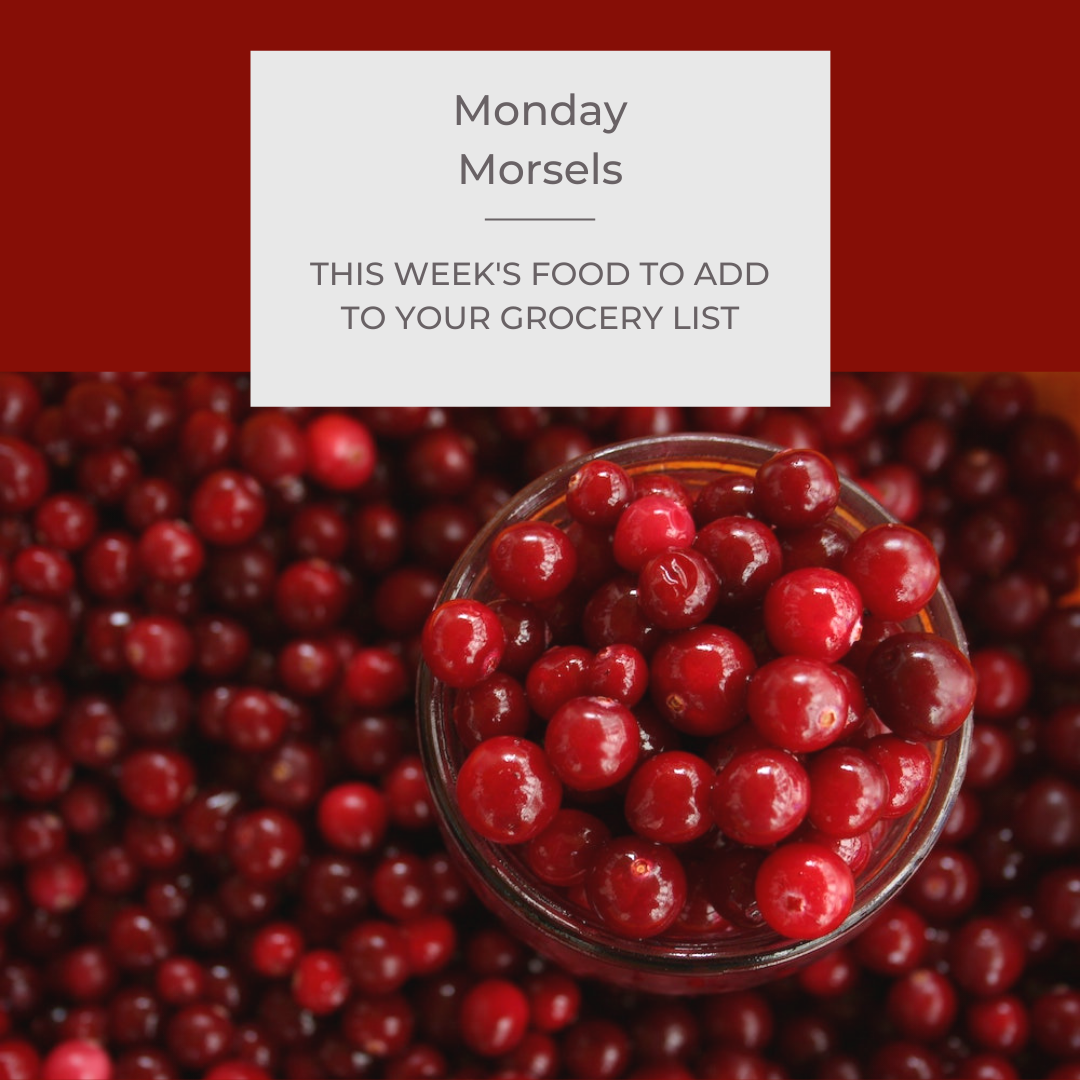
CRANBERRIES.

Oh yes, these bitter and tart berries are tops of the list for a few reasons, when it comes to gut health. Read on…
BECAUSE MICROBIOME LOVIN
In a few different ways: cranberries have been the subject of good research indicating their ability to sway a specific strain of probiotics that is a beneficial one at the gut lining, Akkermansia muciniphila. A. muciniphilla is well documented to be a metabolic health regulator, enhancing your body’s ability to better regulate your blood sugars and help insulin work better. (1) Cranberries for the microbial win!
BECAUSE INFLAMMATION BUSTING
Recent studies indicate that the polyphenols found in cranberries have been shown to have a positive effect on those markers that are checked to indicate how much inflammation your body has: things like oxidative stress, C-reactive protein, blood pressure levels, and other risk factors specifically related to cardiovascular disease. (2)
If you understand that the gut is ground zero for inflammation, then it will make all the sense in the world that cranberries are a brilliant intestinal health ally, especially when it comes to helping reduce inflammation!
BECAUSE ANTI-BIOTIC + ANTI-FUNGAL + ANTI-VIRAL ACTIONS
The compounds found in cranberries have been found to hamper the ability of certain infectious agents to adhere to the intestinal wall. Things like E. coli, Candida albicans, and H. Pylori have a hard time adhering to the walls of the intestinal lining when cranberries are around. (3) They also appear to prevent biofilm formation. I think of these biofilms as the ultimate invisibility cloak - when an infectious agent dons their biofilm, your immune system can’t see them. Their stealth-like work can continue under the radar.
But add cranberries in to your meals and whammo, those biofilms get busted up. And now your immune system can see them, and take action to reduce infections at that gut level. Cranberries for the intestinal triple win, friend.
Know what other food does similar work? POMEGRANATES.
Lucky you: both cranberries + pomegranates are readily available in your freezer section at the grocery store. Toss them in to your smoothies, make some switchel with them, toss some into your next crumble, muffin or pie. Make a sauce with these babies!
How would you feature cranberries, or pomegranates? I’d love to hear from you.
Aiming to Keep Well? Looking to love up your guts + intestinal health? Need some help in feeling real good?
Get in touch by clicking here. Let’s meet up to start drawing up your road map to support you in both quantity and quality of life.
*This is not medical advice.
Monday Morsels: Intestinal Love #2
It’s #mondaymorsels day, a brief post about a food you’ll want to add to your grocery list. This food, as always, will be related to the main topic of the month! This month, we’re talking ways Nutrition can support intestinal health, + why that may be important.
Click on the image to get the full exploration of today’s find.
Mondays, as always here on the blog, we build your grocery list with one food, focusing on this month’s main topic. As July is here, we’re zeroing in on those foods to nourish the intestinal lining.
What’s next on your grocery list?
CARROTS.
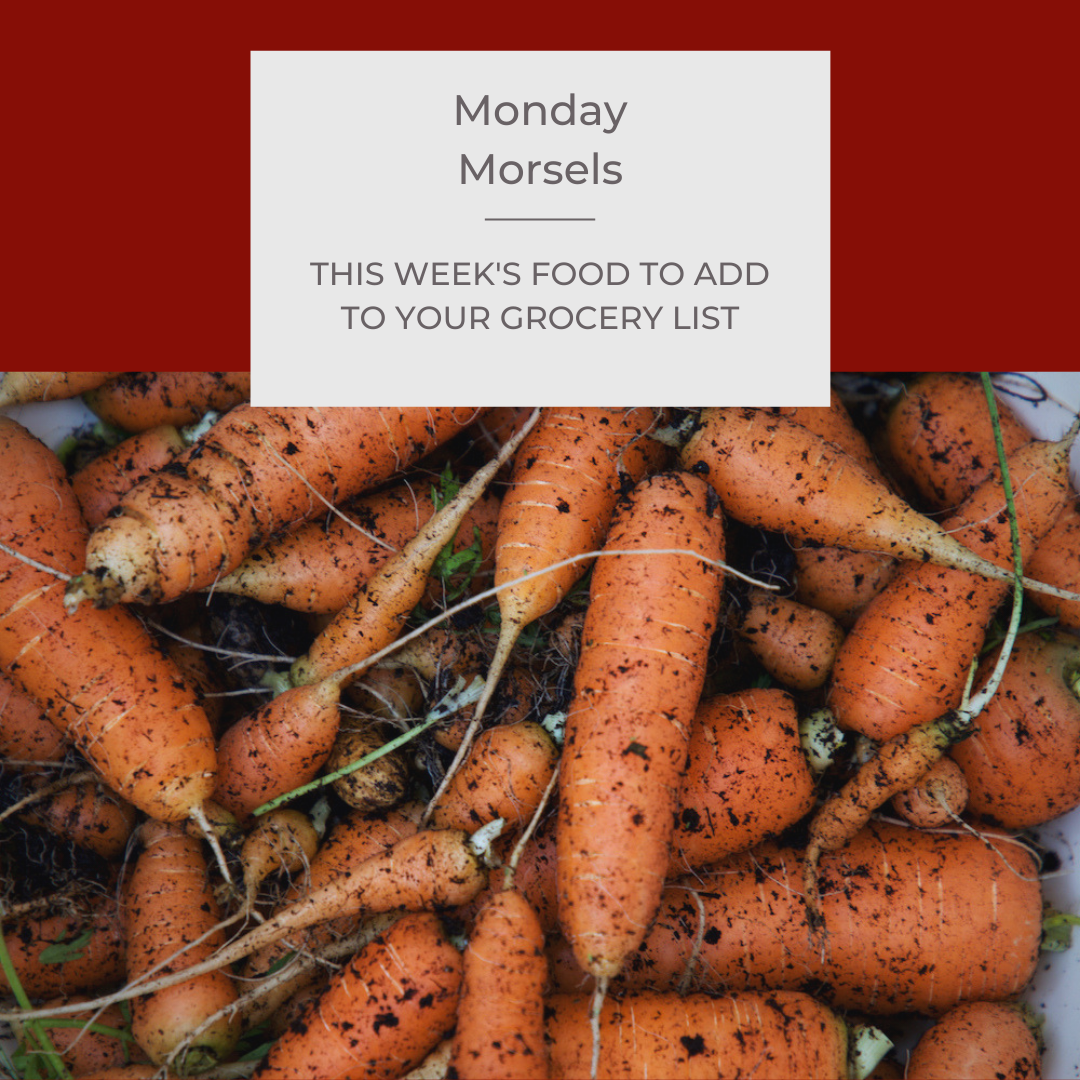
Oh yes, the humble carrot! Let me give you three reasons why…
BECAUSE MICROBIOME LOVIN
I love me some good fibre when it comes to gut health. Fibre is the perfect food to enhance the good guys in your microbiome - yea yea, think of fibre as that prebiotic that helps feed your probiotics.
When you eat fibre rich foods, you help enhance the good guys to stick around, and do their work. You’re feeding them their favourite foods! The more they stick around, the more they’ll crowd out the less favourable bacteria.
Heck yeah, it’s not just about adding in fermented foods: raw carrots can be a brilliant microbiome-building ally! Good news for those who aren’t able to tolerate fermented foods. Adding in a variety of plant based foods for the different types of fibre and polyphenols available will have a positive sway on your microbiome.
BECAUSE SPENT-HORMONE-DISPOSAL
Raw carrots are especially brilliant purveyors of a specific type of fibre that has been found to escort spent estrogen out of your intestinal tract. The specific type of fibre and phytonutrients found in carrots help bind to toxins and metabolic waste like spent estrogen, and help to move it out of your system safely with no chance of reabsorption. This helps keep estrogen from re-circulating, one of the biggest contributors to estrogen coming into dominance. Raw carrots can do this? Heck yeah!
BECAUSE SUPER POOPING PROWESS
You’ve heard this many times before: fibre helps to bulk up your stool. It’s true! Fibre-rich foods, such as the ones found in carrots, help to bulk up your stool to help it move through you innards more swiftly and easily.
Bulking up your stool helps to improve your motility, meaning moving of stuff down the digestive tract. This is code for relieving constipation!
While I do love fibre for this, some fibres can do this work with less insult to the intestinal tract than others. The fibre found in carrots is one of those fibres that is gentle on the intestinal tract, a pro-metabolic root veg packed with good fibre that will ease the poop down the chute. (I love me a good alliteration. Especially the pooping kind!)
Know this though: fibre is awesome, but only when done in conjunction with enough water. So make sure to drink your water and stay hydrated over the course of the day to help relieve constipation!
(*and to be honest, when there is chronic constipation in the picture, it’s not always because of a lack of fibre and water combination. There can be so many other reasons behind this scenario - so get that checked out first and foremost. Or hit me up to try to get to the root of your constipation troubles. That stuff ain’t no fun.)
So carrots: now what?
Eat ‘em. Every day. Or maybe every other day if this feels too much. Raw as much as possible. Grate them into bowls, into salads, eat ‘em straight up.
Doesn’t matter.
The only type of carrot that need not apply: the baby carrot. Often, those carrots are treated with a little bit of chlorine to help extend their shelf life and reduce spoilage. (1) Know what chlorine does? Wipes out bacteria.
Wait. What’s your microbiome made of? BACTERIA.
Oh.
Ditch the baby carrots, my kittens.
Aiming to Keep Well? Looking to love up your guts + intestinal health? Need some help in feeling real good?
Get in touch by clicking here. Let’s meet up to start drawing up your road map to support you in both quantity and quality of life.
*This is not medical advice.
Monday Morsels: Intestinal Love #1
It’s #mondaymorsels day, a brief post about a food you’ll want to add to your grocery list. This food, as always, will be related to the main topic of the month! This month, we’re talking ways Nutrition can support intestinal health, + why that may be important.
Click on the image to get the full exploration of today’s find.
Mondays, as always here on the blog, we build your grocery list with one food, focusing on this month’s main topic. New month, and so a new topic. We’re zeroing in on those foods to nourish the intestinal lining in July!
Where do you start?
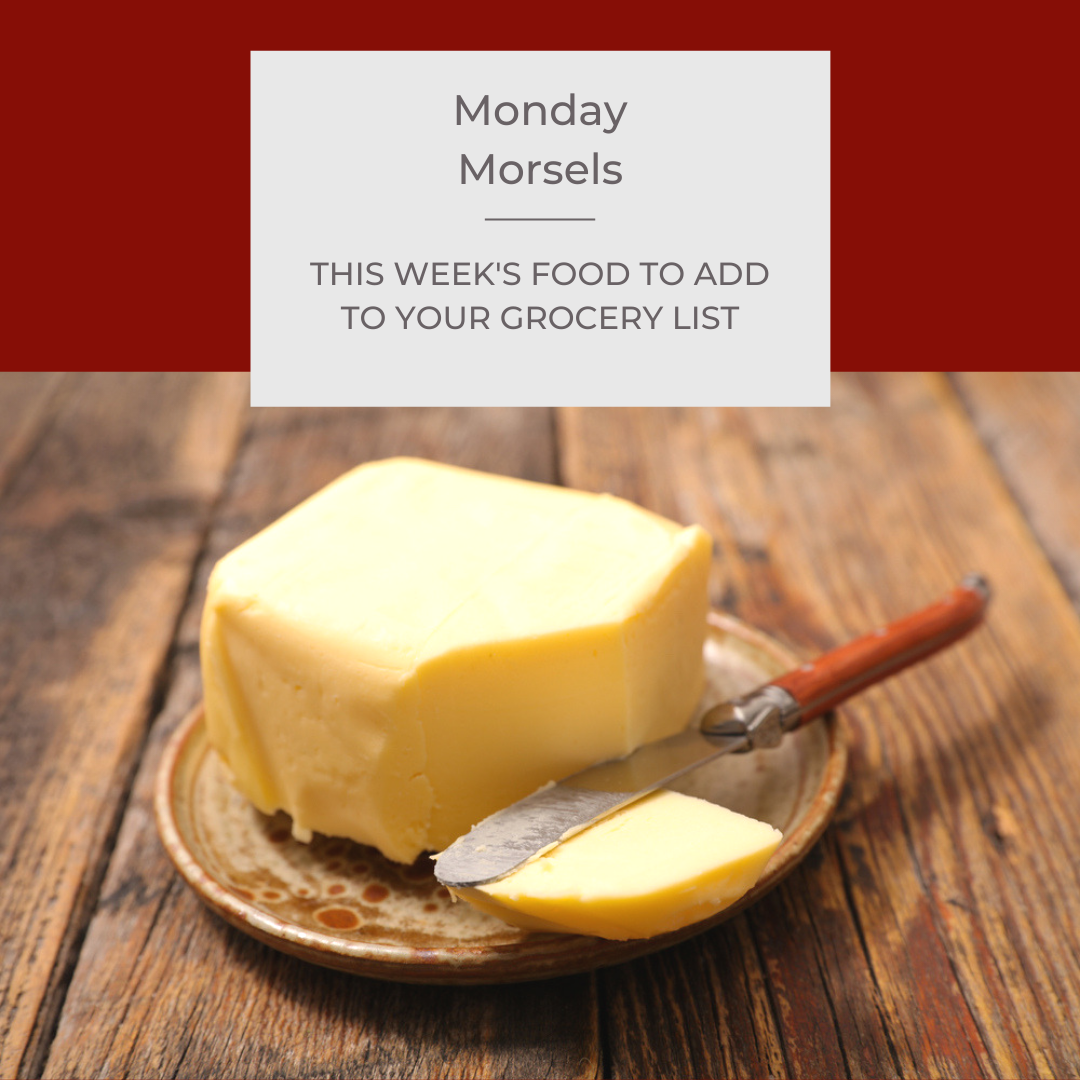
BUTTER.

AS IF you need more reasons to reach for butter. In case you do, I’ll give you three things to think about:
BECAUSE BUTYRATE
Butyrate is a short chain fatty acids made by the bugs in your gut (microbiome!) and is also found in butter. Why is butyrate so good for the intestinal tract, then? Butyrate is one of the favourite foods of the cells of your colon, and has been shown to help reduce inflammation (1). Butyrate, whether from animal dairy sources or produced by your own microbial collection at the gut (provided you’re eating loads of fibre!) is an essential nutrient for gut health! (2)
BECAUSE THE TRUE VITAMIN A
Butter (+ ghee!) provide a brilliant amount of the animal version of Vitamin A, retinol. Vitamin A is a needed nutrient to support mucosal health (3), and where you have a robust mucosal lining, you work at supporting tighter junctions between cells. Where you work at tighter junctions of cells, now you work at decreasing permeability at the gut level. Butter for the musocal + intestinal win!
BECAUSE ANTI INFLAMMATION
Butter provides animal versions of the all important fat soluble vitamins like A (mentioned above), D, E and K2. You know A, and you hopefully know D. Vitamin E is an important antioxidant vitamin that helps do the clean up from low grade chronic inflammation (or a high burden of stress). Vitamin K2 is the other vitamin featured here — this one is a stellar helper in reducing inflammation + helping get calcium into your bones, and helping your brain + heart function well.
Bonus if you’re reaching for butter from cows fed on pasture: there is a solid amount of the anti-inflammatory essential fatty acid, Omega 3! Heck yeah, baby! Omega 3 is a stellar ally in reducing overall inflammation in the body.
Where is ground zero for inflammation in your body? OH YES. THE GUT. (Check out this free master class if you want to know more.)
Not sure how to bring butter in?
Start by swapping out your margarine for butter. And use butter wherever you were using margarine. Heck, don’t even finish that container of margarine. No one needs that kind of negativity in their life!
Just put it on things. On all the things. Or explore this post here for a bit more in-depth about the brilliance of butter.
Aiming to Keep Well? Looking to love up your guts + intestinal health? Need some help in feeling real good?
Get in touch by clicking here. Let’s meet up to start drawing up your road map to support you in both quantity and quality of life.
*This is not medical advice.
Monday Morsels: Histamine Help #4
It’s #mondaymorsels day, a brief post about a food you’ll want to add to your grocery list. This food, as always, will be related to the main topic of the month! This month, we’re talking ways Nutrition can support through histamine mediated troubles.
Click on the image to get the full exploration of today’s find.
Mondays, as always here on the blog, we build your grocery list with one food, focusing on this month’s main topic - histamines.
So let’s dive in to one last of those best foods to help you move through histamine mediated troubles with a bit more ease.
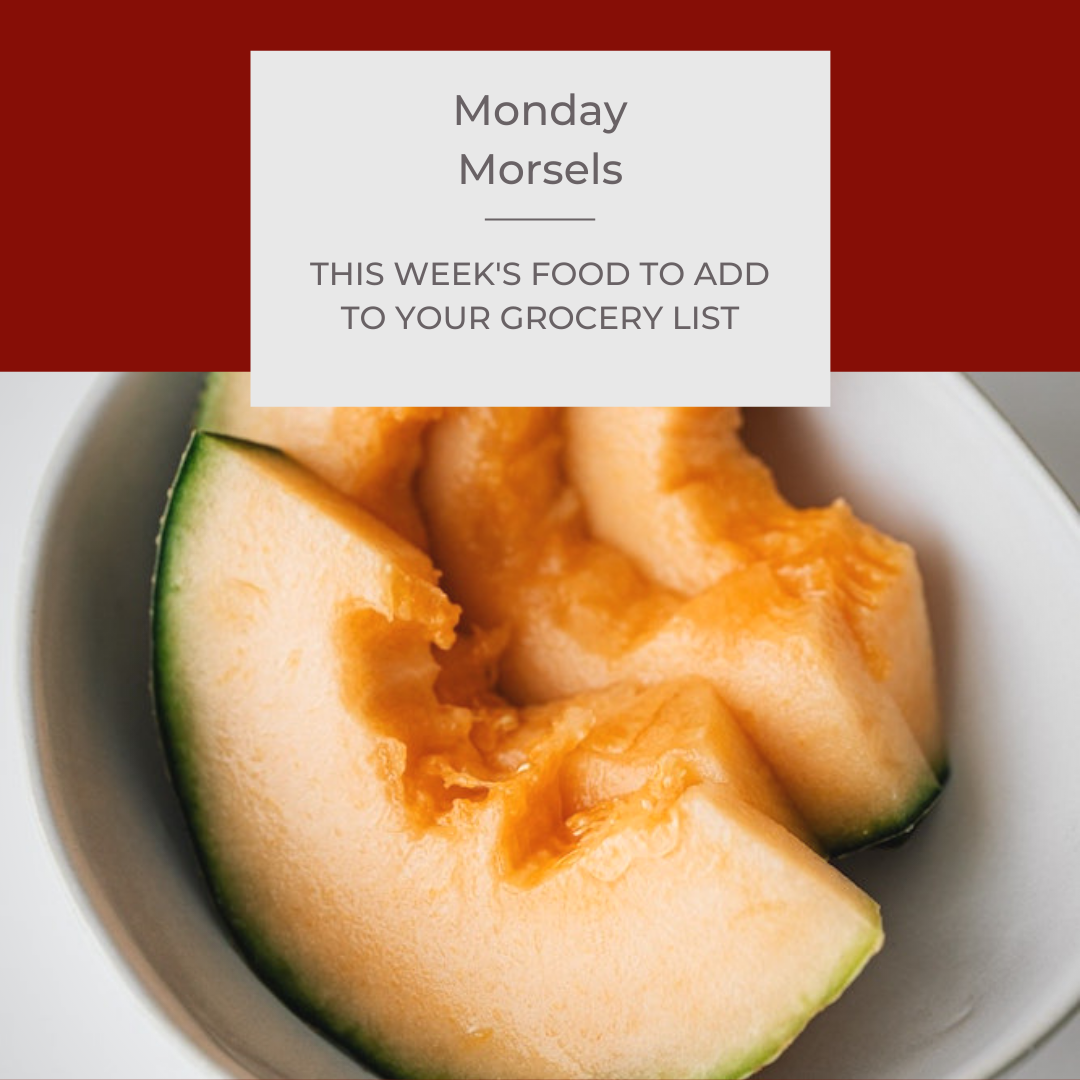
CANTALOUPE.
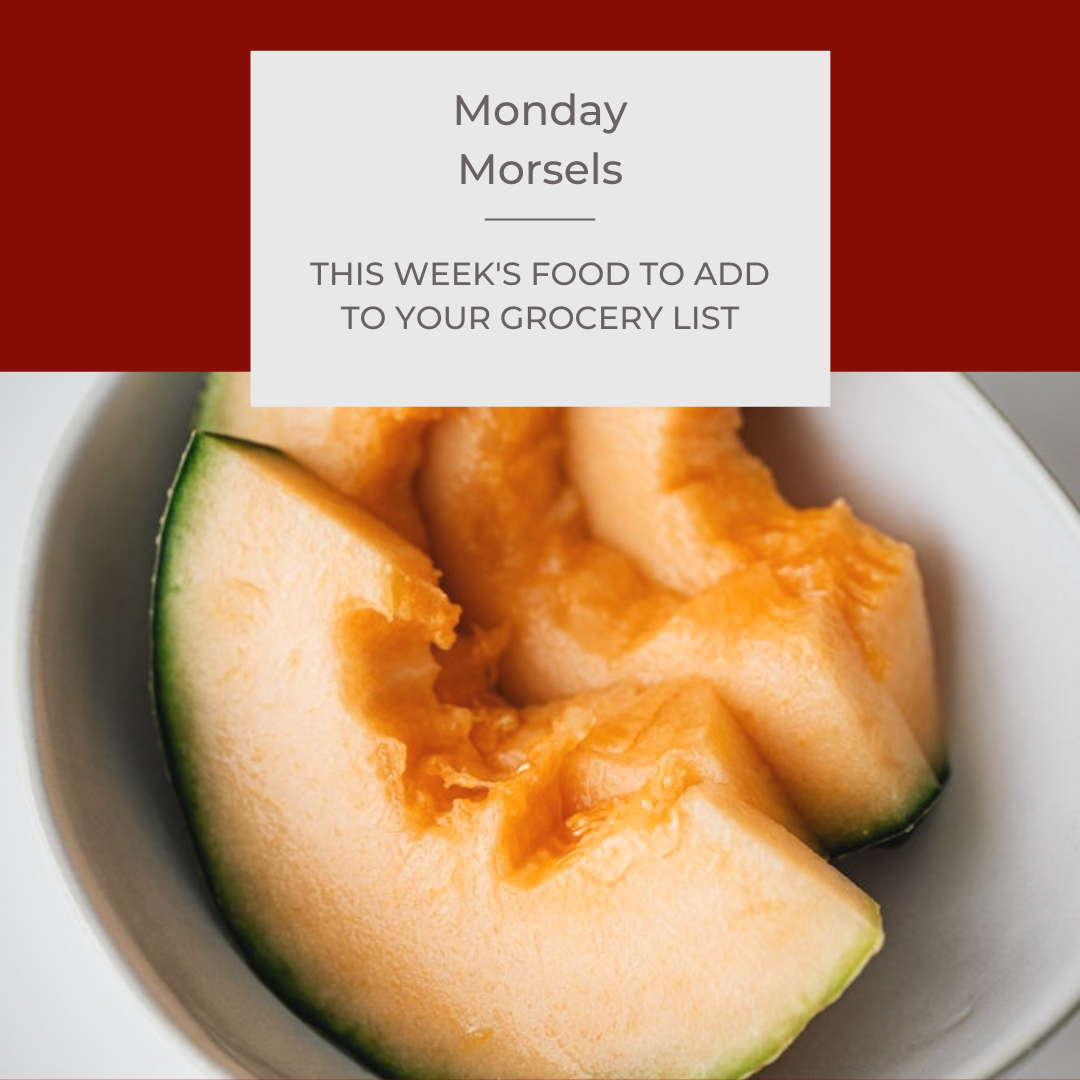
It’s summertime. Do you really need an excuse to eat more fruit? Seems like the perfect season to do so!
But for those who want to know the why, here are my reasons:
BECAUSE VITAMIN C
Vitamin C is a brilliant anti-histamine on its own, and one cup of cantaloupe provides you with enough vitamin C for the whole day. Vitamin C helps reduce histamine levels in the blood (1).
Bonus points here too, as vitamin C is one of the nutrients needed to make that important DAO enzyme at the gut level. How does this play in to histamine issues? That’s the enzyme that breaks down histamine coming in through your gut. When you can better make this enzyme, now you are better able to break down histamine coming in through your diet, reducing the histamine mediated symptoms currently troubling you.
BECAUSE INFLAMMATION REDUCING
Vitamin C is a free radical scavenger, meaning it’s used in the clean up as a result of inflammation. If you understand that low grade chronic inflammation is one of the root pieces to the picture of histamine troubles, then you’ll understand how important this Vitamin is in the picture of histamine things. Real food for the win!
BECAUSE HYDRATION
When the body is dehydrated, your production of histamine increases. Cantaloupe is 90% water! Eating fruit can help you prevent dehydration, which can go miles in reducing histamine.
Bonus points for you here too: the water comes with some solid electrolytes that help you better absorb the water found in the fruit. Think sodium, potassium, calcium and magnesium. Small amounts, but these electrolytes (minerals!) help you better hydrate, and help balance the fluid between cells and inside of cells.
One of the things to know about cantaloupe: it’s a low histamine fruit, to boot. What’s not to love here?
Have some with your breakfast. Cut a cantaloupe, and have pieces ready to grab from the fridge when it’s snack time. Build skewers for a side at meals with cantaloupe + honeydew melon if you can find + cucumber chunks. Use a melon baller to scoop balls out of the fruit, and build a delicious salad with that at the dinner table with arugula + minced fresh mint + goat cheese if you can tolerate.
Aiming to Keep Well? Working through what you wonder might be histamine related issues? Need some help in feeling real good?
Get in touch by clicking here. Let’s meet up to start drawing up your road map to support you in both quantity and quality of life.
*This is not medical advice.