
What inspires me to invite you to join with the Good Food (aka my manifesto)
A dear friend and colleague asked me a question today. I didn’t realize it, but my answer is my manifesto.
Read my answer here.
A lovely friend and colleague I trust and respect so much asked me a question on email this week.
Before I lose my nerve, I want to share with you my answer. And before we get started, I want to say a huge thanks to B. for asking me to answer this question.
I had no idea how much I needed to put this down on paper.
Q: What inspires you to lead through food?
As a Holistic Nutrition Practitioner, I think of food as having the potential of bringing nourishment on three levels:
Food nourishes our bodies and provides the nutrients and ingredients we need to function as humans, day in and day out.
Food nourishes the bugs of our gut - our microbiome. When we look after our microbiome, they look after us. It's that simple.
Food nourishes on a soul level too - quite possibly the most important part.
See, food is about more than the science.
It's about the love. And the hardships. And the stretching things out to last.
It's about bringing people together.
It's about building bonds & celebrating our cultures & our lives together with those at our table, and dare I say, those in our farming and agricultural circles.
Food? It's how you pass on your family's culture. Ain't nobody can make a Tourtière like my Acadian Grand-Maman did. And now me.
Food? It's one of the best known love languages - nourishing those you invite to your table.
Food, too? When you nourish a human well, you give them the tools to fully express themselves, and allow them to be who they are as a whole.
Good food is not only for the elite.
Good food is not restricted to the sector of society that has an abundance of time.
Real Food is what has nourished the people who came before us, that has fed the genetic code that has brought you forward through the ages so you could be here, today.
Celebrating all that the culture of food brings to the (literal and metaphorical) table is about honouring our Ancestors, and celebrating the abundance and gifts from the Earth.
Being a good steward of food + the culture around food is about honouring our place in the long line of ancestors, and in celebrating the riches of a healthy and vibrant Mother Nature.
Food is what makes us humans, and invites us to be a part of the whole. The concept of real food invites us back in to the role we play in the natural world - being a part of nature, not apart from nature.
I love food so much.
Real food is for all of the people, from all of the people, and all of the people to come.
I did a wee video on this. Check it out here.

Monday Morsels: Gut Health Foods #4
It’s #mondaymorsels day, a brief post about a food you’ll want to add to your grocery list. This food, as always, will be related to the main topic of the month! This month, we’re talking ways Nutrition can support gut health, and the role that plays in reducing your own personal Burden of Stress.
Click on the image to get the full exploration of today’s find.
Happy Monday! One last Monday Morsels blog post. I will be retiring these blogs for the time being, with the idea of launching a new Online Community in the new year. These types of things will be available through that community.
Want first access to this resource in the new year? I’ll be announcing it via newsletter first. Sign up for that here.
Ok on to one last food to add to your grocery list, should you be looking to love up your guts.
REAL FOOD. aka Ancestral Wisdom.

I’ll give you three reasons why seeking to add in some Ancestral Wisdom to your day to day will bring you gut love, and in turn, help reduce that internal burden of stress.
BECAUSE OUR GENETICS
Give it a think - the way the people who came before you ate, is pretty steady throughout the last few hundred years. The way our grandparents and their parents and grand parents before them ate, we would call it ‘slow food’ in this day and age. Things didn’t change very much from one generation to the next. You wanted muffins? You’d have to have flour in the pantry, or grow your own grain, harvest, and mill it to grind down into a flour. Then you’d make muffins, and enjoy them before they went bad.
You want a muffin in 2021? You can stop at any drive through, or coffee shop and buy one pre-made for you. But compare the ingredients in the muffins your great-grandparents would have made versus the one you can pick up at any drive through, coffee shop or grocery store, and the ingredient list will be very different.
How did your genetics evolve over the last few hundred years? With the slow foods. Those foods provided your ancestors’ bodies (including how they moved through the world, and had babies and raised those babies) with the ingredients to make everything at the cellular level work. Changing those ingredients as we have done so swiftly in the last 50 years, changes the impact it has on your cells and the DNA found within.
Consider that. Your body today, is a result of many many generations before you that ate a slow food diet. Change the diet, and how does it change things for the generations coming after you? I for one, hope we can evolve with those changes and fast. And I’m game for it. But I’d also like to stack things in favour for how the body has worked for generations before me.
BECAUSE INGREDIENTS TO BUILD + REPAIR HUMANS
Why do we eat? For the macros - think protein, fats + carbs. We also eat for the micros - think minerals, vitamins, polyphenols. We also eat to provide the goods to support our all important microbiome - think fibre, plant foods, good fats.
Your body is always building and repairing tissues. Did you know that you have an entirely new liver every 6 to 12 months? That your intestinal lining is a brand new lining every 2-4 days? That you rebuild and repair about 10% of your bones every year? (Check this chart for other fun numbers.)
How does your body do this building + repair work? It needs ingredients to do this. Where are you getting your ingredients from?
Imagine your brand new liver, 8 months down the line. How well would it work if the ingredients you provided it were mostly from poor quality ingredients? How different would your liver be if it were rebuilt from good quality ingredients?
BECAUSE ADDITIVES + PRESERVATIVES WREAK HAVOC
Oh heck yes they do. Emulsifiers like carrageenan, guar gum, acacia gum and locust bean gum have all been studied and found to have a negative impact on the junctions between cells at the gut lining. Check this study out!
What does this mean? There are quite a few additives + emulsifiers used by the food industry to help with the texture of their products. What do these additives and emulsifiers do? They promote permeability at the gut lining - this is code for pushing cells apart. When you do this, you introduce permeability, aka leaky gut. This leaky gut now makes it easier to get all kinds of things across the gut barrier in to your body than we as humans have ever had to deal with. There is the suggestion here that this may be one of the big contributing factors to the rise in autoimmune conditions.
Looking for a deeper dive? I found this article to be quite a long, but good read, exploring the impact of certain additives and how they can potentially wreak havoc at the gut lining. Check it out here!
Real food. The way our Ancestors did it.
This is not about complicating things, my friend. This is about simplifying things, in fact.
Here’s how I propose we start heeding our Ancestors’ gathered wisdom over generations: eat similar to the ways they ate. Does it mean that because I don’t have any Ancestors hailing from Thailand, that I can’t eat Thai food? Heck no!
I’ll be looking to the wisdom of the Thai Ancestors and cooking more like they would have made their meals. Mmm. Thai slow food. Oh now I’m hungry.
Think to where you came from - what were those foods those people who came before you ate. In my case, there’s a whole lotta pie in my lineage. Some people would nay say pie - saying it’s terrible, loaded with inflammatory ingredients. Then let me ask you this - how are you making this pie?
What if you made your pie the way your great-grans would have made them? For me, this involves lots of lard, and organically grown wheat flour. (Everything USED to be organic by default, until we introduced loads of things to boost agricultural production.) Lard from pigs that were allowed to live the life they were designed to live (i.e. outdoors) is rich in important nutrients like Vitamin D3 and Vitamin E.
A pie was a delivery system of joy. A way to let the bounty of late summer season SING. Think about your Mom’s apple pie, come mid-September. In to the winter, the pies would shift to perhaps a raisin pie, like my Grand-Maman used to make. Raisins are how you stored the summer sun to consume in the winter. How is pie not a delivery system of joy and summer sun?
So where do you start? EAT REAL FOOD. Start with one meal. And build from there. I have loads of from-scratch programs to help you flex this muscle. Check them all out here.
Aiming to Keep Well? Looking to start working on gut health? Need some help in feeling real good?
Get in touch by clicking here. Let’s meet up to start drawing up your road map to support you in both quantity and quality of life.
*This is not medical advice.

Monday Morsels: Gut Health Foods #3
It’s #mondaymorsels day, a brief post about a food you’ll want to add to your grocery list. This food, as always, will be related to the main topic of the month! This month, we’re talking ways Nutrition can support gut health, and the role that plays in reducing your own personal Burden of Stress.
Click on the image to get the full exploration of today’s find.
It’s Monday morning, and so we are diving in to another way to think about the type of food you focus on, especially in the scenario of gut health. That is our main topic all month long here at Good Food + You.
Something to think about, should you be consuming grains / nuts / beans / seeds/ legumes. Today, let’s just start with one of these: the grains. The glutinous and non-glutinous ones.
GO SPROUTED.

I’ll give you three reasons why going sprouted will bring you benefit.
BECAUSE DIGESTION
There are a few things to be found in raw grains that have the potential of shutting down your digestion. She sends these seeds out into the world with a protective coat of armour, you see. Unlike animals, plants can’t run away from predators. The seeds, any kind of seed, all grow to maturation with the intention of starting a whole new plant. In order to have them survive, and live long enough to prosper and grow into a brand new plant, come with those protective things.
One of these protective compounds are enzyme inhibitors. These little guys, found in anything that is a seed with the potential of becoming a plant, turn off your digestion in order to protect the seed. That way, the seed can survive your digestion (or that of the person/animal eating it) and then can grow into a brand new grain plant next season. Brilliant self-protecting mechanism there, Ma Nature!
Well, for the plant at least. Sorry, humans.
How to reduce these enzyme inhibitors? Sprout your grains there, chicken. They are drastically eliminated in the sprouting time.
BECAUSE PROTECTING YOUR GUT LINING
I’m sure you’ve heard of the word ‘lectins’ before. Turns out, grains have loads of these. What do lectins do? They contribute to the pushing apart of cells in your intestinal lining: that’s code for leaky gut (1). Lectins are quite high in grains, including those non-glutinous ones.
How best to reduce the lectin content? Sprouting your grains there, chicken. (Sensing a theme here?) Yes, they are dramatically reduced too, in this sprouting stage.
BECAUSE PROTECTING YOUR BONES
There is another compound found in anything that is a seed, with the potential of becoming a plant. Oh yes, a wheat kernel, a rye kernel, an oat kernel. Glutinous, and non-glutinous. These seeds store something called phytic acid, which when going through your digestive tract, will pull minerals with it, and bind to them preventing you from getting them in to your system. (2) There is evidence that eating a diet high in grains (which contain phytic acid), one has the potential of leaching out minerals which can now negatively impact hormonal balance and starts to deplete your mineral stores - aka your bones.
How can you prevent this from happening, and reduce that phytic acid without giving up the grains you love? Sprout your grains, chicken. Or buy something already sprouted, to make it easier on yourself.
The brilliance of living in these current times.
You might be thinking to yourself but how am I supposed to now also incorporate the sprouting of my grains, and how do I go about doing that? Don’t I have enough to do in a day?
Heck yeah you do. Let me introduce you to a little thing I call smart shortcuts.
Buy sprouted grains. Buy sprouted breads.
Even the gluten free ones. Look for them in health food stores, big box stores do carry some too. Join a local food buying club or coop, and buy in bulk to make it more affordable!
I mean sure, you can sprout your own grains. From scratch. It’s a labour and time intensive job. So if you’re a regular make it at home kinda person, you might want to switch your flours and grains to be the sprouted kind. There are quite a few varieties and companies out there doing this work for you- they’re worth seeking out!
Or take it one step further — find a brilliant local sourdough bread from a local maker.
Here in Calgary, Sidewalk Citizen Bakery makes their own old-school sourdough. In the fermentation process, the yeast and bacteria that are in the bread do the job of deactivating and disarming all three of these plants protectors, making the resulting bread much much easier to digest. And less likely to shut down your digestion, less likely to assault your gut lining, and less likely to steal from your own personal mineral stores.
Aiming to Keep Well? Looking to start working on loving up your guts? Need some help in feeling real good?
Get in touch by clicking here. Let’s meet up to start drawing up your road map to support you in both quantity and quality of life.
*This is not medical advice.
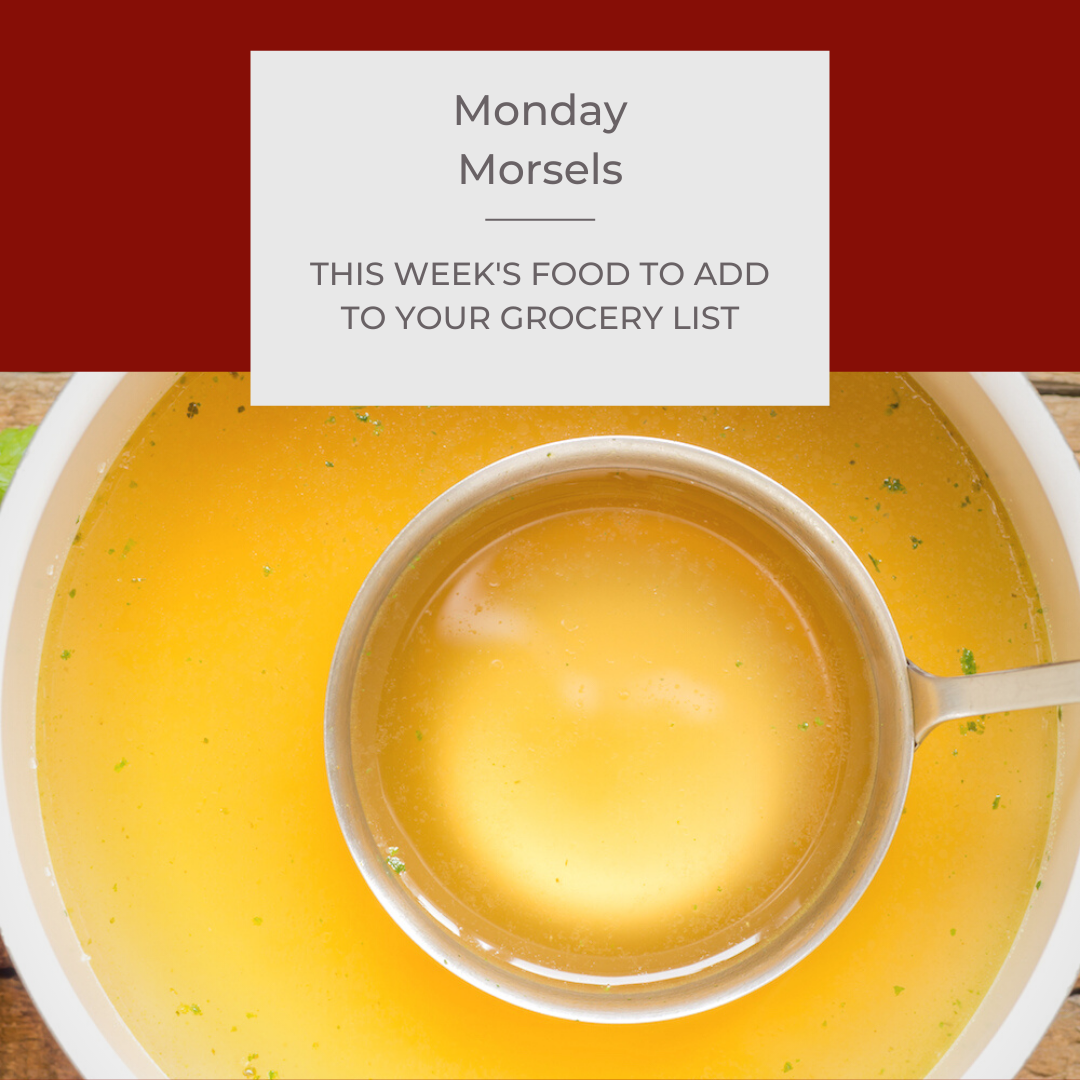
Monday Morsels: Gut Health Foods #2
It’s #mondaymorsels day, a brief post about a food you’ll want to add to your grocery list. This food, as always, will be related to the main topic of the month! This month, we’re talking ways Nutrition can support gut health, and the role that plays in reducing your own personal Burden of Stress.
Click on the image to get the full exploration of today’s find.
Happy Monday! Let’s bring in another food that will love you your guts up from the inside out.
Oh yes, we’re talking gut love all month long here on Good Food + You. Please add to your to do list:
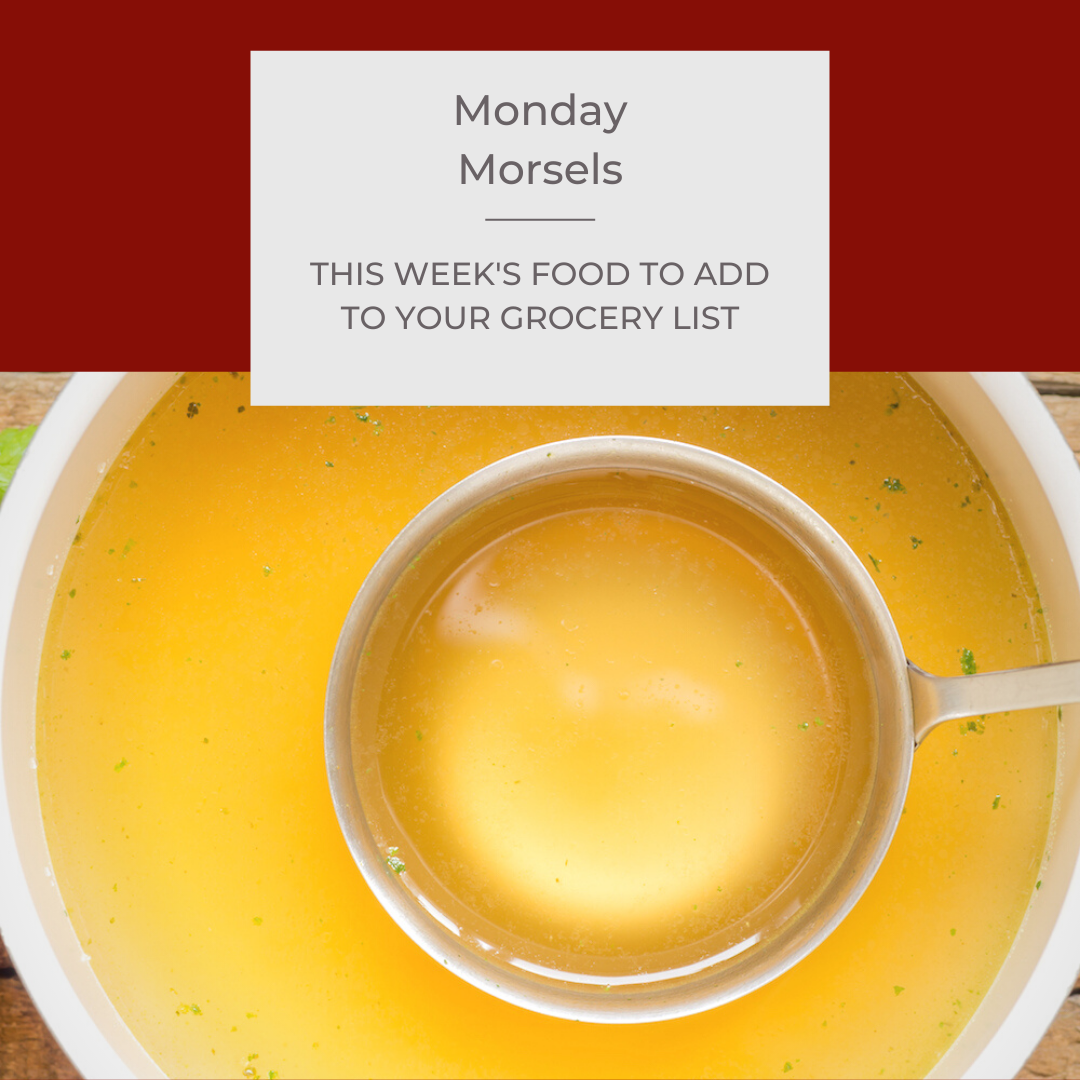
MEAT STOCK.
For those who wish to know the ‘why’ behind this idea, I’ll give you three things to think about.
BECAUSE GUT LOVE
Yes, honey pie! The gut is ground zero for inflammation! Ergo, anything you do to love up your guts will inherently reduce your inflammation. And this, my honey pies, is how you reduce your own internal burden of stress.
Why meat stock here? Because it provides some important nutrients like collagen, proline, arginine and glutamine that are allies in helping join the junctions between the cells at your intestinal lining. (Code for: reducing intestinal permeability / leaky gut). (4)
When we talk gut lovin, it’s not just about supporting the intestinal lining though. We need to talk improving digestion too, in order to support what comes later in the tract. Meat Stock? Why it’s a stellar support to improving digestion via proline + glutamine. (5)
BECAUSE ANTI-INFLAMMATORY
If you understand that a personal high burden of stress is really code for chronic inflammation, then it will make sense that in order to lower your own personal burden of stress, you need to look at reducing your body’s own inflammation going on. Meat Stock is loaded with minerals that serve the job of reducing inflammation, and deeply nourishing those organs that work harder when there is chronic inflammation on the go.
Meat Stock is also loaded with important amino acids (smallest building blocks of protein) that are noted for having anti-inflammatory effects on the body. Take glycine for example. This amino acid has shown to be a brilliant anti inflammatory nutrient, helping to protect cells against the damaging effects of toxins and inflammation. (1) Glycine has also been shown to help speed up the repair to injured tissues, like that found in the Achilles tendon. (2) Glycine is also a brilliant supporter in improving detoxification on the body, helping in the production of glutathione, your master cleaner-upper antioxidant you actually make. (3)
BECAUSE ANCESTRAL WISDOM
I love that we need to look to science to go back to what our ancestors and those who came before us have always done: Eat. Real. Food. See, in the olden days, you used each and every part of the animal, honouring it from tip to tail. That’s just what you did; part of that was due to not having a steady stream of food like we have in our current day and age. Part of it was also to put to good use all those little bits. If your ancestors grew, evolved and lived through the ages with a steady stream of collagen-rich meat stocks and bone broths, there is good value in continuing on with the wisdom they passed on through generations. Your genetics require similar things as that of those who came before you.
Plan to pick up some connective rich tissues like marrow, gizzards, chicken backs/necks, feet, meaty joints, beaks, or heck even organ meats. Your Ancestors would be proud.
To be clear, I’m talking the homemade stuff. The short cook stuff, not the tetra packs, and not the boiled-for-hours-on-the-stovetop kinda deal. Read on…
Want a simple recipe to get you started on the Meat Stock?
Sign up for my newsletter here.
Wondering if the same can be said of Bone Broth? Or maybe wondering if Meat Stock and Bone Broth are the same? Then visit this post, and check the first video out. (We answer the question on histamine here too, should you be, like me, one of those people that react to bone broth or high histamine foods.)
Need a video to lead you through making your own batch? Check this second video out.
EVEN BETTER - want to join a 4-week program to lead you through making a batch of meat stock a week, and then building in ways to utilize it in meals for the coming weeks? I have one such program for sale HERE that I call Meat Stock as Medicine. (Need a low histamine version? Then you can access that one here.)
Aiming to Keep Well? Looking to start working on your gut love and reducing your personal burden of stress? Need some help in feeling real good?
Get in touch by clicking here. Let’s meet up to start drawing up your road map to support you in both quantity and quality of life.
*This is not medical advice.

Monday Morsels: Gut Health Foods #1
It’s #mondaymorsels day, a brief post about a food you’ll want to add to your grocery list. This food, as always, will be related to the main topic of the month! This month, we’re talking ways Nutrition can support gut health, and the role that plays in reducing your own personal Burden of Stress.
Click on the image to get the full exploration of today’s find.
It’s Monday, and time for another food to focus on. All month long here, we’ll be zeroing in on that second pillar of work it takes to build, in order to have that foundation to reduce your own personal Burden of Stress.
What is pillar number 2, you ask? Why loving up your guts. So add to your grocery list, if you will:
A WATER FILTER.

I’ll give you three reasons why using a filter for your water will provide you with some insta-gut-lovin:
BECAUSE CHLORINE
Listen. I don’t want anyone to die of some bacterial disease, brought on by dirty water. So let me start by saying I love that our water is treated, here in Treaty 7 territory. (And let me be clear: clean water is a human right. I wish this for all humans. Yeah, Prime Minister JT. Get on it.)
But listen. Treating water means adding chlorine to kill those bacteria. While that’s good to prevent dysentery, I am now wondering what impact that chlorine can have on the bacteria living in your gut lining - yeaaaahhhh, THOSE little guys. Your microbiome.
Drinking straight up tap water delivers chlorine right to the bugs at the gut level, and has the potential of decimating them. We want to keep the happy bugs going at your gut: we don’t want to eradicate them! So encourage a happy microbiome balance by filtering your water. And make sure to swap out your filter every few months, to make sure you continue to remove that chlorine in order to protect your all important microflora.
BECAUSE GLYPHOSATE
There are studies showing that glyphosate residue has been found in soil and waterways adjacent to agricultural fields (1). This inevitably makes its way in to the water table of the areas affected, which then has the potential of contaminating our drinking water sources.
The chemicals found in this pervasive pesticide have been shown to decimate certain strains of bacteria at the gut level (2). For the love of your microbiome, make sure that the filter you are using with the water in your home is able to filter this stuff out!
BECAUSE MUCOSAL SUPPORT
You have three layers at the gut level: the first is your intestinal tract, one cell thick. The next level is your mucosal barrier, you know, much like the lining inside your mouth. That slimy layer. The third layer is your microbiome, your personal collection of bacteria, fungi and yeast that reside in your intestinal lining. Good work.
That second layer, your mucosal barrier, she relies on some good hydration on your part to function well. And that barrier is an important part of the overall picture of gut health: she is a protective barrier, and offers a place for your microbiome to hang out. Pretty important work. So drink that filtered water for gut health, my friend!
There are many filters to choose from, and ones that will fit every budget.
Do your research, and find the one that will best suit your budget, and do the most filtering you can get. And always make sure to swap out your filters often, including the ones in your refrigerator, as outlined in your manual or the product information.
Aiming to Keep Well? Looking to start working on improving your gut health? Need some help in feeling real good?
Get in touch by clicking here. Let’s meet up to start drawing up your road map to support you in both quantity and quality of life.
*This is not medical advice.